carnival games in Carmel Valley.
A carnival game is a single freestanding booth built around one simple, learnable skill and a prize for succeeding at it — ring toss around a bottle neck, a ball dropped down a plinko board, a dart aimed at a star, a ring tossed onto a milk can, a magnetic duck pulled from a rolling trough. Each booth is its own self-contained attraction: striped canopy, a playing surface, a prize wall, and enough repetition that a six-year-old and a grandparent can both win something in under a minute. As part of a full event My Little Carnival produces in Carmel Valley, carnival games in Carmel Valley usually show up in a run of six to twelve booths, mixed by skill level and laid out so a crowd can circulate without bottlenecking at any one game. This guide covers how they're typically used locally, what comes with each booth, and what's worth knowing before you lock a headcount.
Carmel Valley's carnival-game demand comes mostly from school and community events — fall festivals and spring carnivals organized through Del Mar Union School District elementary campuses, plus the occasional San Dieguito Union High School District fundraiser for an older crowd. Carmel Valley Community Park and the adjacent Carmel Valley Recreation Center are the two venues that come up most often when a PTA or community group wants more open grass than a school blacktop offers.
My Little Carnival produces carnival games as part of full event setups across San Diego County, with Carmel Valley bookings split fairly evenly between on-campus fall fests and off-campus park events.
How carnival games get used in Carmel Valley.
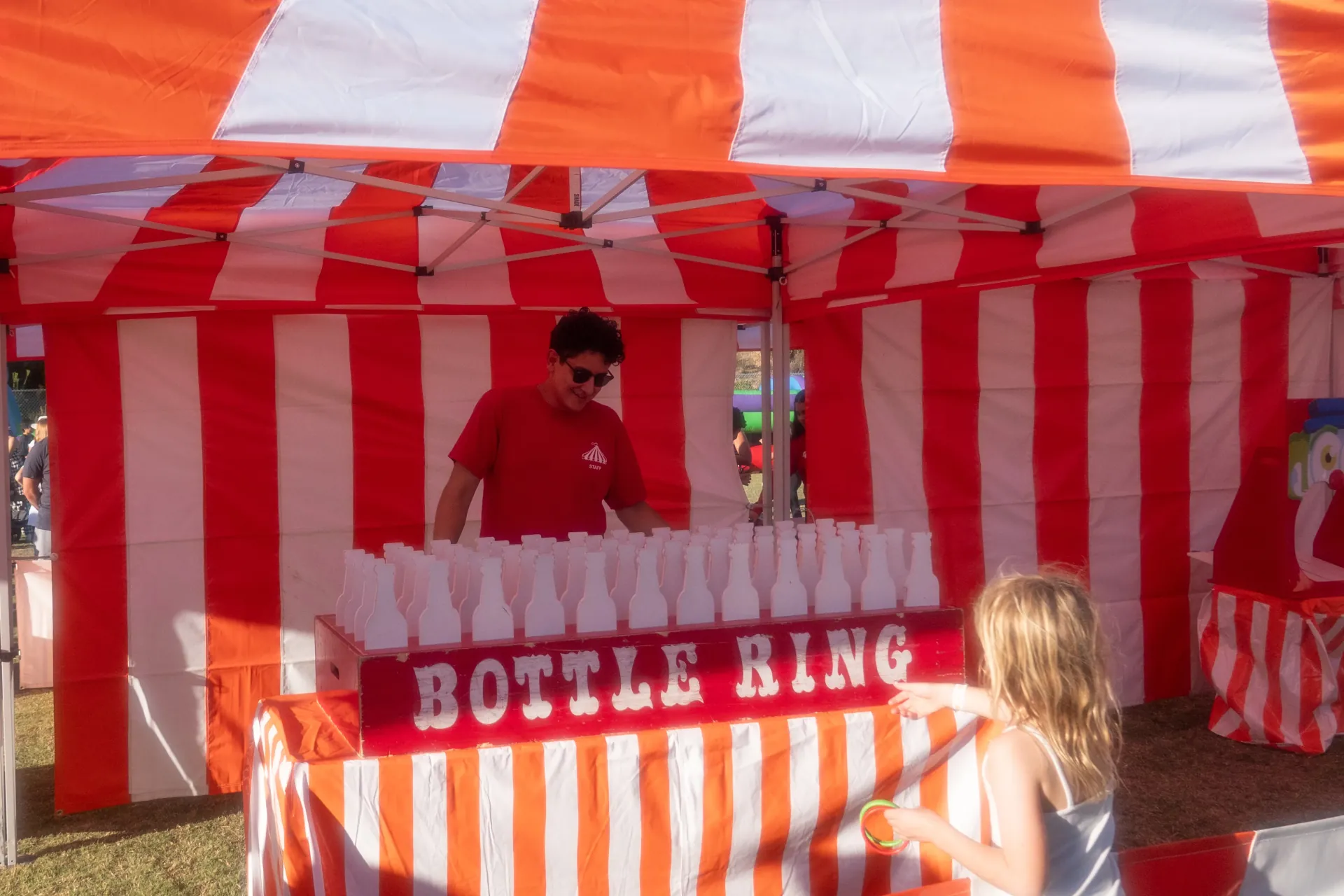
A typical layout groups booths in a loose line or horseshoe so foot traffic can flow past all of them — a few easy wins up front (balloon pop, fishing for ducks) to pull kids in, a couple of skill-tiered games in the middle (ring toss, bottle ring), and one or two harder challenge booths (dart-the-stars, basketball pop) toward the back for teens and adults chasing a bigger prize. Plinko tends to draw a small crowd on its own since it doubles as a spectator game — kids watch the chip bounce even when it's not their turn.
At a school fall fest this might mean eight booths spread across a blacktop with a concession table nearby; at a corporate family day at Carmel Valley Community Park it might be six booths on open grass with more space between them. Either way, My Little Carnival sets the booths, stocks the prize walls, and either staffs each one with a trained attendant or hands the run sheet to volunteers, depending on what the event calls for.
What's typically included.
-
The game booth itself.
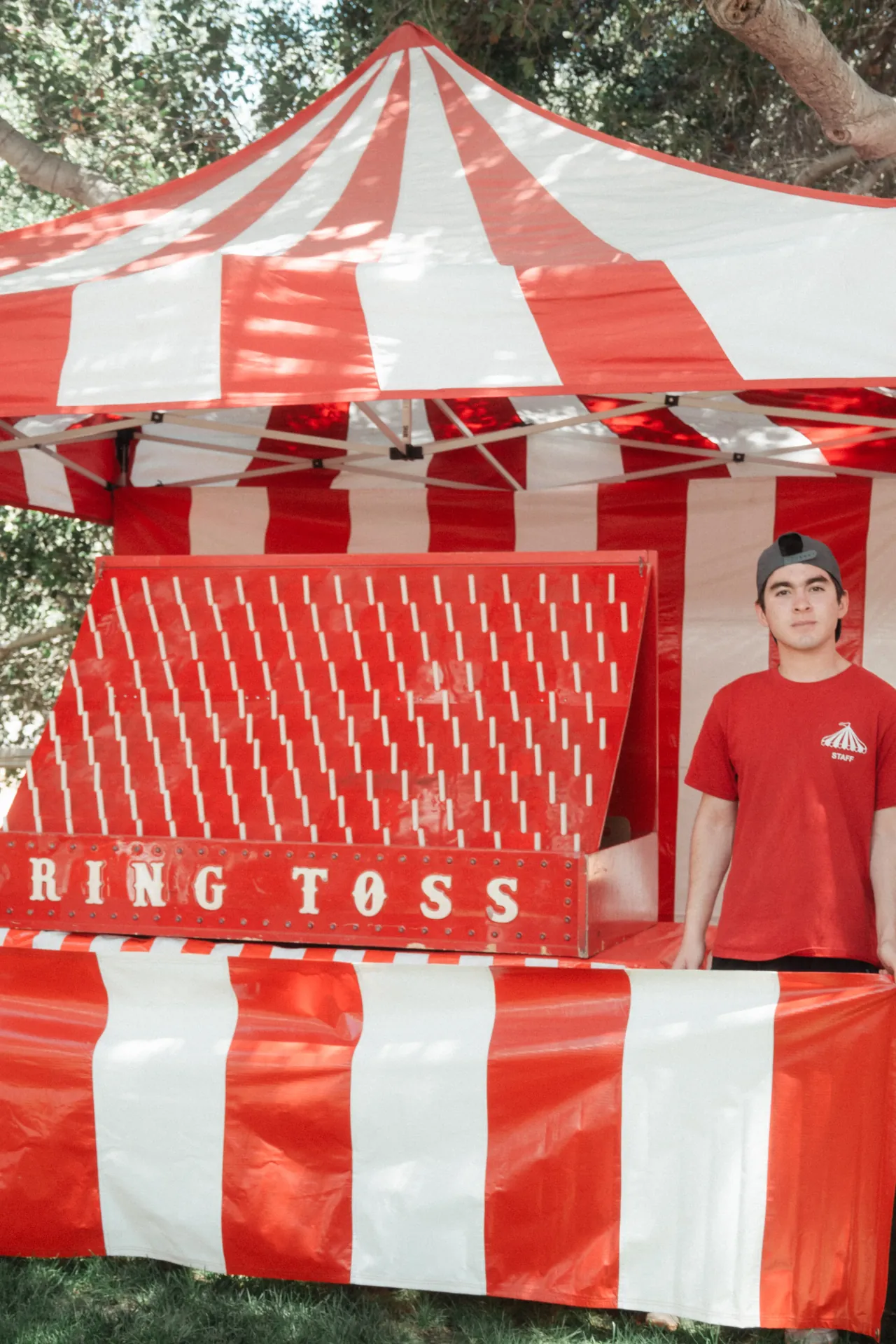
A striped canopy or tabletop unit built for the specific game — ring toss stand, bottle ring rack, plinko board, dart wall, milk-can targets, balloon board, basketball hoop, or duck pond — delivered as part of the event setup.
-
Prize inventory.
Consolation and top-tier prizes loaded into each booth ahead of time, sized to the expected guest count so a booth doesn't run dry mid-event.
-
All game supplies.
Rings, darts, balls, chips, magnetic ducks — whatever the game requires to run start to finish, replenished as needed through the event window.
-
Delivery, setup, and breakdown.
Crew delivers, assembles, and stages each booth ahead of the event start, then packs everything out afterward. No lifting or assembly falls on the host.
-
Attendants — optional.
An My Little Carnival attendant per booth is available as an add-on, quoted per booth or per hour, and runs the game and prize flow. Volunteer-staffed booths are common at school events and work fine with a short walk-through.
-
Layout planning.
Booth count and placement are scoped to the venue and expected crowd size — a school blacktop lays out differently than open grass at a park.
Typical timeline for carnival games in Carmel Valley.
- 1
Inquire
Share the venue, expected guest count, and event type. My Little Carnival recommends a booth count and mix based on age range and space.
- 2
Quote + booking
Scope is confirmed — number of booths, attendant staffing or volunteer run sheet, prize tier — and a deposit locks the date.
- 3
Delivery + setup
Crew arrives ahead of the event start, assembles and stocks each booth, and stages the layout to match the venue's footprint.
- 4
Event day + breakdown
Games run for the contracted window, staffed by attendants or volunteers. Crew returns to pack out once the event ends.
Specifics for Carmel Valley.
- Surface flexibility: Most game booths are freestanding and work equally well on blacktop, grass, or pavers — no stakes or anchoring required, which makes them straightforward on a school playground or the open lawn at Carmel Valley Community Park.
- Attendants vs. Volunteers: For school events, many PTAs staff booths with parent volunteers to keep costs down; attendants are quoted separately and are worth adding for larger crowds or corporate events where consistent pacing matters more.
- Power needs: Traditional game booths don't require power. If lighting or a is added for an evening event, that's worth flagging during the quote so it's accounted for separately.
- Venue types: Del Mar Union School District campuses handle most fall-fest bookings on blacktop or field space; larger community events tend to move to Carmel Valley Community Park or the Recreation Center grounds, both of which typically require a park-use permit ahead of the date.
- Booth count guidance: A rough rule of thumb is one booth per 40-60 guests for steady play without long lines. A 200-guest school carnival runs comfortably on six to eight booths; a larger community event may want ten to twelve.
- Weather: Southern California's typically dry climate makes outdoor game booths low-risk most of the year. A shade canopy over the games is worth considering for midday events, especially anything held near Torrey Pines State Natural Reserve where afternoon sun is direct.
Common questions.
Do carnival games come with attendants?
Not by default. Attendants are available as an add-on, quoted per booth or per hour, and are worth it for larger events or when consistent pacing matters. Plenty of school events run games with parent volunteers instead.
What surface do the games need?
Blacktop, grass, and pavers all work fine — booths are freestanding and don't require stakes or anchoring. Just make sure the ground is reasonably level.
How many games should we book?
As a starting point, plan on one booth per 40-60 guests. A 200-guest school carnival typically runs six to eight booths; larger community events scale up to ten or twelve.
Is power needed for any of the games?
No — traditional carnival games like ring toss, plinko, and bottle ring don't need electricity. Power only comes into play if you add lighting or sound for an evening event.
Can we mix game difficulty levels?
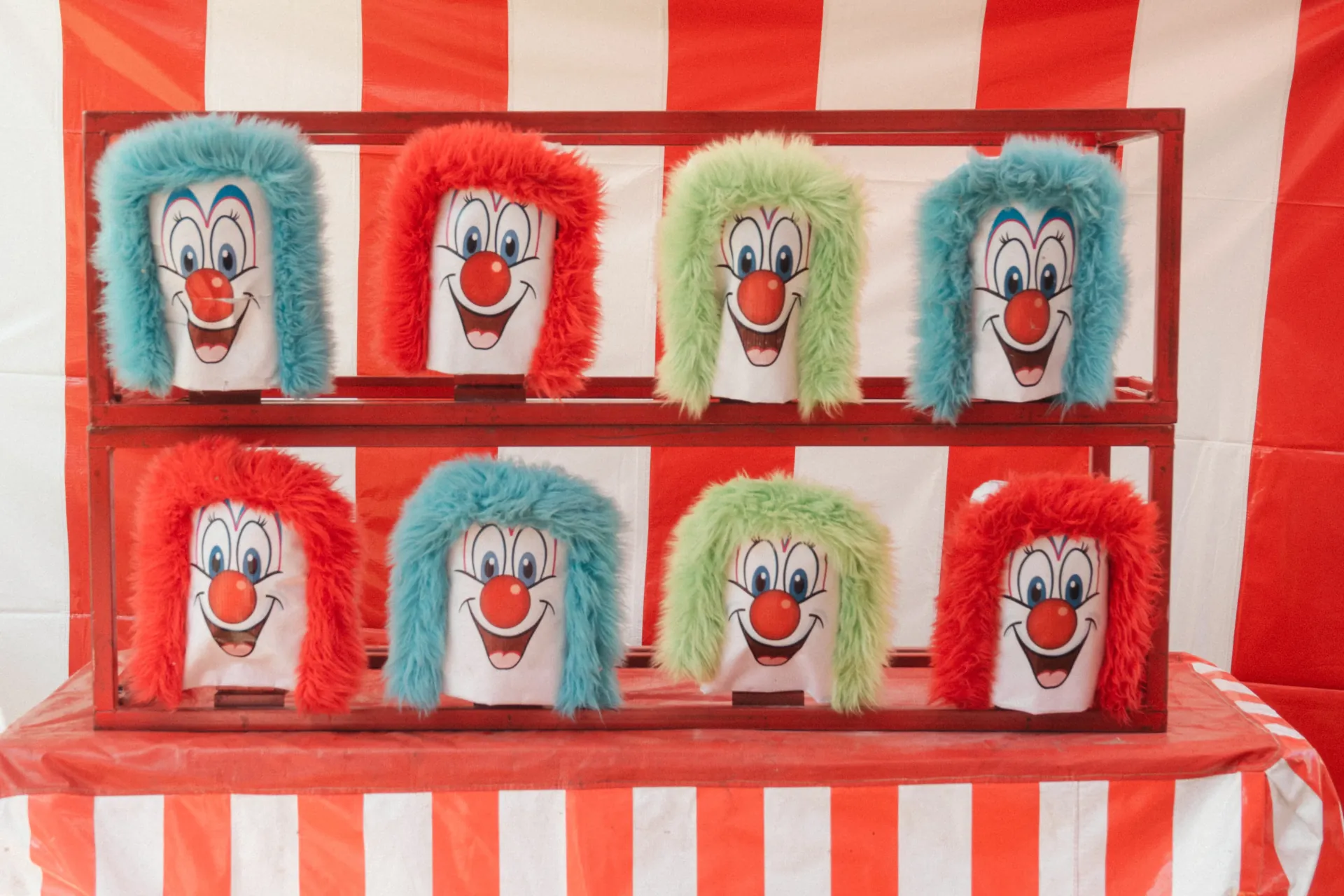
Yes, and most bookings do — a few easy-win games like balloon pop or fishing for ducks alongside skill-tiered options like ring toss or dart-the-stars keeps both younger kids and adults engaged.
Can we book carnival games on their own?
My Little Carnival produces full event setups rather than single standalone items, so carnival games are booked as part of a complete carnival, school fest, or corporate event production rather than as an individual rental.
About this guide.
This local guide to carnival games in Carmel Valley was compiled by My Little Carnival, a division of My Little Carnival, producing school carnivals, fundraisers, and community events across San Diego County.
Helpful local references: Del Mar Union School District · San Dieguito Union High School District
Carnival Games in nearby cities.
Planning carnival games for an event in Carmel Valley?
Share your venue, guest count, and event type — and My Little Carnival will recommend a booth mix and send a scoped quote.
Get a quote →