bounce houses & inflatables in Casa de Oro.
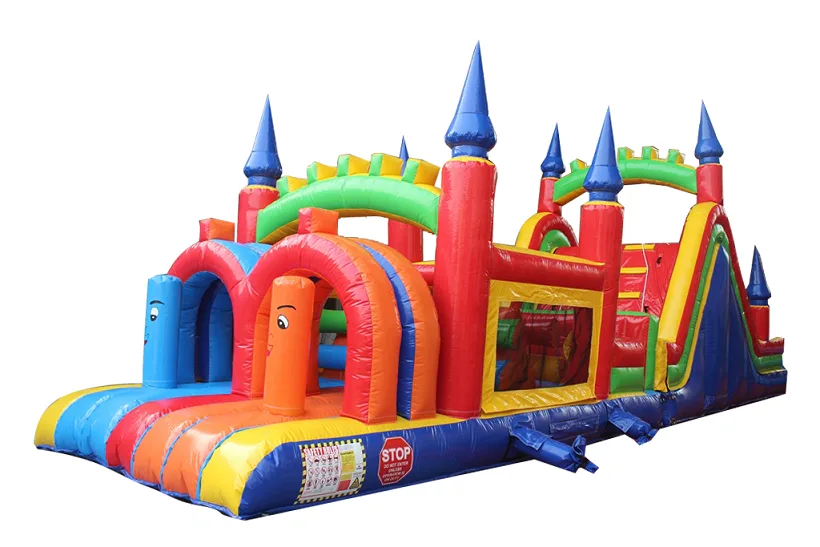
A bounce house is an inflatable enclosed structure — walls, a bouncing floor, and a blower fan that keeps it upright for the length of an event — built for kids to jump, climb, and slide on. The category extends past the classic bounce box into combo units with an attached slide, obstacle courses long enough to crawl and climb through, and in warmer months, water slides. In Casa de Oro, these show up as part of full event setups My Little Carnival produces — backyard birthdays, school and HOA events, and family days at neighborhood parks — rather than as something dropped off on its own. This is a local guide to what these inflatables actually are, how they typically get used around Casa de Oro, and what the logistics look like once one is part of your event.
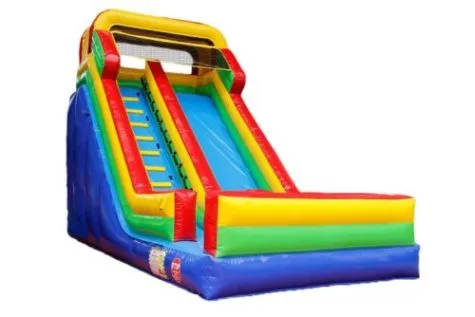
Casa de Oro sits in a mostly residential stretch of unincorporated San Diego County, with backyard lot sizes that vary block by block — some flat and fenced, some sloped toward Mount Helix. That mix shapes which inflatable fits where: a straightforward bounce house works on most patios and lawns, while a combo unit or obstacle course wants a flatter, longer stretch of grass or a park permit at a spot like Estrella County Park or Sweetwater Lane Park.
My Little Carnival brings bounce houses and inflatables as part of full event productions across Casa de Oro, sized to the yard, park space, or school lot the event is actually happening on.
How bounce houses and inflatables show up in Casa de Oro.
Most of the time, an inflatable is one piece of a larger backyard birthday setup — it anchors a corner of the yard while game booths and a concession table sit along another edge. Crew brings the unit in through a side gate, stakes or sandbags it depending on the surface, and runs the blower off a nearby outlet or a small generator if the yard doesn't have one close enough. By the time guests arrive, it's already inflated and roped off from the rest of the setup until the event starts.
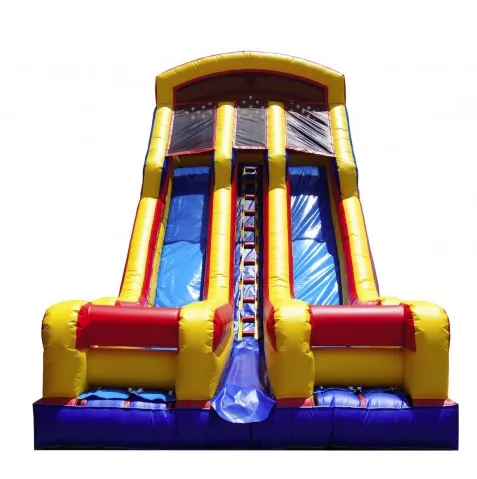
At school events and HOA gatherings, inflatables usually scale up — two or three units instead of one, often a mix of a standard bounce house for younger kids and a combo slide or obstacle course for older ones. These larger footprints tend to land on a field or blacktop area rather than a residential lawn, and they're the kind of setup that benefits from a walk-through before the date to confirm the space and power will work.
What's typically included.
-
Delivery and setup.
Crew delivers the inflatable as part of the event build-out, positions it on the confirmed surface, and has it fully inflated and secured before the event window starts.
-
Blower and tie-down equipment.
Each unit runs on a dedicated blower with an extension cord or generator feed, and is anchored with stakes on grass or sandbags on concrete and pavers.
-
Safety mats and edging.
Entry and landing areas get padded mats where the surface calls for it, particularly on hard ground or near a slide exit.
-
Attendant, optional.
Inflatables aren't staffed with a dedicated attendant by default — supervision is available as an add-on, quoted separately, or can be handled by parent or host volunteers.
-
Generator, when needed.
For backyards, parks, or school lots without a close outdoor outlet, My Little Carnival brings a generator sized to the blower load rather than relying on a long extension cord.
-
Breakdown and pack-out.
Crew deflates, disassembles, and removes the unit at the end of the event window as part of the full production strike, leaving the lawn or lot as it was found.
Typical timeline for bounce houses & inflatables in Casa de Oro.
- 1
Inquiry
Share the date, rough guest count, and where the event is happening — backyard, park, or school lot — so the right inflatable size and count can be scoped.
- 2
Quote and booking
A quote comes back sized to the space and event type. A deposit locks the date once the inflatable and any other event elements are finalized.
- 3
Week of
Surface, gate access, and power are confirmed. If the space is tight or sloped, a quick walk-through or photos help avoid surprises on setup day.
- 4
Event day and pack-out
Crew arrives ahead of the event window to inflate and secure the unit, runs it for the contracted hours as part of the event, then deflates and removes it during breakdown.
Specifics for Casa de Oro.
- Surface matters: Grass allows stake anchoring, which is the simplest setup. Concrete, pavers, or asphalt — common on Casa de Oro driveways and school blacktops — require sandbags instead, which is fine but worth flagging when booking.
- Power access: A blower needs a dedicated outlet within reach of a standard extension cord. Where that's not available — many park pavilions and some backyard corners — My Little Carnival brings a generator sized to the unit.
- Park permits: Events at Estrella County Park, Mount Helix Park, or Sweetwater Lane Park typically require a county park-use permit and a certificate of insurance before an inflatable can be set up on site.
- HOA and slope considerations: Casa de Oro's terrain near Mount Helix means some yards have noticeable slope. A flat pad of at least the unit's footprint plus a few feet of clearance is needed on all sides.
- School and district events: Field days and fall festivals at campuses within La Mesa-Spring Valley School District and Grossmont Union High School District usually run multiple smaller units rather than one large one, spread across a field or blacktop to manage lines.
- Weather contingency: Southern California's typically dry climate keeps outdoor bookings low-risk most of the year, but wind above a certain threshold requires deflating a unit as a safety precaution — something to plan a backup for on any borderline day.
Common questions.
Do inflatables need grass, or will concrete work?
Both work. Grass gets staked, which is the more secure option. Concrete, asphalt, or pavers use sandbags instead — just flag the surface type when you inquire so the right anchoring gear comes along.
Is an attendant included with the inflatable?
Not by default. Inflatables are typically supervised by parent or host volunteers; a dedicated attendant is available as an add-on and quoted separately if you'd rather not assign that job to a guest.
Do we need a generator?
If there's a standard outdoor outlet within reach of an extension cord, that usually covers it. Backyards, park sites, or school areas without close power get a generator sized to the blower as part of setup.
Is there an age or weight limit?
Standard bounce houses are generally suited to ages 3-12 with a per-jumper weight limit around 100 pounds. Combo units and obstacle courses can flex toward older kids and teens depending on the specific unit.
What happens if it's windy or rains on the day?
Wind above a safe threshold means the unit gets deflated as a precaution, and rain typically pauses use until it clears. Building in a backup plan — an indoor space or a flexible time window — is worth discussing when booking an outdoor date.
Can we get a water slide instead of a dry one?
Water slides are available seasonally and need a water source nearby plus a bit more surface clearance for runoff. They pair well with warmer-month backyard events but aren't typically run at parks without water hookups.
About this guide.
This local guide to bounce houses and inflatables in Casa de Oro was put together by My Little Carnival, a division of My Little Carnival, which produces backyard birthdays, school events, and community gatherings across San Diego County.
Helpful local references: La Mesa-Spring Valley School District · Grossmont Union High School District
Bounce Houses & Inflatables in nearby cities.
Planning an event with a bounce house in Casa de Oro?
Tell My Little Carnival the date, the space you're working with, and roughly how many kids will be there — a quote will come back sized to fit.
Get a quote →