
grand openings in City Heights.
A grand opening is the public event a business stages when a new location starts trading: the ribbon cutting, the first weekend push, the pop-up that introduces a brand to a block that has never seen it. The carnival version of that is built to be photographed. Booths are placed as photo opportunities, prizes can carry your marks, and the footprint is arranged so a phone held at chest height catches the logo, the balloon work, and a guest mid-laugh in the same frame. City Heights turns that into a spatial problem before it is a creative one. This is one of the denser stretches of San Diego, with apartments and duplexes on small lots and storefronts packed along University Avenue, El Cajon Boulevard, and Fairmount Avenue, so the useful question is rarely what a launch could include and almost always how much of it the frontage will actually hold. This is a local guide to grand openings in City Heights: what the activation covers, how approvals move through the City of San Diego, and what to settle before the date goes public.
City Heights is a San Diego neighborhood rather than a city with a hall of its own, so every approval for a launch here routes through the City of San Diego. Retail sits in long ribbons along University Avenue, El Cajon Boulevard, and Fairmount Avenue, on lots that tend to run shallow and shared with neighboring tenants. Launches that outgrow their own frontage move onto public ground instead: City Heights Community Park and Colina del Sol Park both hold a wider booth layout, Park de la Cruz Community Center adds partly covered space, and the City Heights Recreation Center suits a smaller indoor version, each running on the city's park-use track rather than a sidewalk permit. Households in the surrounding blocks are zoned to San Diego Unified School District, worth checking against the district calendar whenever a launch is aimed at parents and kids instead of weekday office traffic.
My Little Carnival produces grand opening activations across San Diego County, scaled from a two-booth setup on a storefront apron to a full lot layout with branded signage, concessions, and a photo backdrop.
How a launch activation fits a City Heights storefront.
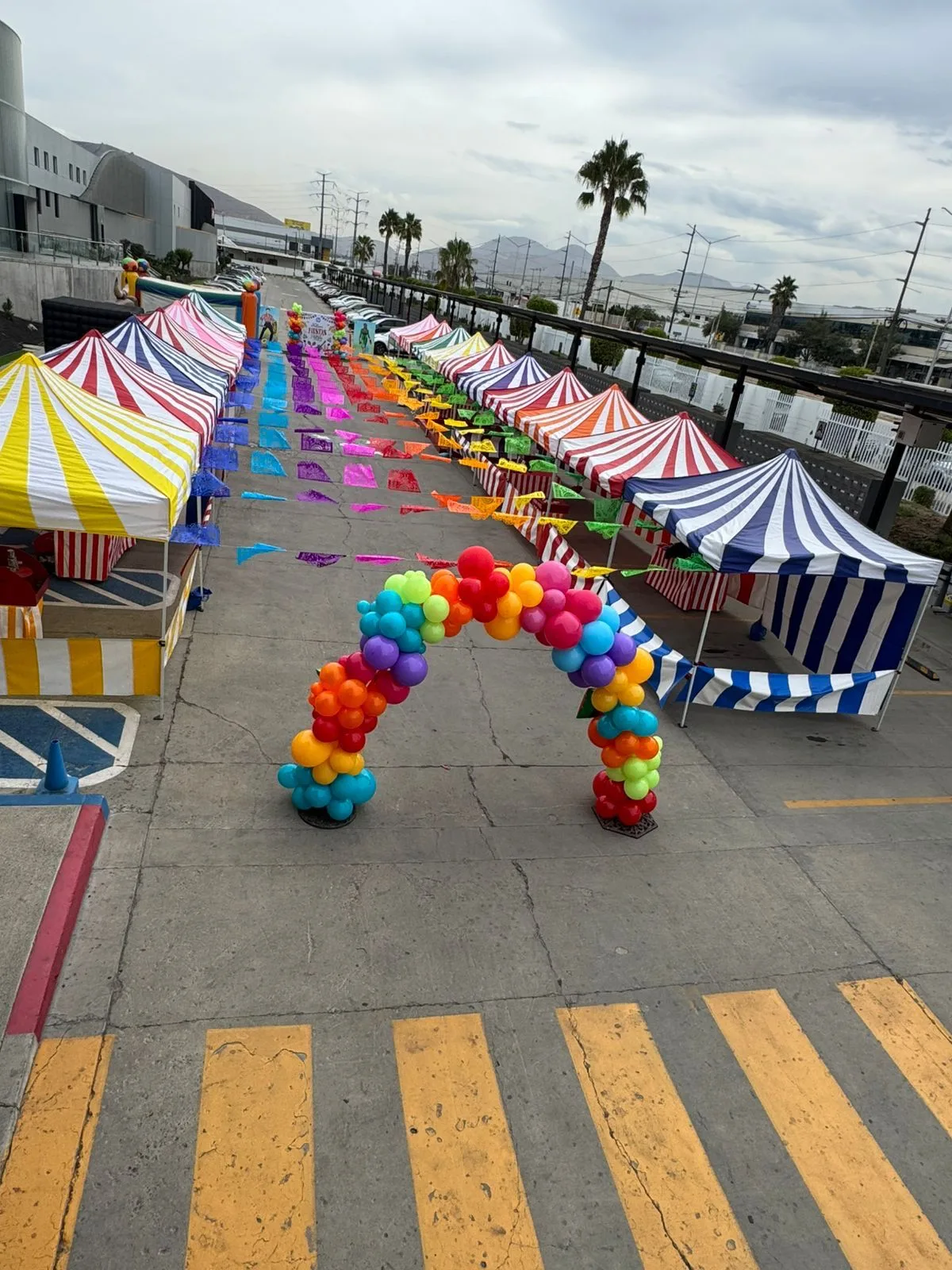
Load-in begins a few hours ahead of the announced start. The crew stages booths, prize inventory, concession machines, and the backdrop, then walks the site for sightlines: what a driver on El Cajon Boulevard registers at thirty-five miles an hour, what a pedestrian sees rounding the corner, and where a guest will plant their feet for the picture that ends up online. A shallow frontage folds the whole activation into a single row against the building face, prizes forward, machines at the far end. A corner property or a strip-center lot with spaces released for the day opens into two facing rows with a walkway between them, which is the arrangement that photographs best and moves a line fastest.
The public window normally runs three to four hours. Guests play a booth game, take a prize, stop at the backdrop, and step through the doors on the way past, which is the whole mechanism the format is built around. Professional attendants keep games stocked and machines running so the owner and the sales team stay inside talking to customers rather than refilling a popcorn kettle. Strike happens the same day, generally inside ninety minutes of close, which matters more here than in a suburban center because the parking these corridors share gets tight again by early evening.
Depth of branding is the dial that moves the number. Signage, prize ribbons, and concession packaging in company colors are the baseline layer. A Gala-tier décor package with a dressed entrance and a full photo backdrop sits above that. Most City Heights launches land between five and fifteen thousand dollars depending on activation size, how far the branded décor goes, and how many hours the booths stay open. Multi-day runs and simultaneous openings at more than one address get quoted on their own terms.
What's typically included.
-
Booths set up as photo opportunities.
Striped high-peak booths angled so the counter, the prize wall, and your storefront sign land inside one frame. On a narrow lot the placement question is which single sightline earns the good photograph, and the layout gets built backward from that answer.
-
Brand-customizable signage and prize ribbons.
Entrance marquees, booth headers, and prize ribbons produced in your colors and marks. Artwork is locked a few weeks ahead so printed pieces are in hand before the site walk instead of arriving with the crew on opening morning.
-
Concessions, often in your colors.
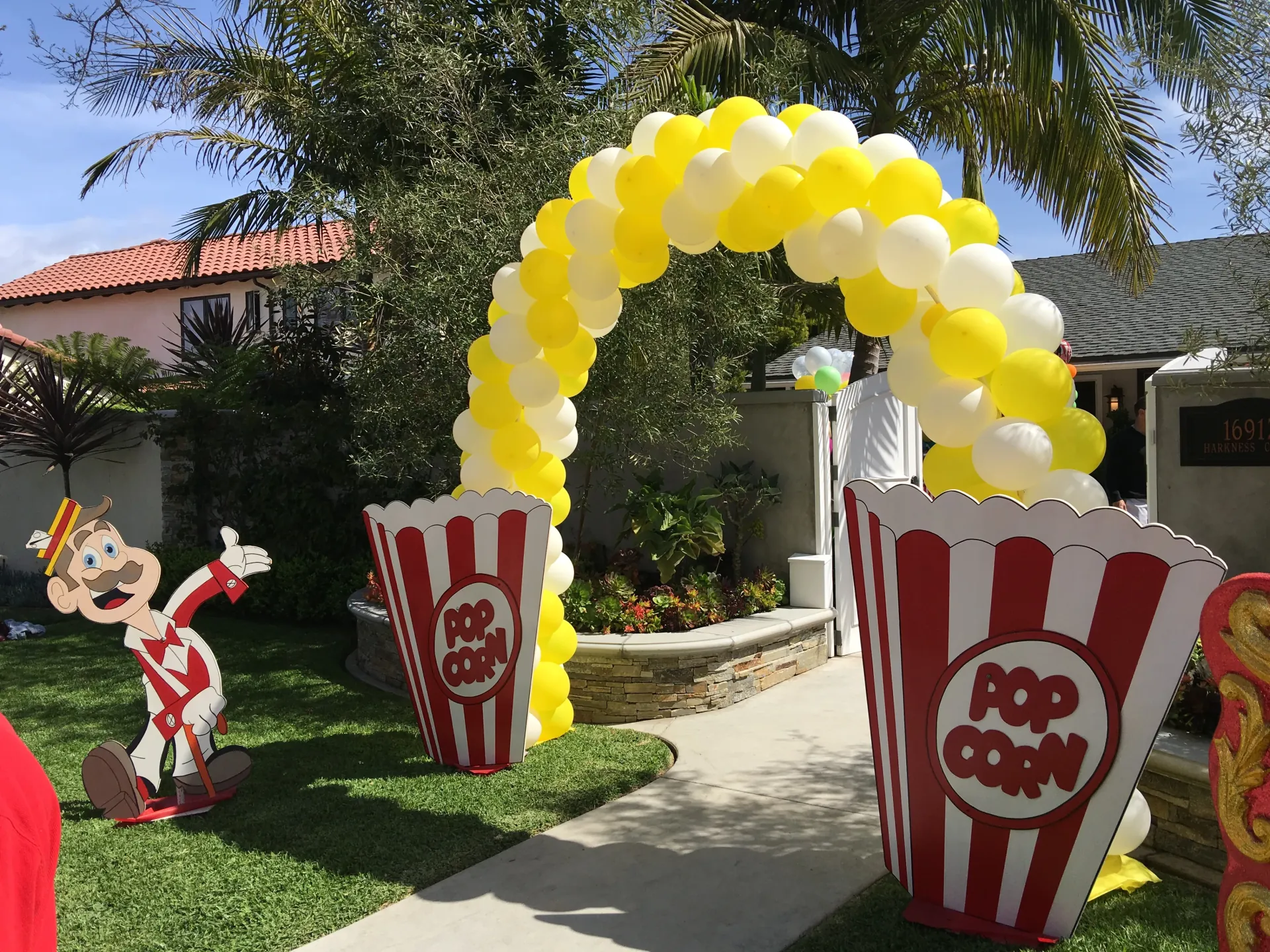
Popcorn and cotton candy stations stocked and run for the full contracted window, with bags and serving pieces matched to the brand palette when a launch wants that level of finish. The smell does as much crowd work as the signage does.
-
Photo backdrop and props.
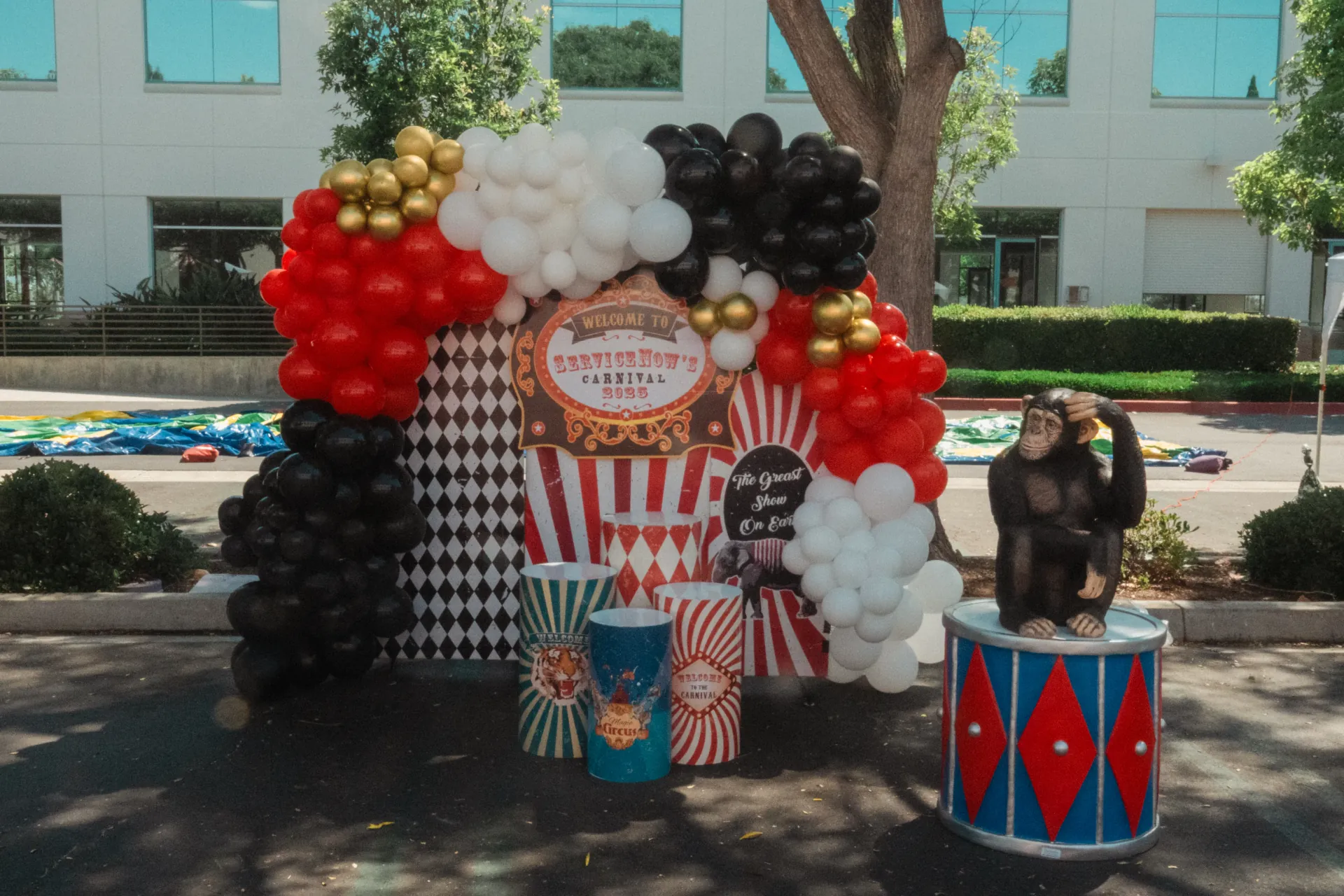
A framed backdrop with carnival props for guests to pose against, available up to Gala-tier décor. On launches where the photograph is the actual deliverable and the walk-in traffic is the bonus, this is the piece that earns its line on the invoice.
-
Professional attendants.
One person per booth and per concession station for the contracted hours, handling gameplay, prize handout, and restocking, so nobody from your own payroll leaves the floor to operate equipment they have never touched before.
-
Load-in, strike, and insurance paperwork.
My Little Carnival covers setup and same-day strike, and issues a certificate of insurance naming the property owner, plus the City of San Diego whenever any part of the activation touches public sidewalk or park land.
Typical timeline for grand openings in City Heights.
- 1
6-8 weeks out
The opening date is penciled in and the activation gets scoped: booth count, concession lineup, décor depth, and hours. If any piece of the setup will occupy public sidewalk or parkway, the City of San Diego special-event application starts at this point rather than after the announcement.
- 2
3-4 weeks out
Scope locks and a deposit holds the date. Brand artwork goes into production for signage and prize ribbons, the landlord or property manager receives the certificate of insurance, and any parking spaces the layout needs are requested in writing before they get promised to someone else.
- 3
Week of
A site walk measures the real frontage against the drawn layout, checks overhead clearance for balloon work near awnings and utility lines, and settles power. Older commercial buildings along these corridors rarely carry exterior circuits rated for an event load, so the generator call gets made here.
- 4
Opening day
Crew arrives two to three hours early, machines pre-heat, attendants take their stations, and the activation runs the contracted window. Strike starts at close and the frontage or lot is returned the same day.
Specifics for City Heights.
- City of San Diego approvals: There is no neighborhood counter to visit. Anything occupying public sidewalk, parkway, or street space goes through the city's special-event permit process with a certificate of insurance naming the city, and those want several weeks of lead time. A setup kept fully inside private property generally needs landlord authorization and a vendor COI instead, still worth getting in writing from the property manager before the layout is final.
- Shallow lots and shared frontage: Depth is the constraint that decides most City Heights layouts. Two booths plus one concession station and a small arch work in roughly fifteen by twenty-five feet, which most aprons on University Avenue or Fairmount Avenue can give up without blocking a drive lane. A six-booth spread with a backdrop wants closer to thirty by forty, which in practice means coning off a parking row that neighboring tenants also use.
- Public overflow venues: When the crowd a launch is chasing will not fit the lease line, City Heights Community Park and Colina del Sol Park both carry a larger footprint, and Park de la Cruz Community Center offers partly covered ground. All are City of San Diego facilities, so they run through the Park and Recreation use-permit process, which typically asks for a COI and a setup diagram and moves on a longer timeline than a sidewalk permit.
- Power on older blocks: Each concession machine wants a dedicated twenty-amp circuit. Commercial buildings along these corridors are largely older stock with one exterior outlet at best, and park sites nearby carry nothing rated for event use, so anything past a single machine brings a generator. It gets staged out of the photo sightlines and away from the queue.
- Timing, parking, and foot traffic: Saturday late morning into mid-afternoon is the most-booked window, when the corridors carry their heaviest walking traffic and neighbors can arrive without moving a car. Weekday launches suit service tenants working a lunch crowd. Whichever slot you take, publish where guests should park, because a launch that fills the tenants' own spaces starts opening day by annoying the neighbors.
- Weather and shade: Southern California's dry stretch keeps outdoor launches low-risk for most of the year. City Heights sits inland of the coastal marine layer, so late-summer afternoons run warmer than a beach-side block and a shade canopy over the concession station stops being optional. Dates from late fall through winter deserve a written rain contingency in the contract.
Common questions.
Does a City Heights grand opening need a permit?
It depends on where the equipment physically sits. Any part of the activation on public sidewalk, parkway, or street space requires a City of San Diego special-event permit, filed several weeks ahead. A layout kept entirely within your own lot or courtyard usually needs only landlord sign-off and a certificate of insurance naming the property owner. Because City Heights is a San Diego neighborhood and not an independent city, both routes end at the same municipal desk.
Our lot is small. Is it worth doing at all?
Yes, and the small footprint is the common case here. A two-booth activation with one concession station, an arch, and a backdrop reads well on camera and creates a reason for people already walking the block to stop. Depth of décor and photo staging carry more weight than booth count when the frontage is shallow, and the budget follows that logic instead of scaling by square footage.
Can the booths and prizes carry our branding?
That is the standard request for a launch. Booth headers, entrance signage, prize ribbons, and concession packaging can all be produced in your colors and marks, and a Gala-tier décor package extends that to the entrance treatment and the photo backdrop. Send artwork roughly three weeks out so production finishes before the site walk.
How long should the activation stay open?
Three hours covers most storefronts: the ribbon-cutting crowd, the walk-in wave that social posts pull in an hour later, and the tail. Four hours makes sense when the footprint is bigger or the block builds slowly. Hours of operation are one of the three inputs that set the quote, alongside activation size and how deep the branded décor goes.
What falls outside the carnival scope?
Booths, games, concessions, décor, the backdrop, attendants, load-in, and strike are covered. Ribbon-cutting ceremony logistics, press and influencer outreach, catering beyond the concession machines, live performers, and interior merchandising stay with the business or its agency. Those run in parallel and do not change what the carnival side delivers.
About this guide.
This local guide to grand openings in City Heights was compiled by My Little Carnival, a division of My Little Carnival, producers of carnival-style launches, brand activations, corporate events, and community carnivals across San Diego County.
Helpful local references: City of San Diego Park and Recreation Department · San Diego Unified School District
Grand Openings in nearby cities.
Opening a new location in City Heights?
Send the opening date, the address, and how much frontage or parking you can hold for the day, and My Little Carnival will scope an activation sized to the footprint and to the crowd you want standing outside your door.
Get a quote →