amusement rides in Clairemont.
An amusement ride is a mechanical attraction — a carousel, a trackless train, a mini ferris wheel, a swing ride, or a teacup ride — that guests board while a trained operator runs the machine from start to finish. Unlike a bounce house or a game booth, a ride is powered equipment: it needs level, open ground, a dedicated electrical hookup or generator, and someone certified to run it for the length of the event, not a volunteer flipping a switch. In Clairemont, rides show up at the larger productions — school carnivals with a few hundred kids moving through, city festivals, grand openings — where My Little Carnival folds one or two rides into a full event alongside games, booths, and concessions rather than dropping a single ride on its own. This is a local guide to amusement rides in Clairemont — what they need logistically, where they tend to fit in this part of San Diego, and what to expect when one shows up as part of an event.
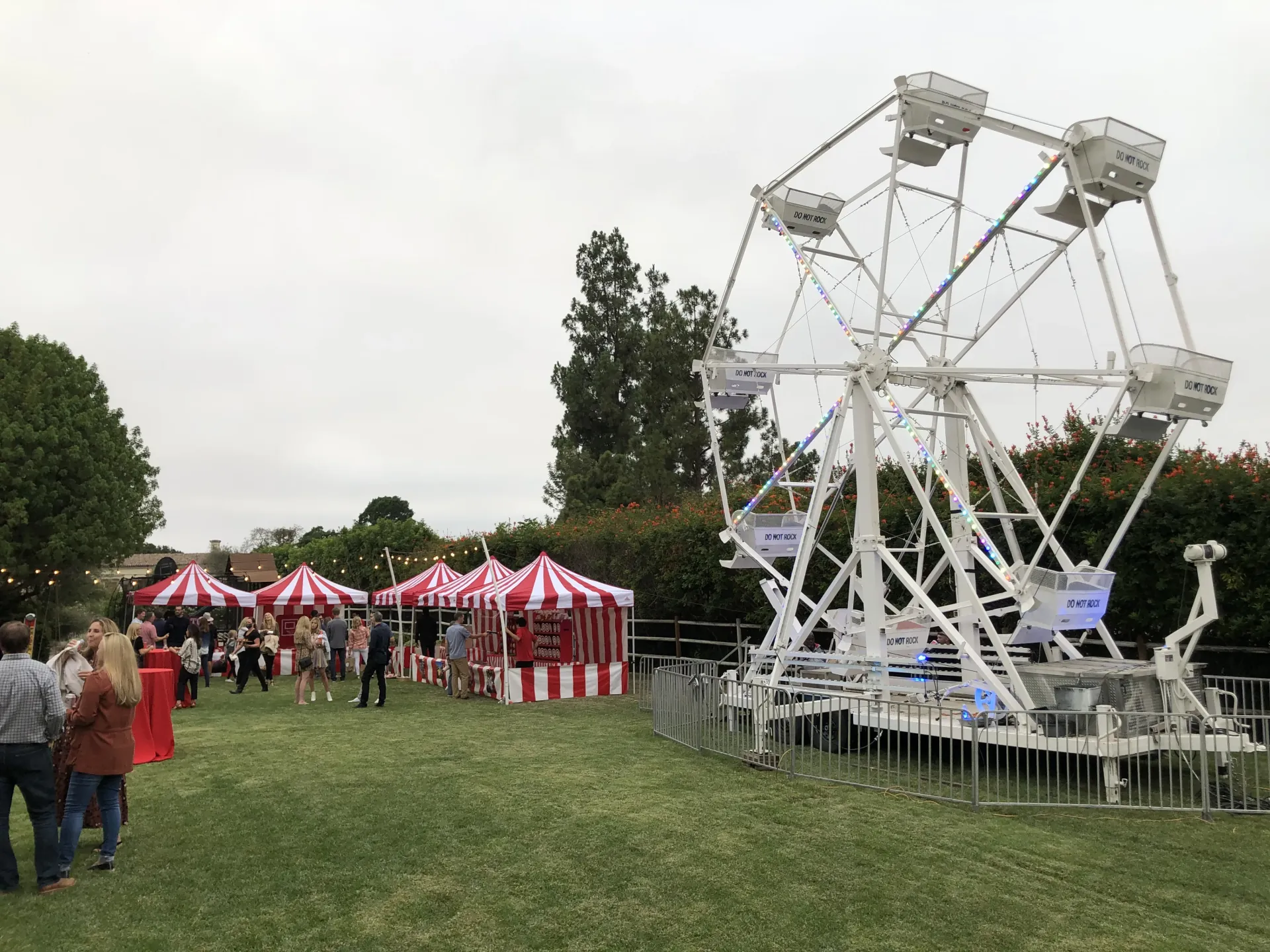
Clairemont's usable open space for rides concentrates around a handful of city facilities — North Clairemont Recreation Center, South Clairemont Recreation Center & Community Park, and Mount Acadia Community Park all have paved lots or flat turf that can hold a ride footprint, while Tecolote Canyon Natural Park's terrain rules most rides out entirely. Schools under San Diego Unified School District bring rides into the mix mainly for larger fall or spring carnivals, where the blacktop or upper field has enough clearance for a trackless train loop or a small ferris wheel.
My Little Carnival brings amusement rides as part of full carnival and festival productions across San Diego County, sized to whatever flat footprint the Clairemont venue can offer.
What an amusement ride looks like inside an event in Clairemont.
A ride gets staked out early in the setup sequence, before booths and concessions fill in around it — the crew needs a clear approach for the trailer or truck, then a level pad to work from. A trackless train wants a loop of open path; a mini ferris wheel or swing ride wants a fixed, level footprint with clearance overhead and on all sides for the rotating arms. Queue stanchions and a rope line go up next, followed by safety signage with height and weight limits posted where parents can see them before their kids get in line.
Once the ride is running, one trained operator stays with it for the entire event window — loading riders, checking restraints, cycling the ride, and unloading — while the rest of the event runs in parallel around it. At a school carnival on a San Diego Unified campus, that usually means the ride anchors one end of the blacktop while game booths line the other; at a community park event, it's often the visual centerpiece near the entrance. Guest counts that can sustain a ride comfortably tend to start in the low hundreds — enough steady traffic to keep a line moving without long idle stretches between riders.
What's typically included.
-
Ride selection.
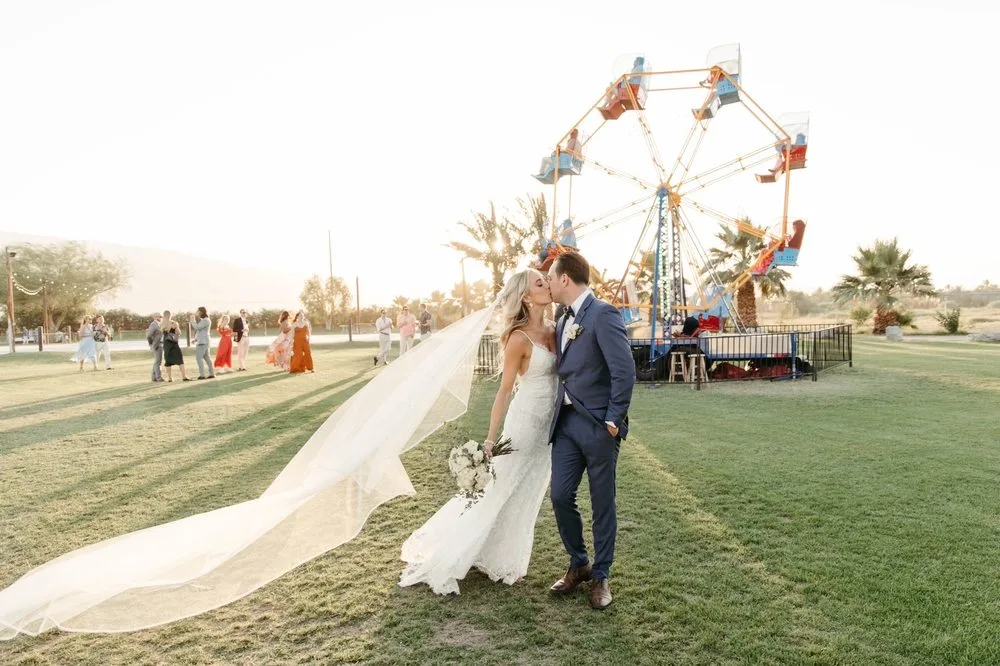
Trackless train, carousel, mini ferris wheel, swing ride, or teacup ride — picked to match the expected guest count and the flat footprint the venue can offer.
-
Delivery and leveling.
Ride components arrive by trailer and are leveled and assembled on-site, whether the surface is asphalt, concrete, or turf.
-
Trained ride operator.
An insured attendant runs the ride for the full event window — loading, restraint checks, cycling, and unloading. Rides are never left to volunteer operation.
-
Power supply.
A generator or a coordinated electrical hookup sized to the ride's motor draw, arranged as part of the site walkthrough before event day.
-
Queue line and signage.
Stanchions, rope barriers, and posted height/weight limit signage go up alongside the ride so the line stays orderly and expectations are clear.
-
Breakdown.
The ride is powered down, disassembled, and cleared from the site after the event, restoring the lot or field to its condition beforehand.
Typical timeline for amusement rides in Clairemont.
- 1
Inquire and quote
Share the venue, expected guest count, and rough date. My Little Carnival recommends a ride sized to the footprint and space availability.
- 2
Site logistics confirmed
A quick review of ground surface, level space, overhead clearance, and power access — generator or hookup — locks in the ride selection before deposit.
- 3
Delivery and setup
Crew arrives ahead of the event to level, assemble, and test the ride, then runs a safety check before doors open.
- 4
Event window and breakdown
The operator runs the ride for the contracted hours; crew disassembles and clears the site once the event ends.
Specifics for Clairemont.
- Ground and footprint: Level asphalt or firm, flat turf is required — a trackless train needs a looped path, while a ferris wheel or swing ride needs a fixed rectangular pad with clearance on all sides. North Clairemont Recreation Center and South Clairemont Recreation Center & Community Park both have paved lots that work well; Tecolote Canyon Natural Park's sloped, unpaved terrain generally doesn't.
- Power needs: Rides pull more amperage than games or inflatables. Most Clairemont venues don't have a dedicated event hookup, so My Little Carnival brings a generator sized to the ride's motor draw as a standard part of setup.
- Venue permits: Community park facilities like Mount Acadia Community Park typically require a City of San Diego Parks and Recreation use permit for any vendor equipment, including rides. School events under San Diego Unified School District require a facility-use authorization and a Certificate of Insurance naming the campus.
- Weather and wind: Southern California's typically dry climate keeps most outdoor dates low-risk, but wind above a set threshold can pause taller rides like a ferris wheel as a standard safety measure. Ground-level rides such as a trackless train or carousel are less affected.
- Operator staffing: Every ride runs with a trained operator included — this isn't optional or volunteer-staffed the way a game booth can be, since ride safety and insurance coverage depend on trained operation.
- Guest flow: Rides work best with steady foot traffic rather than a single burst of guests. Events with a few hundred attendees moving through over several hours keep the line moving without long idle stretches.
Common questions.
What surface do rides need?
Level, firm ground — asphalt, concrete, or compact turf. Sloped, sandy, or uneven surfaces rule most rides out; the site logistics review before booking flags this early.
Is an operator always included?
Yes. Every ride comes with a trained attendant who runs it for the entire event window. Unlike games or concessions, rides are never handed off to volunteer operation.
Do you need a generator?
Usually. Most Clairemont venues, including local recreation centers and school campuses, don't have a dedicated event-grade hookup, so a generator sized to the ride's motor is standard.
What are the height and weight limits?
Limits vary by ride — a trackless train and carousel accommodate a wide age range, while a mini ferris wheel or swing ride post specific height and weight minimums for rider safety, listed on signage at the ride during the event.
What happens if it's windy or rains?
Taller rides like a ferris wheel pause operation above a set wind threshold as a standard safety measure; ground-level rides are less affected. Rain contingencies are worked out during quoting for outdoor dates.
How much open space does a ride actually take up?
It depends on the ride — a trackless train needs a looped path rather than a single footprint, while a ferris wheel or swing ride needs a fixed level pad with clearance on all sides. The site walkthrough during quoting confirms what fits.
About this guide.
This local guide to amusement rides in Clairemont was compiled by My Little Carnival, the San Diego County operation of My Little Carnival — producers of school carnivals, city festivals, and full-scale events across Southern California.
Helpful local references: San Diego Unified School District · South Clairemont Recreation Center & Community Park
Amusement Rides in nearby cities.
Planning an event with amusement rides in Clairemont?
Share the venue, expected guest count, and rough date — My Little Carnival will confirm what fits the space and send a scoped quote.
Get a quote →