amusement rides in El Cajon.
A mechanical amusement ride is a powered attraction — a trackless train, a carousel, a mini ferris wheel, a swing ride, or a teacup spinner — that guests board and ride under the watch of a trained operator. Unlike a bounce house or a game booth, these units run on motors, need level ground, and require a dedicated electrical hookup or generator plus insurance coverage and a attendant running the controls at all times. As part of a full carnival event in El Cajon, My Little Carnival brings rides in alongside the games, booths, and concessions that fill out the rest of the day. This is a local guide to amusement rides in El Cajon — what they need on-site, where they typically show up around the city, and what's involved in fitting one into an event.
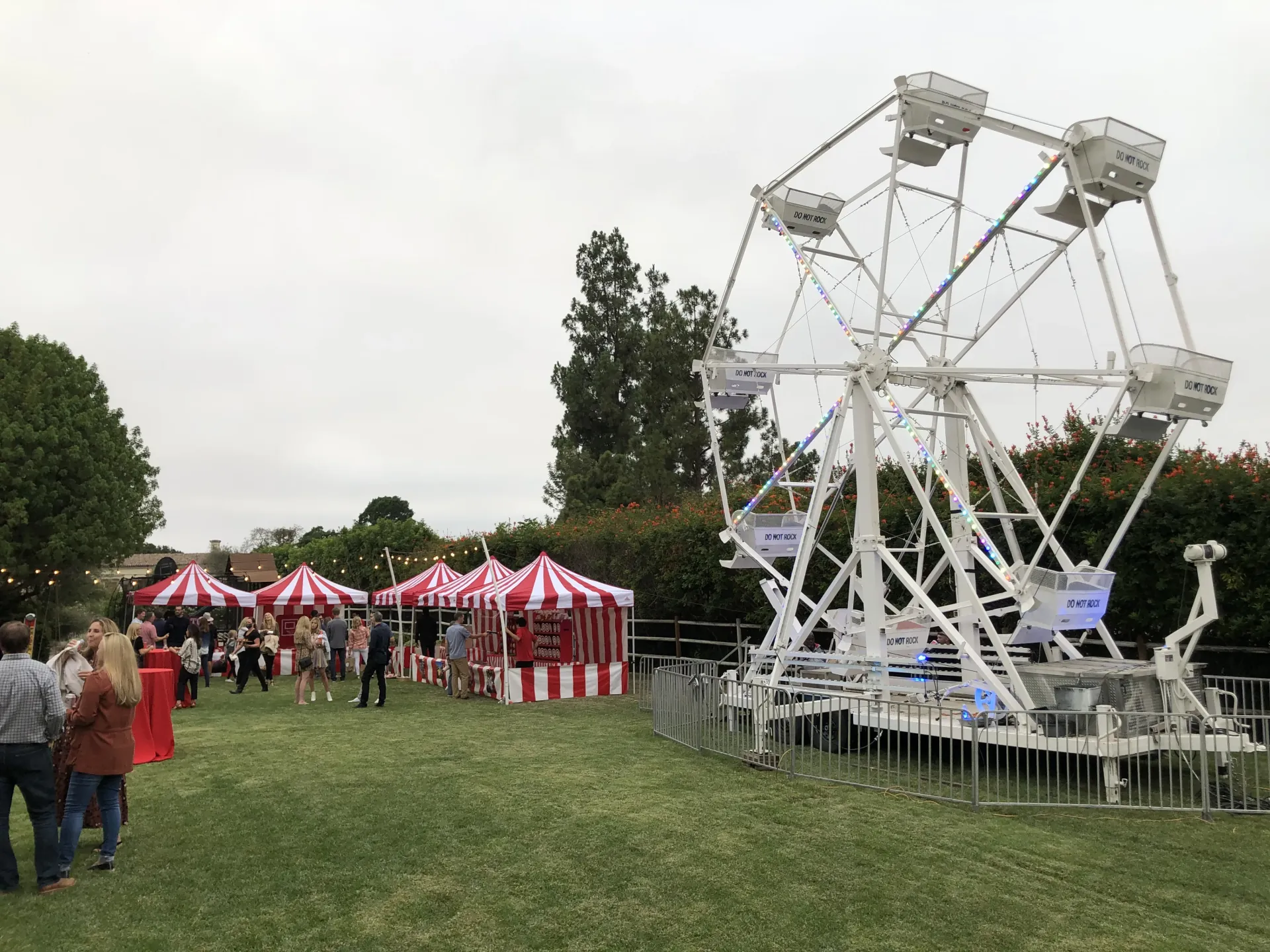
El Cajon's amusement ride bookings cluster around a few recurring occasions — fall carnivals and spring festivals at Cajon Valley Union School District campuses, larger community events at recreation-department venues like Renette Recreation Center and Hillside Recreation Center, and the occasional grand-opening or corporate event that wants something bigger than a bounce house. El Cajon Valley High School's grounds, within Grossmont Union High School District, come up often enough for larger multi-ride setups when a school wants to anchor a bigger event.
My Little Carnival produces festivals, school carnivals, and grand openings across San Diego County, bringing rides into these events as one piece of a full production rather than as a standalone rental.
How amusement rides show up at an event in El Cajon.
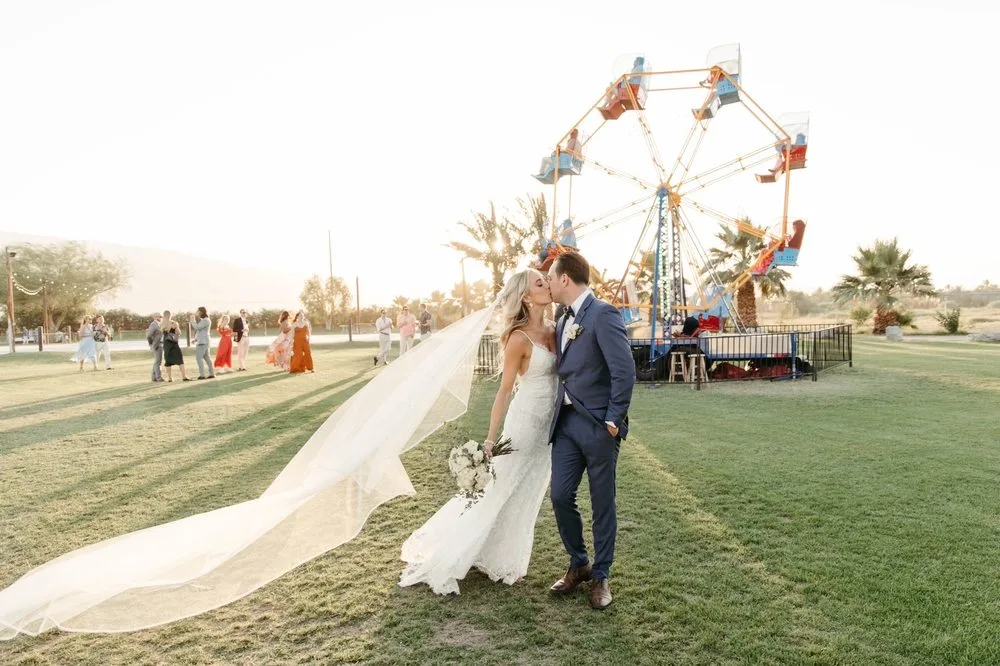
Rides anchor a section of the layout on their own — a flat, cleared footprint set apart from the game booths and concession lines, usually with a fenced or roped queue and a clear sightline for the attendant. A mini ferris wheel or swing ride draws a crowd that stands and watches even when they're not in line, so event layouts tend to put rides where they're visible from the entrance rather than tucked in a back corner. Trackless trains work differently — they loop through the whole event footprint rather than staying fixed, which changes how the rest of the layout gets planned around them.
Inside a full event, rides run alongside everything else My Little Carnival sets up — the striped booths, the concessions, the inflatables — with the ride attendant dedicated solely to loading, running, and unloading their unit for the duration. Guest counts matter more here than with games or booths: a ride with a six-minute cycle time and a twelve-seat capacity can only move so many riders per hour, so events expecting large crowds often pair two smaller rides rather than one big one to keep lines manageable.
What's typically included.
-
Ride selection.
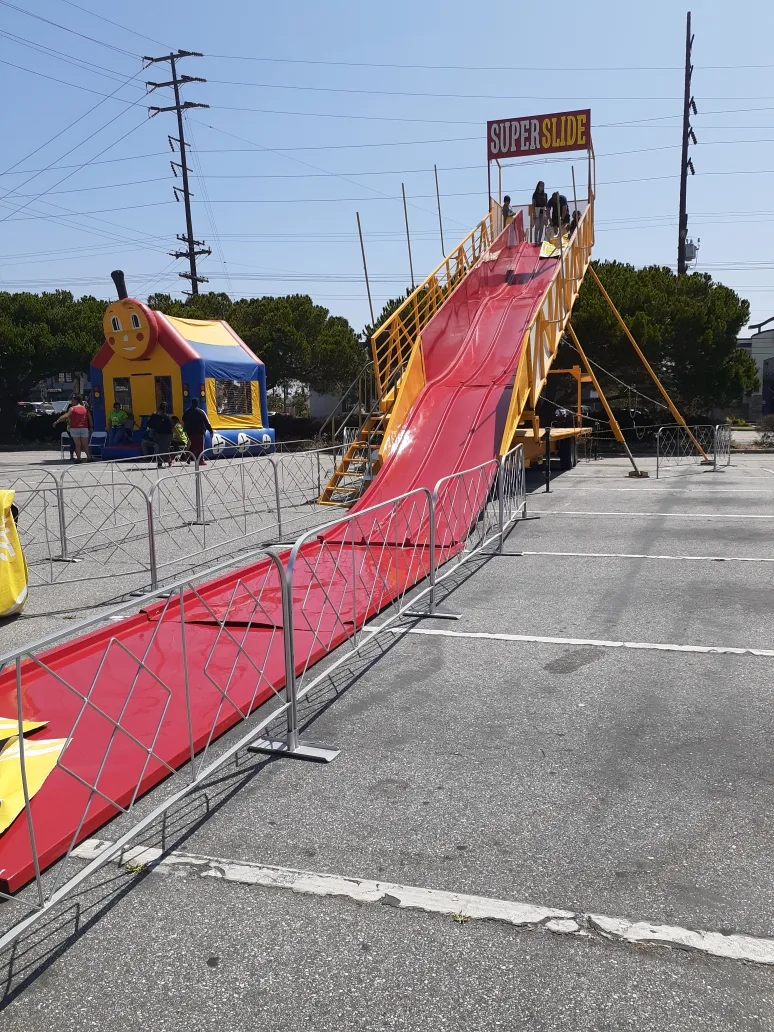
Trackless train, carousel, mini ferris wheel, swing ride, or teacup ride — chosen based on expected guest age range, available footprint, and the scale of the rest of the event.
-
Trained ride attendant.
A operator runs the ride for the full event window — loading, cycling, and unloading riders. This isn't optional or volunteer-staffed; insurance and safety requirements mean a trained attendant is always included with every ride.
-
Delivery, setup, and breakdown.
Crew delivers, levels, and stages the ride as part of the overall event build-out, then breaks it down and hauls it out after the event closes.
-
Power and generator.
Rides pull real amperage. When the venue doesn't have a dedicated hookup — most parks and school lots don't — a generator sized to the ride's draw is brought in as part of the setup.
-
Queue barriers and signage.
Fencing or rope-and-stanchion line management plus height/weight signage posted at the boarding point, sized to the ride and expected crowd.
-
Insurance and COI.
Ride operation requires active coverage; My Little Carnival provides a Certificate of Insurance naming the venue or school district as additional insured where that's required for facility-use authorization.
Typical timeline for amusement rides in El Cajon.
- 1
6-10 weeks out
Ride type and event scope get discussed against the venue's footprint and expected crowd size. A quote goes out once guest count and site details are known.
- 2
3-4 weeks out
Ride selection and layout are locked, deposit is placed, and any facility-use or park-permit paperwork gets submitted to the venue or district.
- 3
Morning of the event
Crew arrives early to level the ride pad, set up the unit, run power, and test the ride before doors open. This happens alongside setup of the rest of the event.
- 4
Event day + breakdown
The attendant runs the ride for the contracted window. Crew breaks the unit down and clears the site after the event closes, same day.
Specifics for El Cajon.
- Footprint and surface: Rides need a level, obstruction-free pad — asphalt, hard-packed dirt, or turf all work, but the ground has to be flat. Fields and blacktop areas at venues like Renette Recreation Center and Hillside Recreation Center typically have room; tighter school courtyards may only fit a single smaller ride.
- Power needs: Most rides need a dedicated circuit or generator rather than relying on a building's standard outdoor outlets. My Little Carnival sizes a generator to the ride during the quote once the venue's available power is known.
- District and venue paperwork: Cajon Valley Union School District and Grossmont Union High School District campuses generally require a vendor Certificate of Insurance naming the district as additional insured before a ride can go on district property. City recreation venues have their own facility-use process.
- Height and weight limits: Every ride carries manufacturer-set height, weight, and sometimes age minimums posted at the boarding point. A mini ferris wheel or teacup ride skews younger; swing rides and larger units often have a taller minimum height requirement.
- Crowd sizing: Ride cycle time and seat capacity set how many guests per hour a unit can move through. Larger festivals in El Cajon often pair two smaller rides side by side rather than relying on one ride to handle the whole crowd.
- Weather contingency: Southern California's typically dry climate keeps outdoor ride dates low-risk most of the year, but wind above a manufacturer's threshold can pause ride operation temporarily. Attendants monitor conditions and resume once it's safe.
El Cajon, CA.
ZIPs: 92019 · 92020 · 92021 · 92022
My Little Carnival delivers amusement rides throughout El Cajon and the surrounding San Diego County area. Pin shows the city center; we cover every ZIP listed above.
Common questions.
What kind of ground do rides need?
Level and clear of obstructions is the main requirement — asphalt, packed dirt, or turf all work. A grade or slope beyond what the ride's leveling jacks can compensate for usually rules a spot out, so flat is more important than surface type.
Is an attendant always included?
Yes. Unlike games or booths, ride attendants are never optional or volunteer-staffed — a trained operator runs every ride for the full event, which is required for insurance and safety reasons.
Do we need to provide power?
Most venues don't have outlets that can handle a ride's draw. My Little Carnival brings a generator sized to the unit whenever the site's available power isn't sufficient, which is the case at most parks and school lots.
Is there a height or weight limit?
Every ride has manufacturer-set limits posted at the boarding point — height minimums are the most common restriction, with some rides also capping rider weight per seat. Limits vary by ride type, so smaller kids may be steered toward a mini ferris wheel or carousel over a swing ride.
What happens if it's windy or rainy on the day?
Attendants monitor conditions throughout the event and pause ride operation if wind or rain crosses the manufacturer's safety threshold, resuming once it clears. Southern California's typically dry climate makes full-day weather stoppages rare.
How many rides fit at one event?
Depends on footprint and crowd size — a single mini ferris wheel or carousel suits a mid-sized school carnival, while larger festivals at venues like El Cajon Valley High School sometimes run two rides side by side to keep lines moving.
About this guide.
This local guide to amusement rides in El Cajon was compiled by My Little Carnival, a division of My Little Carnival, producers of school carnivals, festivals, and community events across San Diego County.
Helpful local references: Cajon Valley Union School District · Grossmont Union High School District
Amusement Rides in nearby cities.
Planning to bring amusement rides to your event in El Cajon?
Share your venue, expected guest count, and rough date — and My Little Carnival will recommend a ride mix and send a scoped quote as part of a full event production.
Get a quote →