carnival booths in Fletcher Hills.
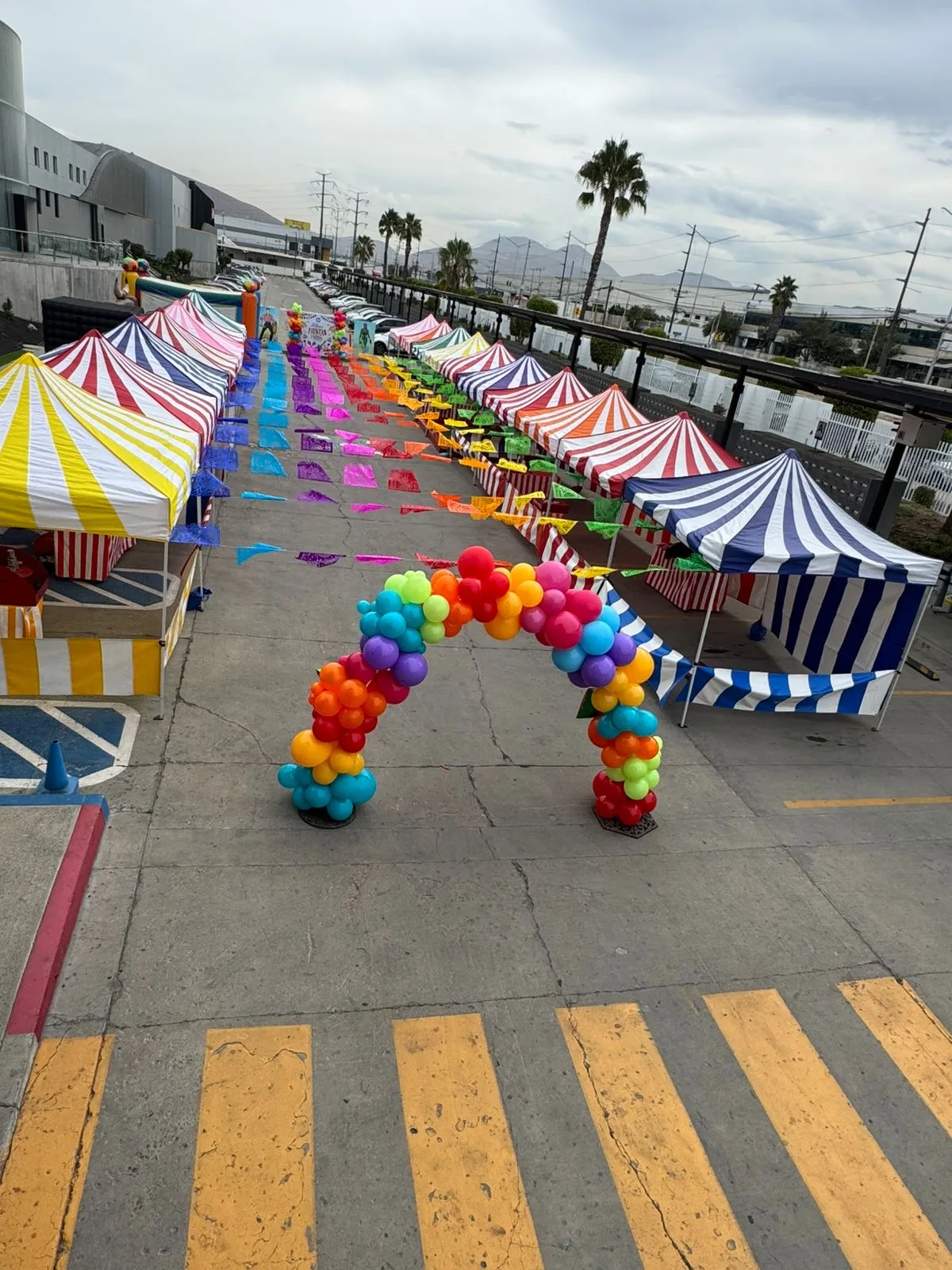
A carnival booth is the striped, high-peak canvas structure that anchors nearly every carnival-style event — 5x5 for a single game or ticket window, 8x8 for concessions or a photo backdrop, 10x10 for a wider prize display or a booth that needs room for two attendants working side by side. The red-and-white stripe is the visual shorthand that tells a crowd 'this is a carnival' before a single ring gets tossed. As part of a full event My Little Carnival produces in Fletcher Hills, booths show up in rows — game stations along one line, concessions and prize windows along another — built to hold up outdoors on a school blacktop, a park lawn, or a driveway, whatever the venue calls for. This is a local guide to carnival booths in Fletcher Hills: what the sizes are actually for, how many a typical event uses, and what's involved in setting a row of them up on-site.
Fletcher Hills sits inside the Cajon Valley Union School District boundary for its elementary and middle schools, with Grossmont Union High School District covering the high-school-age population — Grossmont High School itself sits right at the edge of the neighborhood. Most booth-heavy events in the area are school carnivals on campus blacktops, though Harry Griffen Regional Park and the Fletcher Hills Recreation Center & Pool see their share of community and birthday-scale bookings where a family or group wants the same striped-booth look without a school gym in the background.
My Little Carnival builds carnival booth setups into every event across the Fletcher Hills area, sizing the count and mix of booths to the footprint of the campus, park, or backyard being used.
What a row of carnival booths looks like in Fletcher Hills.
A school carnival on a Cajon Valley Union blacktop typically runs 6 to 10 booths in a horseshoe or straight-line layout — enough for four or five games, a couple of concession stations, and a prize or ticket window at the entrance closest to where families park. A backyard birthday scales down to two or three: one game booth, one concession counter, maybe a photo-booth backdrop tucked against the fence. A corporate or community event at a space like Harry Griffen Regional Park sits in between, often 8-12 booths spread across a wider grass footprint with more room between each one.
Every booth in the row is the same product at a different size — same peaked canvas roof, same red-and-white stripe, same steel frame — reconfigured by what's inside it. A 5x5 works fine for a single ring-toss or a ticket table; an 8x8 gives a concession machine and its operator room to move; a 10x10 is what shows up when a booth needs to double as a photo backdrop or hold a larger prize wall. My Little Carnival sets the mix based on the event type and the guest count, not the other way around.
What's typically included.
-
Booth structure and frame.
Steel-framed, high-peak canvas booths in 5x5, 8x8, and 10x10 — the same striped structure used across every event My Little Carnival produces, delivered clean and fully assembled on-site.
-
Size mix matched to layout.
The combination of 5x5, 8x8, and 10x10 booths is sized to the venue and guest count — a school blacktop, a park lawn, or a backyard each call for a different row length and spacing.
-
Game, concession, or prize fit-out.
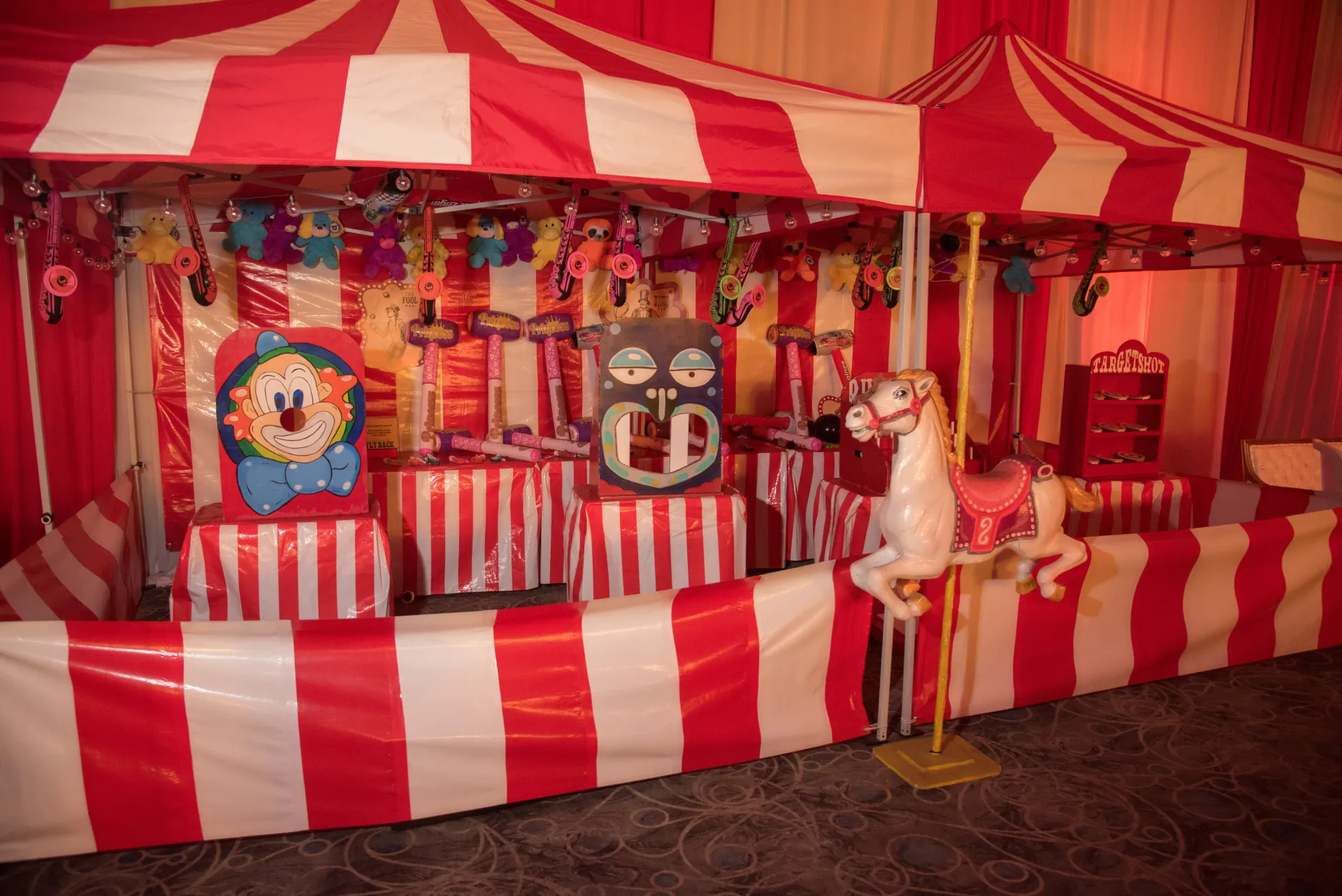
Each booth arrives configured for its role — game equipment and prize shelving, a concession machine and serving counter, or an open prize/ticket window — based on what's booked for the event.
-
Skirting and signage.
Full canvas skirting hides equipment and storage below the counter line; header signage identifies each booth's game or offering from across the row.
-
Setup and breakdown.
Crew delivers, assembles, and anchors every booth before the event starts, then strikes the full row afterward. No lifting or assembly falls to volunteers.
-
Attendants — optional.
Booths themselves don't include staffing by default. An attendant per booth is available as an add-on, quoted per booth or per hour, or the booths can be volunteer-run — common at school carnivals where PTA parents work the games.
Typical timeline for carnival booths in Fletcher Hills.
- 1
6-10 weeks out
Guest count and venue are settled, and the booth count and mix (games vs. Concessions vs. prize windows) gets scoped into a quote.
- 2
2-3 weeks out
Layout is finalized against the specific site — blacktop dimensions, park lawn footprint, or backyard fence lines — and any permit paperwork for a school or city park is confirmed.
- 3
Day before / morning of
Crew arrives ahead of the event start, unloads, assembles, and anchors the full booth row, then stocks each booth's games, concessions, or prize inventory.
- 4
Event day + breakdown
Booths run for the contracted window; crew strikes the row and clears the site within roughly an hour of the last guest leaving.
Specifics for Fletcher Hills.
- Surface requirements: Booths anchor the same way on blacktop, grass, or concrete — sandbags or weighted bases substitute for stakes on paved surfaces like the Cajon Valley Union campuses' blacktop play areas.
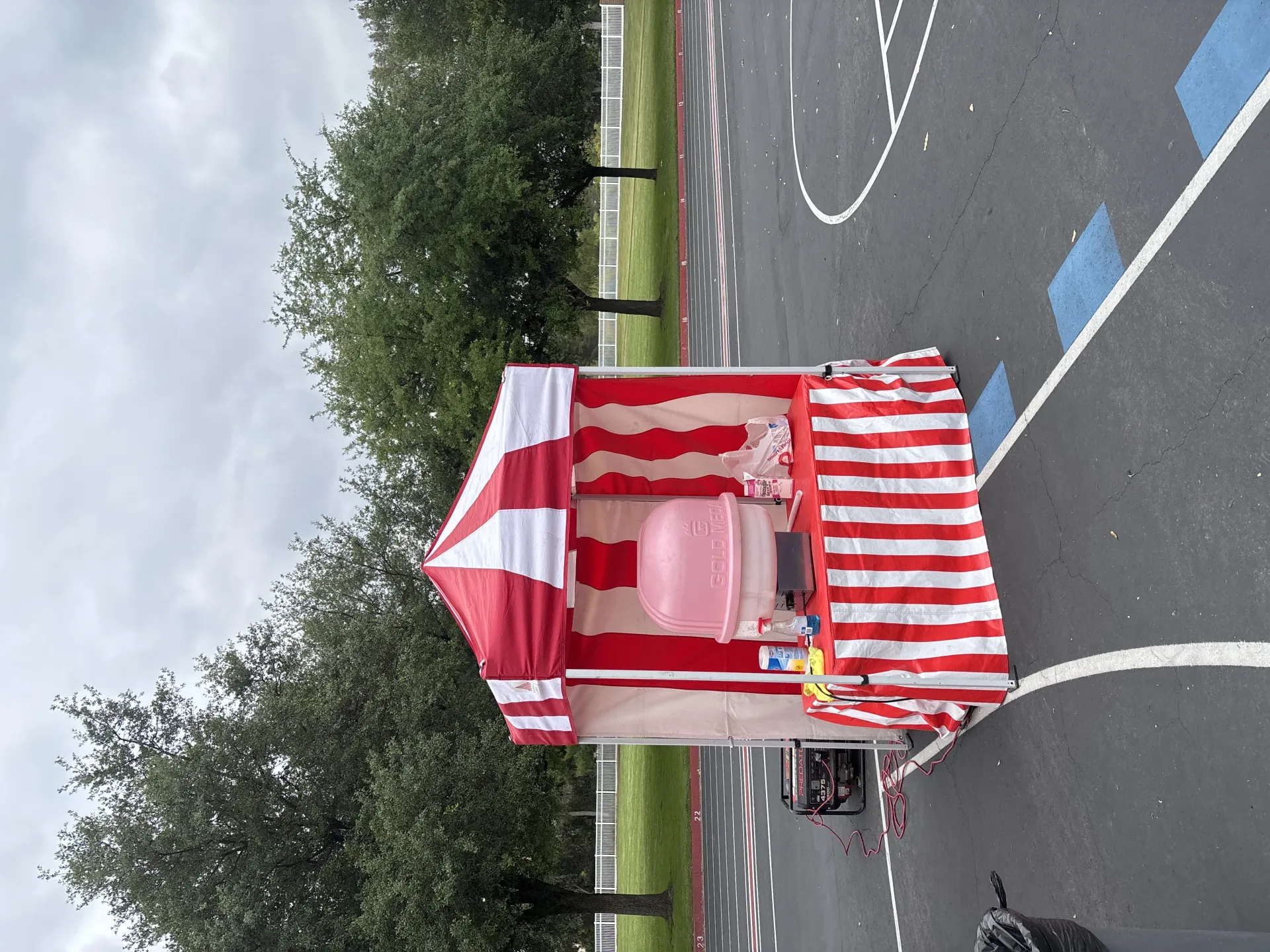
- Power for concession booths: A cotton candy spinner or popcorn popper needs its own circuit. My Little Carnival brings a generator when a site's outdoor outlets — common at Harry Griffen Regional Park — won't cover the load.
- School district paperwork: Events on Cajon Valley Union or Grossmont Union campuses typically require a Certificate of Insurance naming the district as additional insured, arranged through the school's office ahead of the date.
- Park permits: A booth row at Harry Griffen Regional Park or a similar public space needs a county or city park-use permit in addition to any vendor paperwork — worth starting early if the date is a Saturday.
- Backyard footprint: Two 8x8 booths plus a walking lane fit most Fletcher Hills backyards comfortably; a wider 10x10 setup wants closer to 15 feet of clearance along the fence line.
- Weather: Southern California's typically dry climate keeps most outdoor booth setups low-risk, but a canopy angle or sidewall is worth adding for peak-summer sun exposure over concession stations.
Common questions.
How many booths does a typical event need?
A rough guide: one booth per 40-50 guests keeps lines moving. A 150-guest backyard party runs fine on 2-3 booths; a 300-plus guest school carnival usually wants 8-12.
Do booths come with an attendant?
Not by default. An attendant per booth is available as an add-on, quoted per booth or per hour — or the booths can be run by volunteers, which is standard at most school carnivals.
Can booths be set up on a driveway or concrete patio?
Yes. Booths anchor with weighted bases instead of stakes on any hard surface, so a driveway, patio, or blacktop play area all work the same as grass.
Do we need a generator?
Game booths generally don't need power. Concession booths — cotton candy, popcorn, snow cones — do, and My Little Carnival brings a generator whenever the site's outlets won't cover the load.
What size booth should we pick?
5x5 fits a single game or a ticket table. 8x8 is the standard for concessions or a photo backdrop. 10x10 is worth it for a larger prize wall or a booth two attendants need to share.
Is a permit needed to set up booths at a park?
Any public park in the area, including Harry Griffen Regional Park, requires a park-use permit separate from the event vendor paperwork — best to start that process as soon as the date is set.
About this guide.
This local guide to carnival booths in Fletcher Hills was compiled by My Little Carnival, a division of My Little Carnival producing school carnivals, birthdays, and community events across San Diego County.
Helpful local references: Cajon Valley Union School District · Grossmont Union High School District
Carnival Booths in nearby cities.
Planning an event with carnival booths in Fletcher Hills?
Share your venue, guest count, and rough date — and My Little Carnival will scope a booth mix and send a quote sized to your event.
Get a quote →