
grand openings in Hillcrest.
A grand opening is the public launch event a business stages when a new store, restaurant, or brand location starts serving customers, usually scheduled on or near the first day the doors are open to anyone. The goal is straightforward: give the neighborhood a reason to stop walking, and give the launch something worth posting. Carnival production is what turns that into a physical scene. Booths get laid out for the angles a phone camera reads well, signage and prize ribbons carry the business's own colors, concessions run for the length of the window, and a photo backdrop with props supplies the shot guests actually want to share. Professional attendants operate every station, which keeps owners and staff free to work the floor and talk to the people walking in. This is a local guide to grand openings in Hillcrest: what a carnival launch activation includes, how a dense uptown grid of narrow storefronts changes the logistics, and what to settle before the date gets announced.
Hillcrest packs its commercial life into a handful of walkable blocks, mostly along University Avenue and Fifth Avenue, where storefronts, restaurants, and medical offices sit shoulder to shoulder with almost no private lot behind them. That shapes every launch in the neighborhood. A storefront activation typically claims the sidewalk apron or a short run of curb frontage instead of a parking field, and anything bigger borrows public ground: Hillcrest Pride Plaza for a street-level opening that wants hardscape and visibility, Trolley Barn Park or Sixth Avenue Playground for a family-facing launch with room to spread out, and Balboa Park just to the south when a brand needs real acreage. Households in these blocks fall under San Diego Unified School District, so retailers aiming at parents tend to plan around the district calendar rather than against it.
My Little Carnival produces grand opening activations for businesses across San Diego County, scaled from a two-booth setup in front of a single storefront up to a full plaza footprint with branded concessions and a dedicated photo backdrop.
What a grand opening activation looks like in Hillcrest.
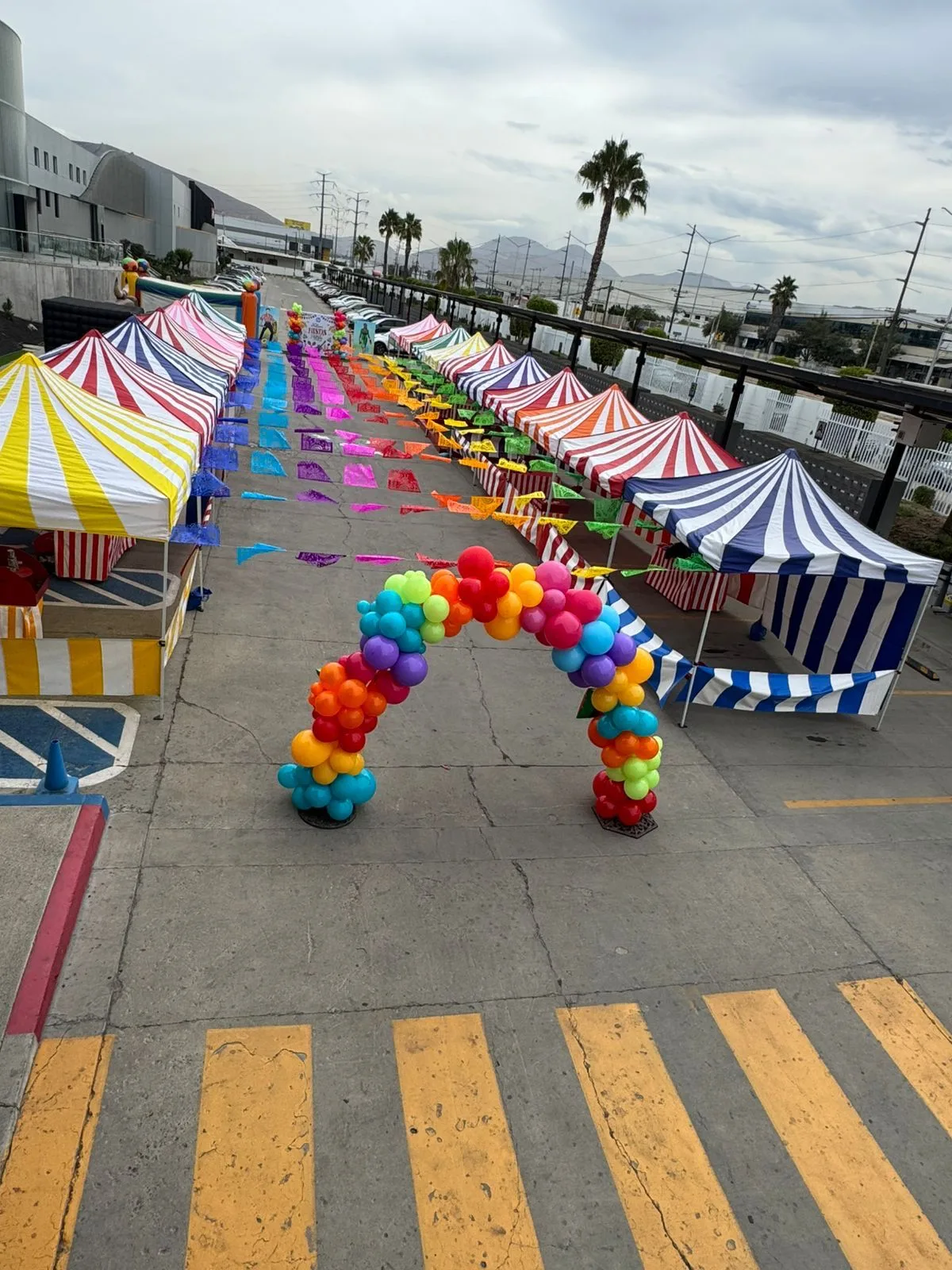
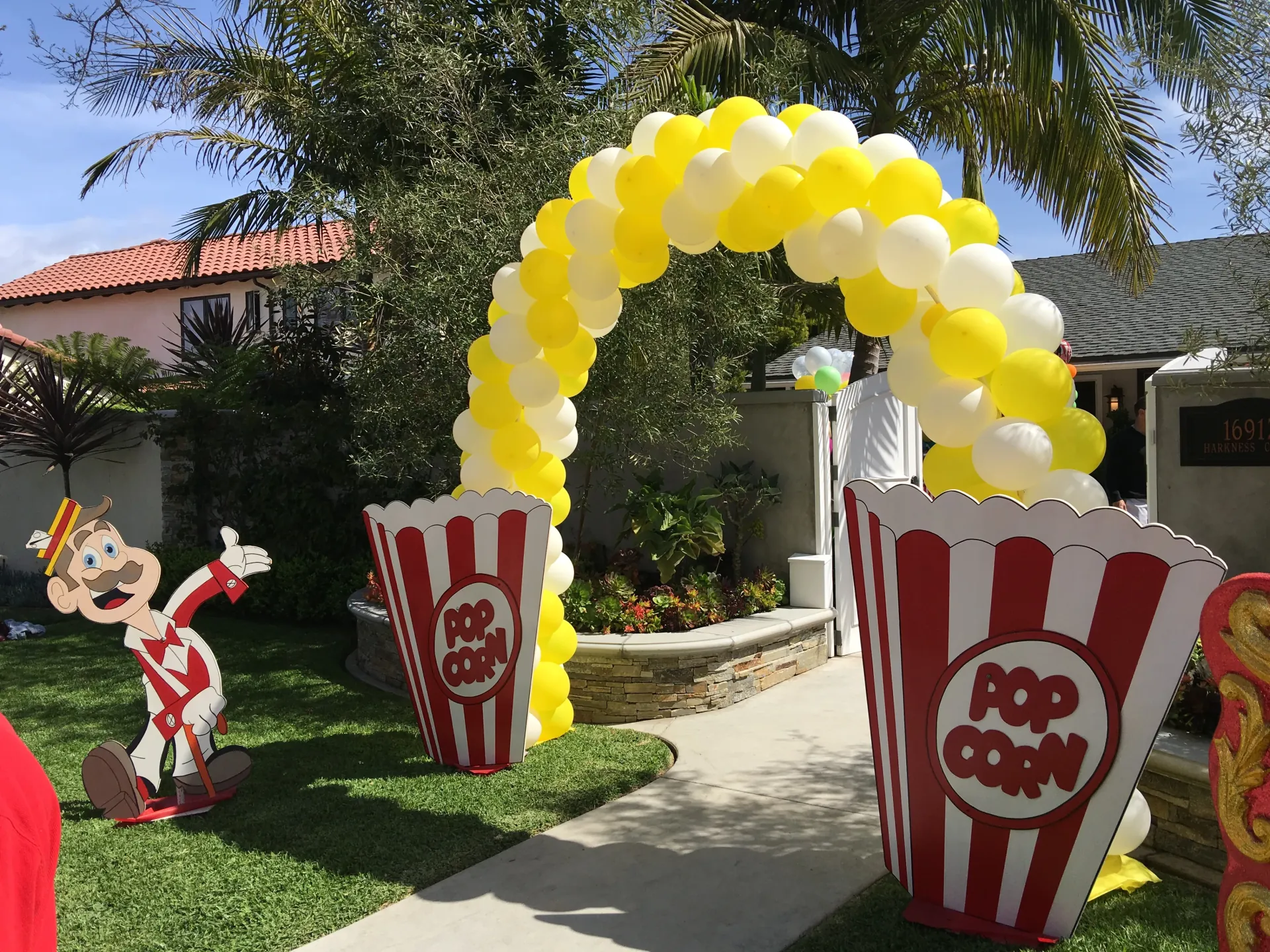
Load-in is the part that takes the most planning here, because the crew is working a curb rather than a parking field. Equipment comes off the truck at a confirmed loading spot, moves down the sidewalk by hand, and gets weighted rather than staked once it lands on concrete. Two to three hours before doors open, the frontage starts reading as an activation: an arch over the entrance, striped booths squared to the building line so pedestrians can still pass, prize ribbons hung at eye level, and the photo backdrop angled to keep the storefront sign visible behind it.
The window itself usually runs two to four hours. People stop, play a round, take a picture, pick up something from the concession station, and drift inside, which is the whole mechanism the format is built on. Attendants keep every station moving so the owner is never pulled off the floor to referee a game. Pack-out happens the same day, generally inside ninety minutes of close, and on a corridor this tight that matters: the sidewalk goes back to the evening dinner crowd along University Avenue with no trace of the setup left behind.
What's typically included.
-
Booths built for the camera.
Striped booths positioned for the angles a phone actually shoots, squared to the storefront and working with daylight, so every station doubles as somewhere guests want to be photographed rather than just a place to play.
-
Branded signage and prize ribbons.
Booth signage and prize ribbons are customized to the business's colors and launch messaging, so whatever ends up in a guest's photo carries the brand instead of generic carnival graphics.
-
Concessions in your colors.
Popcorn and cotton candy stations run the full window, with packaging often branded to match the launch. They pull attention from a block away and give a passerby a reason to stop before knowing what the business even sells.
-
Photo backdrop and props.
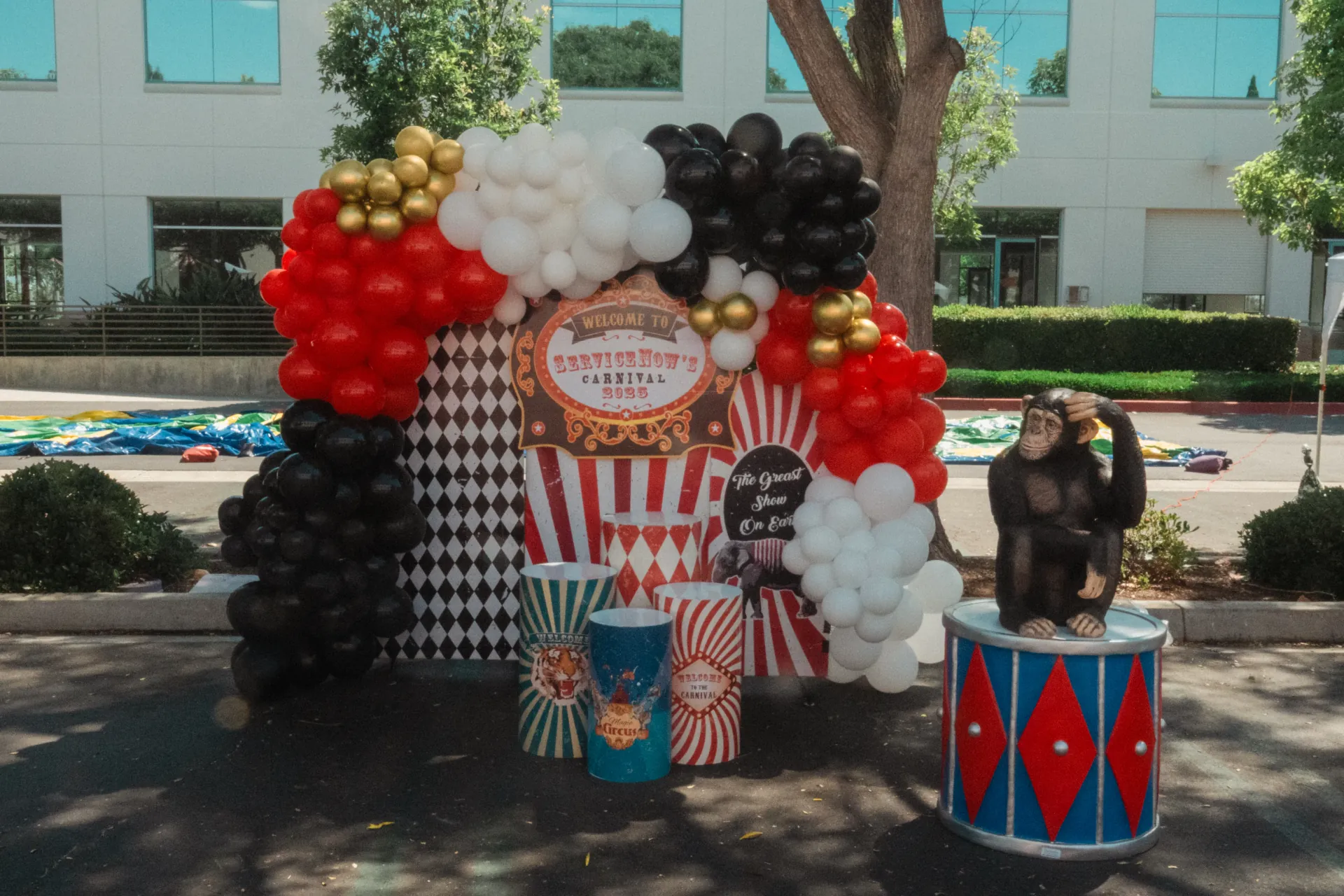
A dedicated backdrop with props, staged where the light cooperates, gives the launch one repeatable shot that guests keep returning to. Gala-tier decor is available when the activation is the centerpiece of a campaign rather than a side attraction.
-
Professional attendants.
Every booth and concession station is run by My Little Carnival staff for the contracted window, so the owner, the manager, and the sales floor stay pointed at the people coming through the door.
-
Setup, breakdown, and insurance paperwork.
Crew handles load-in, placement, and same-day pack-out, and My Little Carnival issues the Certificate of Insurance that landlords, property managers, and City of San Diego permit applications routinely ask for.
Typical timeline for grand openings in Hillcrest.
- 1
6 to 8 weeks out
The opening date gets pinned to the build-out schedule and scope is sketched: booth count, concession lineup, how deep the branded decor goes, how many hours the activation stays open. If any of it touches sidewalk, plaza, or street space, the City of San Diego permit conversation starts here.
- 2
3 to 4 weeks out
Scope locks, a deposit holds the date, and permit paperwork plus the landlord COI go in. Branded artwork for signage and ribbons is due now so it can be produced in time. Launch announcements go out with a confirmed address and start time.
- 3
Week of
A site walk confirms exactly where booths sit relative to the door, the curb, and the neighboring tenant's frontage. Loading spot, power source, and generator need are settled. Counts on branded prizes and giveaway items are finalized.
- 4
Opening day
Crew arrives two to three hours ahead, stages the footprint, and brings concession machines up to temperature. Attendants take their stations before the first guests arrive, the activation runs the contracted window, and the site is cleared the same day.
Specifics for Hillcrest.
- City of San Diego permits: Any part of a Hillcrest activation that spills onto public sidewalk, curb, or street generally calls for a special event permit from the City of San Diego, and a booking at Hillcrest Pride Plaza runs on its own approval track rather than a simple reservation. Allow several weeks either way. A footprint that stays entirely on private property may need nothing beyond landlord authorization and a vendor COI, which is still worth getting in writing.
- Frontage width: Storefront widths along University Avenue and Fifth Avenue vary block by block, and outdoor dining decks have already claimed part of the curb in places. Two booths and one concession station fit a compact frontage. Past roughly four booths, the answer is usually plaza hardscape or a park lawn rather than trying to squeeze more onto the sidewalk.
- Power: Concession machines each want a dedicated 20-amp circuit, and older Hillcrest buildings rarely offer more than one exterior outlet. Most bookings in this part of the city plan on a generator, staged so its noise sits away from the entrance and the photo backdrop.
- Parking and load-in: On-street parking is metered and scarce through the core, and the crew needs a confirmed spot near the door for the length of load-in. Businesses often arrange a temporary loading zone through their property manager, and name the nearest transit stop in the invite so guests are not circling the block.
- Timing: Weekend late morning into mid-afternoon draws the strongest walk-up crowd in the neighborhood. A weekday opening works when the launch is aimed at the lunch break or the after-work stretch, both dependable along University Avenue. A dinner-hour activation competes with a busy restaurant corridor for the same stretch of sidewalk.
- Park alternatives: When the guest list outgrows the frontage, Trolley Barn Park and Sixth Avenue Playground handle a neighborhood-scale crowd and Balboa Park absorbs the largest layouts. Each needs a City of San Diego Parks and Recreation reservation, on a different timeline than a sidewalk permit.
Common questions.
Do we need a permit to set up in front of our Hillcrest storefront?
If any part of the setup sits on public sidewalk, curb, or street, plan on a City of San Diego special event permit and start it several weeks ahead. A footprint contained entirely on private property, a leased lot or an interior courtyard, usually needs only landlord sign-off and a vendor certificate of insurance. Hillcrest Pride Plaza has its own approval process, so treat that as a separate lead time rather than an afterthought.
How much room does the activation actually need?
Two booths and one concession station work in roughly 15 by 25 feet, which most Hillcrest frontages can give up without blocking pedestrian flow. A four to six booth production with a photo backdrop and an entrance arch wants closer to 30 by 40 feet, and in this neighborhood that generally means moving to a plaza or a park footprint.
Can our branding go on the booths and the prizes?
Yes, and for a launch it is the point. Signage and prize ribbons are customized to your colors and message, concession packaging can be branded, and your own merchandise, discount cards, or co-branded prizes can be folded into the prize inventory at each booth. Artwork and quantities should be confirmed about three weeks out so everything is produced on time.
How long should a grand opening activation run?
Two to three hours covers most storefront launches. A three-hour window gives the opening rush time to clear, a second wave of walk-ups time to arrive, and posts from the first hour time to pull in people who missed the start. Four hours or a multi-day run suits a larger brand activation, and those are quoted individually.
What does a grand opening cost?
Most run between $5,000 and $15,000, driven by the size of the activation, how deep the branded decor goes, and how many hours it stays open. Multi-day runs and multi-location launches get custom quoted rather than priced off a package tier.
What is handled separately from the carnival scope?
The activation covers booths, games, concessions, decor, the photo backdrop, attendants, setup, and breakdown. Ribbon-cutting logistics, press and influencer outreach, a full catering order, live music, and anything staged inside the store are arranged by the business and run in parallel without changing the carnival scope.
About this guide.
This local guide to grand openings in Hillcrest was compiled by My Little Carnival, the San Diego County operation of My Little Carnival, producers of grand openings, brand activations, school carnivals, and backyard birthdays across Southern California.
Helpful local references: City of San Diego Parks and Recreation Department · San Diego Unified School District
Grand Openings in nearby cities.
Opening something new in Hillcrest?
Send the date, the address or venue type, and the hours you want the activation open, and My Little Carnival will scope a production sized to your frontage and your launch-day goals.
Get a quote →