
carnival booths in Julian.
A carnival booth is the red-and-white striped structure that anchors nearly every game, concession, prize, or ticket station at a carnival-style event. Booths come in three working sizes — 5x5 for a ticket window or small prize table, 8x8 for a standard game station, and 10x10 for concessions or anything needing counter space and storage. The striped canvas and peaked roofline are the visual shorthand for 'carnival' anywhere in Southern California, and in Julian's small-town setting they read the same way at a school fall festival on a blacktop as they would at a larger fairground. This is a local guide to Carnival Booths in Julian — what the sizes look like, how they get used across town venues, and what's involved logistically for a full event. As part of a complete event My Little Carnival produces here, booths arrive already built out — games loaded, concession equipment installed, signage hung — rather than as a bare tent a host has to dress themselves.
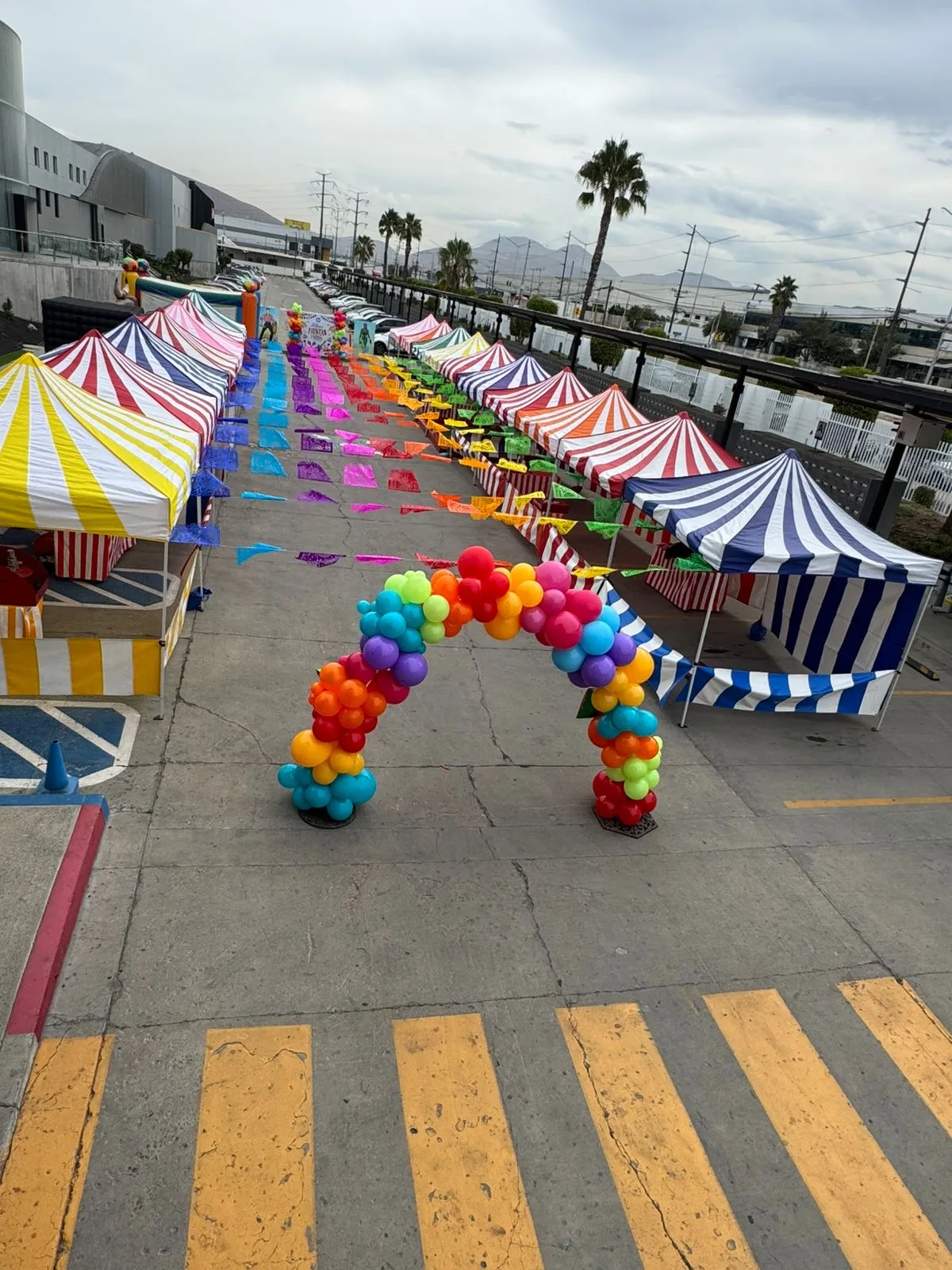
Julian is small enough that most carnival-scale events happen at one of a handful of venues — the blacktop or multipurpose spaces at campuses in the Julian Union Elementary School District and Julian Union High School District, the open lawn at Jess Martin County Park, or the rustic grounds at Julian Ranch when an event wants a rural, string-lights feel. Booth counts run smaller here than in denser parts of San Diego County — four to eight booths covers most school carnivals and private events in town, rather than the double digits a larger suburban campus might book.
My Little Carnival delivers carnival booths as part of full event productions across Julian and the surrounding backcountry, sized to fit the town's smaller venues and narrower access roads.
How carnival booths show up at an event in Julian.
At a typical Julian event, booths get arranged in a loose line or horseshoe depending on the site — a straight row along one edge of a school blacktop, or a wider arc on the grass at Jess Martin County Park where there's room to spread out. A 10x10 concession booth anchors one end near whatever power source is available; game booths (8x8, sometimes 5x5 for younger-kid stations) line up along the walking path so guests can see the full lineup before choosing where to play. A ticket or check-in booth sits near the entrance.
Because Julian events tend to run smaller — a school carnival, a private ranch event, a community gathering — four to eight booths is the common range, covering a mix of two or three games, one concession station, and a prize or ticket window. Booths arrive already dressed for the event: game boards mounted, prize shelving stocked, concession equipment installed and tested, so the layout goes from empty field to running carnival in the hours before doors open, all as part of the full event My Little Carnival sets up on site.
What's typically included.
-
Booth structure & sizing.
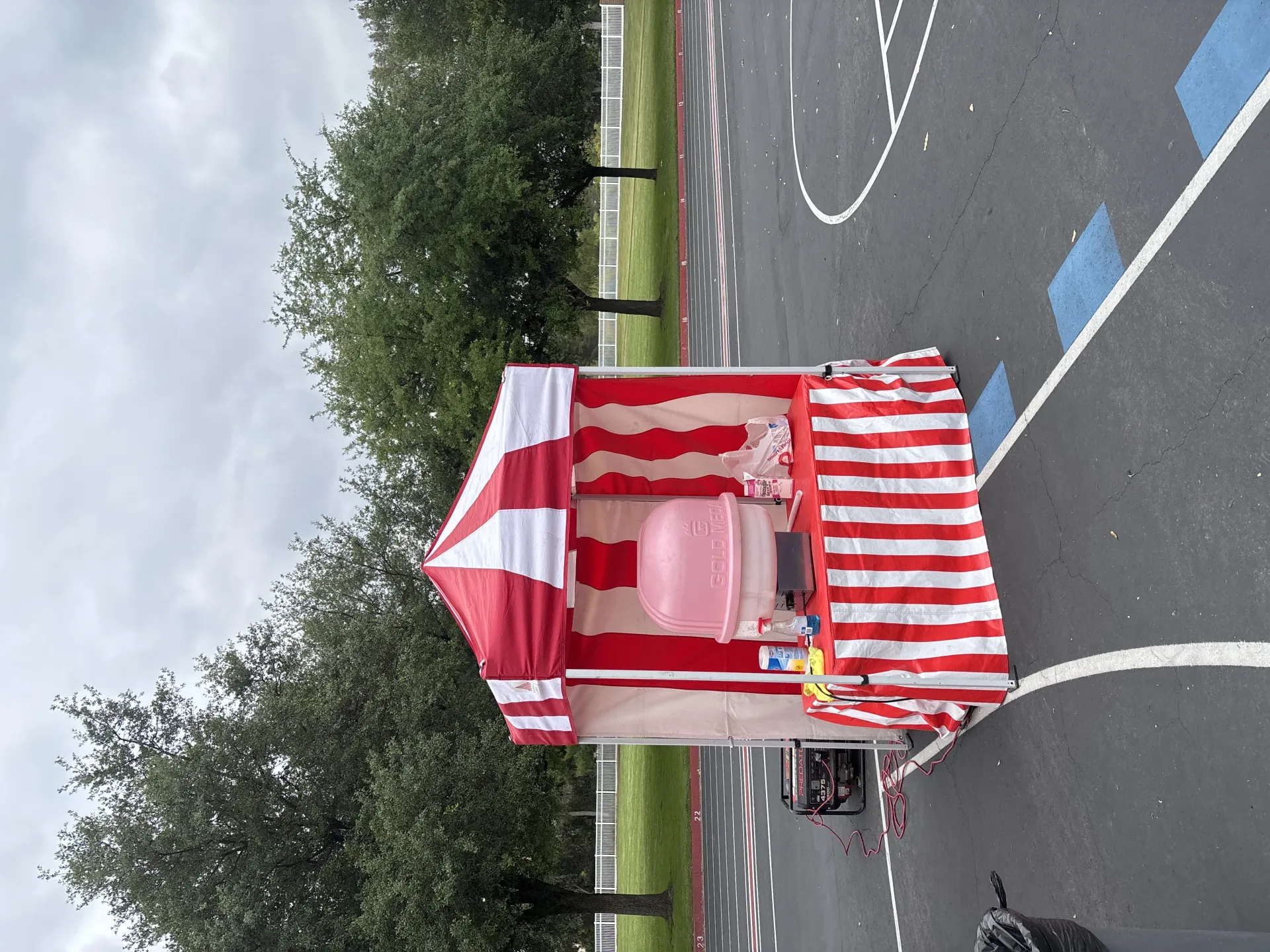
5x5, 8x8, and 10x10 striped tent booths, chosen by function — ticket windows and small prize tables in 5x5, most games in 8x8, concessions and larger prize walls in 10x10.
-
Game & concession build-out.
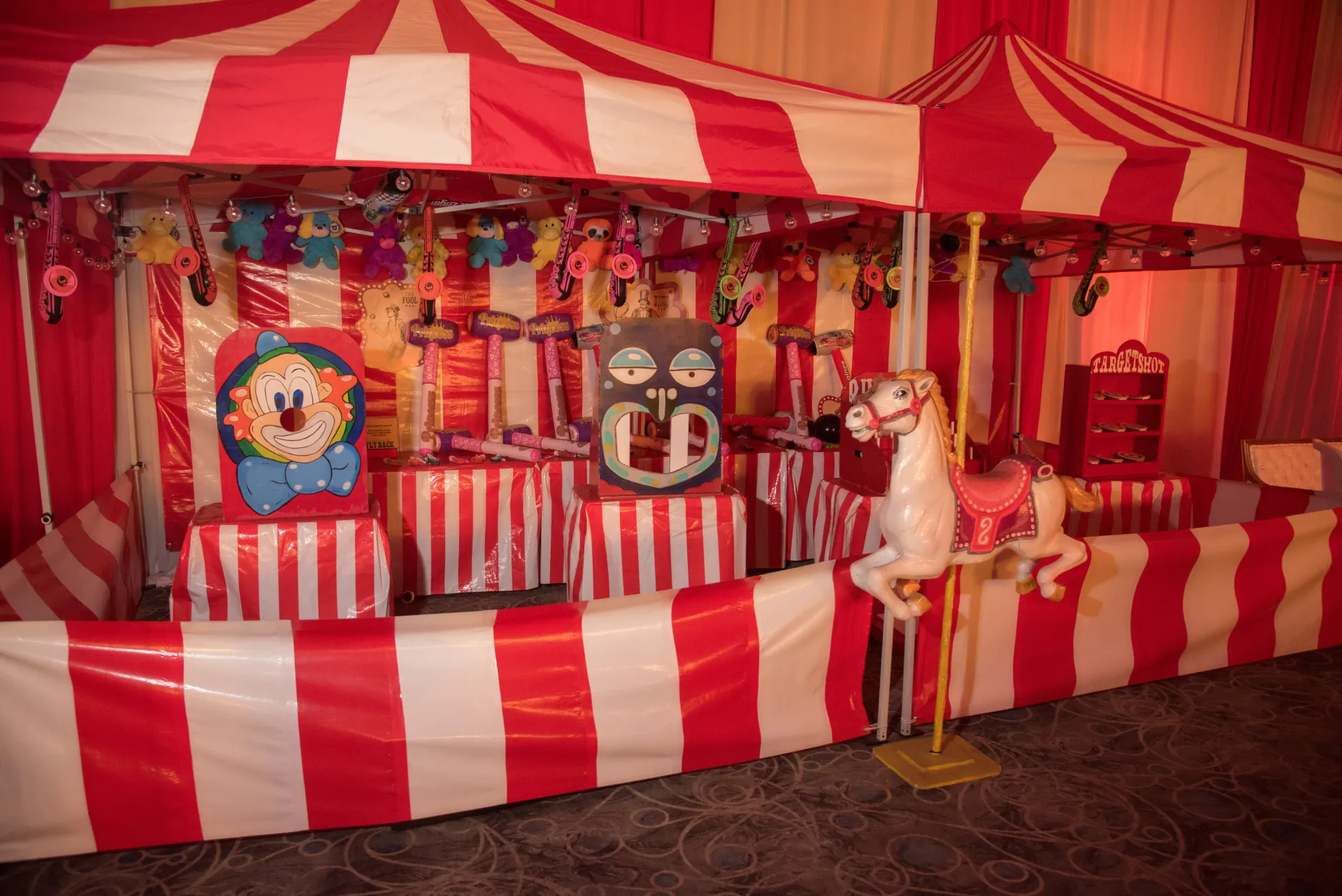
Booths arrive built out for their role — game boards and targets mounted, concession equipment installed, prize shelving stocked and hung, signage in place.
-
Delivery & setup as part of the event.
Booths are delivered, positioned, and assembled on site as part of the full event My Little Carnival produces — not dropped off flat-packed for a host to assemble.
-
Weighting & anchoring.
Sandbags, stakes, or water-barrel weights matched to the surface — grass at a park, blacktop at a school, gravel or dirt at a ranch venue — so booths hold against wind.
-
Attendants, as an add-on.
Attendants are available as an add-on, quoted per booth or per hour, or booths can be volunteer-staffed — common for PTA-run school carnivals where parents work the games.
-
Breakdown.
Crew returns after the event to strike every booth, pack out equipment, and leave the site as it was found — no volunteer teardown required.
Typical timeline for carnival booths in Julian.
- 1
Inquire & scope
Share the event date, venue, and rough booth count; My Little Carnival sketches a layout and sends a quote sized to the site.
- 2
Quote & deposit
The booth mix — games, concessions, ticket or prize windows — gets finalized and a deposit holds the date, especially for busier fall and spring weekends.
- 3
Delivery & setup
Booths arrive as part of the full event build-out, positioned and assembled before doors open, with power and anchoring handled for the specific venue.
- 4
Event day & breakdown
Booths run for the contracted window, then crew strikes everything after the event — no equipment left behind for the host to manage.
Specifics for Julian.
- Surface variety: Julian venues span blacktop school yards, open grass at Jess Martin County Park, and gravel or dirt at rural properties like Julian Ranch — each surface changes how booths get anchored.
- Elevation & climate: Julian sits at a higher elevation than most of San Diego County, with cooler mornings and evenings even in Southern California's typically dry climate — worth factoring into concession choices.
- Power access: Rural venues in Julian don't always have accessible outdoor outlets near the layout. My Little Carnival brings a generator when a concession booth's equipment needs more power than the site can offer.
- Narrow access roads: Julian Ranch and similar backcountry properties are reached by narrower, winding mountain roads — delivery timing accounts for the drive up from town center.
- Permits: School events go through the office at campuses in the Julian Union Elementary School District or Julian Union High School District; community events on public land typically route through Julian Town Hall or the county parks department for a park-use permit.
- Booth count for smaller venues: Most Julian venues run smaller than suburban school campuses, so four to eight booths is typical — enough for a couple of games, a concession station, and a prize or ticket window without crowding the site.
Common questions.
Do carnival booths need power?
Concession booths — popcorn poppers, cotton candy spinners, snow cone machines — need a dedicated circuit. Game and ticket booths generally don't. Where a site's outdoor outlets can't cover it, My Little Carnival brings a generator.
What surface do booths need?
Grass, blacktop, gravel, and packed dirt all work. The anchoring method changes — stakes on grass, sandbags on blacktop or concrete, water-barrel weights where staking isn't possible — but the booth itself sets up the same way.
Are attendants included with the booths?
Not by default. Booths can be run by volunteers, which is common at school carnivals, or staffed by trained attendants as an add-on quoted per booth or per hour.
What sizes are available?
5x5 for ticket windows and small prize tables, 8x8 for most games, and 10x10 for concessions or anything needing counter space and storage.
How many booths does a small Julian event need?
Most events in town run four to eight booths — a couple of games, one concession station, and a ticket or prize window. Larger events at bigger venues can scale up from there.
What happens if it rains?
Booths are weatherproof canvas structures, but Southern California's typically dry climate keeps outdoor dates fairly low-risk even at Julian's higher elevation. A rain-date clause is worth discussing for winter bookings.
About this guide.
This local guide to carnival booths in Julian was put together by My Little Carnival, the San Diego County operation of My Little Carnival. My Little Carnival produces full carnival events — booths included — for schools, ranches, and community venues across the county's backcountry towns.
Helpful local references: Julian Union Elementary School District · Julian Union High School District
Carnival Booths in nearby cities.
Planning an event with carnival booths in Julian?
Share the venue, date, and rough guest count — My Little Carnival will scope a booth mix and send a quote sized to the site.
Get a quote →