carnival booths in Kearny Mesa.
A carnival booth is the striped, high-peaked tent structure that anchors a carnival's midway — the red-and-white canvas box where a game gets played, a prize gets handed over, or a snow cone gets scooped. Booths come in three standard footprints (5x5, 8x8, and 10x10) and function interchangeably as game stations, concession counters, prize windows, ticket booths, or photo backdrops depending on what a given event needs. A single event typically uses somewhere between four and fifteen of them, arranged in a line or horseshoe so guests can move from one station to the next. In Kearny Mesa, My Little Carnival brings carnival booths as part of a complete event production — school carnivals, corporate picnics, church festivals — rather than as a standalone rental. This is a local guide to what carnival booths are, how they're typically arranged, and what to expect logistically for an event in Kearny Mesa.
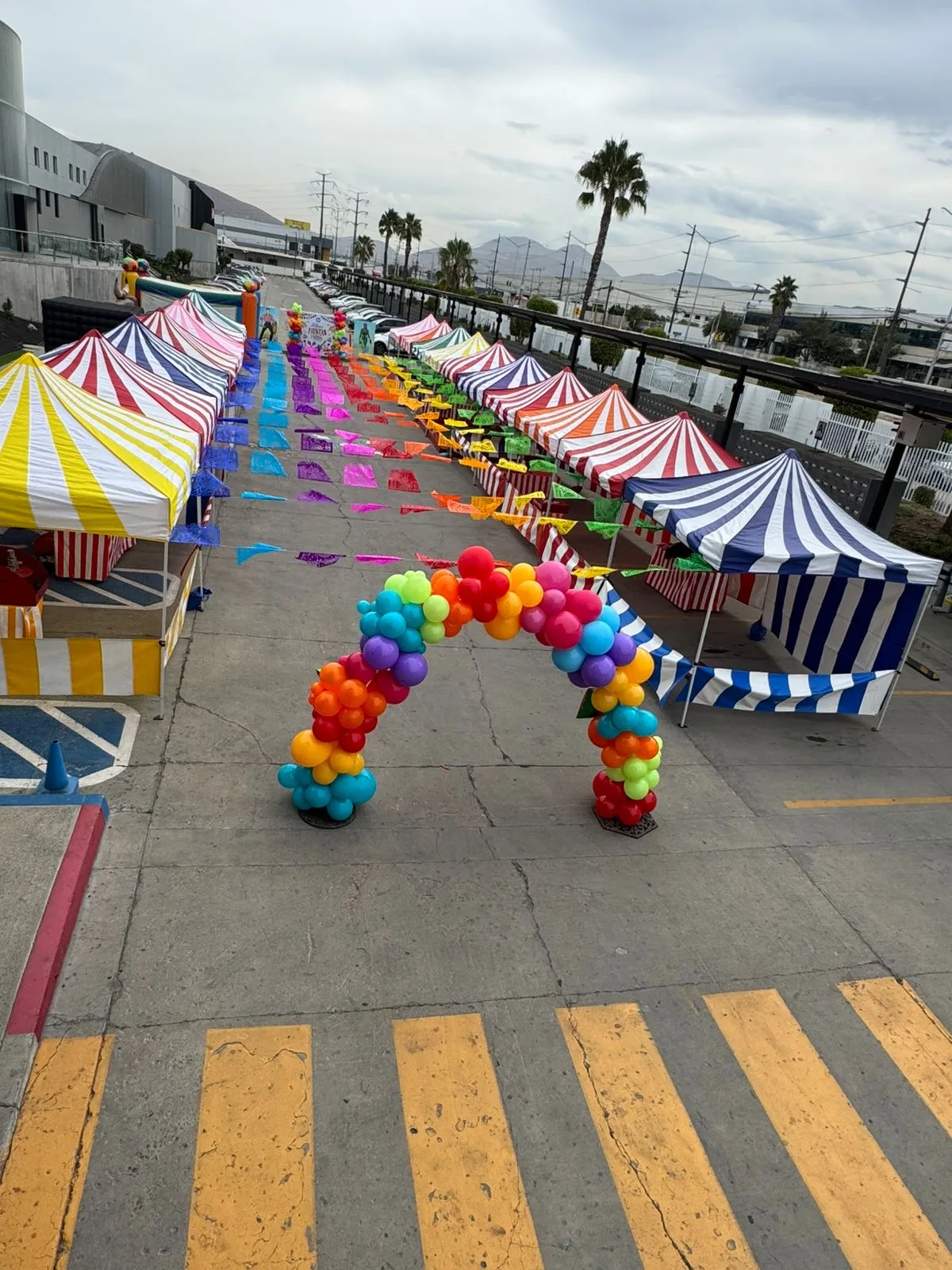
Kearny Mesa doesn't have the sprawling regional parks that some San Diego neighborhoods do, so most carnival-style events here lean on school blacktops within San Diego Unified School District, or on the paved and grass areas at Kearny Mesa Community Park and Kearny Mesa Recreation Center. Cabrillo Heights Neighborhood Park handles smaller neighborhood-scale gatherings. Booth layouts get sized to whichever surface is on offer — a school blacktop horseshoe looks different from a lawn-edge line at the rec center, and both differ from a parking-lot layout for a company gathering.
My Little Carnival produces carnival events across San Diego County, and Kearny Mesa bookings typically pull four to ten booths depending on whether the event is a school fundraiser, a company picnic, or a smaller community gathering.
What carnival booths look like at a Kearny Mesa event.
At a school carnival on a San Diego Unified campus blacktop, six to eight booths typically form a horseshoe around the play area — 8x8 units for most games, a 10x10 or two for concessions that need extra counter space, and a 5x5 tucked near the entrance for ticket sales. The layout keeps sightlines open so volunteers can see the whole event from any point, and leaves a center aisle wide enough for strollers and wheelchairs to move through comfortably.
At a corporate or community event — say, a company gathering staged on the grass at Kearny Mesa Community Park — booths tend to spread along a single line rather than a horseshoe, since there's no fixed backstop like a school building. One booth often gets repurposed as a photo backdrop rather than a game, another becomes a prize-redemption counter, and food-service booths cluster near whatever power source is available. The same striped booth structure adapts to whatever role the event needs.
What's typically included.
-
Booth size mix.
5x5 for ticket sales or compact games, 8x8 as the standard game and prize-window size, 10x10 for concessions or booths that need extra counter depth — mixed and matched to the event.
-
Full skirting and signage.
Red-and-white striping, front skirting, and header signage come standard on every booth, giving the midway its visual consistency regardless of what's happening inside each one.
-
Role-specific build-out.
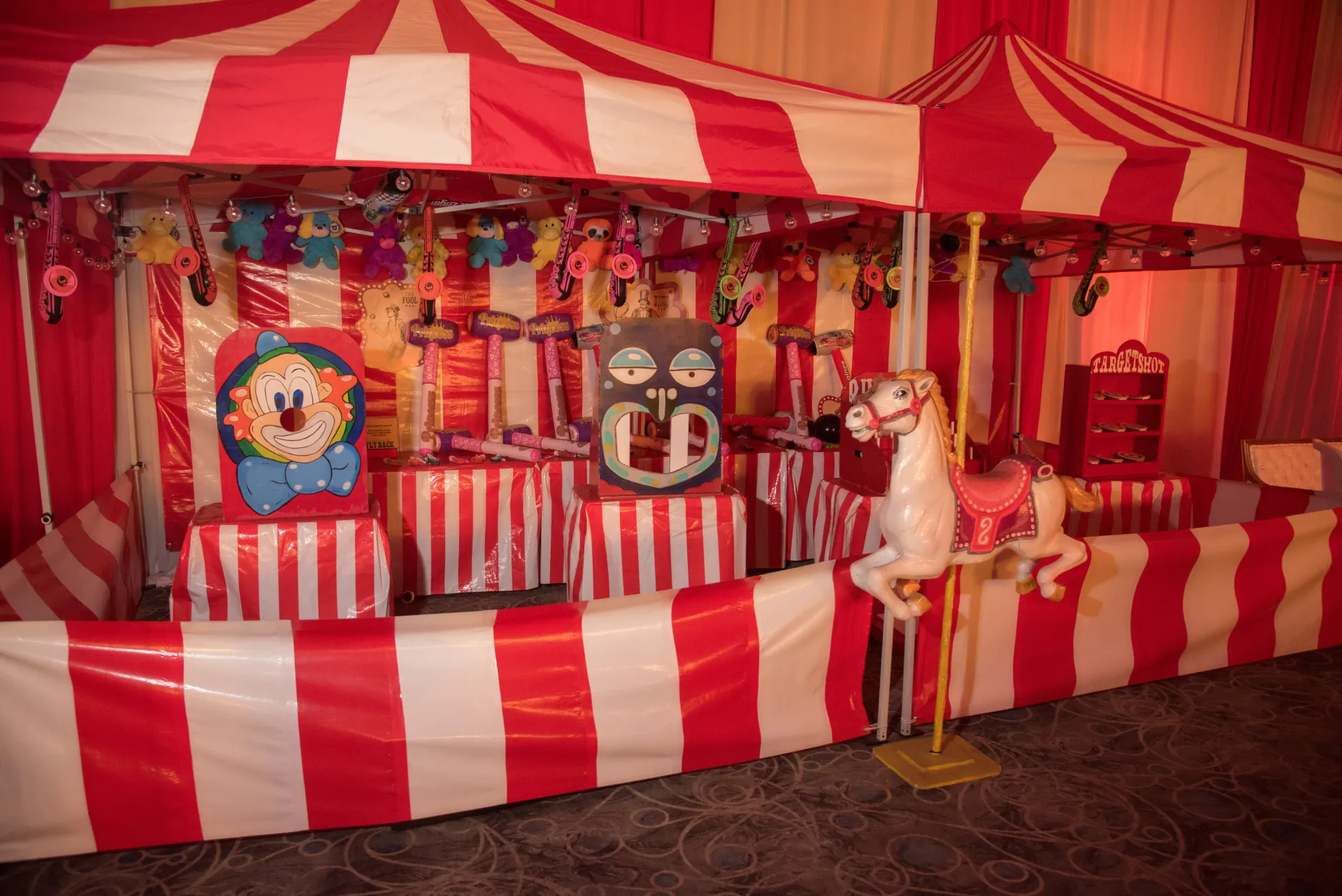
The same booth shell gets outfitted differently depending on assignment — a game shelf and prize pegboard for games, a serving counter for concessions, an open front for a photo backdrop.
-
Tables and interior fixtures.
Folding tables, prize racks, or concession counters are set inside each booth as needed so games and food service are ready to run without additional staging.
-
Delivery, setup, and breakdown.
Booths arrive and are assembled as part of the event build-out, then struck and removed at the end — no lifting or assembly required from the host or volunteers.
-
Attendants (optional add-on).
Booths are commonly volunteer-run at school carnivals. A trained attendant per booth is available as an add-on, quoted separately, for events that want the games staffed by the production team instead.
Typical timeline for carnival booths in Kearny Mesa.
- 1
Inquire & scope
Share the event date, venue, and rough guest count. Booth count and mix (games vs. Concessions vs. photo backdrop) get sketched out based on the space available.
- 2
Quote & deposit
A quote sized to the booth count and event scope goes out; a deposit locks the date. Layout gets refined once the exact venue footprint is confirmed.
- 3
Delivery & setup
Booths arrive as part of the full event build-out, typically a couple of hours before doors open, and are arranged according to the confirmed layout.
- 4
Event window & breakdown
Booths run for the contracted event window, then are struck and hauled out afterward. The venue — blacktop or grass — is left as it was found.
Specifics for Kearny Mesa.
- Surface type: School blacktops within San Diego Unified take weighted bases since staking isn't an option on pavement. Grass areas at Kearny Mesa Community Park and Kearny Mesa Recreation Center allow stakes, which hold better in wind.
- Facility permits: Campus events need a facility-use authorization through the school's front office; events at Kearny Mesa Community Park or the recreation center go through the standard City of San Diego park-use permit process.
- Booth count guidance: A loose rule: one booth per 40-50 guests keeps lines moving. A 200-guest school carnival runs comfortably on 4-6 booths; larger fall festivals or company events scale up toward 10-12.
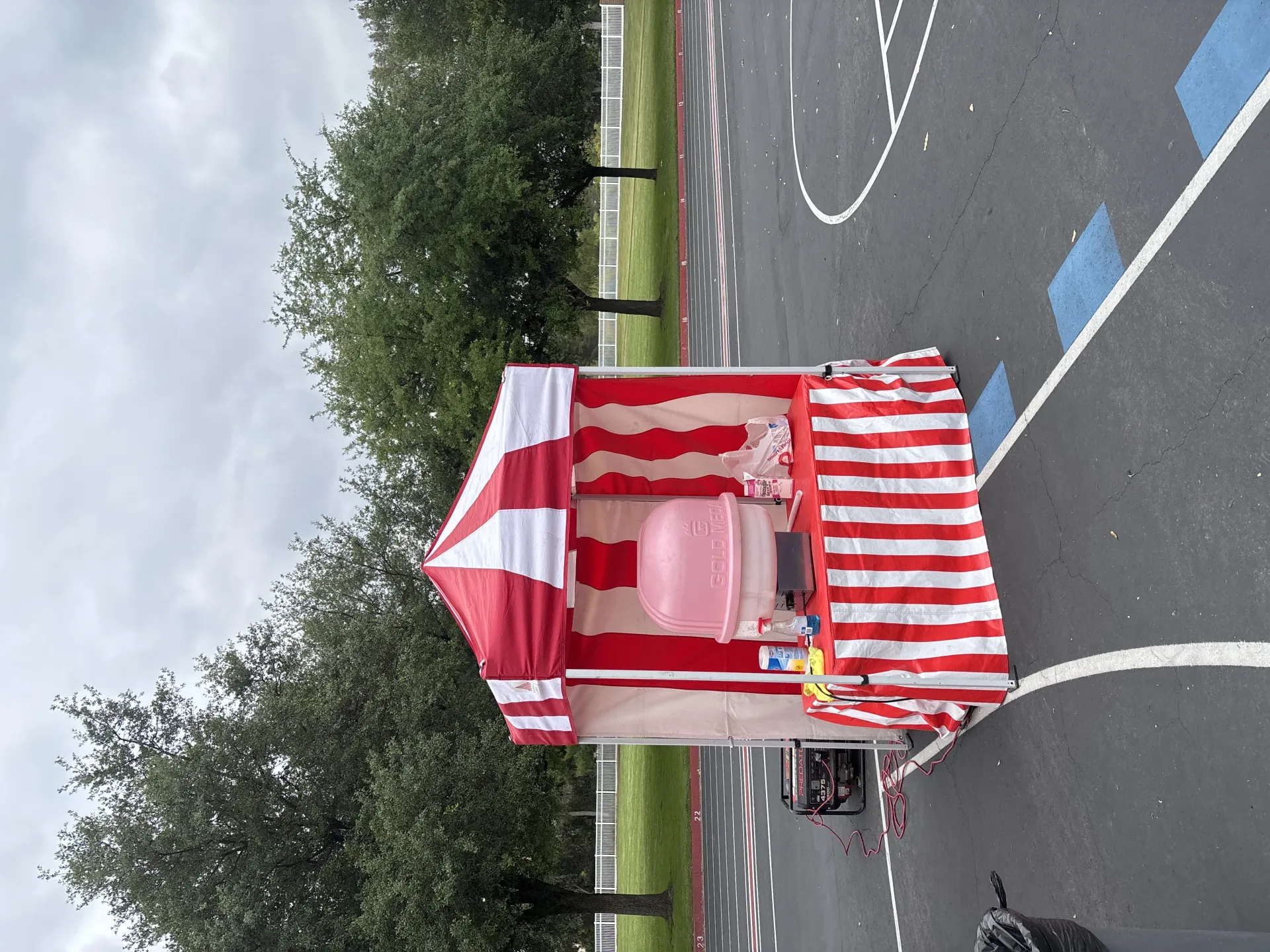
- Power for concessions: Concession booths (popcorn, cotton candy, snow cones) each need a dedicated circuit. On campuses or park areas without enough outdoor outlets, a generator gets brought in as part of setup.
- Photo-backdrop booths: A booth used purely as a photo backdrop needs no power — just a stable, level spot with decent lighting, which makes it one of the easier placements in a tight layout.
- Weather planning: Southern California's typically dry climate makes outdoor booth events low-risk most of the year. Booths are weighted or staked to handle typical coastal-adjacent breeze; a rain-date clause is worth building into any outdoor booking.
Common questions.
What's the difference between the 5x5, 8x8, and 10x10 booths?
5x5 is the smallest footprint, typically used for ticket sales or a simple single-game station. 8x8 is the standard size for most carnival games and prize windows. 10x10 gives extra counter depth, useful for concessions or games that need more interior space.
Do the booths need electricity?
Only if they're running a concession machine — popcorn poppers, cotton candy spinners, and snow cone shavers each need a dedicated circuit. Game booths, prize windows, and photo-backdrop booths don't need power.
What surfaces can booths be set up on?
Blacktop, asphalt, grass, and pavers all work. Blacktop setups use weighted bases; grass setups typically use stakes, which hold more securely in wind.
Are attendants included with the booths?
Not by default. Most school carnivals run booths with parent volunteers. A trained attendant per booth is available as an add-on, quoted separately, for events that want the games staffed by the production crew instead.
How many booths do we actually need?
A loose guide is one booth per 40-50 expected guests. A smaller company gathering of 100 people might only need 3-4 booths; a school carnival expecting 300-400 people typically runs 6-8.
What happens if it rains on the event date?
Outdoor bookings in Kearny Mesa are generally low-risk given the region's dry climate, but a rain-date or rain-contingency clause is worth discussing at the quote stage for any outdoor date, especially in the winter months.
About this guide.
This local guide was compiled by My Little Carnival, the San Diego County operation of My Little Carnival — producers of school carnivals, corporate events, and community carnivals across the region.
Helpful local references: San Diego Unified School District · City of San Diego Parks & Recreation
Carnival Booths in nearby cities.
Planning an event with carnival booths in Kearny Mesa?
Share your venue, date, and rough guest count, and My Little Carnival will scope a booth count and layout sized to your space.
Get a quote →