
carnival games in Mission Hills.
A carnival game is a single freestanding booth built around one classic activity — ring toss, bottle ring, dart-the-stars, plinko, balloon pop, milk-can toss, basketball pop, fishing for ducks — each stocked with its own prize inventory and sized to stand on its own in a lineup. As part of a full event build, My Little Carnival brings a matched set of these games into Mission Hills events for school carnivals, fundraisers, and corporate family days, typically six to twelve games depending on expected attendance. This is a local guide to carnival games in Mission Hills — how a lineup gets configured, what's needed on-site, and what's worth knowing before scoping a booking.
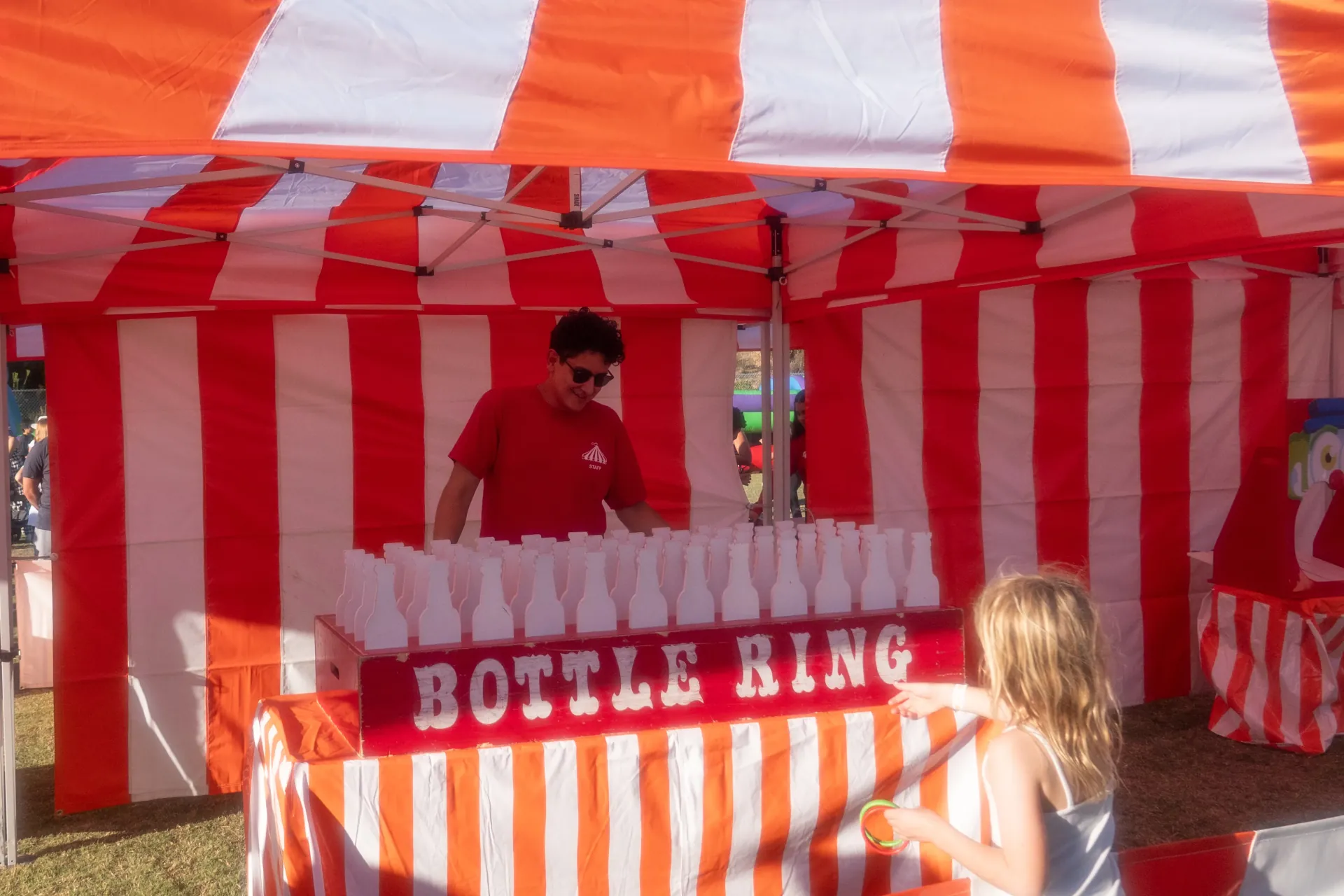
Mission Hills is a compact, canyon-edged neighborhood of older craftsman and Spanish-revival homes, which means most backyard bookings work with modest lot sizes rather than sprawling yards. Larger carnival-game lineups tend to move to the neighborhood's public green space instead — Pioneer Park and Presidio Park both see school and community events, and Inspiration Point's open lawn has hosted larger gatherings that need more room than a residential lot allows.
My Little Carnival produces carnival-game lineups across San Diego County, with Mission Hills bookings split fairly evenly between home lots and the neighborhood's canyon-rim parks.
How a carnival-game lineup comes together in Mission Hills.
Games are almost always arranged in a line or a loose horseshoe so guests can circulate and see the whole lineup at once. A backyard build in Mission Hills typically works with four to six games staged along a fence line or side yard, while a school carnival or fundraiser at a park venue can spread eight to twelve games across a wider footprint with room to spare between booths. Each game shows up as its own unit — its own frame, backdrop, and prize rail — so the layout can flex to whatever space is available.
Guests move through on a ticket or token system decided ahead of time: a fixed number of plays per ticket strip, or an unlimited-play wristband for a set window. Younger kids gravitate to balloon pop and fishing for ducks; ring toss, milk-can toss, and dart-the-stars pull the slightly older crowd who want the harder win. Whether an My Little Carnival attendant runs the booth or a parent volunteer steps in depends on the event — either way, the game itself doesn't change.
What's typically included.
-
Freestanding game unit.
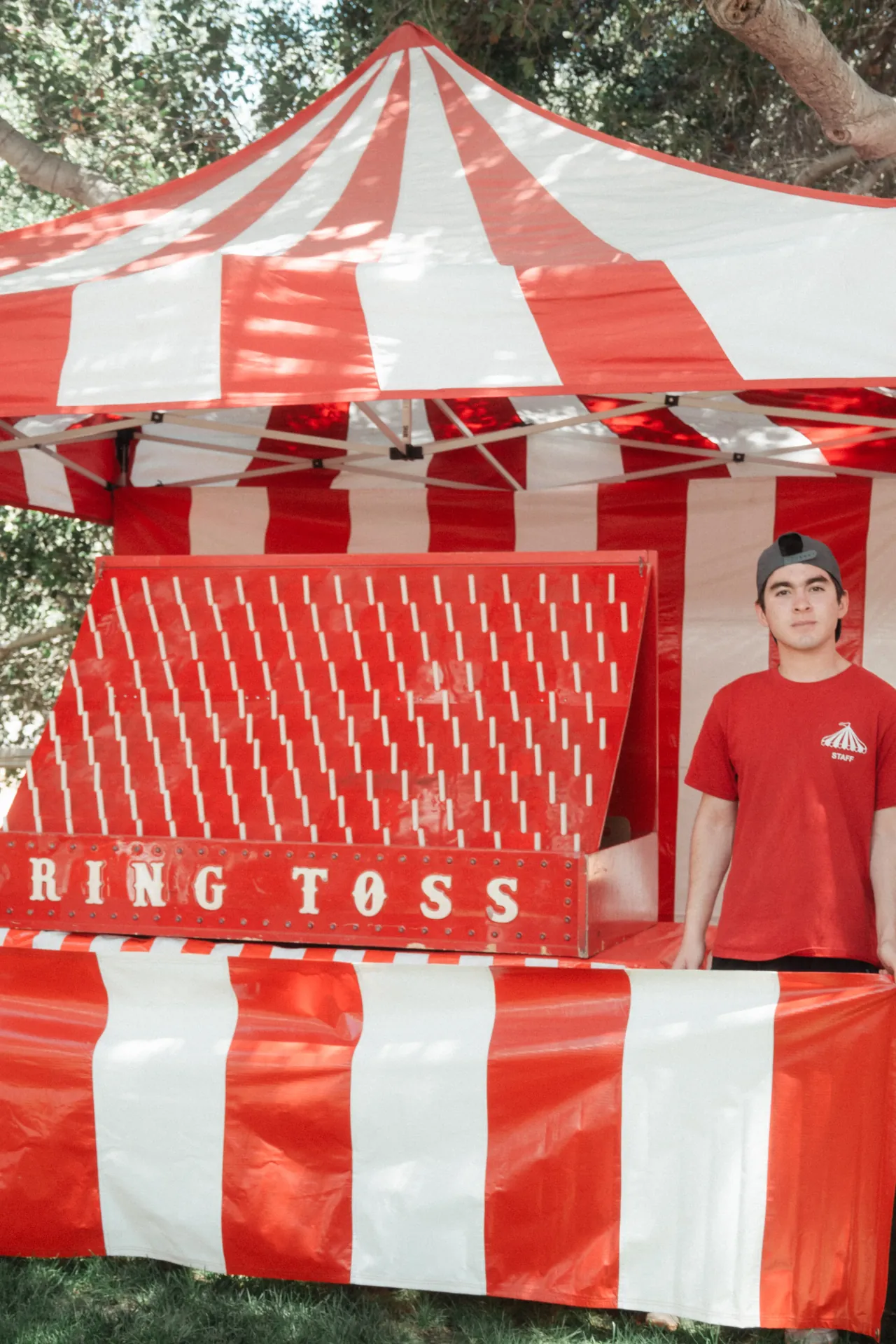
Each booth is a complete station — frame, striped backdrop, playing surface, and signage — delivered ready to play with no assembly required on-site.
-
Prize inventory.
Consolation and top-tier prizes are stocked per game, sized to match the expected guest count and booking length.
-
Ticket or token setup.
A ticket-strip or wristband model is built into the plan ahead of time, along with signage explaining play cost per game.
-
Delivery, setup, and breakdown.
Games arrive as part of the full event build, get positioned to the agreed layout, and are broken down and hauled out at the end of the booking window.
-
Attendants — optional add-on.
Games can be run by an My Little Carnival attendant per booth, quoted separately, or staffed with volunteers — common at school carnivals where parent volunteers cover the booths.
-
Layout planning.
The production team maps out spacing and orientation for the specific yard or park footprint before delivery day, so nothing gets crammed or blocks a walkway.
Typical timeline for carnival games in Mission Hills.
- 1
Inquire
Share the event date, rough guest count, and venue (backyard, school campus, or park) so the lineup size and attendant needs can be scoped.
- 2
Quote and booking
Game count, prize tier, and ticket-versus-wristband model get locked in. A deposit holds the date as part of the full event contract.
- 3
Delivery and setup
Games arrive as part of the event build, usually one to two hours ahead of start time, and get positioned to the planned layout.
- 4
Event day and breakdown
Games run for the contracted window — attendant-staffed or volunteer-run — then the crew breaks down and packs out at the end.
Specifics for Mission Hills.
- Footprint per game: Each booth needs roughly an 8x8 footprint plus a couple of feet of clearance for players standing in front. A six-game lineup fits most Mission Hills side yards; a ten-plus game spread wants a park-sized lawn like Inspiration Point.
- Surface: Grass, concrete, and blacktop all work — games are freestanding units, not staked into the ground, so they set up equally well on a school blacktop or a canyon-lot backyard.
- Power needs: Most carnival games run without electricity. If string lighting or a is added for an evening event, that's the only piece that typically needs an outlet or a small generator.
- Public park venues: Pioneer Park and Presidio Park both work for larger school or community carnivals when a backyard footprint isn't enough; either requires a City of San Diego park-use permit secured ahead of the event date.
- Game-to-guest ratio: A rough planning guide is one game per 40-50 expected guests to keep lines short. A 200-guest school carnival typically runs 5-6 games comfortably; a 500-guest fundraiser wants 10-12.
- Weather contingency: Southern California's typically dry climate keeps outdoor bookings low-risk most of the year, though a rain date or covered-area backup is worth having for winter events in this canyon-adjacent part of the city.
Common questions.
Do carnival games need a power hookup?
No, most games run without electricity — they're mechanical or skill-based (rings, bean bags, darts). Power only becomes a factor if lighting or amplified sound is added for an evening event.
Are attendants included with each game?
Not by default. Attendants are available as an add-on, quoted per booth or per hour, and are common at school carnivals and corporate events. Plenty of Mission Hills bookings run games with parent or staff volunteers instead.
How many games do we need for our guest count?
A loose rule of thumb is one game per 40-50 guests to keep lines moving. Smaller backyard events run comfortably on four to six games; larger school carnivals or fundraisers typically book eight to twelve.
What surface do the games need?
Grass, concrete, and blacktop all work fine — games are freestanding units rather than staked structures, so a school blacktop and a backyard lawn both set up the same way.
Is there an age limit on carnival games?
No strict age limit — younger kids tend to gravitate toward balloon pop and fishing for ducks, while ring toss, milk-can toss, and dart-the-stars skew toward older kids and adults chasing the harder prize tier.
What happens if it rains on the event date?
Southern California's typically dry climate keeps most outdoor dates low-risk, but a covered area or rain-date option is worth discussing at booking, especially for events planned during the winter months.
About this guide.
This local guide was compiled by My Little Carnival, the San Diego County operation of My Little Carnival — producers of school carnivals, fundraisers, and backyard events across the county, including Mission Hills and the surrounding canyon neighborhoods.
Helpful local references: San Diego Unified School District · City of San Diego Parks & Recreation Department
Carnival Games in nearby cities.
Planning carnival games for a Mission Hills event?
Share your date, venue, and rough guest count — and My Little Carnival will scope a game lineup and quote sized to fit.
Get a quote →