amusement rides in Mission Valley.
An amusement ride is a motorized attraction — a trackless train looping a paved path, a carousel turning slow circles under lights, a mini ferris wheel rising above the crowd, a swing ride or teacup ride adding some spin to the afternoon — built for continuous public use and run by a trained operator for the length of the event. Unlike a bounce house or a game booth, a ride needs open, level ground, a dedicated power hookup, and someone certified to work the controls for hours at a stretch. In Mission Valley, amusement rides show up almost exclusively as one piece of a larger production — a city festival, a school carnival, a grand opening at one of the valley's commercial centers — brought in by My Little Carnival as part of a full event rather than rented on their own. This is a local guide to amusement rides in Mission Valley: how they typically show up on-site, what the venue needs to have, and what's worth knowing before the date is locked.
Mission Valley sits on the flat floor of the San Diego River corridor, a mix of commercial centers, hotels, and the newer master-planned Civita neighborhood built around Civita Park's open lawns and paved plazas. That flat, open geography is exactly what a ride footprint needs — level asphalt or hardpack, clear sightlines, and enough room for a safety perimeter. Presidio Park, up on the bluff above the valley, is a different story: its hillside terrain and historic grounds don't suit ride placement the way a flat park lawn or parking lot does. Snapdragon Stadium anchors the larger end of what's possible in the area, with festival-scale grounds that can absorb multiple rides alongside other attractions.
My Little Carnival produces amusement-ride bookings as part of full carnival and festival events across San Diego County, with Mission Valley's flat commercial parcels and planned-community parks among the more workable ride venues in the urban core.
How amusement rides actually show up in Mission Valley.
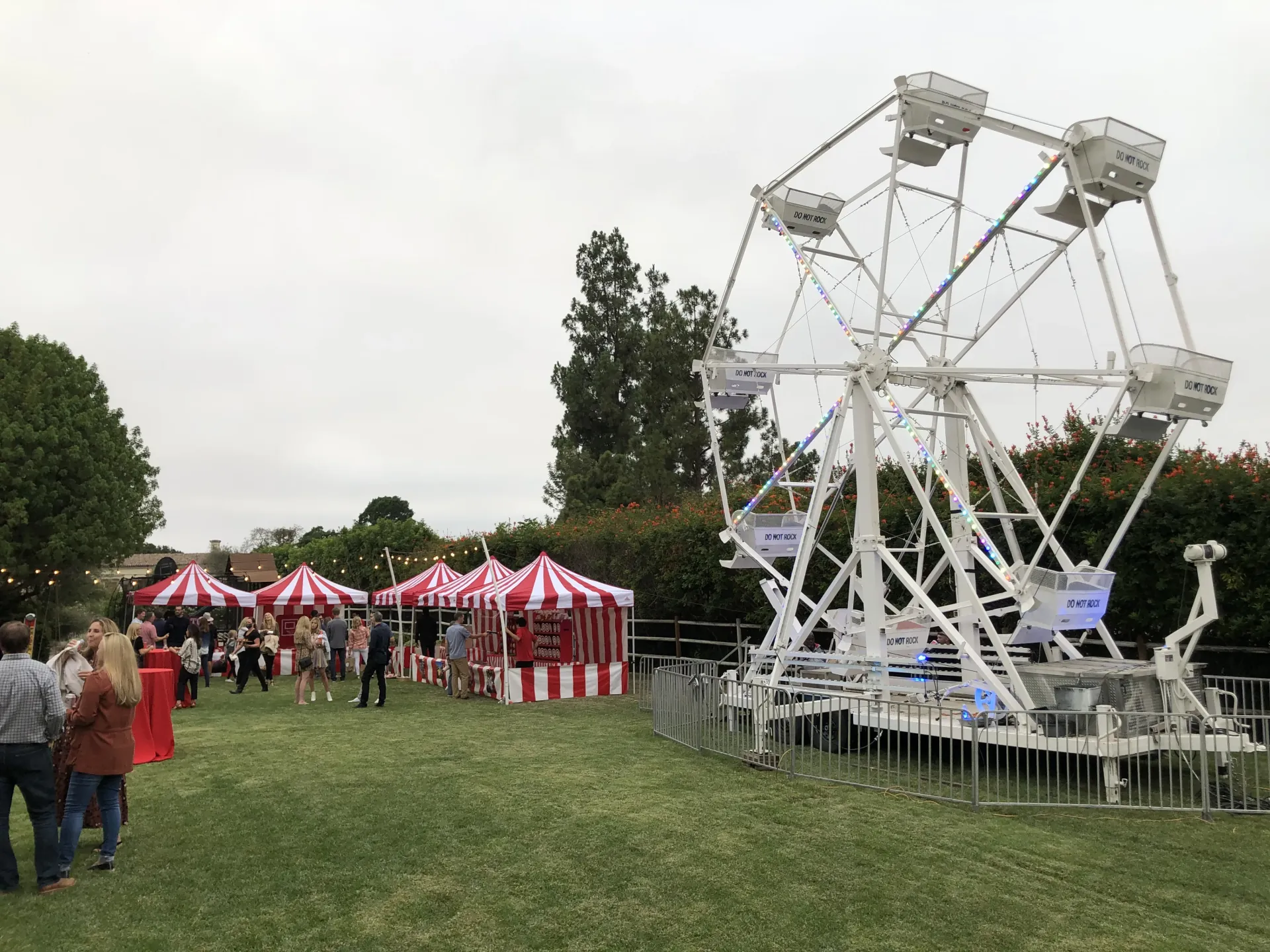
A ride rarely arrives alone. It's positioned as an anchor attraction inside a bigger layout — a trackless train looping a paved perimeter while game booths line the inside edge, or a mini ferris wheel set as the visual centerpiece near the entrance so it's the thing guests see first. Carousels tend to go near the family and younger-kid zone; swing rides and teacup rides, which pull more centrifugal motion, sit further from foot traffic with their own fenced queue line. A festival at Civita Park or a grand-opening event at a Mission Valley retail center might run one to three rides depending on footprint and expected crowd size; a school carnival for a San Diego Unified campus more commonly runs a single ride as the marquee draw alongside games and concessions.
Each ride runs with its own trained operator managing the queue, checking restraints, and controlling ride cycles for the full event window. Guests line up, cycle through in timed rounds, and the ride keeps a steady rhythm rather than running continuously — which is part of why a ride needs a dedicated attendant rather than volunteer staffing. The rest of the event builds around that rhythm: photo ops near the ride entrance, a shaded waiting area if the queue runs long, and enough clearance that the line doesn't tangle with concessions or other foot traffic.
What's typically included.
-
Ride selection.
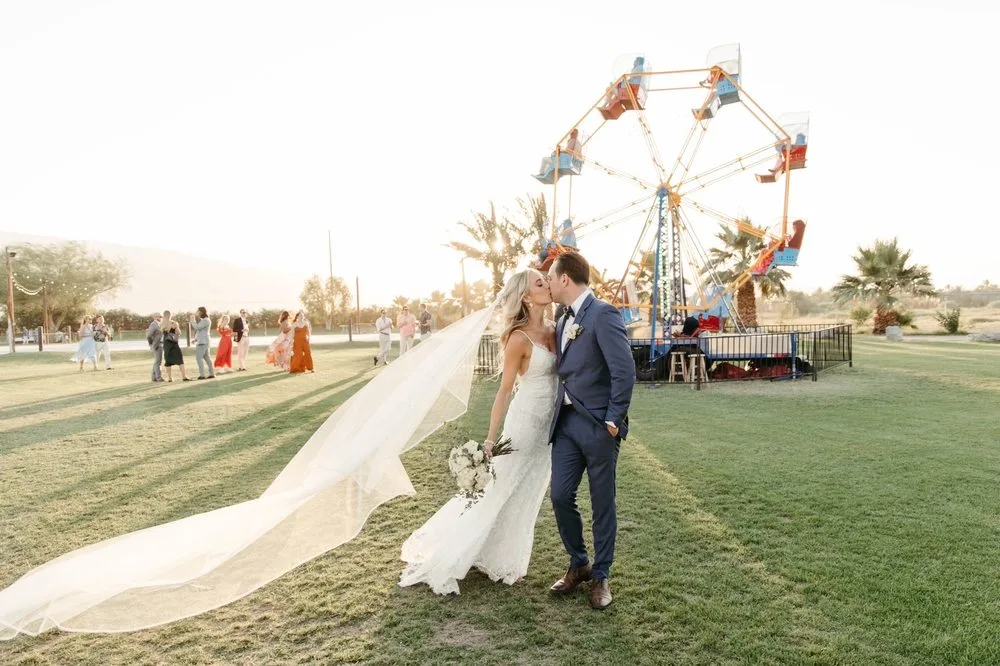
Trackless train, carousel, mini ferris wheel, swing ride, or teacup ride — chosen to fit the footprint, guest age range, and overall scale of the event.
-
Trained ride operator.
Every ride runs with a operator for the full event window — managing the queue, checking restraints, and running ride cycles. Not staffed by volunteers.
-
Power hookup or generator.
Rides draw significant continuous power. My Little Carnival brings a generator sized to the ride when the venue doesn't have a dedicated hookup that can carry the load.
-
Queue fencing and safety barriers.
Crowd-control fencing sets the line, keeps the ride perimeter clear, and separates waiting guests from the ride's motion radius.
-
Delivery, setup, and breakdown.
Crew delivers, levels, and tests the ride before doors open, and breaks it down and hauls out at the close of the event — no equipment left on-site overnight.
-
Insurance and permit paperwork.
My Little Carnival provides the Certificate of Insurance naming the venue or district as additional insured, which most Mission Valley venues and San Diego Unified facility-use agreements require before a ride is approved on-site.
Typical timeline for amusement rides in Mission Valley.
- 1
Inquire
Share the event date, venue, expected guest count, and general layout. Ride selection starts with what the ground and power situation can support.
- 2
Site check + quote
My Little Carnival reviews the footprint — surface type, level ground, clearance, and power access — and returns a quote scoped to the venue and event size.
- 3
Delivery + setup
On event day, crew arrives ahead of doors, delivers the ride, levels and anchors it, runs the generator if needed, and tests it before guests arrive.
- 4
Event window + breakdown
The operator runs the ride for the contracted hours. Crew breaks down and hauls out at the close of the event, leaving the site clear.
Specifics for Mission Valley.
- Venue footprint: Civita Park's open lawns and paved plazas are well suited to a ride footprint — level ground, good sightlines, room for a queue. Presidio Park's hillside terrain generally isn't workable for ride placement; Snapdragon Stadium's grounds can absorb larger festival-scale layouts with multiple rides.
- Surface requirement: Rides need level asphalt, concrete, or well-compacted hardpack. Sloped lawns, loose gravel, or uneven turf usually rule a location out or require a different ride than what was originally requested.
- Power needs: Most rides pull more continuous amperage than a standard outdoor outlet provides. My Little Carnival brings a generator sized to the ride for venues — which is most of them — without a dedicated event power hookup.
- Permits and paperwork: Commercial venues and San Diego Unified School District facility-use agreements typically require a Certificate of Insurance naming the venue or district as additional insured before a ride is approved for the date.
- School and community use: San Diego Unified campuses in the Mission Valley area occasionally book a single ride as the marquee attraction for larger carnivals or anniversary events, paired with games and concessions rather than run on its own.
- Climate: Southern California's typically dry climate keeps outdoor ride dates low-risk most of the year. Wind is the bigger variable for taller rides like a mini ferris wheel — operators can pause or hold a ride in gusty conditions as a standard safety practice.
Common questions.
What kind of ground do amusement rides need?
Level asphalt, concrete, or firmly compacted hardpack. Rides aren't set up on sloped lawns, loose gravel, or soft turf — the venue's surface is one of the first things checked when scoping a quote.
Is a ride operator included?
Yes, always. Rides are staffed by a trained operator for the entire event window as a standard part of the booking — this isn't an optional add-on the way it can be for games or concessions.
Do you need a generator, or can we use the venue's power?
Depends on the venue. Rides draw significant continuous power, and most outdoor outlets can't carry the load. My Little Carnival brings a generator sized to the ride whenever the site doesn't have a dedicated hookup that can handle it.
Are there age, height, or weight limits?
Yes, and they vary by ride. Carousels and trackless trains are generally open to a wide age range; mini ferris wheels, swing rides, and teacup rides carry specific height or weight restrictions tied to restraint systems. Specifics are confirmed once a ride is selected.
What happens if it's windy or rains on the event date?
Southern California's typically dry climate keeps most outdoor dates low-risk. Wind is the more common concern for taller rides — operators can pause ride cycles temporarily in gusty conditions as a standard precaution rather than cancel outright.
Can we book just one ride without the rest of the event?
No — My Little Carnival produces full event setups rather than renting a single ride on its own. A ride is booked as part of a complete event package, alongside whatever mix of games, concessions, or other attractions fits the occasion.
About this guide.
This local guide to amusement rides in Mission Valley was compiled by My Little Carnival, a division of My Little Carnival. My Little Carnival produces festivals, school carnivals, and grand-opening events across San Diego County, matching ride selection to each venue's ground and power realities.
Helpful local references: San Diego Unified School District · City of San Diego Parks and Recreation
Amusement Rides in nearby cities.
Planning an event with amusement rides in Mission Valley?
Share the venue, expected guest count, and rough date — and My Little Carnival will scope a ride selection and full event quote sized to the space and power available.
Get a quote →