carnival booths in National City.
A carnival booth is a striped red-and-white tent structure — 5x5, 8x8, or 10x10 depending on what it's used for — built to house a single carnival activity: a game, a concession counter, a prize window, a ticket table, or a photo backdrop. Lined up in a row or arranged in a horseshoe, booths are the visual signature of a carnival; they're what turns an open field or a school blacktop into something that reads as a carnival rather than a park day. As part of a full event My Little Carnival produces in National City, booths arrive already skinned, skirted, and stocked — the crew builds the layout, not just the frame. This is a local guide to carnival booths in National City — how many a typical event uses, what each size is built for, and what goes into setting a row of them up locally.
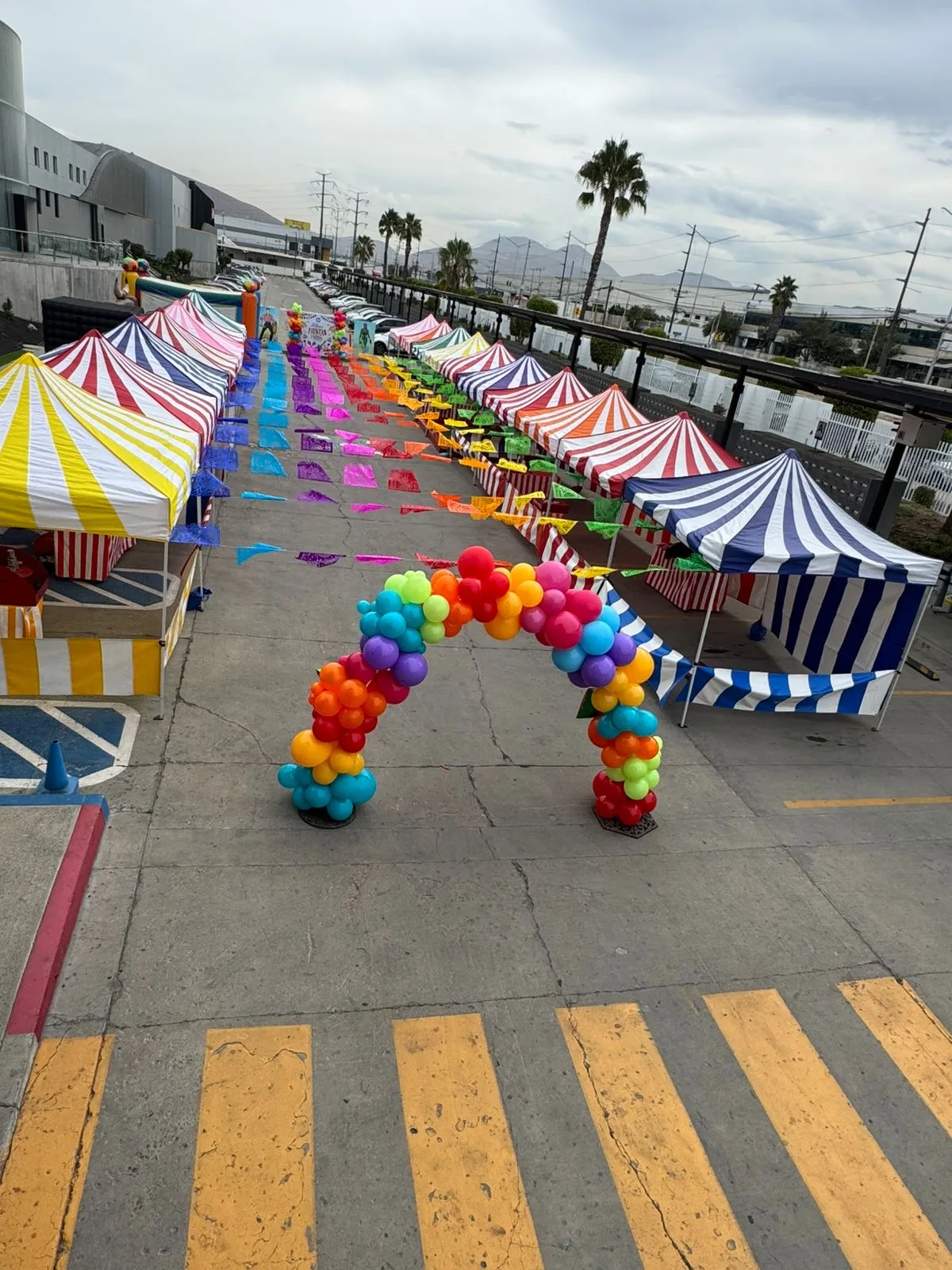
National City events tend to run at community-anchored sites — Kimball Park and El Toyon Park both see school and community carnivals, and campuses within National School District and Sweetwater Union High School District host their own fall fests and spring carnivals on blacktop play yards. Booth counts scale with those footprints: a compact PTA carnival might run four or five booths tucked near a multipurpose room, while a larger community event at Kimball Park spreads eight to twelve across an open lawn.
My Little Carnival builds carnival booth layouts into full event productions across National City, sizing the booth count and mix to whatever venue the event lands on.
How booths get used in National City.
Most events settle into a horseshoe or straight-row layout depending on the site. On a school blacktop, booths usually line the perimeter with a concession cluster near shade or a covered walkway and a prize table at one end; at an open park space like Kimball Park or Las Palmas Park, the arrangement opens up into a wider horseshoe so foot traffic can flow through the middle. A 5x5 booth handles a single simple game — ring toss, balloon pop, a fishing pond. An 8x8 gives room for two attendants and a slightly larger game footprint, and a 10x10 is what concession stations, ticket booths, and photo-backdrop setups usually need for equipment and counter space.
The booth count follows the guest list more than the venue. A four-booth setup keeps a smaller event moving without long waits; a twelve-booth layout is built for several hundred guests cycling through games, food, and photos at once. As part of the full carnival My Little Carnival produces, the booths arrive pre-assigned to a role — game, concession, prize, or photo — before the crew even starts setting the frames.
What's typically included.
-
Booth structure and skirting.
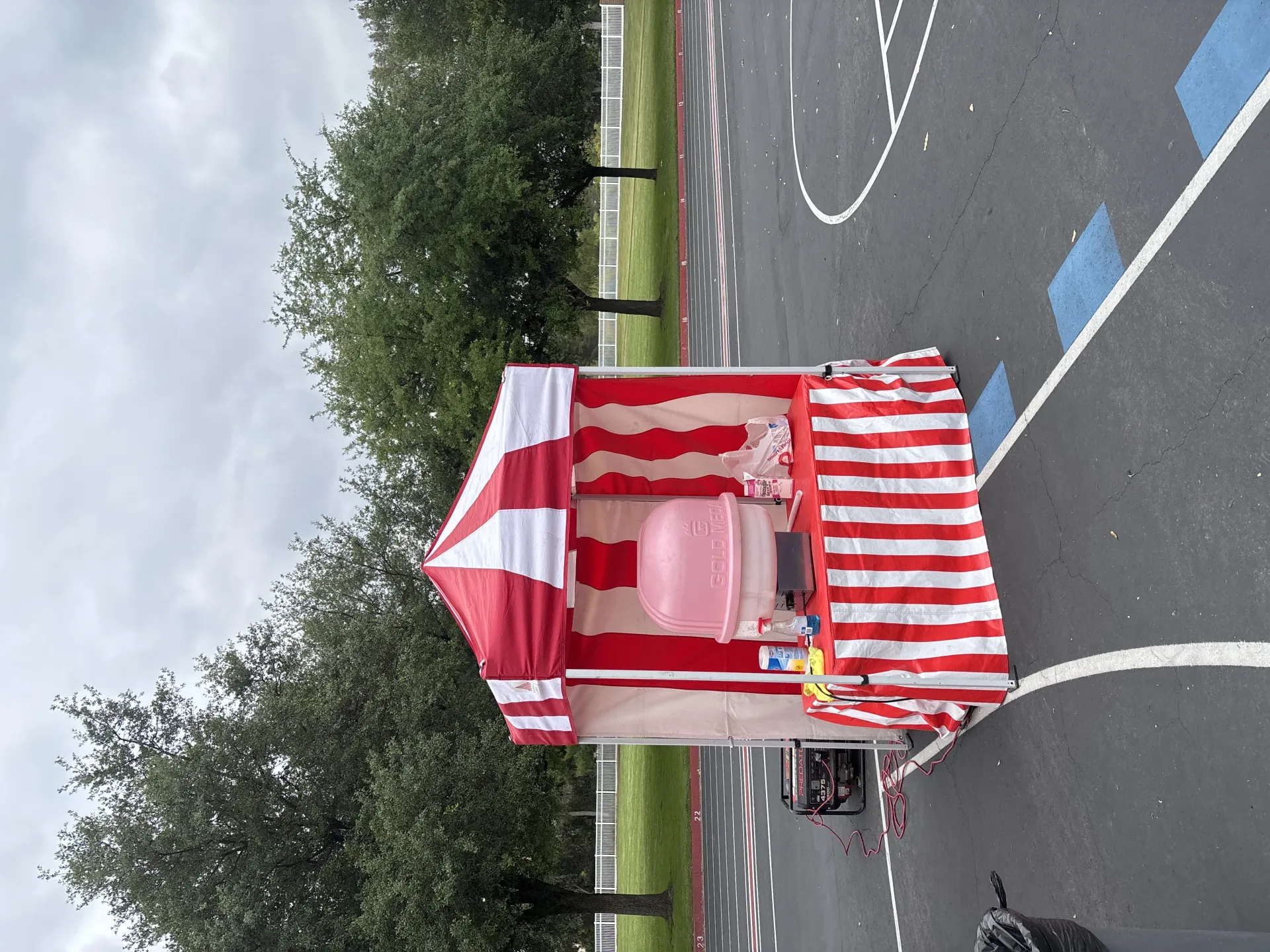
Full frame, striped canopy, and floor-length skirting in your choice of 5x5, 8x8, or 10x10, delivered clean and assembled on-site.
-
Role-specific setup.
Each booth is configured for its job — game shelving and prize hooks, a concession counter and equipment platform, a ticket-sale window, or an open photo-backdrop frame.
-
Signage and prize display.
Game booths come with visible prize displays and simple signage so guests know what each booth offers without an attendant explaining it.
-
Delivery and layout.
Crew delivers, positions, and levels each booth according to the venue's layout — blacktop, lawn, or paved lot — as part of the full event build.
-
Attendants — optional.
Booth attendants are available as an add-on quoted per booth, or the booths can run on volunteer staffing, which is common for PTA-run school carnivals.
-
Breakdown and pack-out.
Crew strikes every booth at the end of the event and clears the site — no volunteer teardown required.
Typical timeline for carnival booths in National City.
- 1
Inquiry
Share the event date, venue, expected guest count, and rough booth mix (games, concessions, prizes, photo) for a scoped quote.
- 2
Quote and layout
Booth count and sizes get set based on the venue footprint — a Kimball Park lawn layout differs from a tighter school blacktop horseshoe.
- 3
Delivery and setup
As part of the full event build, crew arrives ahead of the event, assembles and skins each booth, and stocks games, prizes, or concession equipment.
- 4
Event day and breakdown
Booths run for the event window with optional attendants or volunteer staffing, then get struck and cleared by the production crew afterward.
Specifics for National City.
- Common venues: Kimball Park and El Toyon Park host larger community carnivals with room for wider horseshoe layouts; school blacktops within National School District and Sweetwater Union High School District are the more common school-carnival footprint.
- Surface considerations: Booths set up fine on blacktop, concrete, or grass. Grass sites at Las Palmas Park or El Toyon Park use stake anchoring; paved sites like school blacktops use weighted bases instead.
- Power needs: Game and photo booths generally don't need power. Concession booths (popcorn, cotton candy, snow cones) pull dedicated circuits, and My Little Carnival brings a generator when the site's outlets won't cover the load.
- Booth count guidance: A rough rule is one booth per 40-50 guests for steady play without long lines. Smaller campus carnivals run four to six booths; larger community events at a park venue often run eight to twelve.
- Indoor alternatives: Mountain View Community Center and Camacho Recreation Center offer indoor or covered space for events that want a rain contingency or a shaded gymnasium layout instead of an open lot.
- Weather: Southern California's typically dry climate keeps outdoor booth events low-risk most of the year, though a rain date is worth planning for events scheduled in the wetter winter months.
National City, CA.
ZIPs: 91950 · 91951
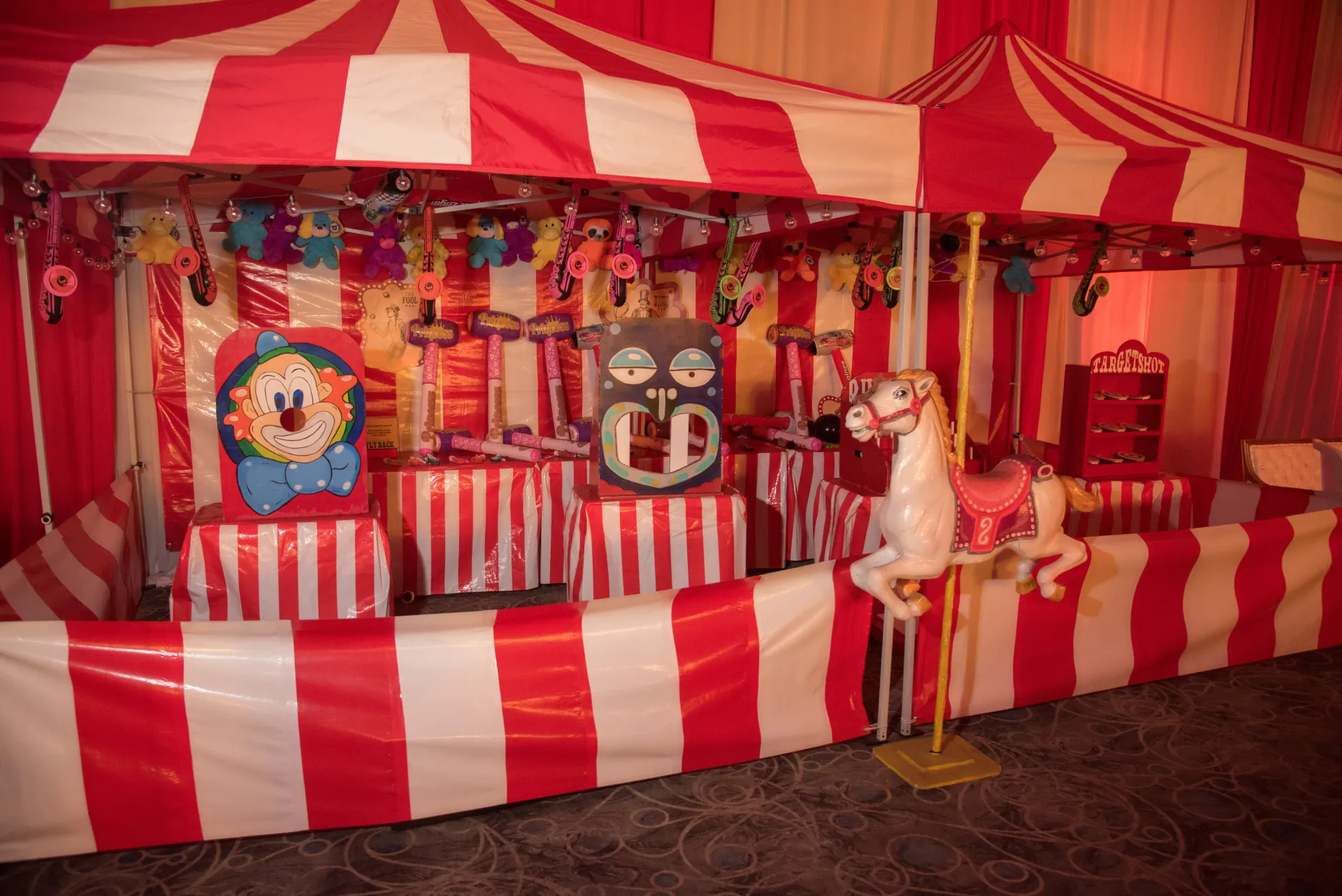
My Little Carnival delivers carnival booths throughout National City and the surrounding San Diego County area. Pin shows the city center; we cover every ZIP listed above.
Common questions.
What's the difference between a 5x5, 8x8, and 10x10 booth?
A 5x5 fits a single simple game and one attendant. An 8x8 gives more room for two people or a slightly larger game setup. A 10x10 is the standard size for concessions, ticket booths, and photo backdrops that need counter or equipment space.
Do booths come with attendants?
Not by default. Attendants for games, concessions, and photo booths are available as an add-on quoted per booth, or the booths can be run by volunteers — common at school-run carnivals.
Can booths be set up on grass and on blacktop?
Yes. Grass sites use stake anchoring; paved surfaces like school blacktops or parking lots use weighted bases instead. Either surface works fine for any booth size.
How many booths does our event need?
A loose guide is one booth per 40-50 guests. Smaller campus events typically run four to six booths; larger park-based community events often run eight to twelve.
Do concession booths need power?
Yes — popcorn poppers, cotton candy spinners, and snow cone shavers each pull a dedicated circuit. My Little Carnival brings a generator when the venue's available power won't cover it, which is common at outdoor park sites.
What happens if it rains?
Outdoor booth events in National City are generally low-risk given the region's dry climate, but a rain date is worth building into plans for winter-season events, or considering an indoor venue like Mountain View Community Center.
About this guide.
This local guide was compiled by My Little Carnival, the San Diego County operation of My Little Carnival — producers of school carnivals, community events, and backyard celebrations across the region.
Helpful local references: National School District · Sweetwater Union High School District
Carnival Booths in nearby cities.
Planning an event with carnival booths in National City?
Share your venue, guest count, and rough booth mix — and My Little Carnival will scope a layout and send a quote.
Get a quote →