amusement rides in Rainbow.
An amusement ride is a mechanical attraction — a trackless train, a carousel, a mini Ferris wheel, a swing ride, or a teacup ride — built to carry riders through a repeating motion under the control of a trained operator. Unlike a bounce house or a game booth, a ride needs open, level ground, a dedicated power source (shore power or a generator), and a attendant running the controls for the entire operating window. In Rainbow, where flat cleared space tends to live in park and school-grounds settings rather than in a typical residential yard, rides show up as the anchor attraction at larger productions — school carnivals, community festivals, grand openings — more often than at small gatherings. As part of a full event build, My Little Carnival brings the ride, the operator, the safety fencing, and the power to run it, sized to whatever open space the venue provides. This is a local guide to amusement rides in Rainbow — what fits, what the ground needs to look like, and what goes into running one for a day.
Rainbow is a small unincorporated community in northern San Diego County, along the Highway 76 and I-15 corridor near Fallbrook, with more open land per capita than the county's incorporated cities. Rainbow County Park is the community's primary public gathering space and the most common venue for a ride-anchored event; Vallecitos Elementary School, part of the Vallecitos Elementary School District, is the other regular host for fall and spring carnivals, with older students in the area served by the Fallbrook Union High School District. Most ride bookings in Rainbow trade the tight footprint of a school blacktop for the open grass and gravel lots that the area's rural layout allows.
My Little Carnival produces festival-scale events across San Diego County, bringing rides, generators, and trained operators out to rural venues like Rainbow alongside its more urban bookings.
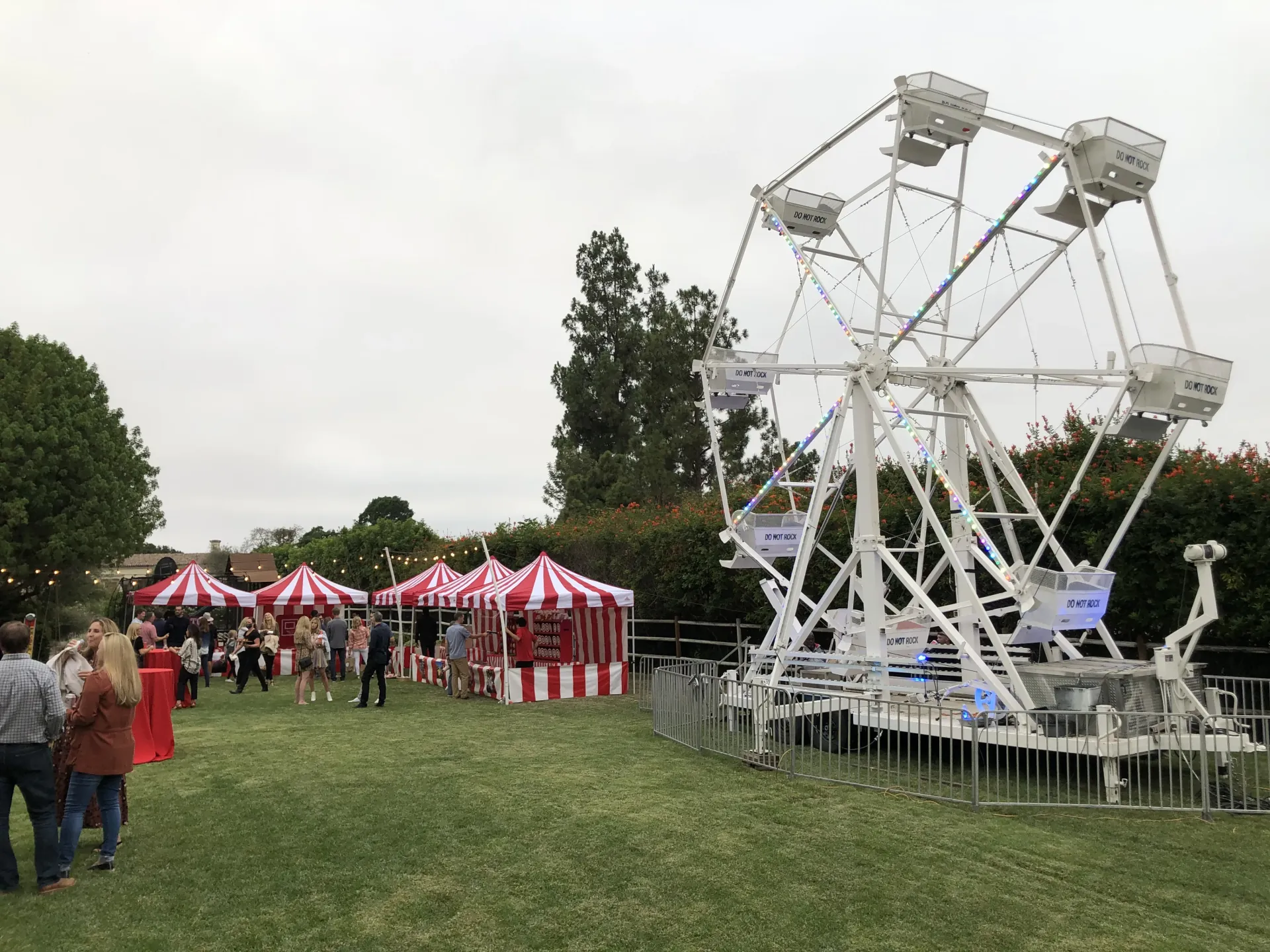
What amusement rides look like at an event in Rainbow.
A ride rarely shows up alone — it's usually the centerpiece of a larger production that also includes game booths, concessions, and sometimes an inflatable, all built around the ride's footprint. At Rainbow County Park, that means the ride gets staked out on the flattest section of open lawn or the gravel lot near the pavilion, with the rest of the carnival wrapping around it in a loop that keeps foot traffic moving one direction. At a school event like one hosted through Vallecitos Elementary, the ride typically takes the far end of the field or the section of blacktop with the widest clearance, since a trackless train or a mini Ferris wheel needs more turning radius and standoff space than a booth does.
Guest counts at Rainbow's ride-anchored events tend toward the smaller end of what a ride can handle — a community festival or grand opening might run a hundred to a few hundred people through the line over several hours, rather than the thousand-plus volume a downtown city festival sees. That works in the ride's favor: shorter lines, more turns per rider, and an attendant who has time to walk first-time riders through the loading process. Setup happens well before doors open, since leveling and anchoring a ride takes longer than staking a booth.
What's typically included.
-
Ride selection.
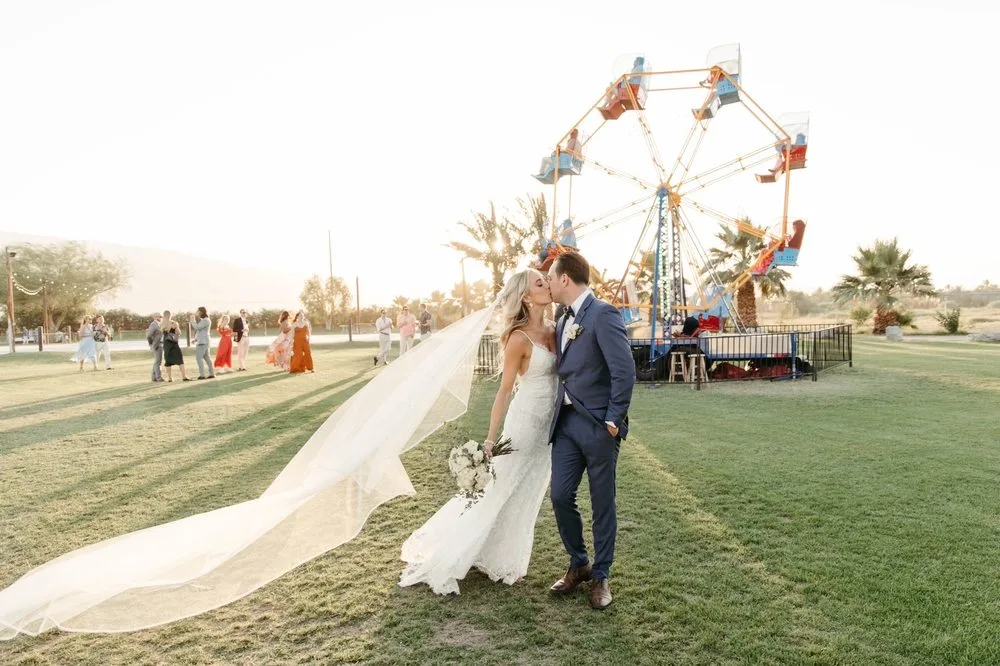
Matched to the venue's footprint and the age mix of the crowd — a trackless train or carousel for a family-heavy school event, a swing ride or teacup ride for an all-ages festival.
-
Trained ride attendant.
Included by default for every ride booking. A operator runs the controls, manages loading and unloading, and stays at the ride for the full operating window.
-
Delivery, setup, and leveling.
Crew hauls the ride in, levels it on grass, gravel, or asphalt, and anchors it to spec before the event opens — this takes longer than a booth setup and is scheduled accordingly.
-
Generator or shore power.
Rides pull more current than a game booth or concession machine. A generator sized to the ride's draw comes standard when the venue doesn't have a dedicated outdoor circuit.
-
Safety fencing and queue line.
Barriers around the ride perimeter and a rope queue to control loading order, both set up before any rider boards.
-
Permits and insurance documentation.
My Little Carnival provides the Certificate of Insurance the venue requires — a county park facility-use application or a school district's vendor authorization, depending on where the event lands.
Typical timeline for amusement rides in Rainbow.
- 1
8-12 weeks out
Share the venue, expected guest count, and rough dates. Ride selection gets scoped against the available open space and a quote comes back sized to the footprint.
- 2
3-4 weeks out
A site walk-through or venue diagram confirms ground surface, turning radius, and power access. Deposit locks the date and the specific ride.
- 3
Week of
Final guest count is confirmed and any remaining permit paperwork goes in — a County of San Diego park-use form for Rainbow County Park, or a district vendor authorization for a school event.
- 4
Event day
Crew arrives well ahead of doors to level, anchor, and test the ride. The attendant runs the full operating window, and breakdown starts once the last rider is off.
Specifics for Rainbow.
- Footprint and clearance: Rides need more room than a booth — a mini Ferris wheel or swing ride wants roughly a 20x20 pad plus standoff space beyond the swing radius. This gets confirmed during the site walk-through, not guessed at.
- Ground surface: Grass, packed dirt, gravel, or asphalt all work if the surface is level and firm. Rides generally aren't placed on slopes, soft sand, or uneven turf — leveling is part of setup, but the base surface still has to hold.
- Power needs: A generator is the default for most Rainbow venues, since dedicated outdoor circuits capable of running a ride are rare outside of a few school buildings. This gets sized to the specific ride during the quote.
- Permits: Rainbow County Park bookings go through the County of San Diego Department of Parks and Recreation for facility use. School events need a Certificate of Insurance naming the Vallecitos Elementary School District or Fallbrook Union High School District as additional insured, depending on the campus.
- Typical venues: Rainbow County Park is the community's default open-space venue for a ride-anchored event. Vallecitos Elementary is the more common school site for a fall or spring carnival that includes a ride.
- Weather: Southern California's typically dry climate keeps most outdoor dates low-risk, but wind is the main factor for rides specifically — most rides pause operation above a set wind threshold as a standard safety practice.
Common questions.
Is a ride attendant included, or is that extra?
A trained attendant is always included with any ride booking — this is different from games, concessions, or inflatables, where attendants are an optional add-on. Rides are staffed by a operator for the full event by default.
What kind of ground do rides need?
Level, firm surface — grass, asphalt, or packed gravel all work. Steep slopes, soft sand, or heavily uneven turf don't. The site walk-through during quoting confirms whether a given spot at Rainbow County Park or a school field will work.
Do you need a generator, or can you plug into the venue's power?
Most Rainbow venues don't have an outdoor circuit that can handle a ride's draw, so a generator is the standard setup. If a venue does have adequate power access, that gets confirmed and adjusted during the quote.
Are there height or age limits on the rides?
It varies by ride. Carousels and teacup rides are generally open to a wide age range with a caregiver-accompaniment option for younger kids; swing rides and Ferris wheels carry a minimum height requirement posted at the ride. Specifics come with the ride selection.
What permits does a ride need at Rainbow County Park?
A facility-use permit through the County of San Diego Department of Parks and Recreation, plus a Certificate of Insurance from My Little Carnival naming the county as additional insured. This is handled as part of event planning, not something the host has to chase down alone.
What happens if it's windy or rains on the event date?
Rides pause operation above a set wind threshold as standard safety practice, and heavy rain can delay or cancel a ride's operating window for the day. Southern California's typically dry climate makes this a low-frequency issue, but it's worth discussing a contingency plan for any date booked outside the driest stretch of the year.
About this guide.
This guide to Amusement Rides in Rainbow was compiled by My Little Carnival, the San Diego County operation of My Little Carnival — producers of school carnivals, community festivals, and backyard events across the region, including rural venues like Rainbow County Park.
Helpful local references: County of San Diego Department of Parks and Recreation · Fallbrook Union High School District
Amusement Rides in nearby cities.
Planning an amusement ride for an event in Rainbow?
Share the venue, expected guest count, and rough dates, and My Little Carnival will scope a ride, attendant, and power setup sized to the space.
Get a quote →