
carnival booths in South Park.
A carnival booth is the striped red-and-white tent structure that gives a carnival its signature look — a peaked canvas roof over an open counter, built in 5x5, 8x8, and 10x10 sizes depending on what it needs to do. A 5x5 usually runs a single game like ring toss or duck pond; an 8x8 works as a concession counter or a bigger game station; a 10x10 anchors a ticket booth, prize window, or photo backdrop. Booths are modular — the same frame that runs a bottle-knockdown game in the morning gets restocked as a popcorn counter by afternoon, and eight to fifteen lined up together form the backbone of a school carnival midway. In South Park, where blacktop play yards and compact park lawns are the typical footprint, booths are the fastest way to turn an ordinary lot into a recognizable carnival layout. As part of a full event My Little Carnival produces in South Park, booths arrive already built into the package — striped, signed, stocked, and placed to fit whatever space the event calls for.
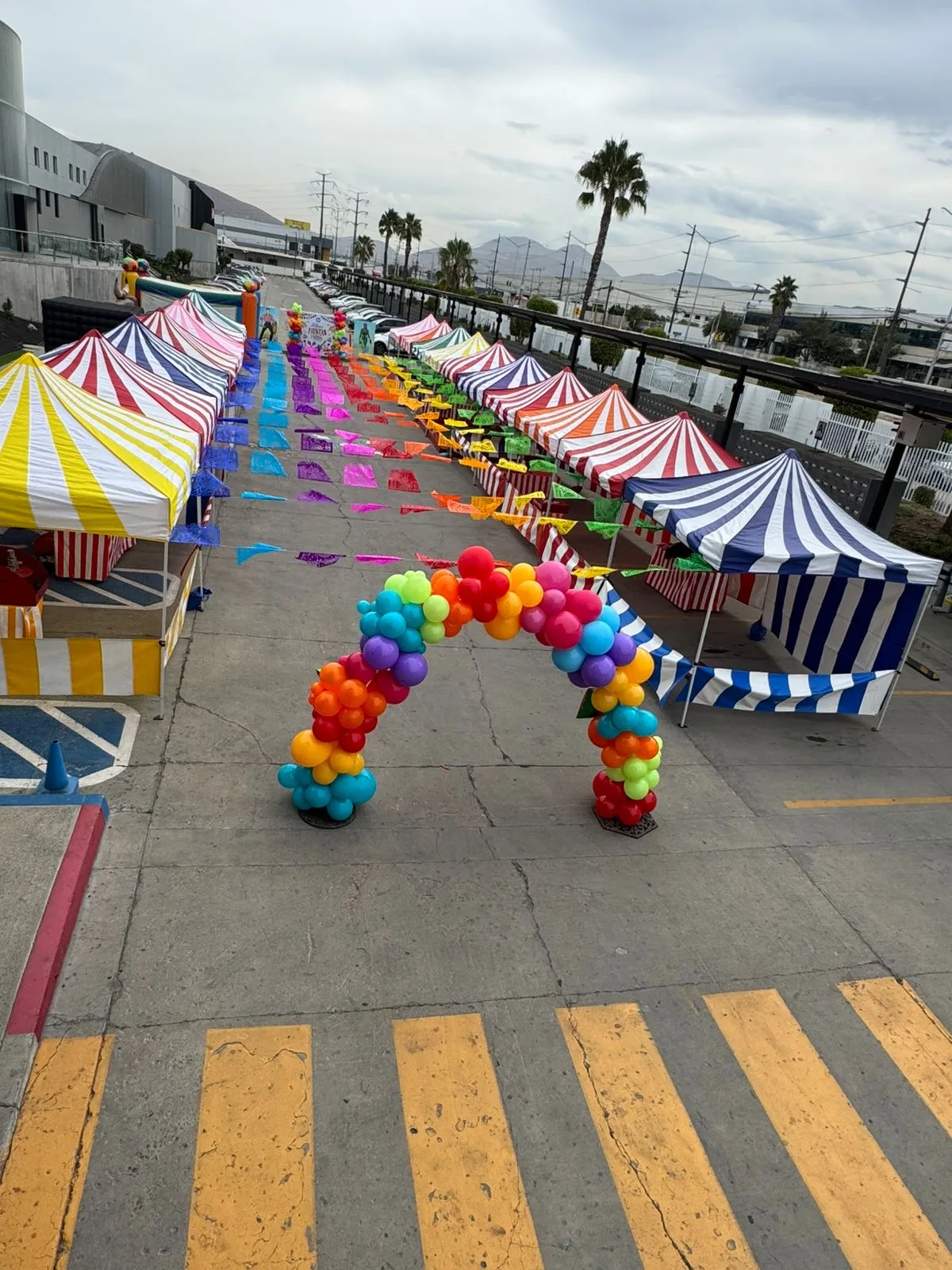
Carnival booths in South Park mostly show up in two settings — the compact blacktop and grass areas of neighborhood elementary campuses within San Diego Unified School District, and the open lawns at Grape Street Park and Golden Hill Recreation Center when a PTA or community group wants more room than a campus allows. Balboa Park sits just north of the neighborhood and occasionally hosts larger community carnivals that need a permitted city venue rather than a school lot.
My Little Carnival produces full carnival events across South Park and the surrounding San Diego neighborhoods, building booth rows sized to whatever footprint the venue allows.
How carnival booths show up in a South Park event.
At a typical campus carnival, booths line one edge of the blacktop in a horseshoe or straight row facing the play area — 5x5 game booths closest to the younger grades, 8x8 concession booths clustered near a covered walkway for shade, and a 10x10 ticket or prize booth positioned at the entrance nearest the drop-off zone. The layout is built around foot traffic: kids move down the row, play a few games, cash in tickets at the far end.
At a park event — Grape Street Park or Golden Hill Recreation Center are the two most common off-campus venues — booths get anchored into grass instead of concrete, which changes the setup from weighted bases to stakes, and the layout tends to open up into a wider horseshoe since there's more room to work with than a school yard allows. Balboa Park bookings, when they happen, usually mean a larger footprint and a city permit on top of whatever the organizing group already has in place.
What's typically included.
-
Booth structure and striping.
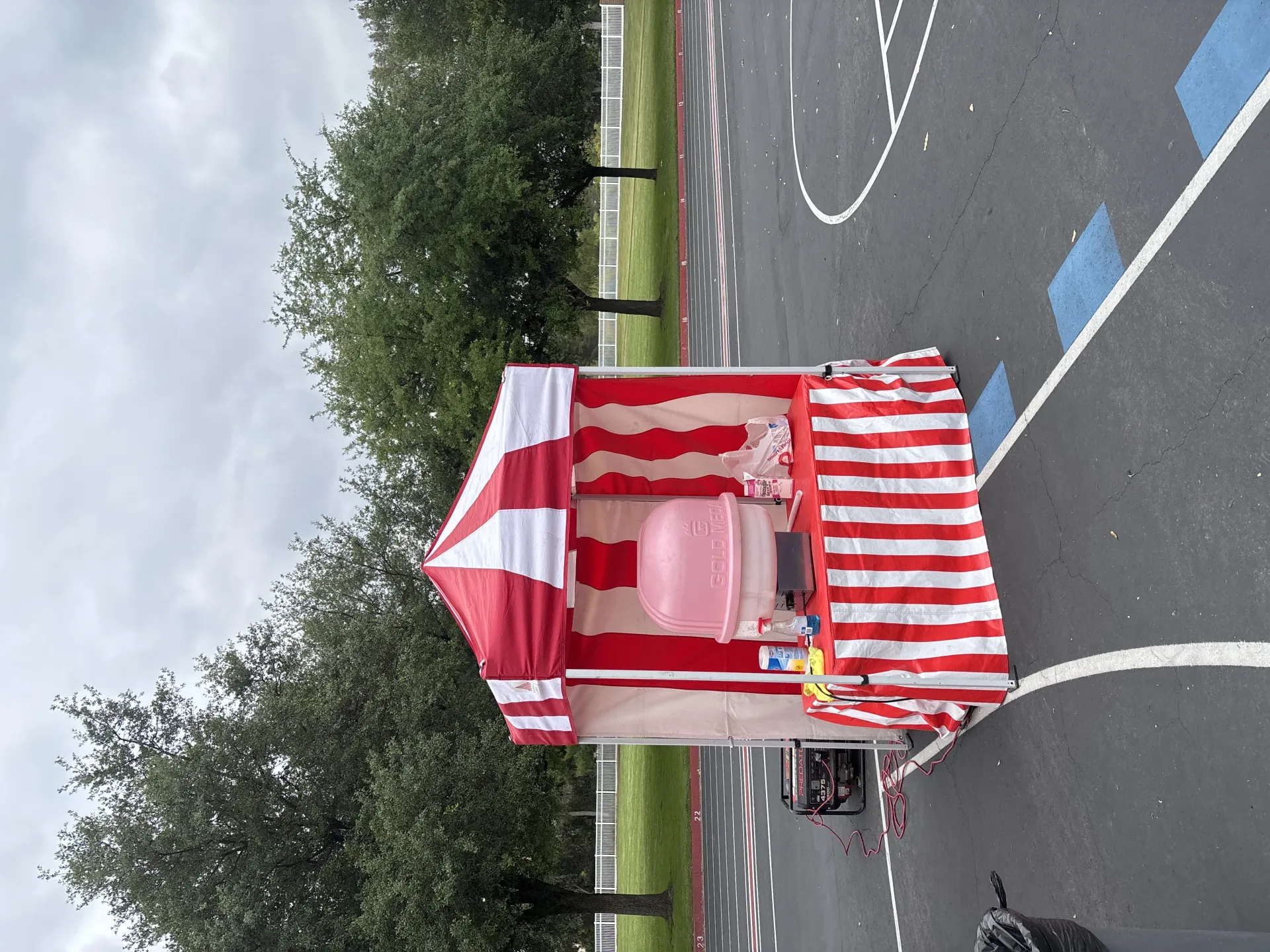
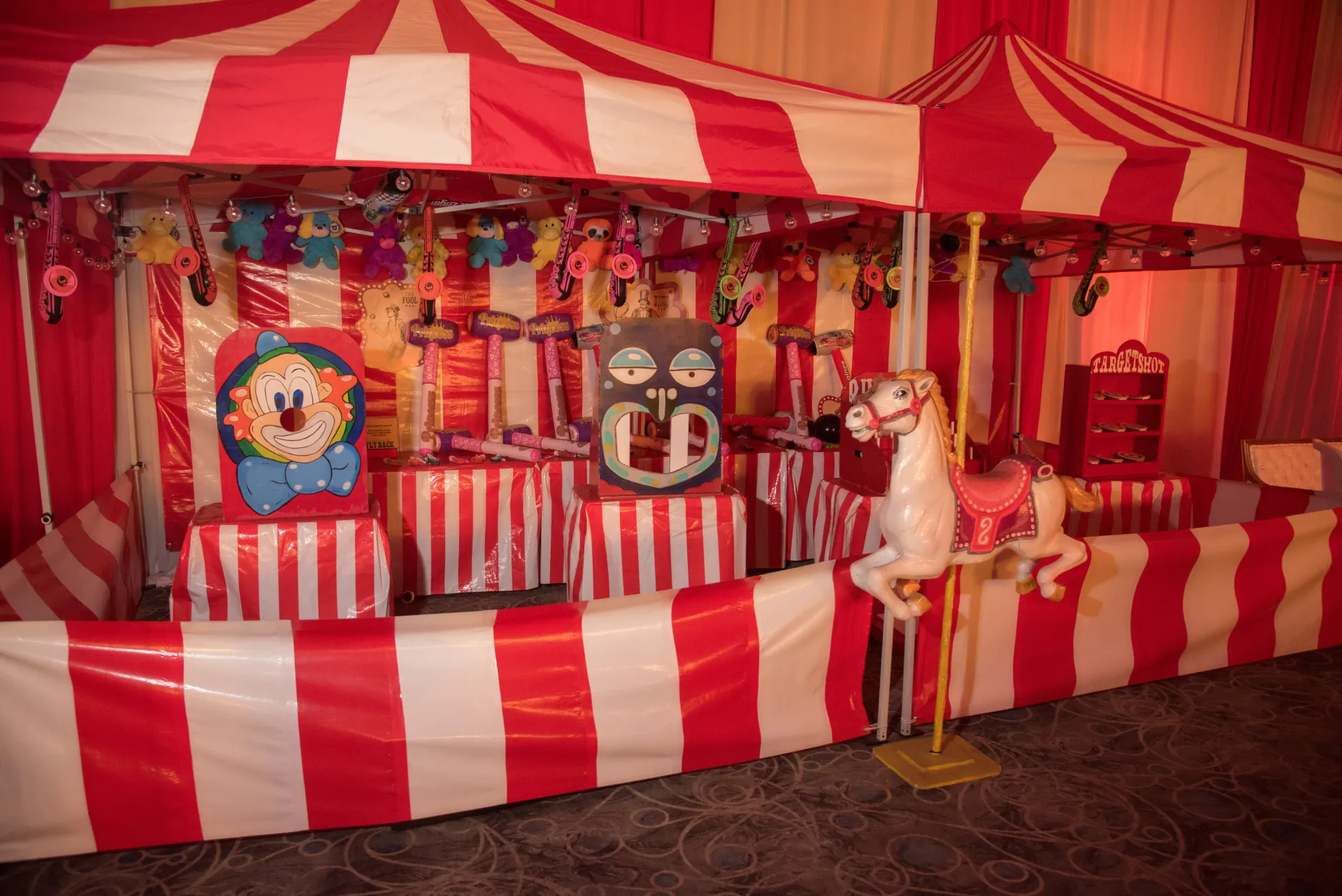
The peaked-roof frame with red-and-white canvas covering, the visual anchor of any carnival layout, built in 5x5, 8x8, and 10x10 footprints.
-
Size matched to function.
5x5 for a single game, 8x8 for concessions or a bigger game, 10x10 for ticket sales, prize redemption, or a photo backdrop — sized as part of the overall event scope.
-
Signage and skirting.
Front-facing signage naming the game or station, side skirting for a finished look, and a prize shelf or display rail where the booth calls for one.
-
Counter or game surface.
A service counter for concessions, or the game-specific playing surface (ring-toss stand, bottle rack, plinko board) built into the booth for game stations.
-
Delivery, setup, and breakdown.
Crew places and levels every booth as part of the event build, and packs everything out at the end — no separate rental pickup to coordinate.
-
Attendants.
Not automatically included. An attendant per booth is available as an add-on, quoted per booth or per hour, or booths can run on parent or staff volunteers.
Typical timeline for carnival booths in South Park.
- 1
Inquire
Share the venue, expected guest count, and roughly how many booths you're picturing — school blacktop, Grape Street Park, Golden Hill Recreation Center, or a private lot.
- 2
Quote
My Little Carnival scopes booth count, sizes, and function (games, concessions, tickets) against the footprint and returns a quote sized to the event.
- 3
Setup
Crew delivers and builds the booth row as part of the full event setup, positioning each booth according to the confirmed layout before doors open.
- 4
Event day and breakdown
Booths run for the contracted window and come down at the end — no equipment left behind, no separate pack-out to arrange.
Specifics for South Park.
- School paperwork: San Diego Unified School District campuses typically require a vendor certificate of insurance naming the district as additional insured for on-campus events, usually routed through the school office a few weeks ahead.
- Park permits: Events at Grape Street Park, Golden Hill Recreation Center, or Balboa Park go through the City of San Diego's park-use permitting process rather than a school facility form — worth starting early if the date is firm.
- Surface and anchoring: Booths on blacktop or concrete get weighted bases; booths set on grass at Grape Street Park or Golden Hill get staked instead. Either way the ground gets checked before setup.
- Power access: Concession booths running popcorn poppers or cotton candy spinners pull a dedicated circuit. Where park or campus outlets don't cover it, a generator gets brought in as part of the setup.
- Load-in access: South Park's residential streets and alleys are narrow in places — curb access near the setup point makes booth load-in noticeably faster than a mid-block carry.
- Weather: Southern California's typically dry climate keeps outdoor booth setups low-risk most of the year; sidewall panels are available on request for wind or sun exposure on open lawns.
Common questions.
What's the difference between the 5x5, 8x8, and 10x10 booths?
5x5 fits a single game station, 8x8 handles concessions or a larger game, and 10x10 is used for ticket booths, prize redemption, or a photo backdrop. Most South Park events mix sizes depending on how many functions the layout needs.
Do booths come with an attendant to run them?
Not by default. Attendants are available as an add-on, quoted per booth or per hour, or booths can be staffed by school or event volunteers — common for PTA carnivals where parent volunteers are already part of the plan.
Can booths be set up on grass, or only pavement?
Both. Blacktop and concrete setups use weighted bases; grass setups at venues like Grape Street Park or Golden Hill Recreation Center use stakes instead. Either surface works fine for the standard booth frame.
Do booths need electricity?
Game booths generally don't. Concession booths running poppers or spinners do, and pull a dedicated circuit — a generator gets added to the setup when the venue's available outlets aren't enough.
How many booths does a typical event need?
A rough guide is one booth per thirty to fifty guests for comfortable play. A backyard-scale event runs on a couple of booths; a school carnival with a few hundred guests typically uses eight to fifteen.
What happens if it rains on event day?
Outdoor bookings in South Park are low-risk most of the year given the region's dry climate, but sidewall panels can be added for wind or light rain, and rain-date terms are worth discussing during the quote for events booked in the wetter months.
About this guide.
This local guide was compiled by My Little Carnival, the San Diego County operation of My Little Carnival. My Little Carnival produces full carnival events — booths included — for schools, community groups, and private parties across South Park and the surrounding neighborhoods.
Helpful local references: San Diego Unified School District · City of San Diego Parks & Recreation
Carnival Booths in nearby cities.
Planning an event with carnival booths in South Park?
Share your venue, guest count, and how many booths you're picturing — and My Little Carnival will scope a layout and send a quote.
Get a quote →