amusement rides in Tierrasanta.
An amusement ride is a mechanical attraction — a trackless train, a carousel, a mini ferris wheel, a swing ride, or a set of teacups — that needs a flat footprint, a power source, and a trained operator running it for the length of the event. Unlike a bounce house or a game booth, a ride can't be dropped off and left; it's staged, leveled, wired to a generator or dedicated circuit, and staffed for insurance and safety reasons the whole time it's running. In Tierrasanta, rides show up as part of complete event productions My Little Carnival builds for school carnivals, community festivals, and grand openings — never sold or delivered on their own. This is a local guide to amusement rides in Tierrasanta — what the ride categories are, where they fit logistically in a neighborhood built on canyon terrain, and what to expect once one shows up on your event day.
Tierrasanta's canyon-and-mesa layout means flat, open space is at a premium compared to flatter San Diego neighborhoods — most of the neighborhood's usable event ground sits at Tierrasanta Community Park & Recreation Center, with its ballfields and paved lots, or on school blacktops within San Diego Unified School District. Mission Trails Regional Park borders the community and defines its outdoor character, but as a nature reserve it isn't typically where amusement rides get staged; events with ride components stay on the paved and turf areas built for that kind of load.
My Little Carnival builds amusement rides into full event productions across San Diego County, with Tierrasanta bookings generally centered on the community park and nearby SDUSD campuses.
How amusement rides show up at an event in Tierrasanta.
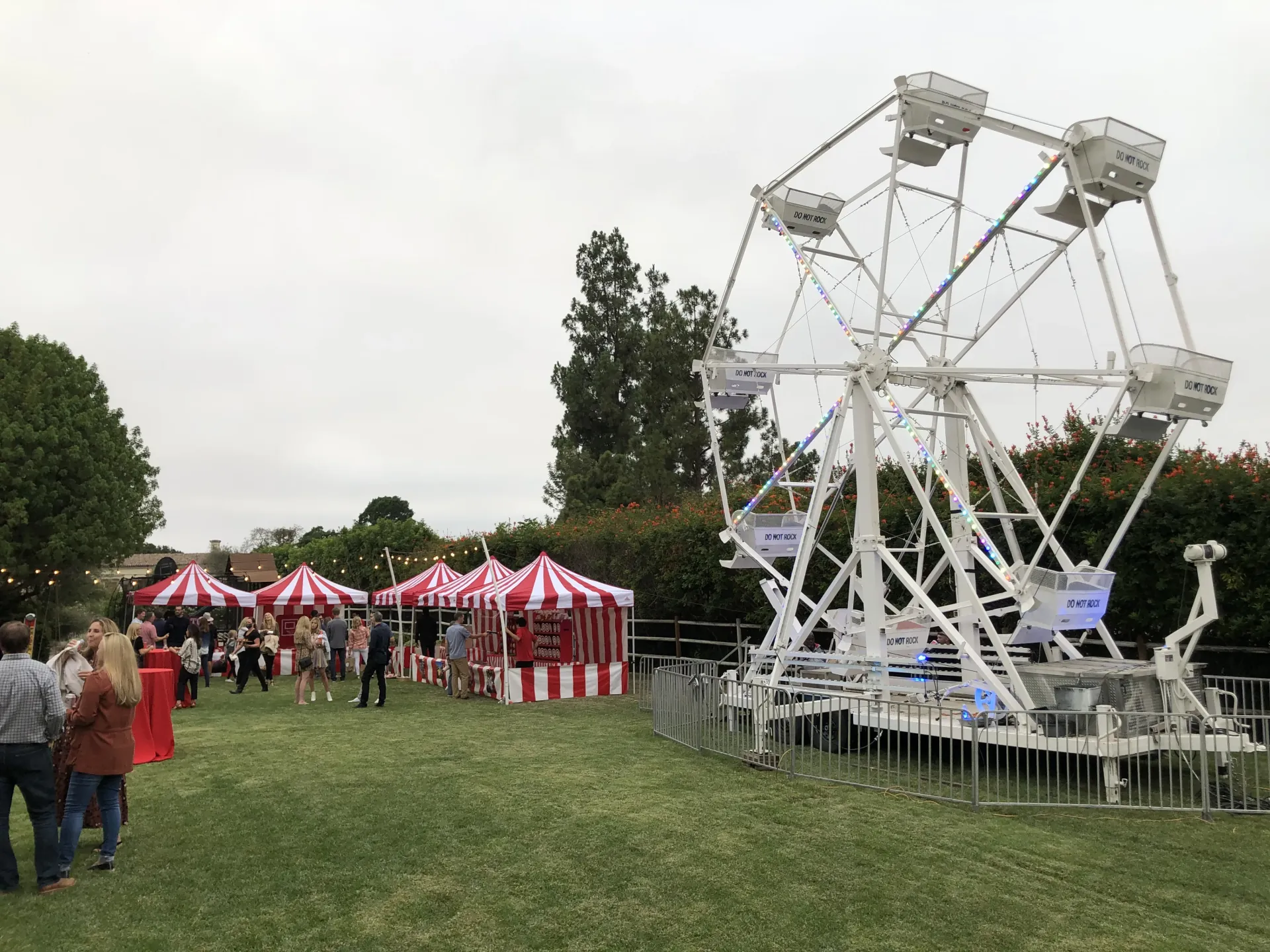
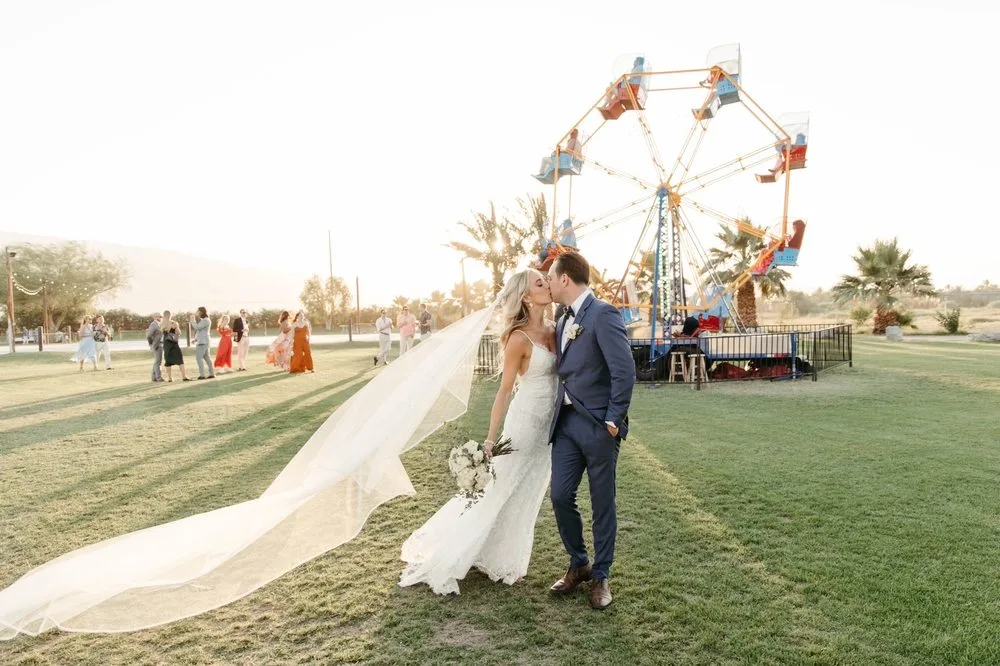
Rides anchor the far end of a carnival or festival footprint, away from the game booths and concessions, because they need clear approach lanes for the delivery trailer and enough flat ground to level the base. At Tierrasanta Community Park & Recreation Center that usually means the paved lot or a section of open field; at an SDUSD elementary or middle school it's the blacktop or upper play area, the same ground school carnivals already use for booths. A trackless train loops a wider perimeter path if the site allows it; a mini ferris wheel or swing ride sits on a single leveled pad with a roped queue line running to one side.
A trained operator stays at the ride for the entire booking — checking harnesses or safety bars, managing the line, and starting and stopping cycles — which is different from how My Little Carnival staffs a game booth or concession stand. Guest counts for a single school carnival or community festival in Tierrasanta usually run one or two ride units; larger city-wide festivals stack three or more across a wider footprint.
What's typically included.
-
Ride selection.
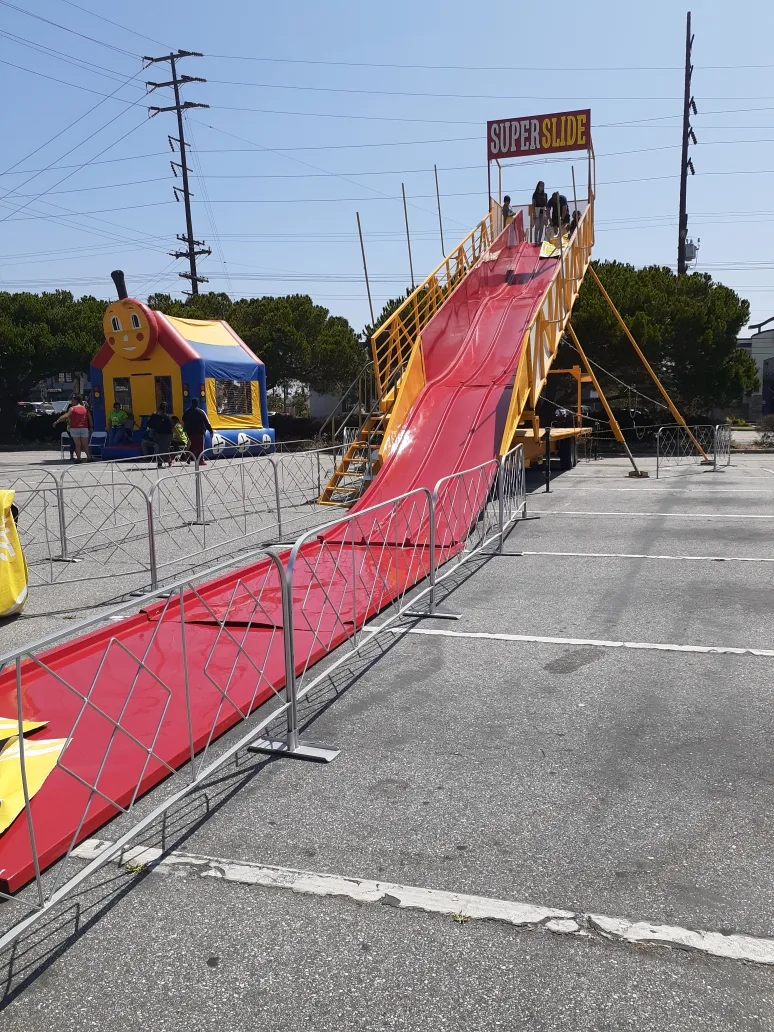
Trackless train, carousel, mini ferris wheel, swing ride, or teacups — chosen to match the footprint available and the age range of the expected crowd.
-
Trained ride operator.
Every ride runs with a staffed operator for the full booking window — checking restraints, managing the queue, and running the cycle. This is included by default, not an add-on, because of the insurance and safety requirements tied to moving equipment.
-
Delivery, leveling, and setup.
Crew hauls the ride in, sets it on leveled ground or a portable pad, and runs a safety check before the event opens. Setup time scales with the ride — a mini ferris wheel takes longer than a trackless train.
-
Power hookup.
Rides pull real amperage. My Little Carnival brings a generator sized to the ride when the site doesn't have a dedicated circuit that can handle the load — most Tierrasanta park and school sites need one.
-
Queue line and signage.
Ropes or stanchions to manage the line, plus height or weight signage posted at the entrance so families know before they queue up.
-
Breakdown and haul-out.
Ride comes down, gets loaded back on the trailer, and the ground is left clear — no residue from leveling blocks or generator placement.
Typical timeline for amusement rides in Tierrasanta.
- 1
6-10 weeks out
Site details get scoped — available flat footprint, power access, and expected guest count — since ride choice depends on all three. Fall school carnivals and spring festivals both fill early.
- 2
2-3 weeks out
Ride selection and quote are finalized, and any facility-use paperwork for a school campus or park-use permit for Tierrasanta Community Park gets submitted.
- 3
Load-in and leveling
Crew arrives well ahead of doors-open to position the trailer, level the ride, run power, and complete a safety check before the operator takes over.
- 4
Event day + breakdown
The operator runs the ride for the contracted window; crew breaks it down and hauls out once the event ends, typically within an hour.
Specifics for Tierrasanta.
- Flat ground is the limiting factor: Tierrasanta's terrain is hillier than much of San Diego, so usable flat space concentrates on the paved lot and fields at Tierrasanta Community Park & Recreation Center and on SDUSD campus blacktops. Ride selection often comes down to what footprint the site actually offers.
- Power needs: A mini ferris wheel or swing ride draws more power than a standard 20-amp outlet supplies. My Little Carnival brings a generator sized to the ride for sites without a dedicated event hookup, which covers most park and school venues in the area.
- Permits and facility use: Events at Tierrasanta Community Park & Recreation Center go through the City of San Diego's park facility-use process; events on an SDUSD campus go through the school's facility-use application, both of which typically require a Certificate of Insurance from the production vendor.
- Mission Trails as backdrop, not venue: Mission Trails Regional Park shapes the neighborhood's outdoor identity, but as a protected nature reserve it isn't a typical ride venue — events with amusement rides stay on the paved and turf areas designed for that kind of equipment and foot traffic.
- Ride count scales with guest count: A single school carnival or neighborhood festival usually supports one or two ride units without long lines; larger city-wide events add a third ride or stagger operating hours to keep queues manageable.
- Wind and weather holds: Southern California's typically dry climate keeps rain delays rare, but Tierrasanta's canyon-adjacent terrain can produce gustier afternoon wind than flatter parts of San Diego. Ride operators pause taller units like a mini ferris wheel during sustained high wind as a standard safety practice.
Common questions.
Is an operator included with the ride, or do we need to staff it ourselves?
A trained operator is included with every ride booking for the entire event window. This isn't optional the way it can be for a game booth — rides require a staffed operator for insurance and safety reasons.
Do you need a generator, or can we use the site's power?
Most rides draw more power than a standard outlet handles. My Little Carnival brings a generator sized to the ride whenever the venue doesn't have a dedicated circuit that can carry the load, which is the case at most Tierrasanta park and school sites.
What kind of ground do rides need?
Flat, level, and solid — paved lots, blacktop, or firm turf all work. Sloped ground or soft soil isn't usable without additional leveling equipment, which is why most Tierrasanta bookings land at the community park or a school campus rather than a residential yard.
Are there height or weight limits on the rides?
Yes — each ride type has its own posted height, weight, or age guidance (teacups and carousels skew younger; trackless trains and mini ferris wheels fit a wider range). Signage goes up at the queue entrance so families can check before getting in line.
What happens if it's windy on event day?
Ride operators follow standard wind-hold practices and will pause a taller ride like a mini ferris wheel during sustained gusts. Ground-level rides like a trackless train are less affected. This is handled on-site by the operator, not something you need to plan around in advance.
How many rides do we actually need?
For a typical school carnival or neighborhood festival, one or two ride units keep lines reasonable. Larger community-wide festivals sometimes add a third ride or run staggered operating windows to manage crowd flow — this gets sized during the quote conversation based on expected attendance.
About this guide.
This local guide was compiled by My Little Carnival, the San Diego County operation of My Little Carnival — producers of school carnivals, community festivals, and full-scale event productions across the region.
Helpful local references: San Diego Unified School District · City of San Diego Parks & Recreation
Amusement Rides in nearby cities.
Planning an event with amusement rides in Tierrasanta?
Share your venue, expected guest count, and rough dates — and My Little Carnival will scope which rides fit the footprint and send a sized quote.
Get a quote →