
carnival games in University City.
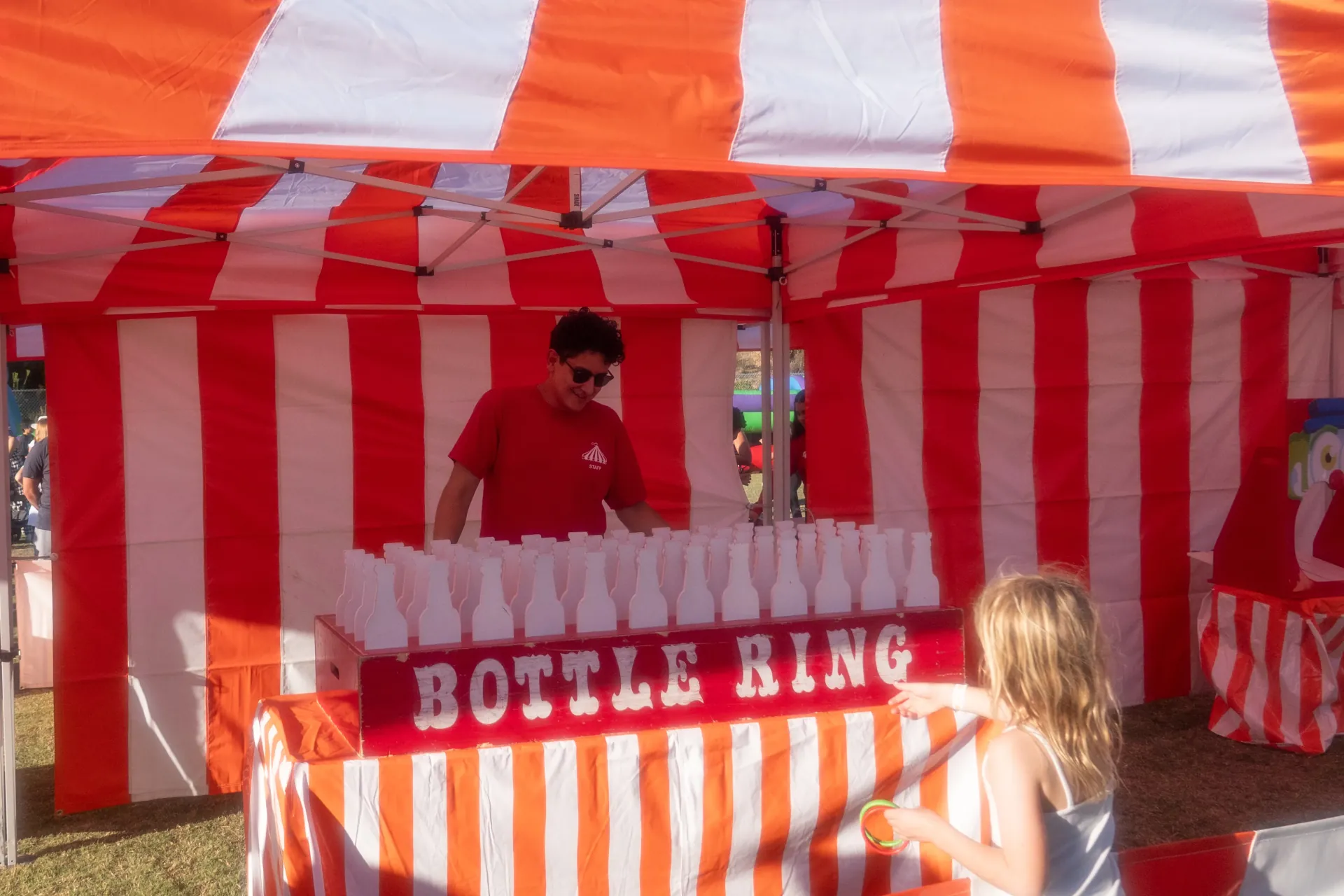
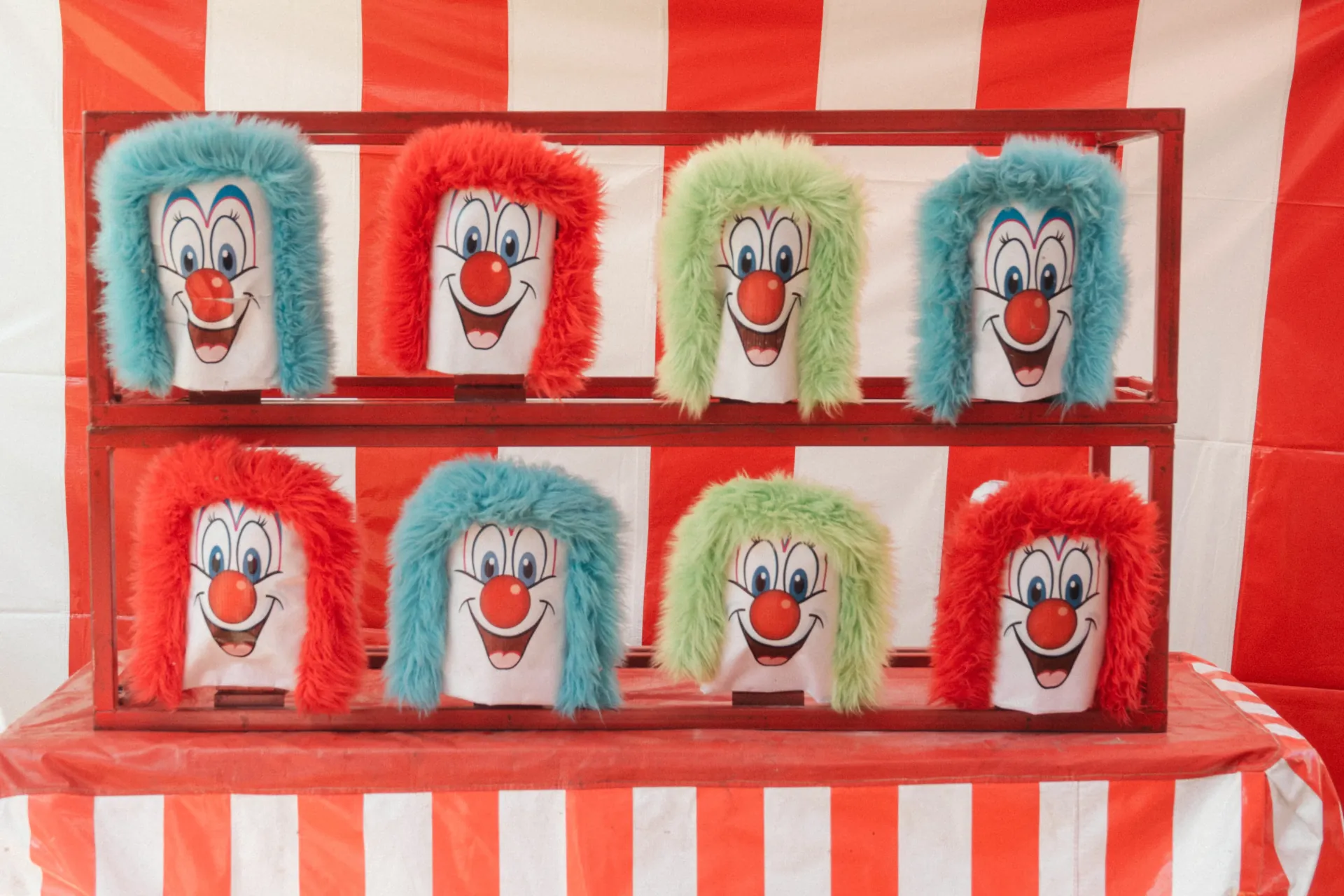
Carnival games are freestanding booth-style attractions—ring toss, bottle ring, dart-the-stars, plinko, balloon pop, milk-can toss, basketball pop, fishing for ducks—each built around a simple skill-or-chance mechanic and stocked with prizes for every player who steps up. They're the backbone of the classic carnival midway: a run of six to twelve booths lined up so guests can wander from one to the next, win something small, and move on. In University City, My Little Carnival brings carnival games as part of a full event production—school fall festivals, HOA and community fundraisers, corporate picnics tied to the UTC business corridor—rather than as a single booth dropped off on its own. This is a local guide to carnival games in University City: how many booths a typical event needs, what's included with each one, and where these setups tend to land around the neighborhood.
University City sits between the UC San Diego campus and the UTC retail and business corridor, which gives it a mix of school-based and workplace-based carnival demand. Elementary and middle schools within San Diego Unified School District run the bulk of fall-festival and spring-carnival bookings, typically on a blacktop or multipurpose court. Community and neighborhood fundraisers gravitate toward Standley Recreation Center and Standley Community Park, both of which have open turf and paved areas that handle a multi-booth game lineup well. Marian Bear Memorial Park sees occasional use for larger community gatherings that want more open space than a school campus offers.
My Little Carnival produces carnival games as part of full event packages across University City and the broader San Diego area, sizing the game lineup to the guest count and footprint of each booking.
How carnival games show up at an event in University City.
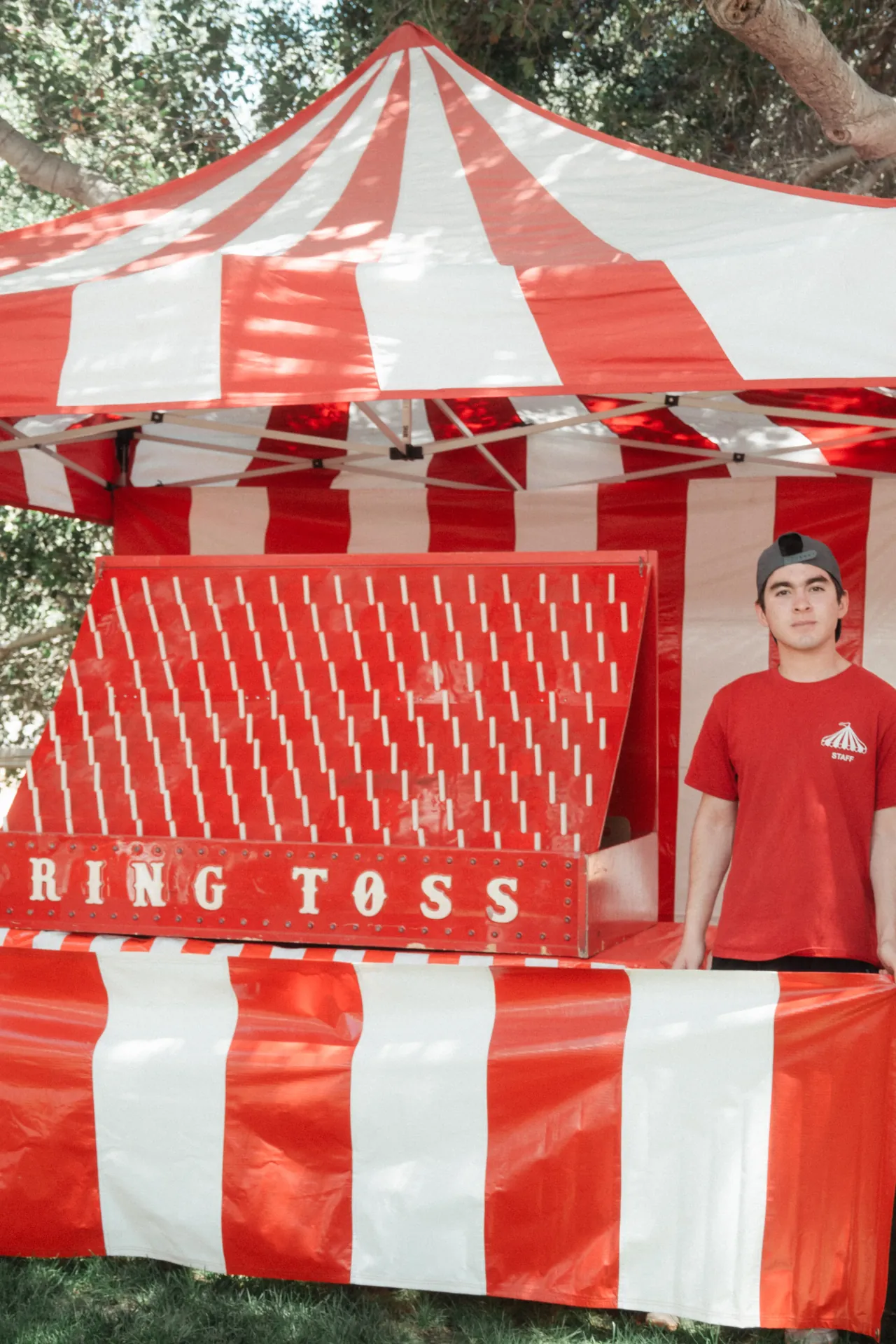
A typical setup runs six to twelve games arranged in a row or loose horseshoe, spaced enough that lines don't cross into each other. Ring toss and bottle ring tend to anchor one end because they read as classic carnival from a distance; plinko and balloon pop usually sit toward the middle, where their bigger footprint and visual color pull people in. Milk-can toss and basketball pop skew toward older kids and adults looking for a harder challenge, and fishing-for-ducks is almost always placed near the entrance because it's the easiest win for the youngest guests.
At a school carnival within San Diego Unified, this lineup gets built into the larger event alongside concessions and booths, with games staffed by an My Little Carnival attendant or by parent volunteers depending on what the PTA books. At a community fundraiser near Standley Community Park or a corporate event tied to the UTC area, the same core lineup scales up or down—smaller footprints lean toward four or five games with tighter spacing, larger guest counts add booths and spread the layout across more turf or pavement.
What's typically included.
-
Game booth units.
Each game—ring toss, bottle ring, plinko, balloon pop, milk-can toss, basketball pop, dart-the-stars, fishing for ducks—arrives as a self-contained, freestanding unit with signage and a prize display built in.
-
Prizes for every player.
Consolation and top-tier prizes are stocked per booth and matched to the expected guest count, so nobody walks away from a game empty-handed.
-
Attendant, optional.
Games are not staffed by default. An My Little Carnival attendant per booth is available as an add-on, quoted per booth or per hour, or the booths can run on parent or staff volunteers—common at school events.
-
Booth variety matched to age range.
The six-to-twelve game lineup is picked to fit the guest mix—more chance-based, easy-win games for younger crowds, more skill-based games when the audience skews older.
-
Delivery, setup, and breakdown.
Booths are delivered, positioned, and staged as part of the full event build-out, then broken down and hauled out after the event closes—no volunteer lifting required.
-
Signage and layout planning.
Each booth carries game-specific signage and prize displays, and the overall row or horseshoe layout is planned around the venue's footprint before event day.
Typical timeline for carnival games in University City.
- 1
Inquire
Share the event type, guest count, and venue—school campus, Standley Community Park, a backyard, or a corporate site near UTC—and My Little Carnival scopes a game count and lineup.
- 2
Quote and game selection
The specific mix of games gets picked based on age range and available footprint, and a deposit locks the date as part of the full event booking.
- 3
Delivery and setup
Booths arrive as part of the event build-out, typically one to two hours before doors open, and get positioned into the planned row or horseshoe layout.
- 4
Event window and breakdown
Games run for the contracted window—staffed by an attendant or volunteers—then get broken down and hauled out once the event wraps.
Specifics for University City.
- Surface: Game booths sit comfortably on blacktop, turf, or pavers—the school courts common across San Diego Unified campuses and the paved multi-use areas at Standley Community Park both work without modification.
- Power needs: Most games run without power; a few lighted or motorized units (like some plinko boards) pull a small load, which My Little Carnival accounts for during the quote rather than assuming an on-site outlet.
- Venue permits: Public-park bookings at Standley Community Park or Marian Bear Memorial Park typically need a city park-use permit and a certificate of insurance; school campuses within San Diego Unified School District generally route authorization through the site office.
- Booth count guidance: Rough rule of thumb is one game per thirty to fifty guests for steady play without long lines. A 150-guest school carnival runs comfortably on four to six games; a 400-guest community event usually wants eight to twelve.
- Attendant vs. Volunteer: School and PTA events often staff games with parent volunteers to keep costs down; corporate and community events near UTC more often add My Little Carnival attendants so nobody on staff has to learn game mechanics on the fly.
- Weather: Southern California's typically dry climate keeps outdoor game bookings low-risk most of the year; open-turf venues like Marian Bear Memorial Park are the ones worth a rain-date conversation for winter dates.
Common questions.
Is an attendant included with each game?
Not by default. Attendants are available as an add-on, quoted per booth or per hour, or the games can be staffed by volunteers—common at school carnivals and PTA fundraisers.
What surface do the games need?
Blacktop, turf, and pavers all work without special preparation. Games are freestanding, so there's no need for stakes or anchoring on hard surfaces.
Do the games need power?
Most don't. A handful of lighted or motorized units pull a small electrical load, which gets accounted for in the quote rather than assumed available on-site.
Are prizes really included with every game?
Yes—each booth is stocked with consolation and top-tier prizes sized to the expected guest count, so every player who plays walks away with something.
How many games should we book?
A rough guide is one game per thirty to fifty guests. Most school carnivals in University City run four to eight games; larger community or corporate events go up to ten or twelve.
Is there an age limit on the games?
No hard age limit—game difficulty is picked to fit the crowd. Chance-based games like fishing for ducks and ring toss suit younger kids; milk-can toss and basketball pop tend to draw older kids and adults.
About this guide.
This local guide to carnival games in University City was compiled by My Little Carnival, a division of My Little Carnival that produces school carnivals, community fundraisers, and full-scale event carnivals across San Diego County.
Helpful local references: San Diego Unified School District · Standley Recreation Center
Carnival Games in nearby cities.
Planning carnival games for an event in University City?
Share your guest count, venue, and event type, and My Little Carnival will scope a game lineup and send a quote.
Get a quote →