carnival booths in Valley Center.
A carnival booth is the striped red-and-white structure that gives a carnival event its signature look — the game station where kids toss rings or knock down bottles, the concession counter where popcorn gets scooped, the prize window, the ticket booth at the entrance, or the backdrop guests line up in front of for photos. Booths come in three standard sizes — 5x5 for a single game or a ticket window, 8x8 for concessions or a two-lane game, and 10x10 for the bigger prize-heavy stations — and a typical event lays out anywhere from four to fifteen of them in a row or a horseshoe. Carnival booths in Valley Center show up as part of a complete event My Little Carnival produces — school carnivals, church fall festivals, ranch-style private parties — rather than as something dropped off on its own.
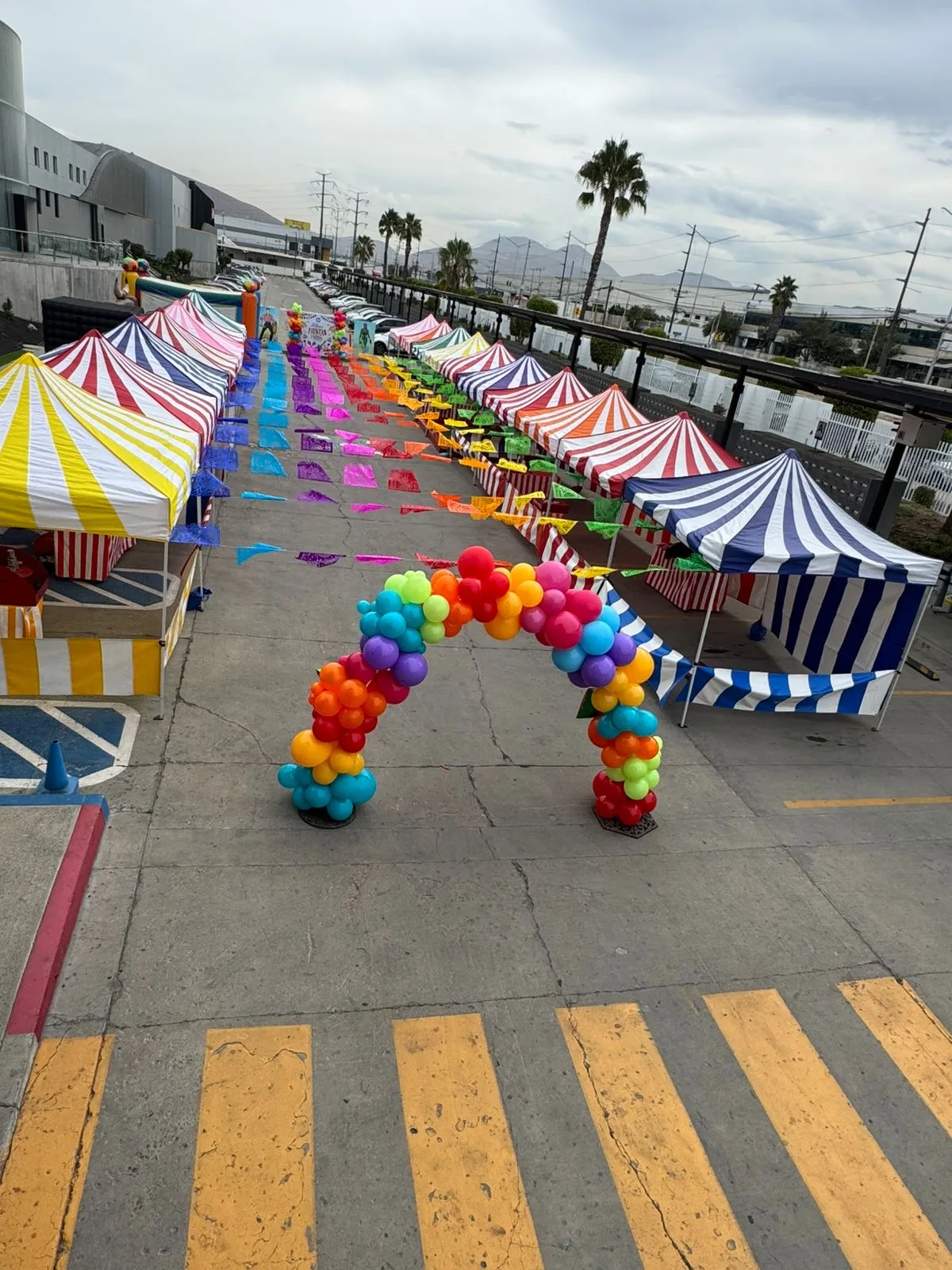
Valley Center's mix of school-district campuses, the Community Hall and Park lawn, and rustic private venues like Bates Nut Farm means booth layouts here vary more than in a dense suburban city. A school carnival on a Valley Center-Pauma Unified campus needs a tight, blacktop-friendly horseshoe; a fall festival at Bates Nut Farm has room to spread booths across open grass with a rural backdrop that suits the theme on its own.
My Little Carnival produces carnival events across Valley Center and the surrounding North County backcountry, sizing the booth count and layout to whatever ground the venue offers.
How carnival booths get used at an event in Valley Center.
At a school carnival, six to ten booths typically line up along a blacktop play area or spill onto an adjacent field, alternating games with a couple of concession stands and a prize table near the center. At a private party or ranch event — the kind that fits well at a venue like Bates Nut Farm — booths get more spread out, with wider walking lanes and a single ticket or check-in booth near the entrance instead of a formal ticket line.
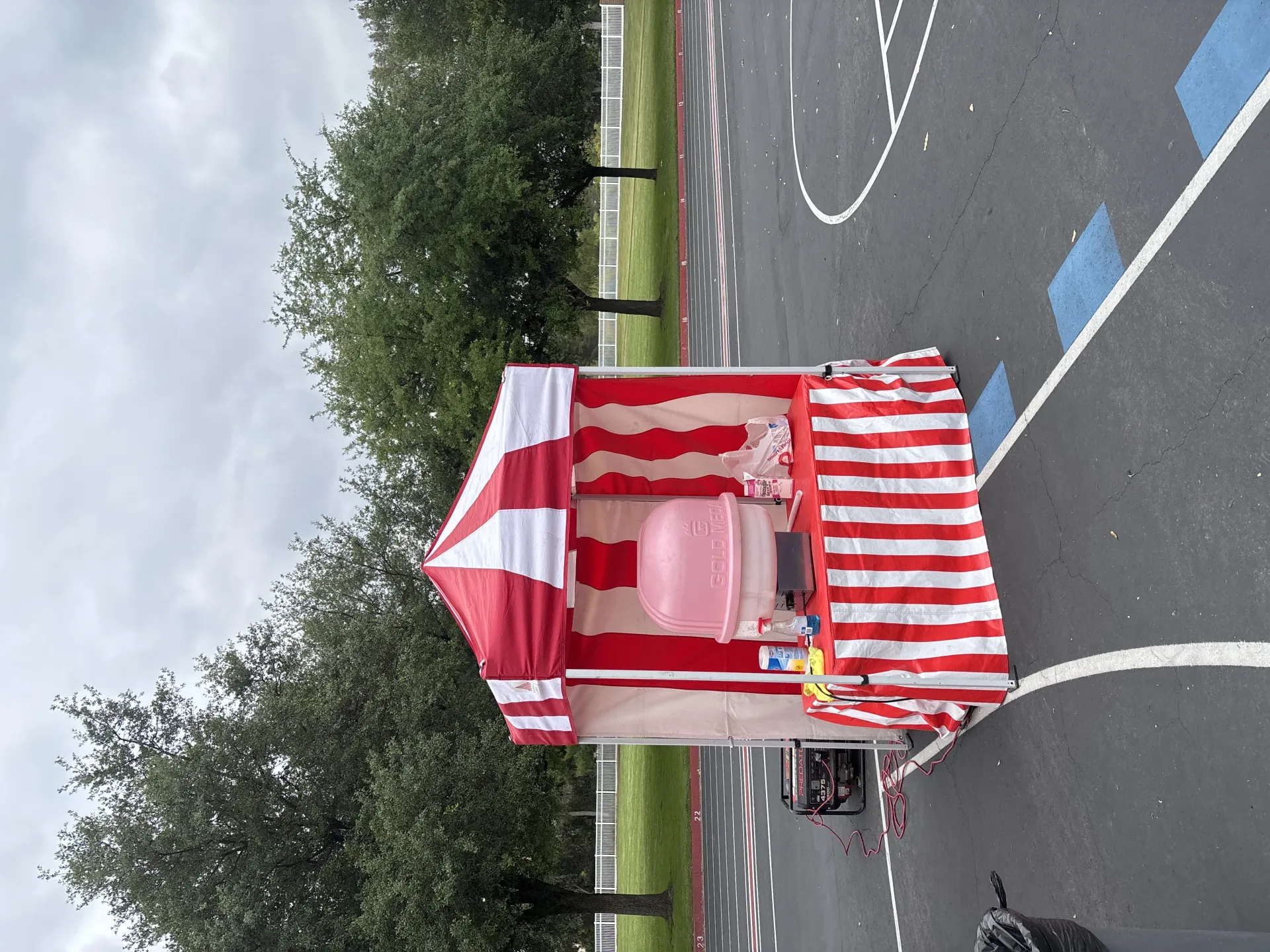
Inside a full My Little Carnival event, booths aren't rented piecemeal — they arrive as a set, sized to the guest count and the games or concessions the event calls for. A 5x5 works fine for a single ring-toss station or a ticket window; an 8x8 gives a concession counter room for a popcorn popper and a cotton candy spinner side by side; a 10x10 is the size most hosts pick when a booth needs to double as a bigger prize display or a photo backdrop with props.
What's typically included.
-
Booth structure and striping.
Frame, canopy, and full red-and-white skirting in 5x5, 8x8, or 10x10 sizes, set up level and secured to whatever surface the venue offers.
-
Game or concession fixtures.
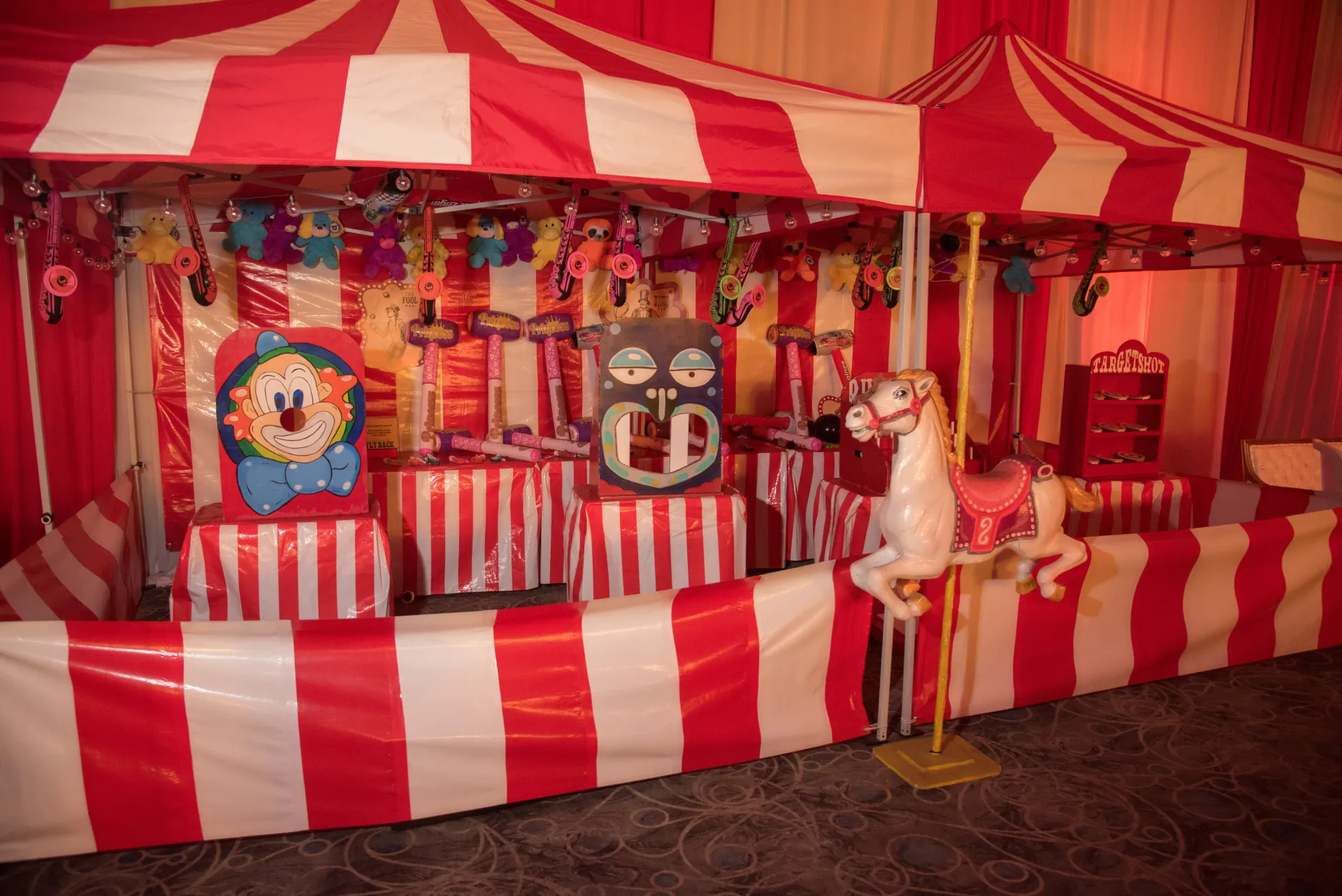
Counter surface, game backboard or prize rail, and any mounting hardware needed for the specific game or concession assigned to that booth.
-
Signage.
Booth-front signage identifying the game, prize tier, or concession item, matched to the event's overall look.
-
Delivery and layout.
Booths arrive as part of the event setup and are arranged in a row or horseshoe based on the venue's footprint and expected guest flow.
-
Breakdown.
Crew strikes every booth after the event window closes; nothing is left for volunteers to fold up or haul out.
-
Attendants — optional.
Booth staffing is available as an add-on, quoted per booth or per hour, or can be volunteer-run by the host organization or family.
Typical timeline for carnival booths in Valley Center.
- 1
Inquiry
Share the venue, expected guest count, and whether booths are for games, concessions, prizes, or a mix. This sets the booth count and size mix for the quote.
- 2
Quote and booking
Booth count, sizes, and game or concession assignments get finalized alongside the rest of the event scope. A deposit locks the date.
- 3
Delivery and setup
Booths are delivered and arranged as part of the full event setup, ahead of the guest arrival window.
- 4
Event day and breakdown
Booths run for the contracted window, then crew strikes everything — no gear left behind at the school, park, or ranch venue.
Specifics for Valley Center.
- Surface variety: Valley Center venues range from blacktop campus yards at Valley Center-Pauma Unified schools to open grass at Bates Nut Farm and the Valley Center Community Hall and Park lawn. Booths set up on either, though grass sites usually get staked rather than sandbagged.
- Wind and open ground: Valley Center's inland, semi-rural terrain sees more open-field wind exposure than coastal cities. Booths on unshaded grass at venues like Bates Nut Farm get extra staking or ballast on breezier days.
- Power for concessions: Popcorn poppers and cotton candy spinners each need a dedicated circuit. Rural venues without reliable outdoor outlet access — a common situation outside campus buildings — often need a generator brought in as part of the setup.
- School district paperwork: Events on Valley Center-Pauma Unified School District campuses typically require a facility-use request and a Certificate of Insurance naming the district as additional insured, arranged ahead of the event.
- Booth count guidance: A backyard or small church event runs comfortably on four to six booths; a full school carnival at the higher end of Valley Center's enrollment sizes usually wants eight to twelve, split between games and concessions.
- Ranch and open-venue layouts: At larger rural venues, booths often spread wider apart than a tight campus horseshoe, with room between stations for foot traffic and animal-adjacent attractions if the event includes them.
Valley Center, CA.
ZIPs: 92082
My Little Carnival delivers carnival booths throughout Valley Center and the surrounding San Diego County area. Pin shows the city center; we cover every ZIP listed above.
Common questions.
What sizes do carnival booths come in?
5x5, 8x8, and 10x10. A 5x5 suits a single game or ticket window, an 8x8 fits most concession setups, and a 10x10 works for bigger prize displays or a photo-backdrop booth.
Do booths come with an attendant?
Not by default. Attendants for games and concessions are available as an add-on, quoted per booth or per hour, or the booths can be volunteer-run — common at school carnivals where PTA parents staff the stations.
Can booths be set up on grass?
Yes. Booths go up on grass, blacktop, or pavers. Grass setups are usually staked; hard surfaces use weighted ballast instead.
Do we need a generator?
Only for booths pulling power — mainly concession machines. Game and prize booths don't need electricity. At venues without accessible outdoor outlets, a generator gets added to the setup.
How many booths does our event need?
A rough guide is one booth per 30-50 guests for steady play without long lines. Smaller private events run on four to six; a larger school carnival typically uses eight to twelve.
What happens if it's windy on event day?
Booths are staked or ballasted based on the surface, and setups on more exposed grass venues get extra anchoring. Southern California's typically dry climate keeps rain risk low, but wind is the more relevant factor on open ground.
About this guide.
This local guide to carnival booths in Valley Center was put together by My Little Carnival, a Southern California carnival production company that builds full event setups — booths, games, concessions, and more — for schools, churches, and private venues across San Diego County.
Helpful local references: Valley Center-Pauma Unified School District · Valley Center Community Hall and Park
Carnival Booths in nearby cities.
Planning an event with carnival booths in Valley Center?
Tell My Little Carnival your venue, guest count, and whether you need games, concessions, or both — and get a quote sized to your booth count.
Get a quote →