
school carnivals in Warner Springs.
A school carnival is an on-campus fundraising event built around carnival game booths, concession stands, and a ticket- or wristband-based play system that lets a PTA or school foundation raise money for the year in a single afternoon. Equipment shows up the morning of, staff run the booths, and families handle sales and volunteering. School Carnivals in Warner Springs work the same way in principle as anywhere else in the county, but the backcountry setting changes the practical details — one small campus, a wide-open rural footprint, and longer travel distances for any vendor coming from the coast. This guide covers how a carnival typically comes together here, what to plan around, and what a turnkey setup includes.
Warner Springs sits in San Diego County's backcountry, well east of the coastal cities, and the community it serves is small and spread out — ranch families, residents around Lake Henshaw, and those near Warner Springs Ranch Resort. Warner Unified School District covers a large rural attendance area with Warner Elementary School as its hub, which means a school carnival here is usually a single, well-attended community event rather than one of several competing school fundraisers happening the same weekend.
My Little Carnival produces school carnivals across San Diego County, including backcountry campuses like Warner Springs where logistics and travel distance factor into planning earlier than they would closer to the coast.
How a school carnival actually unfolds in Warner Springs.
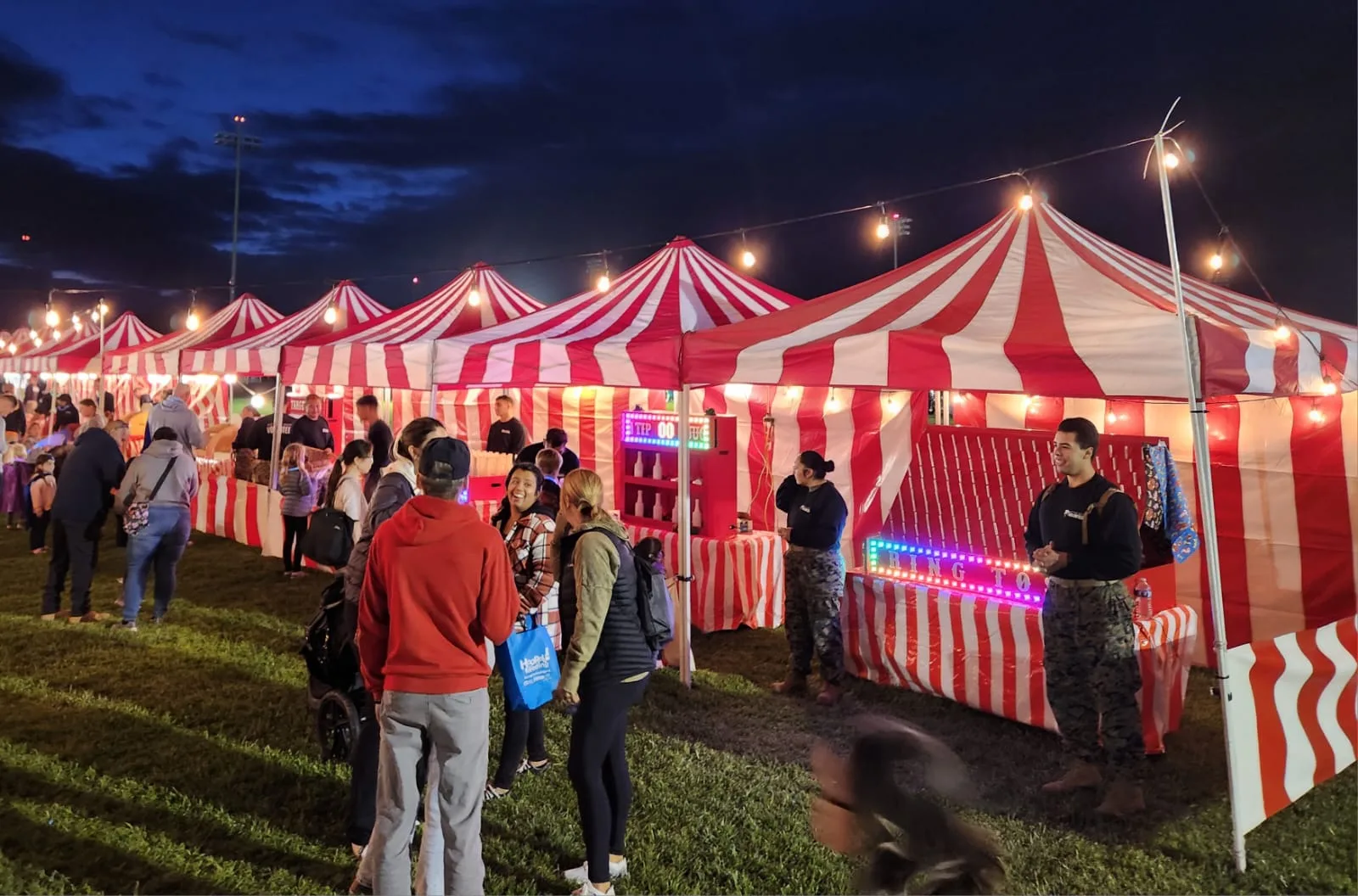
Because the school and surrounding community are small, a carnival here often draws a large share of the district's enrolled families plus neighbors from the wider Warner Springs and Lake Henshaw area who come out for what functions as a community gathering as much as a school fundraiser. The layout tends to spread across whatever flat open ground the campus offers — sometimes a dirt lot, sometimes a grass field — since there's rarely a paved blacktop the size of a typical suburban campus.
A handful of striped booths anchor the games, a concession table runs popcorn or cotton candy nearby, and a prize table sits close to the entrance. With a smaller crowd than a big-city elementary school, lines move quickly and the pace is relaxed — kids often loop back through the same two or three favorite games rather than working through a long row of booths. My Little Carnival scales the booth count and staffing to match, so a 100-guest event doesn't get overbuilt with more equipment than the space or crowd calls for.
What's typically included.
-
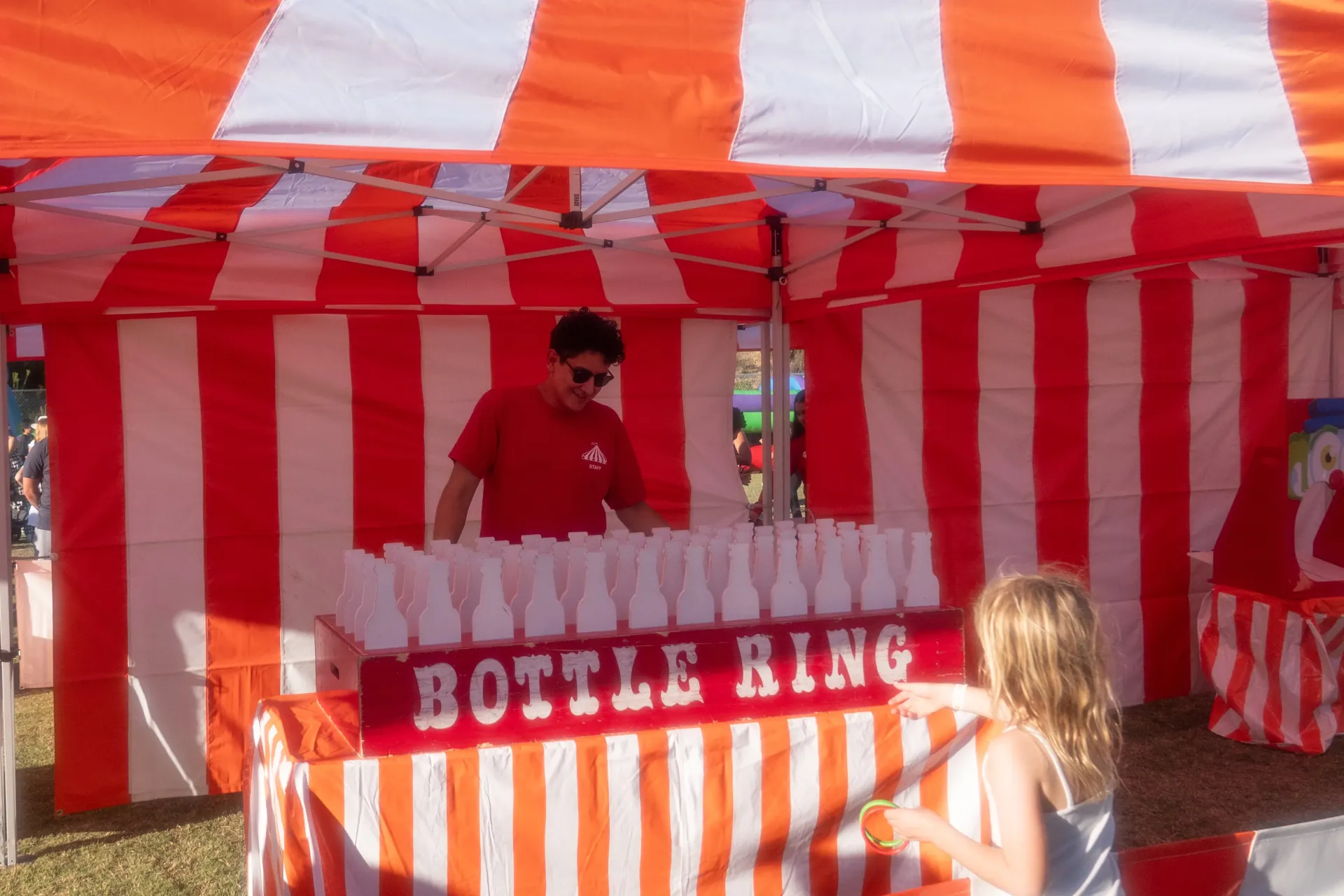
Striped game booths.
Two to six booths depending on scope — enough for a compact rural campus without overwhelming the available space.
-
Carnival games + prizes.
Ring toss, bottle knockdown, balloon pop, and similar classics, each stocked with prizes sized to the expected guest count.
-
Concession stations.
Popcorn, cotton candy, or snow cones — supplies, scoops, and serving materials included, run by trained staff.
-
Trained attendants.
Staff to run games and concessions so the handful of parent volunteers available in a small community aren't stretched across every station.
-
Setup and breakdown.
Crew handles delivery, setup, and pack-out the same day, which matters more in a location without easy same-day equipment access nearby.
-
Certificate of Insurance.
My Little Carnival provides a COI naming the school district as additional insured, matching what most district facility-use processes require regardless of campus size.
Typical timeline for school carnivals in Warner Springs.
- 1
10-14 weeks out
Given the travel distance from the coast, booking a carnival production earlier gives more flexibility on date and scope than the 6-8 week lead time common closer to San Diego.
- 2
4-6 weeks out
Booth count, concession lineup, and prize tier get locked in. Flyers and ticket presale go out to the district's smaller, tighter-knit family list.
- 3
Week of
Final guest-count check and a walk-through of the available campus footprint — dirt lot, field, or paved area — so equipment placement is settled before crew arrives.
- 4
Event day
Crew arrives early to allow for the drive time, sets up, runs the event, and packs out the same day. Volunteers handle ticket sales and prize redemption as usual.
Specifics for Warner Springs.
- Single-campus planning: With one elementary school anchoring the district, there's typically one carnival date per year rather than several competing school events — planning tends to be less rushed as a result.
- Ground surface: Many backcountry campuses don't have a large paved blacktop. Booths and machines are set up on whatever flat dirt, gravel, or grass area the school has, which affects layout more than it does in denser suburban settings.
- Power and generators: Rural campuses often have limited outdoor outlet access. My Little Carnival brings a generator by default for concession equipment rather than assuming an on-site hookup will cover the load.
- Travel distance: Warner Springs sits well outside the coastal service radius most vendors default to, so booking further in advance helps lock in a date and avoid last-minute scheduling conflicts.
- Community turnout: Families from the wider Warner Springs and Lake Henshaw area, including those connected to Warner Springs Ranch Resort, often turn out even if they aren't currently enrolled at the school, which can push attendance higher than the district's enrollment alone would suggest.
- Climate considerations: Backcountry elevation means cooler mornings and evenings than the coast, even during Southern California's typically dry climate. A midday event window tends to be more comfortable than early morning or dusk.
Common questions.
How far in advance should we book a carnival in Warner Springs?
10-14 weeks out is a safer window than the 6-8 weeks common near the coast, mainly because of travel distance and to lock in a Saturday before other bookings fill the calendar.
Does a small school carnival need fewer booths?
Usually, yes. A campus expecting 100-200 guests runs comfortably on 2-4 booths plus one or two concession stations, rather than the 8-12 booths a larger suburban school might book.
What if the campus doesn't have a paved area?
Game booths and concession stations work fine on dirt, gravel, or grass. The production team walks the available space ahead of the event to plan booth placement and generator routing.
Do we still need a Certificate of Insurance?
Yes — most school districts, including smaller rural ones, require a COI naming the district as additional insured before approving a facility-use request. My Little Carnival provides this as part of booking.
Can non-enrolled families from the area attend?
Almost always, and it's common. School carnivals in small communities like Warner Springs often double as a general community event, with turnout from beyond the district's enrolled families.
What ticket model works best for a smaller crowd?
Both ticket strips and unlimited-play wristbands work at smaller scale. With shorter lines already built in by the smaller crowd size, the choice comes down more to fundraising preference than to congestion management.
About this guide.
This local guide was compiled by My Little Carnival, the San Diego County operation of My Little Carnival — producers of school carnivals, backyard birthdays, and community events across the region, including its backcountry communities.
Helpful local references: Warner Unified School District · Warner Springs Ranch Resort
School Carnivals in nearby cities.
Planning a school carnival in Warner Springs?
Share your date, expected guest count, and rough budget, and My Little Carnival will scope a quote sized for a rural campus and its available space.
Get a quote →