community + hoa events in Carmel Valley.
A community or HOA event is a resident-facing gathering, usually two to four hours, organized by a homeowners association board, a neighborhood association, or a property manager to get residents onto shared ground for a shared afternoon. The setting is whatever common space the community has: a park within the development, a clubhouse lawn, or the deck around a shared pool. Carnival games and concessions work as the entertainment anchor because they don't require programming, scripts, or a stage; kids have something to do, adults have a reason to stand around and talk to a neighbor they've only ever waved at, and the whole thing runs itself once the booths are up. This is a local guide to community and HOA events in Carmel Valley: how boards and associations here typically plan them, which shared spaces host them, and what a right-sized carnival setup adds to a resident day that a rented bounce house alone doesn't.
Carmel Valley is a heavily HOA-governed, master-planned community along the 56, and most of its newer-construction neighborhoods carry a homeowners association with its own common areas: a pocket park, a clubhouse, or a resident pool. When an event outgrows those common areas, Carmel Valley Community Park and the Carmel Valley Recreation Center are the two public venues boards and associations turn to for more open lawn than a private green offers. Families in the community feed into Del Mar Union School District for elementary grades and San Dieguito Union High School District from middle school on, and a fair share of resident-day guest lists are built around those same school rosters, since neighbors' kids already know each other from the same classrooms.
My Little Carnival produces community and HOA events across San Diego County, sizing crew and equipment to whatever a given development's common area can actually hold.
How a community or HOA event typically comes together in Carmel Valley.
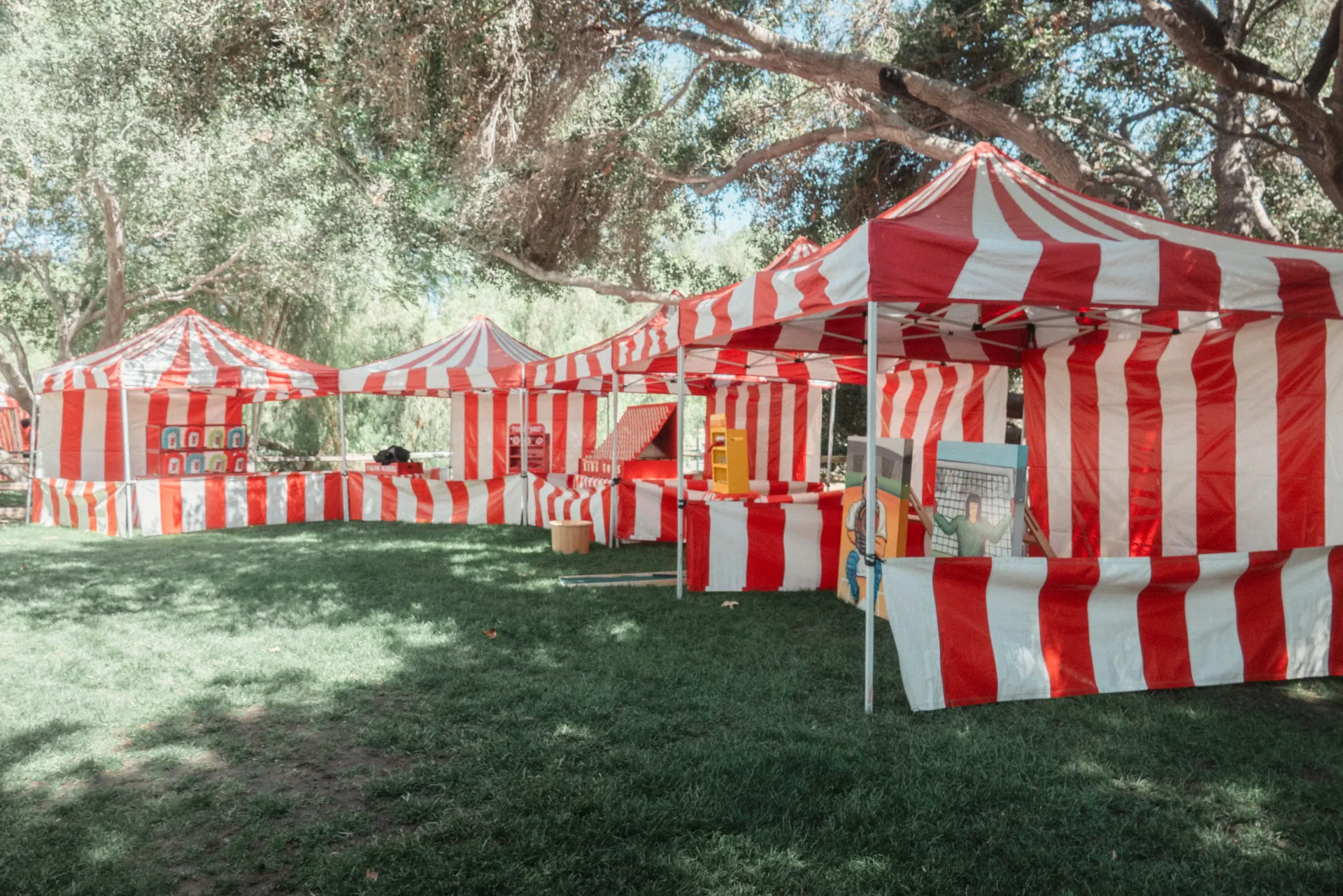
Setup usually takes under two hours for a resident-day scope, which matters because most HOA common areas are in daily use right up until the event starts. Booths get positioned along whatever flat edge the space offers, whether that's the grass strip beside a clubhouse, the paved apron around a pool, or the open lawn at a park within the development. Concession equipment lands near an outlet or a generator, kept a reasonable distance from any pool deck. By the time residents start walking over, games are staffed, the popcorn machine is running, and there's a visible reason to bring the kids down rather than just RSVP and stay home.
The board or the organizing committee handles the parts that are specific to the community: resident communication, RSVP tracking, any raffle or welcome table, and coordination with property management if the venue is a shared amenity rather than a public park. My Little Carnival handles the carnival side of it: booths, games, prizes, and concessions scaled to the RSVP count rather than a flat package, so a 40-household pool kickoff and a 300-household summer block party get sized differently even though the equipment list looks similar on paper.
What's typically included.
-
Right-sized booth setup.
Two to eight striped game booths scaled to a community park lawn, a clubhouse patio, or a pool-area courtyard rather than a full festival footprint. Layout adapts to whatever shape the common area actually is.
-
Family-friendly games and prizes.
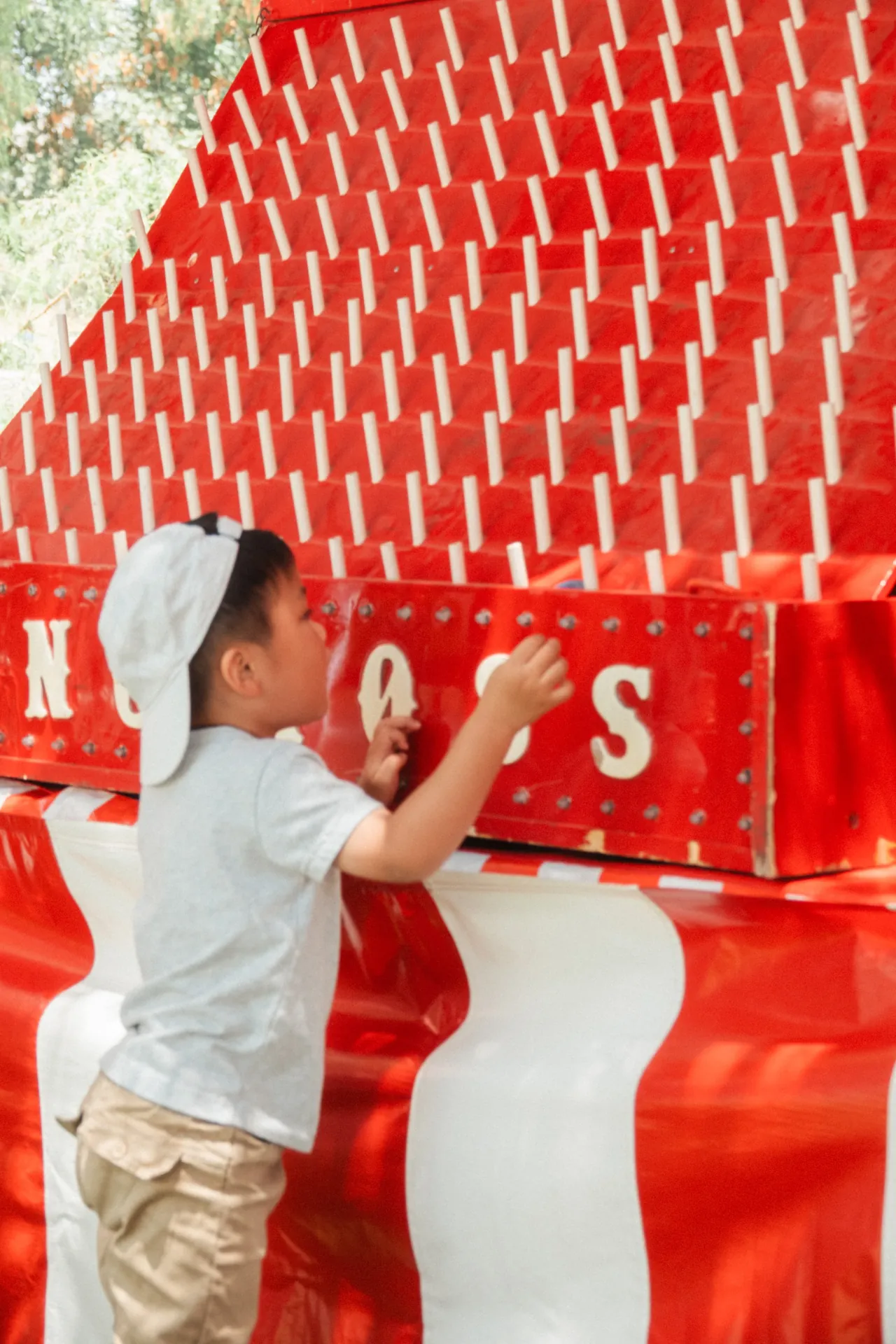
Ring toss, bottle knockdown, plinko, and similar low-skill games, with prize tiers set for a mixed-age resident crowd running from toddlers to grandparents.
-
Concessions matched to RSVPs.
Popcorn, cotton candy, and snow cone service sized to the board's or committee's actual headcount estimate, not a generic package built for a guess.
-
Setup for grass, concrete, or mixed surfaces.
Booths, tables, and concession equipment anchor differently on a park lawn than on a pool deck or a clubhouse parking apron. Anchoring method is confirmed during the quote walk-through, not improvised on site.
-
Setup and breakdown.
Crew arrives ahead of the event window to build the layout and clears the common area afterward, since most HOA amenities need to go back into normal resident use the same day.
-
Certificate of insurance.
My Little Carnival provides a COI naming the HOA corporation, the property management company, or the City of San Diego as additional insured, depending on which entity owns the venue.
Typical timeline for community + hoa events in Carmel Valley.
- 1
6-10 weeks out
Board or committee picks a date, confirms the venue (private common area or a city park), and requests a quote. Boards that need a vote at a general meeting tend to start earliest.
- 2
3-4 weeks out
Booth count and concession lineup get locked against a first-pass RSVP estimate. The COI is issued for the HOA board packet, the property manager's file, or a City of San Diego park-use permit application.
- 3
Week of
Final headcount confirmed, layout walked through against the actual common area, and power access checked. Pool-area events get a specific look at outlet placement relative to the water.
- 4
Event day
Crew sets up in under two hours, staffs the full contracted window, and breaks down the same day. The board or committee runs resident communication and any raffle or welcome table; the production crew runs the carnival.
Specifics for Carmel Valley.
- HOA board approval: Most Carmel Valley HOAs want board sign-off at least one meeting cycle ahead of the date, plus a COI naming the HOA corporation as additional insured. A courtesy notice to residents near the common area is common practice even when the CC&Rs don't strictly require one.
- Park permits for larger events: Events that outgrow a private common area and move to Carmel Valley Community Park or route through the Carmel Valley Recreation Center need a City of San Diego park-use permit in addition to whatever the association handles internally.
- Pool-area logistics: A pool-deck kickoff keeps concession equipment and any generator a set distance back from the water, with cords run along a dry path rather than across the deck. Shade for the concession table is worth planning since pool decks rarely have much of their own.
- Scope by turnout: A smaller HOA gathering of a few dozen households runs on two to three booths and a single concession station. A mid-size community day with a few hundred residents fills out into a full mini-carnival. A larger neighborhood-association event with a wider guest list moves into production-scale staffing and multiple concession stands.
- Power access: Clubhouse patios and pool areas vary in outdoor outlet capacity. My Little Carnival brings a generator when a common area's circuits won't cover the concession and game load, which is routine for multi-booth setups away from a building.
- Coastal weather: Carmel Valley's proximity to the coast and Torrey Pines State Natural Reserve means a marine layer most mornings that typically clears by late morning. Afternoon events are the more reliable timing choice for a resident day, and a rain contingency is worth naming in the booking for events scheduled outside the dry season.
Common questions.
How far ahead should our HOA board book?
Six to ten weeks is a comfortable window, especially if the date needs a vote at a board meeting or a City of San Diego park-use permit for a larger venue. A private common area with a quick board sign-off can move faster than that if needed.
Can this run on a pool deck?
Yes, and it's a common request for summer kickoffs in Carmel Valley. Concession equipment and any generator stay a set distance from the water, and shade gets added over the concession table since most pool decks don't have much natural cover.
What size gathering does this work for?
The format scales from a few dozen households with two or three booths up to a few hundred residents with a full mini-carnival. Pricing and booth count follow the RSVP estimate rather than a fixed package tier.
Do we need a park permit, or does HOA board approval cover it?
If the event stays inside the community's own common area, board approval and a COI naming the HOA corporation are typically what's needed. Moving to a public venue like Carmel Valley Community Park adds a City of San Diego park-use permit on top of that.
What does the HOA or organizing committee still need to handle?
Resident communication, RSVP tracking, any raffle table or welcome table, and coordination with property management if the venue is a shared amenity. My Little Carnival handles booths, games, prizes, concessions, and the crew running them.
What if it's overcast the morning of the event?
A marine layer clearing by late morning is typical along the coast near Carmel Valley, so afternoon start times are the safer bet for a resident day. A rain contingency is worth discussing at booking for dates outside the reliably dry months.
About this guide.
This local guide to community and HOA events in Carmel Valley was compiled by My Little Carnival, a division of My Little Carnival, producing carnival-style events for HOAs, neighborhood associations, and property managers across San Diego County.
Helpful local references: City of San Diego Parks & Recreation · Del Mar Union School District
Community + HOA Events in nearby cities.
Planning a community or HOA event in Carmel Valley?
Share the date, the venue (private common area, clubhouse, pool deck, or city park), and a rough RSVP count, and My Little Carnival will scope a quote sized to fit.
Get a quote →