carnival games in Lake San Marcos.
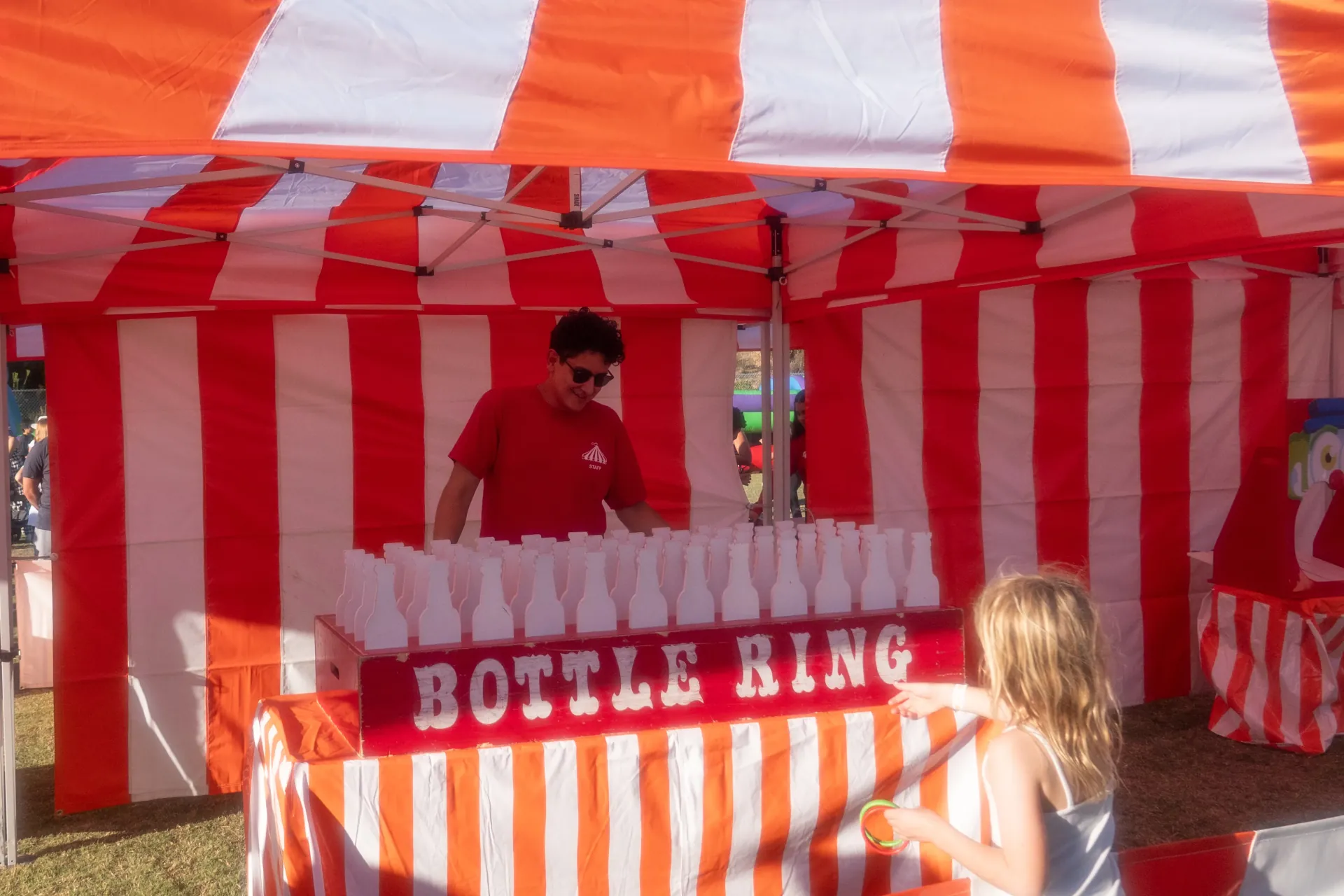
A carnival game is a single freestanding booth built around a simple skill-and-prize mechanic — ring toss, bottle ring, dart-the-stars, plinko, balloon pop, milk-can toss, basketball pop, or fishing for ducks. Each one is self-contained: a striped or painted frame, a playing surface, and a stocked prize wall, sized to run one player or a small line at a time. As part of a full event My Little Carnival produces in Lake San Marcos, carnival games show up in matched sets — six to twelve booths arranged in a row or horseshoe — rather than as single drop-off units. This is a local guide to carnival games in Lake San Marcos: what a typical lineup looks like, what comes with each booth, and what's worth knowing before picking a count.
Lake San Marcos sits at the smaller, more residential end of the games market compared to bigger nearby cities — most bookings come from HOA and community gatherings around the lake, corporate outings at venues like St. Mark Golf Club or Lakehouse Resort, and school fundraisers tied to San Marcos Unified School District campuses. Carnival games in Lake San Marcos tend to run on flat lawn or patio space rather than open fields, since most of the local venues are resort grounds, clubhouse lawns, or community-center courtyards rather than school blacktops.
My Little Carnival supplies carnival game booths as part of full event productions across Lake San Marcos and the surrounding San Marcos area, sized to fit resort lawns, clubhouse patios, and community-center grounds alike.
How carnival games show up at an event in Lake San Marcos.
At a school fundraiser or a corporate picnic, games get lined up in a row facing the main walkway or arranged in a horseshoe around a central lawn, with one booth per anchor point every eight to ten feet. Plinko and dart-the-stars tend to draw the longest lines, so those go at the ends where there's room to queue without blocking the row. Ring toss, bottle ring, and balloon pop fill the middle — quick-turnover games that keep the whole lineup moving.
At smaller HOA or resort gatherings around the lake, four to six games is a common count, tucked along a clubhouse patio or lawn edge near the San Marcos Community Center or a similar shared space. Larger school and district events pull closer to ten or twelve, matched to the guest count and spaced to avoid bottlenecks. Either way, My Little Carnival delivers the booths pre-stocked with prizes as part of the event setup — nobody is restocking a prize wall mid-party.
What's typically included.
-
Game booth unit.
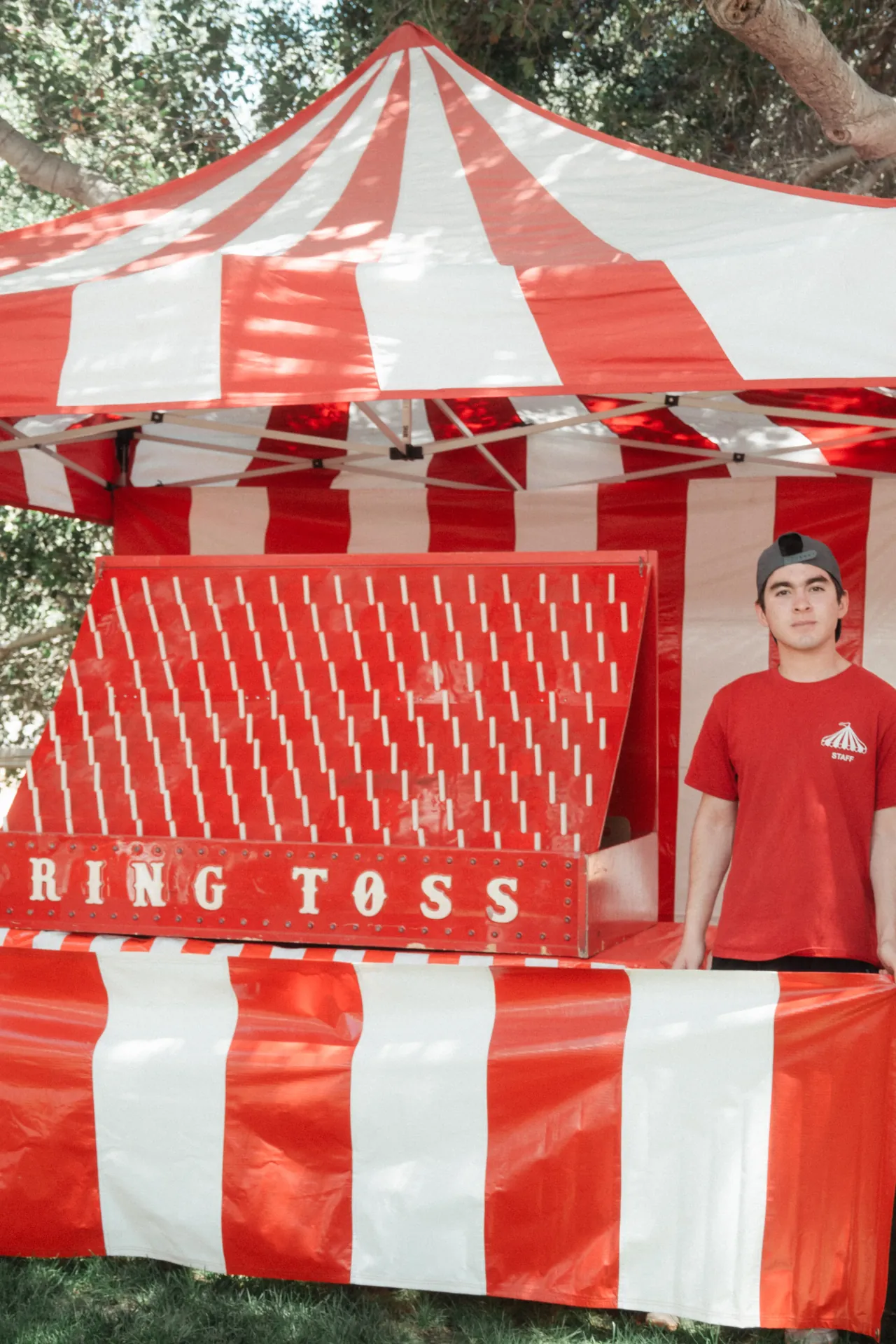
A complete freestanding booth — frame, playing surface, and signage — for whichever game is selected: ring toss, bottle ring, plinko, dart-the-stars, balloon pop, milk-can toss, basketball pop, or duck fishing.
-
Prizes included.
Each booth arrives stocked with consolation and top-tier prizes sized to the expected play volume, so nobody's restocking mid-event.
-
Table and setup hardware.
Skirting, backboard, and any table or stand the specific game needs to sit level on grass, patio, or pavement.
-
Attendant, optional.
Games are commonly staffed by client volunteers. An My Little Carnival attendant per booth is available as an add-on, quoted separately, for events that want the games run hands-off.
-
Delivery and setup.
Crew delivers, arranges, and levels each booth as part of the event build-out, and returns to break down and load out afterward.
-
Layout planning.
Booth count and arrangement — row, horseshoe, or scattered stations — worked out ahead of time to match the venue footprint and expected foot traffic.
Typical timeline for carnival games in Lake San Marcos.
- 1
Inquire
Share the venue, expected guest count, and event type. Lake San Marcos bookings often reference a resort lawn, clubhouse patio, or school campus so the layout can be scoped early.
- 2
Quote and booth count
My Little Carnival recommends a game count — typically four to twelve depending on guest volume — and confirms whether attendants are wanted or volunteers will run the booths.
- 3
Delivery and setup
Booths arrive as part of the full event setup, arranged and leveled ahead of the start time, prizes already stocked.
- 4
Event day and breakdown
Games run for the contracted window, then crew returns to break down and load out — no equipment left behind on the lawn or patio.
Specifics for Lake San Marcos.
- Common venues: Lakehouse Resort and St. Mark Golf Club host a fair share of corporate and private bookings; the San Marcos Community Center and nearby San Marcos Unified School District campuses cover most of the school and community fundraiser demand.
- Surface needs: Most games sit fine on grass, patio pavers, or asphalt as long as the ground is level. Resort lawns and clubhouse patios around the lake are typically flatter than open school fields, which simplifies booth placement.
- Power access: Most traditional games — ring toss, bottle ring, balloon pop, milk-can toss — need no power at all. Plinko and any lit signage may want an outlet or a small generator, which My Little Carnival brings when the venue's outdoor power won't reach.
- Attendant staffing: Games are one of the categories where volunteer staffing is common and works well — a parent or coworker can run ring toss with a five-minute explanation. An attendant per booth is available as an add-on for events that want it fully hands-off.
- Booth count guidance: A rough rule locally: one game per 30-40 guests keeps lines short. A 100-guest HOA gathering runs comfortably on four to six games; a larger school fundraiser tied to San Marcos Unified pulls closer to ten or twelve.
- Weather contingency: Southern California's typically dry climate keeps outdoor game bookings low-risk most of the year. A covered patio or clubhouse overhang at venues like Lakehouse Resort is a useful backup for an unusually wet weekend.
Common questions.
Do carnival games come with an attendant?
Not by default. Games are commonly volunteer-run — anyone can pick up the mechanics quickly. An My Little Carnival attendant per booth is available as an add-on, quoted separately, for events that want the games staffed professionally.
How many games do we need for our guest count?
A loose guideline is one game per 30-40 guests to keep lines moving. Smaller HOA or resort gatherings around the lake often run four to six games; larger school and district fundraisers typically book eight to twelve.
Do the games need electricity?
Most traditional games — ring toss, bottle ring, balloon pop, milk-can toss, basketball pop — run with no power at all. Plinko or any illuminated signage may need an outlet or a small generator, which is arranged as part of setup when needed.
What surfaces do the booths work on?
Grass, patio pavers, or asphalt all work as long as the ground is reasonably level. Most Lake San Marcos venues — resort lawns, clubhouse patios, community-center grounds — are flat enough without extra prep.
Are prizes included with each game?
Yes. Every booth arrives pre-stocked with consolation and top-tier prizes matched to the expected play volume as part of the event booking — no separate prize order needed.
Can we mix games with other attractions like a bounce house?
Yes — games are typically one piece of a larger event My Little Carnival produces, often alongside inflatables, concessions, or booths. Layout is planned together so games, food, and play areas don't compete for the same footprint.
About this guide.
This local guide was compiled by My Little Carnival, the San Diego County operation of My Little Carnival — producers of school carnivals, fundraisers, and community events across the region, including bookings around Lake San Marcos.
Helpful local references: San Marcos Unified School District · San Marcos Community Center
Carnival Games in nearby cities.
Planning carnival games for an event in Lake San Marcos?
Share your venue, guest count, and rough date — and My Little Carnival will recommend a game lineup and send a scoped quote.
Get a quote →