
church events in Lake San Marcos.
A church event, in the carnival-production sense, is usually an outreach festival — a fall festival in October, a trunk-or-treat the same season, a culmination carnival at the end of a summer VBS week, or a community day tied to an anniversary or holiday — where the carnival games and concessions are the draw that gets neighborhood families through the gate. It runs two to four hours, uses the same booth-and-concession format as a school carnival, and is built to welcome people who don't attend the church as much as it serves the congregation itself. This is a local guide to church events in Lake San Marcos — how congregations here typically structure them, where they happen given the area's small campus footprints, and what's worth knowing before a planning team locks a date.
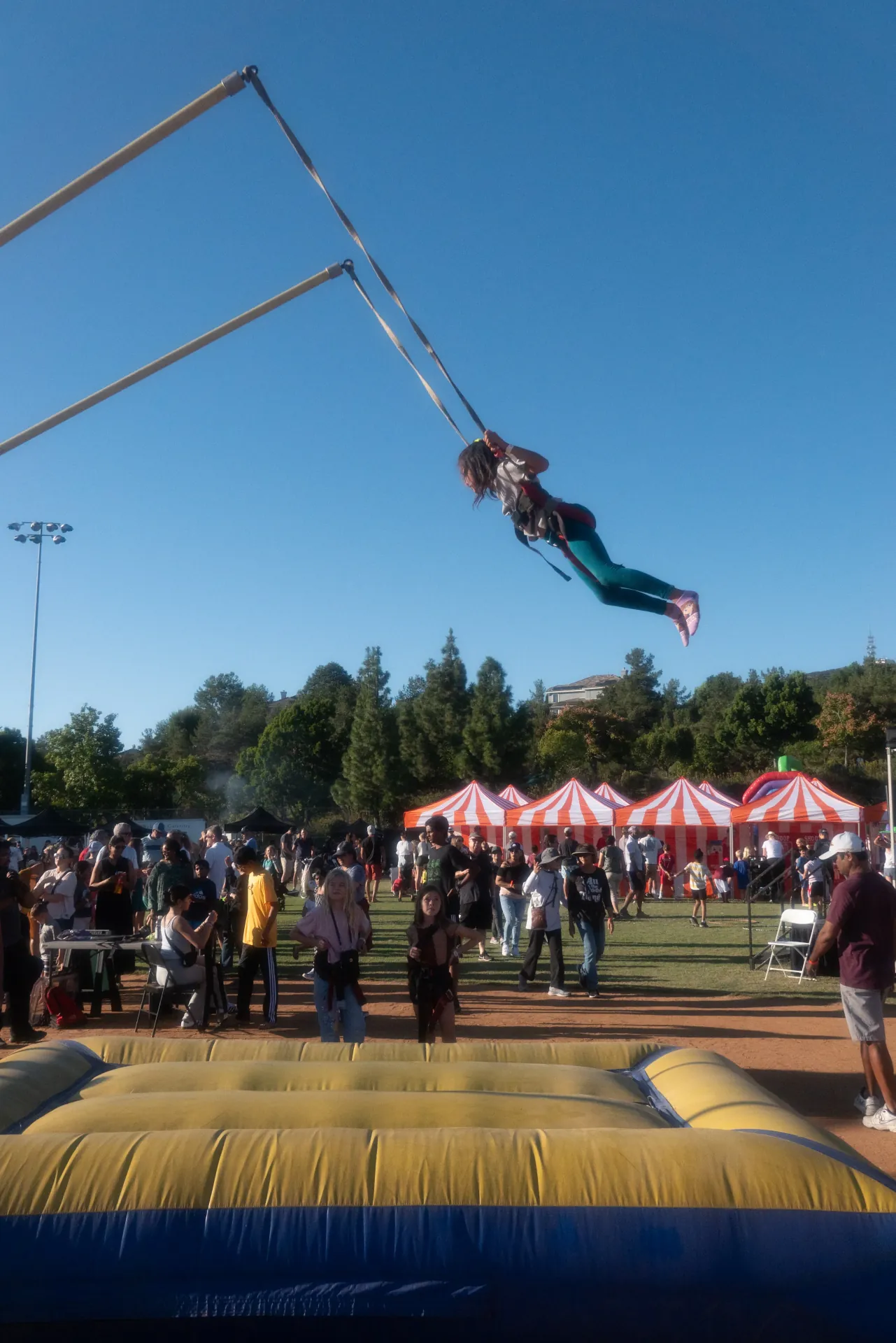
Lake San Marcos is a small, largely residential community built around its namesake private lake, wedged between the city of San Marcos and Escondido. Church campuses in and around the area tend to be modest — a sanctuary, a parking lot, maybe a fellowship hall — which shapes how outreach events get planned. Congregations with a tight lot often scale down to a compact game-and-concession layout on asphalt, while those wanting a bigger community day sometimes look to a larger nearby venue such as the San Marcos Community Center.
My Little Carnival produces church events for congregations across San Diego County, sizing the booth count and concession lineup to whatever footprint a Lake San Marcos-area campus actually has.
How a church event unfolds in Lake San Marcos.
Most events set up in the church parking lot or on an adjacent grass strip, with booths arranged along the edges to leave a clear walking path down the middle. A fall festival or trunk-or-treat usually opens with a welcome table where visitors get a wristband or a ticket strip, then wanders freely between games, a bounce house if one's booked, and a concession stand doing steady business in popcorn and cotton candy. Because the audience skews toward neighborhood families rather than just church members, signage and greeting tend to be a bigger focus than at a typical school carnival.
The congregation's own volunteers usually handle greeting, prize-table restocking, and any spiritual programming — a short message, a prayer station, a resource table — while My Little Carnival runs the equipment itself: booths, games, and concessions staffed by trained attendants so volunteers aren't learning game mechanics on the spot. A VBS carnival at the end of a summer program runs a similar setup but skews younger and shorter, often ninety minutes to two hours instead of a full festival window.
What's typically included.
-
Striped game booths.
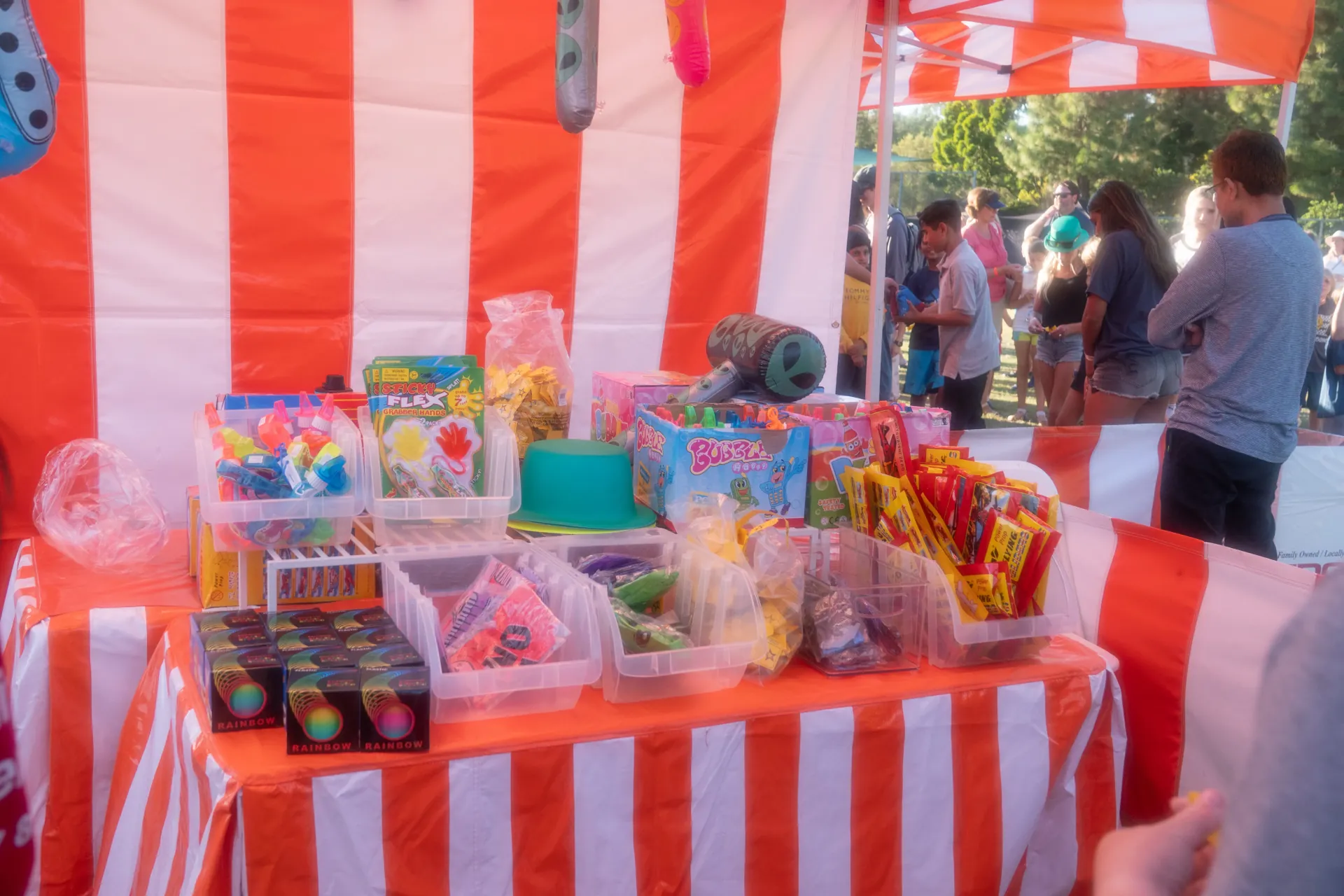
Two to eight booths depending on scope — high-peak red-and-white tents with games suited to a broad family audience rather than a single age group.
-
Carnival games + prizes.
Ring toss, bottle knockdown, plinko, balloon pop, and similar low-skill games, each pre-loaded with prize inventory sized to the expected guest count.
-
Concession stations.
Popcorn, cotton candy, and snow cone machines with supplies included — a reliable draw for a neighborhood outreach event.
-
Trained attendants.
One staff member per booth and concession station. Church volunteers handle greeting, registration tables, and any ministry programming; the carnival equipment is fully staffed.
-
Setup and breakdown.
Crew arrives roughly two hours before doors open and clears out within an hour of the event ending, leaving the lot or field as it was found.
-
Certificate of insurance.
My Little Carnival provides a COI naming the host church as additional insured, which most facility-use or property-liability policies require before an outside vendor sets up on-site.
Typical timeline for church events in Lake San Marcos.
- 1
8-10 weeks out
Outreach or hospitality committee picks a date, confirms the lot or field is available that day, and requests a scoped quote based on expected attendance and budget.
- 2
3-4 weeks out
Booth count, concession lineup, and any add-ons (bounce house, stage sound) are finalized. Flyers and neighborhood invitations go out; a deposit holds the date.
- 3
Week of
Final headcount estimate confirmed, parking-lot layout walked through with the production lead, and any power or access notes ironed out ahead of setup.
- 4
Event day
Crew sets up over roughly two hours, runs the event for the contracted window, and packs out same-day. Church volunteers run greeting, registration, and any spiritual programming throughout.
Specifics for Lake San Marcos.
- Campus footprint: Most churches serving the Lake San Marcos area have a parking lot or a single adjacent field. A two-to-four-booth layout fits comfortably on a standard lot; anything larger usually means closing off part of the lot to vehicle traffic for the day.
- Off-campus alternatives: Congregations wanting more room than their own lot allows have used the San Marcos Community Center and, for a more upscale community day, venues like the Lakehouse Resort on the lake itself. Off-site bookings require the venue's own permit or reservation process in addition to any church coordination.
- Power access: Cotton candy spinners and popcorn poppers each need a dedicated circuit. My Little Carnival brings a generator when a parking lot or field doesn't have accessible outdoor outlets, which is the case at most church campuses.
- Volunteer coordination: Congregational events lean more heavily on volunteers than school carnivals do — greeting, registration, and any altar-call or resource-table element are typically church-run, while the carnival equipment itself is staffed by the production crew.
- Neighborhood turnout: Fall festivals and trunk-or-treats aimed at the surrounding neighborhood tend to draw beyond the regular congregation, so headcount estimates for these events run higher and looser than for an internal-only gathering like a VBS closing carnival.
- Weather: Southern California's typically dry climate keeps outdoor fall festivals fairly low-risk, though a Halloween-season trunk-or-treat occasionally runs into an early rain system. Most churches build in a rain-or-move-indoors contingency for the fellowship hall rather than a separate rain date.
Common questions.
How early should a church book its event?
Eight to ten weeks out is comfortable for a fall festival or trunk-or-treat, since October Saturdays fill quickly across the region. A VBS closing carnival can usually be booked with a bit less lead time since it's tied to a program the church already controls the calendar for.
Does this work for a church with a small parking lot?
Yes. A two-booth setup with one concession machine fits on most standard lots. The production team sizes the layout to the space during the quote process rather than assuming a fixed footprint.
Can the event stay focused on outreach rather than fundraising?
Most church events are run as free or low-cost community outreach rather than a paid-admission fundraiser — unlimited-play wristbands or simply open access are both common. That's a different economic model than a school carnival's ticket-per-game setup, and it's worth deciding early since it changes staffing and signage.
Do we need a lot of church volunteers?
Fewer than a typical school carnival, since My Little Carnival staffs every booth and concession station. Volunteers are still useful for greeting, registration tables, and any ministry element the church wants to run alongside the carnival.
What if it rains?
Southern California's dry climate makes this a low-frequency issue, but churches with an indoor fellowship hall or gym often build a fallback plan for a scaled-down version of the event rather than canceling outright.
Can this work for an anniversary or dedication event instead of a seasonal festival?
Yes — the same booth-and-concession format works for any community day a church wants to host, seasonal or not. The date and theme are flexible; the setup logistics stay the same.
About this guide.
This local guide was compiled by My Little Carnival, the San Diego County operation of My Little Carnival — producers of church events, school carnivals, and backyard birthdays across the region, including the Lake San Marcos area.
Helpful local references: City of San Marcos Parks & Recreation · San Marcos Unified School District
Church Events in nearby cities.
Planning a church event in Lake San Marcos?
Share the date, expected turnout, and what kind of event it is — outreach festival, trunk-or-treat, or VBS carnival — and My Little Carnival will scope a quote sized to your campus.
Get a quote →