
city + municipal events in Mission Valley.
A city or municipal carnival event is public programming run by a city department, a parks and recreation division, or a community association acting under a municipal partnership: a citywide festival, a parks-and-rec summer series stop, a holiday tree-lighting with a carnival add-on, or a neighborhood family day organized with city or quasi-city sponsorship. A carnival production supplies the midway layer, game booths, concessions, and the staff running them, while the sponsoring department or association handles permits, staging, and the rest of the program. Mission Valley complicates the usual playbook because sponsorship rarely runs through one traditional city park the way it might elsewhere; the valley's open-space venues split between a homeowner association, a historic hillside park, and a stadium plaza. This is a local guide to City + Municipal Events in Mission Valley: the venue landscape, the paperwork a public-facing event tends to need, and what a full production includes.
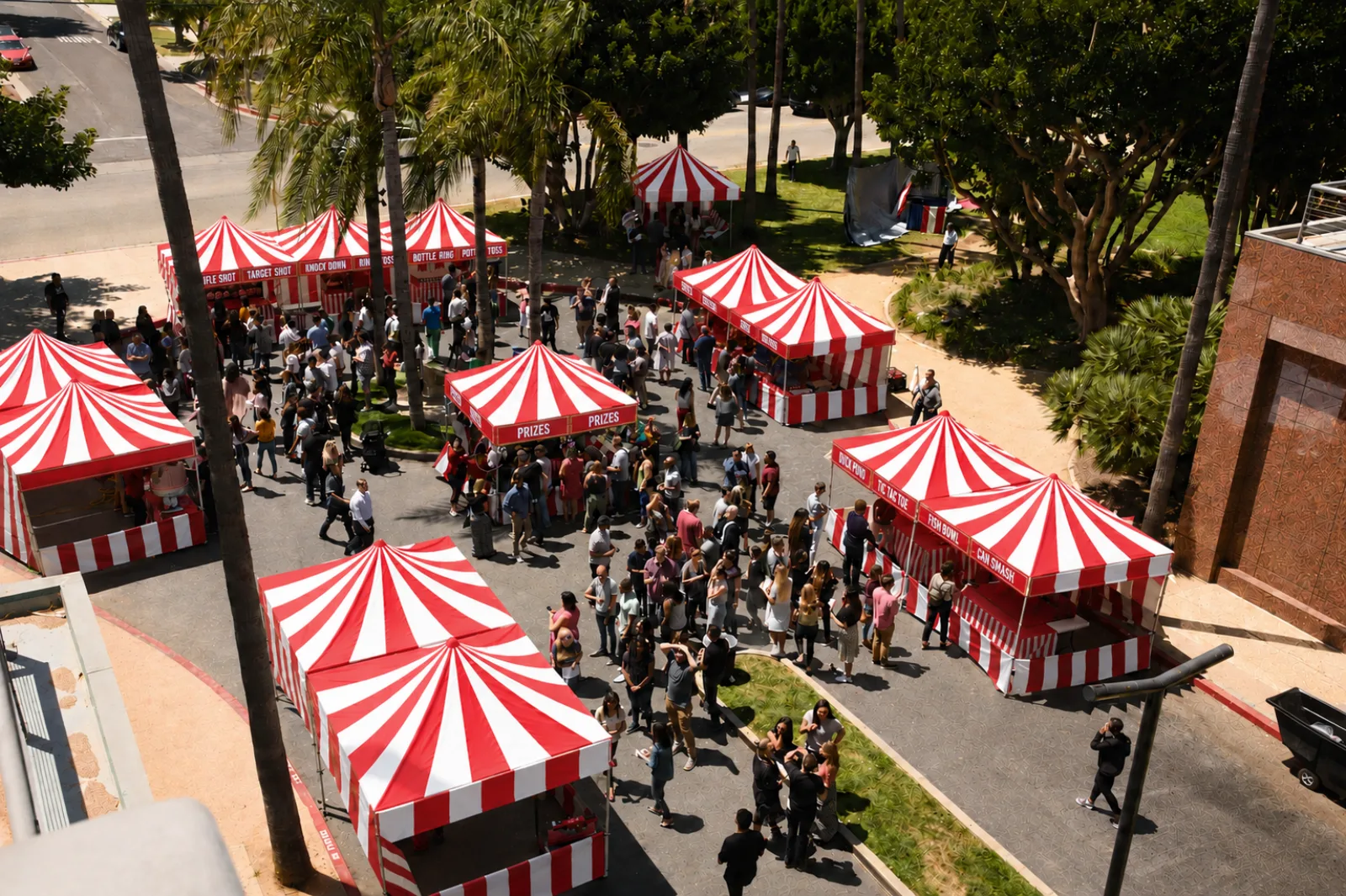
Mission Valley complicates the usual municipal-event playbook because its highest-capacity open space, Civita Park, sits under the Civita Community Association rather than the City of San Diego parks department, so a citywide festival or parks-and-rec stop routed through Civita typically runs as a joint booking between the city sponsor and the association rather than a standard park-use permit alone. Presidio Park, the historic hillside park above the valley floor, is available through the city's own parks and recreation process, but its terrain and landscaping cap it at smaller civic gatherings rather than a full festival footprint. For citywide programming that needs real scale, plaza and lot space at Snapdragon Stadium is the closest thing Mission Valley has to a large public common, though it is booked through the venue's own event operations team rather than a city permit desk. Families zoned into San Diego Unified School District make up much of the audience for parks-and-rec and holiday programming here, which is part of why weekend and early-evening scheduling tends to outperform a weekday slot.
My Little Carnival produces city-scale carnival events across San Diego County, with experience coordinating alongside city departments, parks staff, and homeowner associations acting as venue sponsors on public-facing programming.
How a city or municipal event comes together in Mission Valley.
A citywide or parks-and-rec event routed through Mission Valley usually lands at one of three venue types, and each shapes the carnival footprint differently. At Civita Park, joint programming between a city sponsor and the Civita Community Association spreads booths across the open lawn in a wide grid, with an information or check-in table near the main path and room left for strollers and folding chairs. At Snapdragon Stadium's plaza, the surface is flat and mostly hardscape, which lets a larger citywide festival scale past what any park lawn here could hold, with the carnival occupying a defined zone alongside stage programming, food trucks, and sponsor tables. Presidio Park's civic use skews smaller: a holiday gathering or a modest community day rather than a full festival, given the hillside terrain.
Public-facing bookings in Mission Valley tend to run longer on the approval side than on the event-day side. A city department or the Civita Community Association issues the permit or use agreement, coordinates any co-sponsor paperwork, and often loops in a second stakeholder, whichever association, venue operator, or district actually controls the ground being used. My Little Carnival assigns a production lead who works directly with whoever holds that permit, so booth layout, power needs, and any mid-event changes go through one point of contact rather than several department staff each tracking the carnival section separately from the rest of the program.
What's typically included.
-
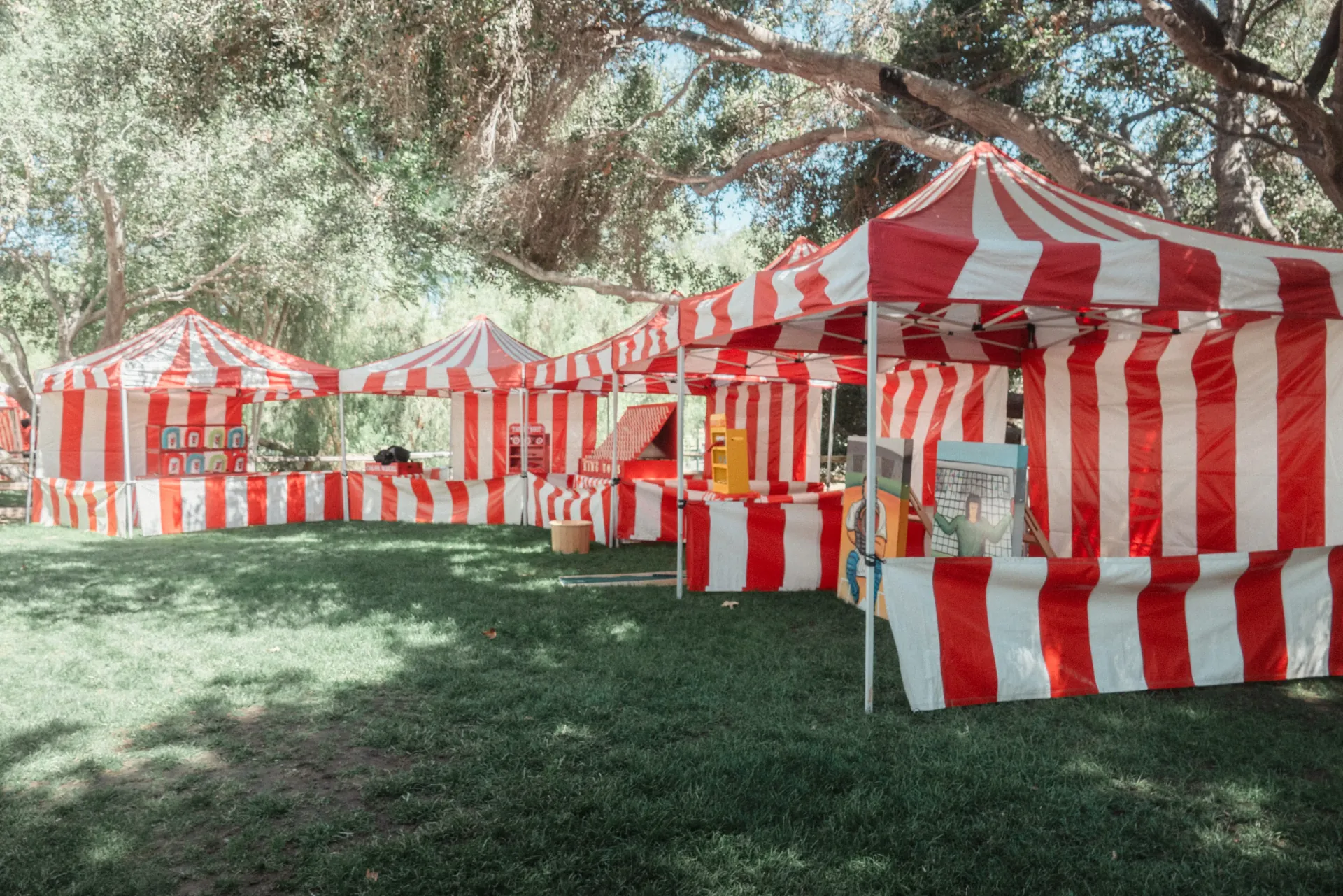
Striped game booths at public scale.
Eight to twenty high-peak striped tents depending on the venue and expected attendance, arranged as a midway row, grid, or defined zone within a larger festival layout. Each booth arrives pre-set with signage and prize displays.
-
Carnival games + prize inventory.
Ring toss, bottle knockdown, plinko, dart throw, and similar midway games, stocked with consolation and top-tier prizes scaled to the booking size and audience age range across a public event.
-
Concessions sized for unpredictable turnout.
Popcorn poppers, cotton candy spinners, and snow cone stations in a quantity built around a public-event attendance range rather than a fixed RSVP count, since city and parks-and-rec crowds are harder to predict than a private booking.
-
On-site booth staff.
Staff on hand to run every booth and concession station for the full event window, plus a production lead who stays in direct contact with the city or association coordinator throughout.
-
Setup, strike, and venue coordination.
Crew arrives ahead of the event to complete full setup, and strike begins as soon as the event window closes, timed against whatever teardown schedule the venue or co-sponsor is running on the rest of the site.
-
Certificate of Insurance.
My Little Carnival provides a COI naming the applicable sponsor as additional insured: the City of San Diego for a parks-and-rec booking, the Civita Community Association for a Civita Park event, or Snapdragon Stadium's venue management for a stadium-plaza program.
Typical timeline for city + municipal events in Mission Valley.
- 1
16-24 weeks out
City departments, parks-and-rec coordinators, and community associations typically start vendor outreach at this stage. Scope gets discussed, booth count, concession lineup, layout preferences, and a quote is prepared. Council or board approval cycles can stretch this window further, so starting early creates buffer without compressing the production timeline.
- 2
8-10 weeks out
Scope is locked, contract signed, deposit paid. The COI is issued naming whichever sponsor holds the permit, and the underlying park-use or venue authorization should be moving in parallel on the city or association's end.
- 3
Week of
Final attendance estimate confirmed, layout walk-through completed with the production lead, power access verified, and generator logistics settled if the venue's circuits won't cover the full load. A rain or weather contingency is confirmed for winter dates.
- 4
Event day
Crew arrives several hours ahead of opening depending on scope. Booths are set, concessions are pre-heated, and staff are briefed before the first guest arrives. The production lead stays reachable to the city or association coordinator through strike.
Specifics for Mission Valley.
- Civita Park bookings: Private and city-partnered events at Civita Park go through the Civita Community Association rather than a standard city park permit. Confirming which entity is the actual venue sponsor early avoids a mismatch between the COI paperwork and the permit holder.
- Presidio Park's ceiling: The hillside historic park works for a smaller civic gathering or a compact holiday event, but its terrain and landscaping make it a poor fit for a full booth-and-concession festival footprint. Larger city programming usually looks to Civita Park or Snapdragon Stadium instead.
- Snapdragon Stadium scale: Plaza and lot space at the stadium can host a citywide footprint larger than either park allows, though booking runs through the venue's own event operations team on its own timeline rather than a city parks permit process.
- SDUSD scheduling overlap: Families zoned into San Diego Unified School District shape attendance patterns for parks-and-rec and holiday programming, and weekend or early-evening timing generally draws a larger turnout than a weekday afternoon slot.
- Load-in around valley traffic: Retail-corridor congestion near Fashion Valley and Friars Road can slow a crew's arrival window during peak hours. Setup at any Mission Valley venue is typically scheduled around that traffic pattern rather than against it.
- Power for hardscape venues: Concession machines pull real amperage, and neither Snapdragon Stadium's plaza nor Presidio Park's grounds carry dedicated outdoor circuits rated for a full carnival load. My Little Carnival typically brings a generator array for programming beyond a minimal booth count.
Common questions.
How far in advance should a Mission Valley city or municipal event book?
Sixteen to twenty-four weeks is the practical range once council or association approval cycles are factored in. Public-event lead times run longer than private bookings by design, and earlier outreach protects the date, the venue sponsor's own permit timeline, and the COI paperwork deadline.
What does a typical booking cost at this scale?
A parks-and-rec stop generally runs five to fifteen thousand dollars, a citywide festival fifteen to forty thousand or more, and a holiday celebration with a carnival add-on eight to twenty thousand. The production lead scopes an exact quote against the venue and expected attendance.
Which venue fits a citywide festival versus a smaller community day?
Snapdragon Stadium's plaza handles the largest citywide footprints. Civita Park, booked jointly with the Civita Community Association, suits a mid-size parks-and-rec stop or family day. Presidio Park's terrain caps it at a smaller civic gathering or a compact holiday event.
Does a holiday tree-lighting event include a carnival add-on?
Yes, a common format pairs a city or association-run tree-lighting with a smaller carnival section, typically a handful of booths and a concession station, rather than the full festival-scale footprint used for a summer citywide event.
Who holds the permit for a Civita Park event, the city or the association?
The Civita Community Association, not the City of San Diego directly. A city-sponsored program at Civita Park is generally a joint arrangement between the department and the association, which is worth confirming before COI paperwork gets drafted.
What happens if a public event needs to be rescheduled for weather?
Rescheduling terms are set in the contract and depend on how far ahead the change is made. Venues with a built-in contingency date in the original permit or use agreement are in the best position, since rebooking a park or plaza for an alternate date can take as long as the original approval process.
About this guide.
This local guide to City + Municipal Events in Mission Valley was compiled by My Little Carnival, a division of My Little Carnival, producers of public festivals, parks-and-rec programming, and community events across San Diego County.
Helpful local references: City of San Diego Parks and Recreation · San Diego Unified School District
City + Municipal Events in nearby cities.
Planning a city or municipal event in Mission Valley?
Share the event date, expected attendance, venue sponsor, and any permit or approval timeline, and My Little Carnival will scope a production that fits the footprint and works within the sponsoring department or association's process.
Get a quote →