
grand openings in Mission Valley.
A grand opening is the public launch event a business stages when a new store, restaurant, office, or brand pop-up starts trading, and its job is to convert curiosity on the street into a first visit. Layering carnival production onto that launch gives people a reason to stop walking: booths worked by professional attendants, prizes handed across the counter, concession machines running, and a photo backdrop guests will post before they leave the lot. The look is photogenic on purpose. Every booth is built as a photo opportunity and every prize can carry your logo, so the launch keeps earning social coverage after the crowd thins out. This is a local guide to grand openings in Mission Valley, covering how the area's retail aprons and plazas shape a layout, what a turnkey activation actually includes, and what is worth settling before you announce the date.
Mission Valley is where San Diego shops, which leaves it dense with the exact frontage a launch event wants: the Fashion Valley and Westfield Mission Valley retail corridors, the office and showroom addresses along Camino del Rio and Friars Road, and the hotel properties strung along Hotel Circle North and South. Almost every activation here lands on private hardscape, a parking apron or a plaza a few steps from the door, with a property manager rather than a park ranger holding the keys. When a launch needs more room than its own frontage allows, the open lawn at Civita Park is the usual step up and the plaza footprint at Snapdragon Stadium absorbs anything larger. Families zoned into San Diego Unified School District fill the neighborhoods that ring the valley floor in Linda Vista and Serra Mesa, which is why a late-morning Saturday start reliably out-draws a weekday slot.
My Little Carnival produces grand openings, ribbon cuttings, and brand activations for businesses across San Diego County, sized anywhere from a two-booth storefront setup to a full lot activation with branded decor and several concession stations.
How a launch-day carnival comes together in Mission Valley.
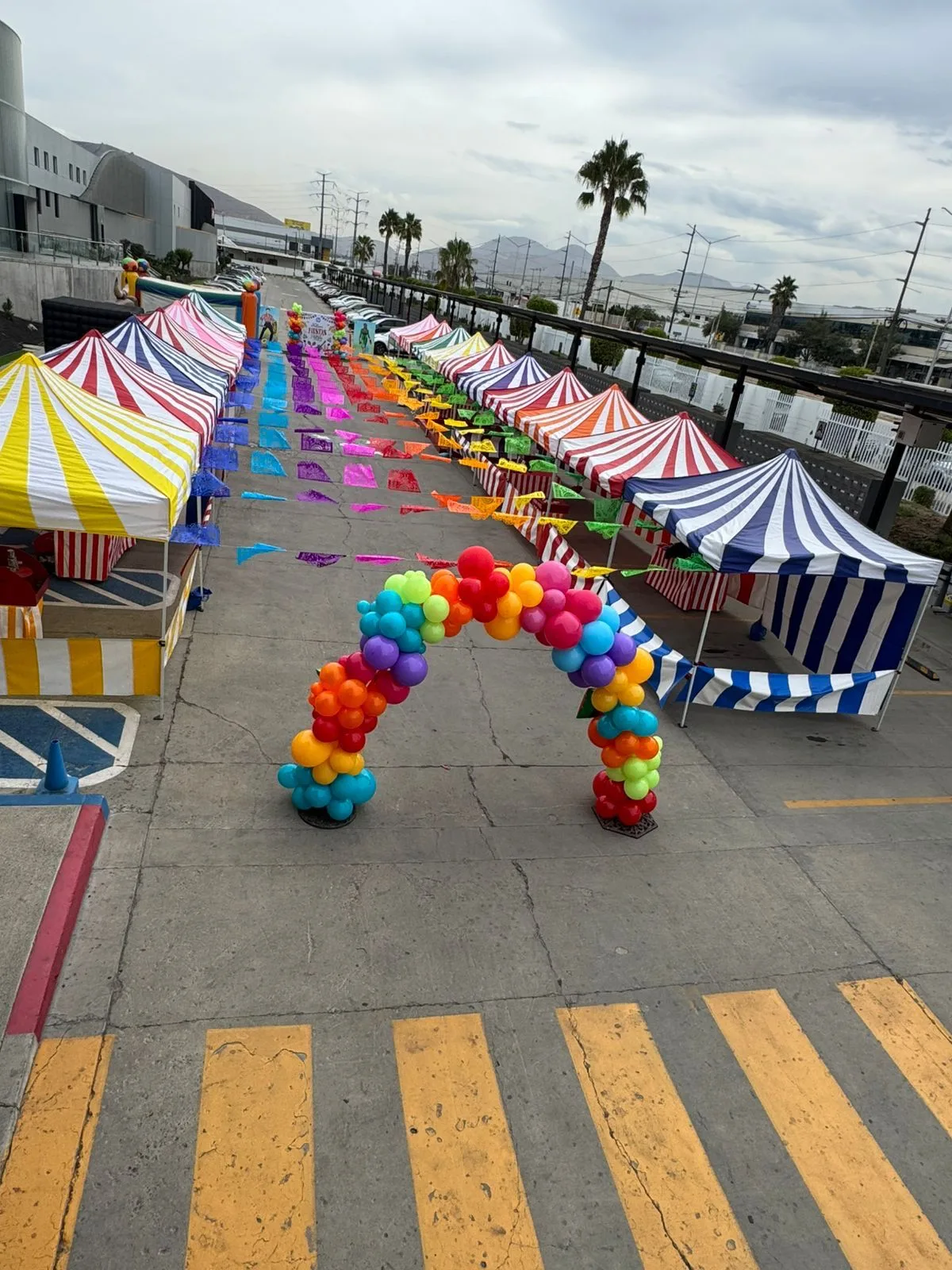
Most valley launches happen on hardscape instead of grass. The usable footprint is a slice of a retail lot, the plaza in front of an entrance, or a courtyard between two buildings, so the layout gets drawn around drive lanes, fire access, and where a queue can form without blocking a doorway. Crew arrives a couple of hours ahead of the announced start, sets the booths in a short facing pair of rows so guests walk between them, hangs the arch where it frames the door from the street, and brings the concession machines up to temperature before anyone shows. By opening time the corner of that lot reads as an event from a hundred feet away, which is the entire reason the carnival is parked there.
The public window normally runs two to four hours. Guests play a booth, collect a prize, step into the backdrop for a photo, and carry on into the store, and the ribbon cutting slots near the front of that window while the crowd is thickest. Attendants run the games, restock prizes, and keep the concession line moving, which leaves the owner and the store team free for customers, press, and the landlord. Pack-out is same day, usually inside ninety minutes of close, so the lot is back to ordinary parking before the evening retail rush builds.
What's typically included.
-
Booths placed for photo capture.
Striped booths positioned where the camera angle works: facing the entrance, catching the light, and leaving clean sightlines so a guest photo shows your storefront and your signage in the same frame rather than the back of a truck.
-
Brandable signage and prize ribbons.
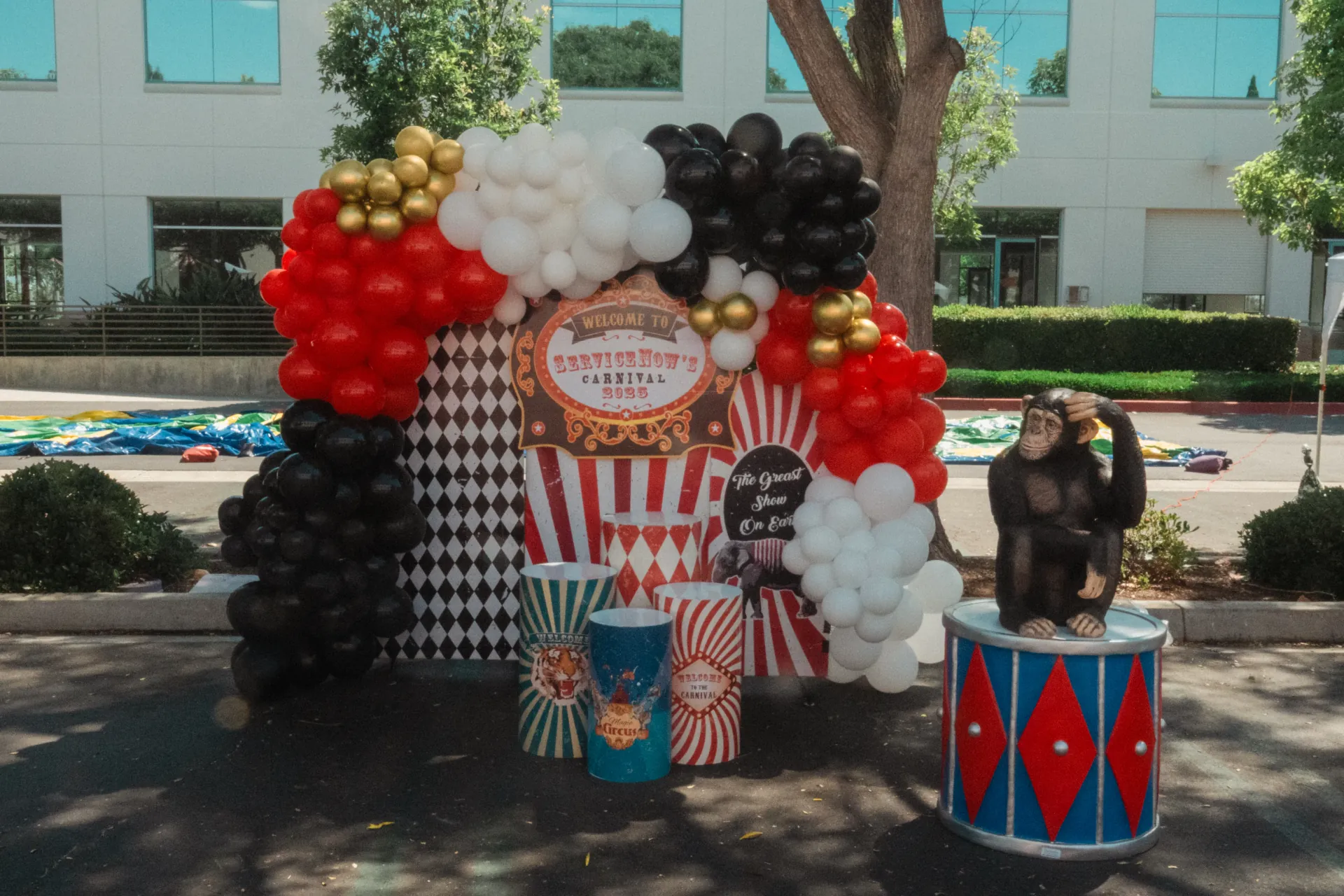
Booth headers, entrance signage, and prize ribbons produced in your colors and marks. Supply artwork a few weeks ahead and the activation reads as your launch, not as a generic carnival that happened to park outside.
-
Concessions in your colors.
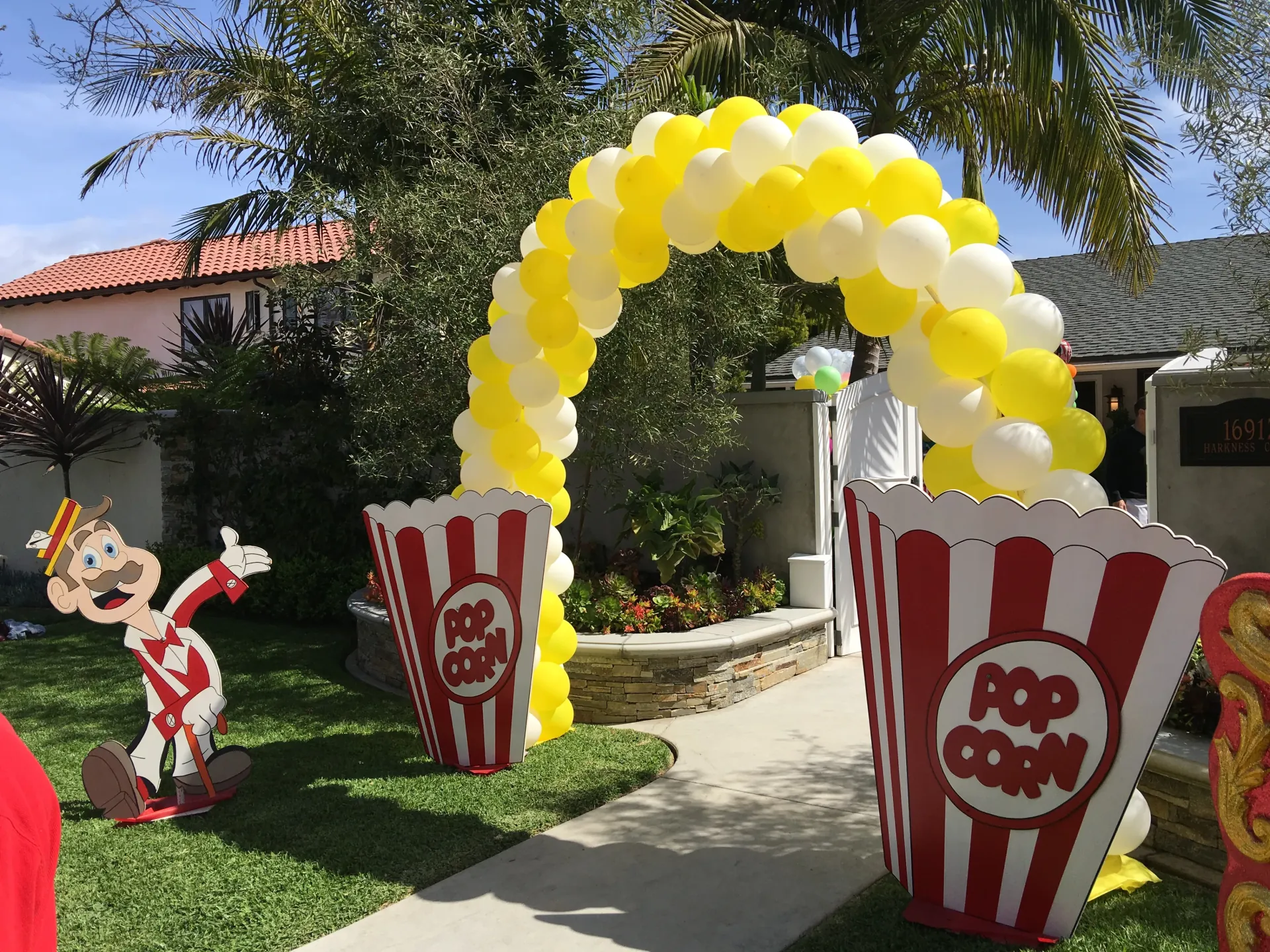
Popcorn and cotton candy stations running through the full window, with bags, cones, and supplies included. Branded sleeves and color-matched product are a common request and get confirmed at the same time as signage artwork.
-
Photo backdrop and props.
A dedicated backdrop with carnival props so guests have a marked spot to shoot and tag. Gala-tier decor is available when the launch is a flagship, a press event, or anything where the photo quality carries the whole campaign.
-
Professional attendants.
Staffing for each booth and concession station across the contracted hours, handling gameplay, prize distribution, and machine operation so nobody from your payroll gets pulled off the sales floor on the busiest day of the year.
-
Setup, breakdown, and COI.
Load-in, teardown, and a Certificate of Insurance naming the property owner or landlord as additional insured, which most Mission Valley retail centers and hotel properties require from any outside vendor before load-in day.
Typical timeline for grand openings in Mission Valley.
- 1
6 to 8 weeks out
Opening date is penciled against the buildout schedule and the activation is scoped: booth count, concession lineup, backdrop, and how deep the branded decor goes. If any part of the setup will sit on public sidewalk or street, the City of San Diego permit conversation starts here.
- 2
3 to 4 weeks out
Scope locked and deposit placed. Artwork for signage, prize ribbons, and branded concession items is submitted for production. The landlord or center management issues its vendor approval and the insurance certificate is written to match.
- 3
Week of
Site walk confirms booth positions against drive lanes and fire access, checks which exterior outlets are live, and settles whether a generator joins the load list. Start time and location go out on your channels with the ribbon cutting called out.
- 4
Opening day
Crew loads in two to three hours ahead, machines pre-heat, attendants take their stations, and the activation runs the full contracted window. Everything is off the lot the same day, generally inside ninety minutes after the close.
Specifics for Mission Valley.
- Private lot versus public right of way: The great majority of Mission Valley launches sit entirely on private property, where landlord or center-management approval plus a vendor insurance certificate is the whole paperwork trail. The moment any element crosses onto public sidewalk or street, that becomes a City of San Diego special event matter with a longer lead time, so confirm the property line with your center manager before you draw the layout.
- Retail apron sizing: A two-booth setup with one concession station works inside roughly a 15 by 25 foot patch, which most storefront aprons in the valley can spare. A six-booth activation with a backdrop and an arch wants closer to 30 by 40 feet, and in the larger retail lots near Fashion Valley and Westfield Mission Valley that space usually exists at the far end of a row rather than directly at the door.
- Hotel Circle and Mission Center Road launches: Hotel properties along Hotel Circle North and South and the addresses on Mission Center Road host outdoor activations regularly and are comfortable with outside vendors, though each keeps its own documentation standard and its own rules about where a vehicle may load in and for how long.
- When the frontage is too small: Civita Park's open lawn is the common overflow venue once an activation outgrows its own apron, and it books through the Civita Community Association rather than a standard city park permit. Presidio Park's hillside terrain suits a small gathering far better than an equipment-heavy footprint, and the plaza and lot space at Snapdragon Stadium handles the largest launches through the venue's own event operations team.
- Power on hardscape: Popcorn and cotton candy machines each want a dedicated 20 amp circuit, and a retail exterior wall rarely offers more than one or two live outlets. Anything past a single concession station generally means a generator, which gets confirmed at the site walk rather than discovered on opening morning.
- Load-in against valley traffic: The retail corridors around Friars Road and Fashion Valley congest hard on weekend middays, and the freeway convergence of I-8, I-15, and CA-163 pushes that congestion onto the surface streets. Crews schedule arrival early enough that the setup clock never depends on a clean run down Camino del Rio.
Common questions.
Do we need a city permit to run this in our own parking lot?
Usually not. An activation contained on private property in Mission Valley typically runs on landlord or center-management approval plus a vendor insurance certificate. A City of San Diego special event permit enters the picture once any part of the setup occupies public sidewalk, parkway, or street, and that track needs several weeks, so establish where the property line falls before you commit to a layout.
How do we get our brand into the activation?
Booth headers, entrance signage, prize ribbons, and concession packaging can all be produced in your colors and marks, and prizes themselves can be co-branded or swapped for your own merchandise. Artwork and quantities want about three weeks of runway so everything is staged and correct on opening morning.
What should a Mission Valley launch actually budget?
Most grand openings land between $5,000 and $15,000, and the three variables that move that number are the size of the activation, how deep the branded decor goes, and how many hours you stay open. Multi-day launches and simultaneous openings across several valley locations get quoted individually.
How long should the activation stay open?
Three hours is the workhorse. It covers the ribbon-cutting rush, a second wave of walk-in traffic pulled off Friars Road or the mall corridors, and the stretch where posts from the first hour start sending people over. Four hours makes sense for a large footprint or a location whose baseline foot traffic needs longer to build.
What is not covered by the carnival production?
The scope is booths, games, concessions, backdrop and decor, attendants, setup, and teardown. Ribbon-cutting ceremony logistics, press outreach, catering beyond the concession machines, live performers or a DJ, and anything inside the store are handled by your team or separate vendors and run in parallel without affecting the carnival scope.
About this guide.
This local guide to grand openings in Mission Valley was compiled by My Little Carnival, the San Diego County operation of My Little Carnival, producers of retail launches, brand activations, school carnivals, and corporate events across Southern California.
Helpful local references: City of San Diego Special Events · San Diego Unified School District
Grand Openings in nearby cities.
Opening a new location in Mission Valley?
Send the date, the address, and how much of the lot you can hold, and My Little Carnival will scope an activation sized to that footprint and to the traffic you want through the door.
Get a quote →