city + municipal events in National City.
A city or municipal carnival event is a public celebration organized and funded by a city department, usually parks and recreation, rather than by a private group or a single company. Think a citywide festival, a summer concert night with a carnival add-on, a Fourth of July celebration, a holiday tree-lighting, or a parks-and-rec family day built for whoever shows up rather than an invite list. My Little Carnival supplies the midway side of these events: striped game booths, concessions, prize inventory, and the setup and strike that comes with them, while city staff handle the parts a production company shouldn't: permitting, street closures, stage programming, and public safety. National City runs its public events across a tight cluster of city-owned parks, close enough together that one crew can often cover more than one department's calendar in a season. This is a local guide to City + Municipal Events in National City: which venues typically host them, how the permit and procurement process tends to move, and what a production at this scale actually includes.
National City runs its public events through a compact set of city-owned venues, which keeps logistics simpler than in a sprawling suburban district. Kimball Park, the largest and most central green space in the city, is the default site for a citywide festival or a large parks-and-rec day that needs open lawn and street-adjacent access for load-in. Las Palmas Park adds a community pool to the mix, useful for a summer kickoff that wants a water component built into the public program. El Toyon Park, set in the city's northeast hills, suits a smaller neighborhood-scale celebration where a full festival footprint would be more than the crowd needs. Mountain View Community Center and Camacho Recreation Center both offer indoor space, which city departments lean on for evening programming, a rain contingency, or a check-in and registration hub separate from the outdoor midway. Families across National City are zoned to National School District for elementary grades and Sweetwater Union High School District from middle school on, both of which city departments frequently coordinate with when a public event lands near a school-calendar milestone.
My Little Carnival produces city-scale carnival events across San Diego County, with a home office in National City and direct experience working with the city's Community Services Department on public festivals, parks-and-rec days, and holiday programming.
What a city event in National City looks like on the ground.
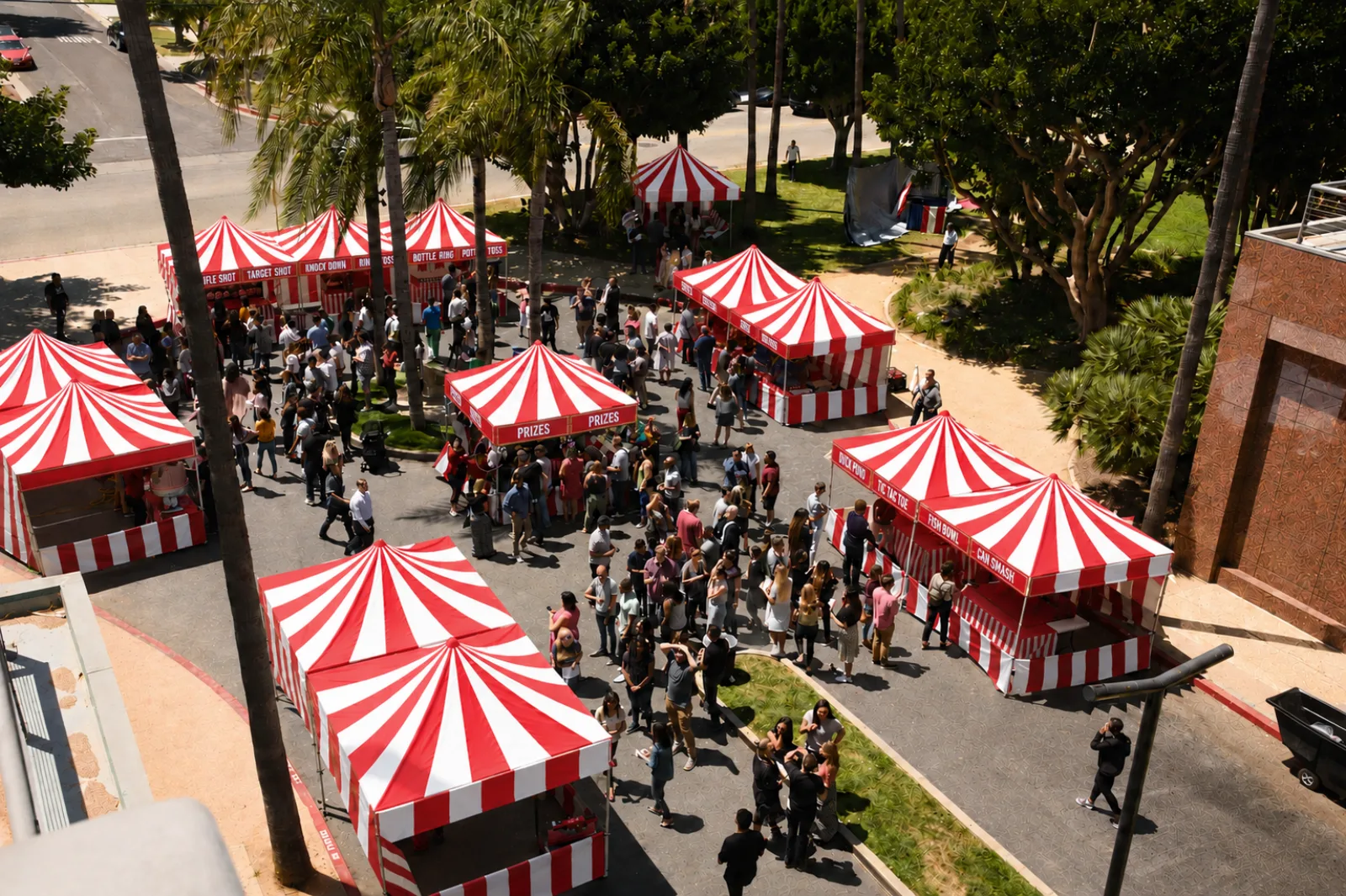
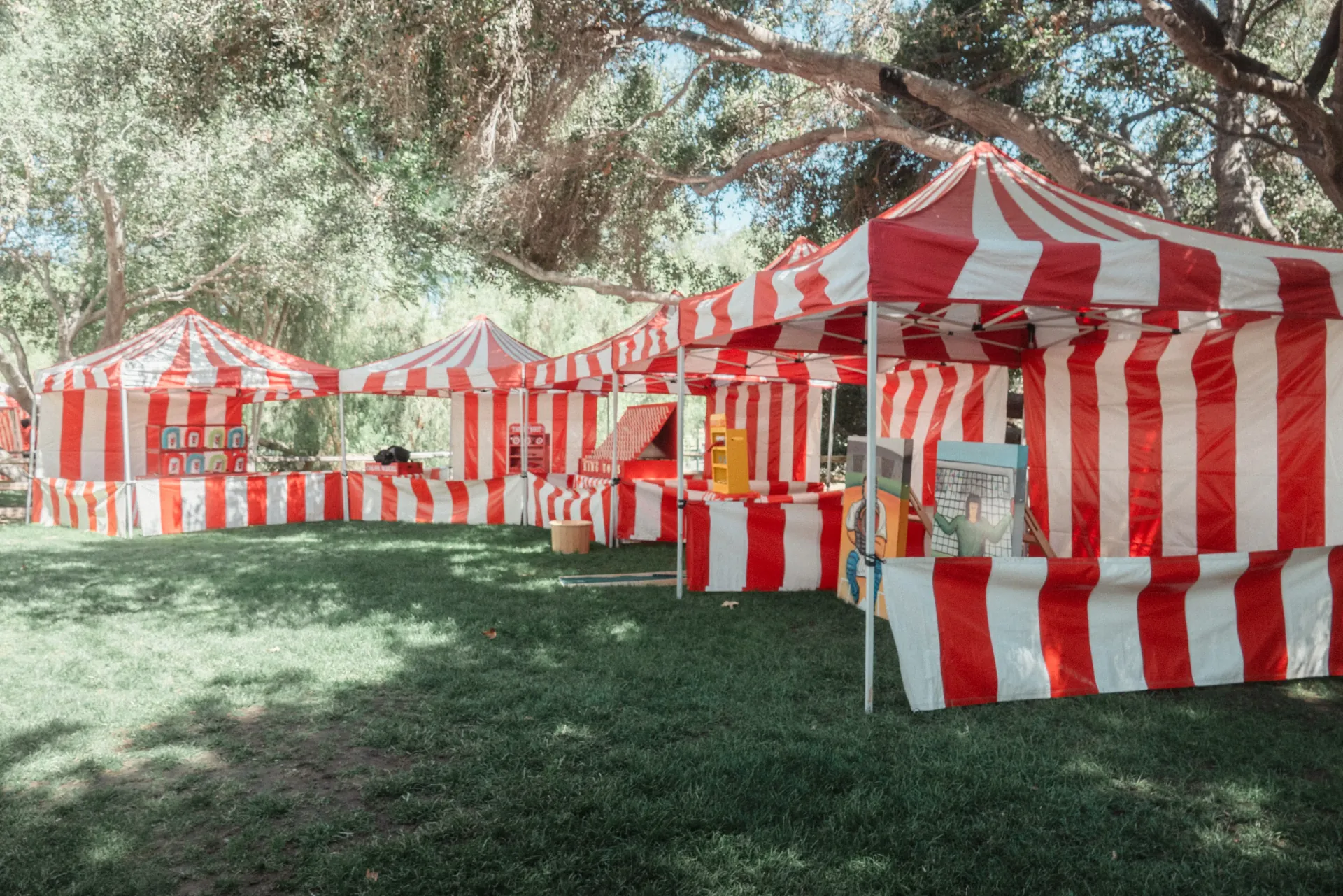
A midsize citywide event at Kimball Park, drawing somewhere between 500 and 1,500 attendees over an afternoon, typically sets the carnival footprint along one edge of the open lawn, leaving the rest of the park for a stage, food vendors, and city information tables. Ten to fifteen striped booths run in a line or a loose grid, a concession row sits near the main walking path, and a staging area holds extra prize inventory and backup equipment out of the main sightline. The city's own event coordinator or parks-and-rec staff manage the broader festival, street closures where they apply, vendor check-in, and program timing, while the carnival section runs as its own contained unit inside that larger footprint.
The bigger difference from a smaller private booking is procurement and lead time, not just headcount. A public event on city property routes through a park reservation, an insurance requirement, and often a purchasing or bid process before a contract is even signed, which stretches planning out to months rather than weeks. My Little Carnival assigns one production lead who works directly with the city's event coordinator throughout planning and on the event day itself, so a question about layout, power, or a schedule change goes through a single channel instead of getting relayed booth by booth.
What's typically included.
-
City-vendor and COI paperwork, ready to submit.
W-9s, vendor registration forms, and a Certificate of Insurance naming the City of National City as additional insured, prepared ahead of whatever purchasing or facility-use process the event requires.
-
Scaled setup for public-event footprints.
Booth count and layout sized for a public turnout of 200 to 2,000 or more guests, since a citywide festival draws attendance that is harder to forecast than an invite-only booking.
-
Concessions sized for uncertain turnout.
Popcorn, cotton candy, and snow cone stations stocked with a supply buffer built in, so a walk-up crowd that runs past the city's early headcount estimate doesn't strand the concession line.
-
Coordination with parks and facilities staff.
A single production lead who works directly with the city's parks-and-rec or facilities team on load-in timing, power needs, and footprint boundaries, so planning questions don't bottleneck through multiple contacts.
-
On-site staffing for the full event window.
One crew member per booth and concession station for the duration of the event, plus a production lead reachable by the city's coordinator throughout the day.
-
Setup, strike, and site care.
Crew arrives ahead of opening for full setup and clears the site immediately after close, timed so teardown doesn't collide with the city's own crews or the next morning's park use.
Typical timeline for city + municipal events in National City.
- 1
3-6 months out
Public-event lead times run long because council approvals, budget sign-off, and a park reservation often have to line up before a vendor contract can move forward. Starting outreach this early gives the city's own approval process room without compressing the production timeline.
- 2
6-10 weeks out
Scope is locked, booth count and concession lineup set, contract signed, and deposit paid. The COI is issued naming the city as additional insured, ready for whatever facility-use packet the event requires.
- 3
Week of
Final headcount estimate confirmed, a layout walk-through with the production lead, power access checked against the venue, and a rain or heat contingency confirmed for the date.
- 4
Event day
Crew arrives several hours before opening depending on scope, booths and concessions are ready before the first guest arrives, and the production lead stays reachable by the city's coordinator through close. Strike begins the moment the event window ends.
Specifics for National City.
- Choosing among National City's parks: Kimball Park handles the largest citywide footprints and has the street-adjacent access a multi-truck load-in needs. Las Palmas Park works well when a water component fits the program. El Toyon Park, up in the northeast hills, suits a smaller department-level event better than a full festival build.
- Council and procurement timelines: A public event funded through the city often needs council or budget approval, sometimes a formal bid process or vendor registration, before a contract can be signed. That approval chain is the real reason public-event lead times stretch to three to six months rather than the six to ten weeks a private booking needs.
- Power at city parks: Concession machines pull real amperage, and not every picnic area at Kimball Park or El Toyon Park has a dedicated outdoor circuit built in. My Little Carnival brings a generator array for events past a minimal booth count, and this gets flagged on the site plan submitted to the city.
- A South Bay home base: My Little Carnival's office sits on Transportation Ave in National City, a few minutes from Kimball Park and the Mile of Cars corridor. That proximity shortens response time on a site walk, a last-minute layout change, or a same-week question from the city's event staff.
- Timing around the school calendar: Kid-focused programming, a summer kickoff or a holiday family day, often lands around school breaks. City departments frequently check the date against National School District and Sweetwater Union High School District calendars before locking it in.
National City, CA.
ZIPs: 91950 · 91951
My Little Carnival delivers city + municipal events throughout National City and the surrounding San Diego County area. Pin shows the city center; we cover every ZIP listed above.
Common questions.
How far ahead does a National City public event need to book?
Three to six months is the realistic window once council approval, budget sign-off, and a park reservation are all part of the path. A smaller parks-and-rec department event with a simpler approval chain can sometimes move faster, but starting early protects the date and gives COI paperwork time to clear before a facility-use deadline.
What does a Certificate of Insurance for a National City event usually need?
Typically a general liability minimum in the $1M-per-occurrence, $2M-aggregate range, with the City of National City named as additional insured. My Little Carnival issues the COI once scope and contract are set; the exact wording follows whatever the city's facility-use or vendor packet specifies.
How many booths does an event with around 1,000 guests need?
A rough guide: one booth per seventy-five to a hundred guests keeps wait times reasonable. A 1,000-guest event over four to six hours runs comfortably on ten to twelve booths plus a concession row. A compressed one- or two-hour peak window pushes that number higher.
Can the carnival section sit inside a larger multi-vendor festival?
Yes, that is the most common setup for a citywide event. The carnival occupies a defined zone within the festival footprint while food vendors, sponsor tables, and a stage occupy the rest. The production lead coordinates load-in order and footprint boundaries with whoever runs the broader event.
What happens if a public event needs to move due to weather?
Rescheduling terms live in the contract and depend on how much notice there is. A city event with a built-in rain date has the easiest path; rebooking a park reservation from scratch can take nearly as long as the original approval process, so it's worth asking about a backup date early.
Does this fit a smaller department event, not just a major festival?
Yes. A parks-and-rec afternoon with 200 to 300 guests, a holiday tree-lighting with a carnival add-on, or a single-department family day all sit toward the lower end of this range. The same COI and vendor process applies; booth count and staffing just scale down.
About this guide.
This local guide to City + Municipal Events in National City was compiled by My Little Carnival, a carnival event production operation headquartered in National City and serving public agencies across San Diego County. My Little Carnival is a division of My Little Carnival, producers of public festivals, school carnivals, and community events.
Helpful local references: City of National City Community Services Department · National School District
City + Municipal Events in nearby cities.
Planning a city or municipal event in National City?
Share the event date, expected turnout, venue, and any council or procurement requirements, and My Little Carnival will scope a production that fits the park footprint and the city's approval timeline.
Get a quote →