carnival booths in Normal Heights.
A carnival booth is a striped, high-peak canvas structure — usually built in 5x5, 8x8, or 10x10 footprints — that functions as the modular unit a carnival event is built from. The same frame can be dressed as a game station, a concession counter, a prize window, a ticket booth, or a photo backdrop, depending on what's staged inside it. The red-and-white stripe is the single most recognizable visual shorthand for 'carnival' anywhere in Southern California. As part of a full event build in Normal Heights, My Little Carnival brings a set of these booths — typically four to fifteen depending on the venue and guest count — arranged into a layout rather than dropped off as individual rentals. This is a local guide to carnival booths in Normal Heights: what the different sizes are for, how they get arranged across the neighborhood's parks and school yards, and what to expect logistically.
Normal Heights doesn't have its own school district or a large open-field park, so most carnival-booth setups here happen at one of a handful of familiar spots — Ward Canyon Neighborhood Park, Adams Recreation Center, or the grounds around Normal Heights Community Center for community and church events, and Kensington Park for smaller neighborhood gatherings. School carnivals for the elementary campuses in the area run through San Diego Unified School District, which means blacktop layouts and the same district facility-use paperwork that governs any vendor bringing equipment onto a campus.
My Little Carnival produces full carnival events across San Diego County, with booth counts and configurations sized to whichever Normal Heights venue the event lands at.
How carnival booths get arranged in Normal Heights.
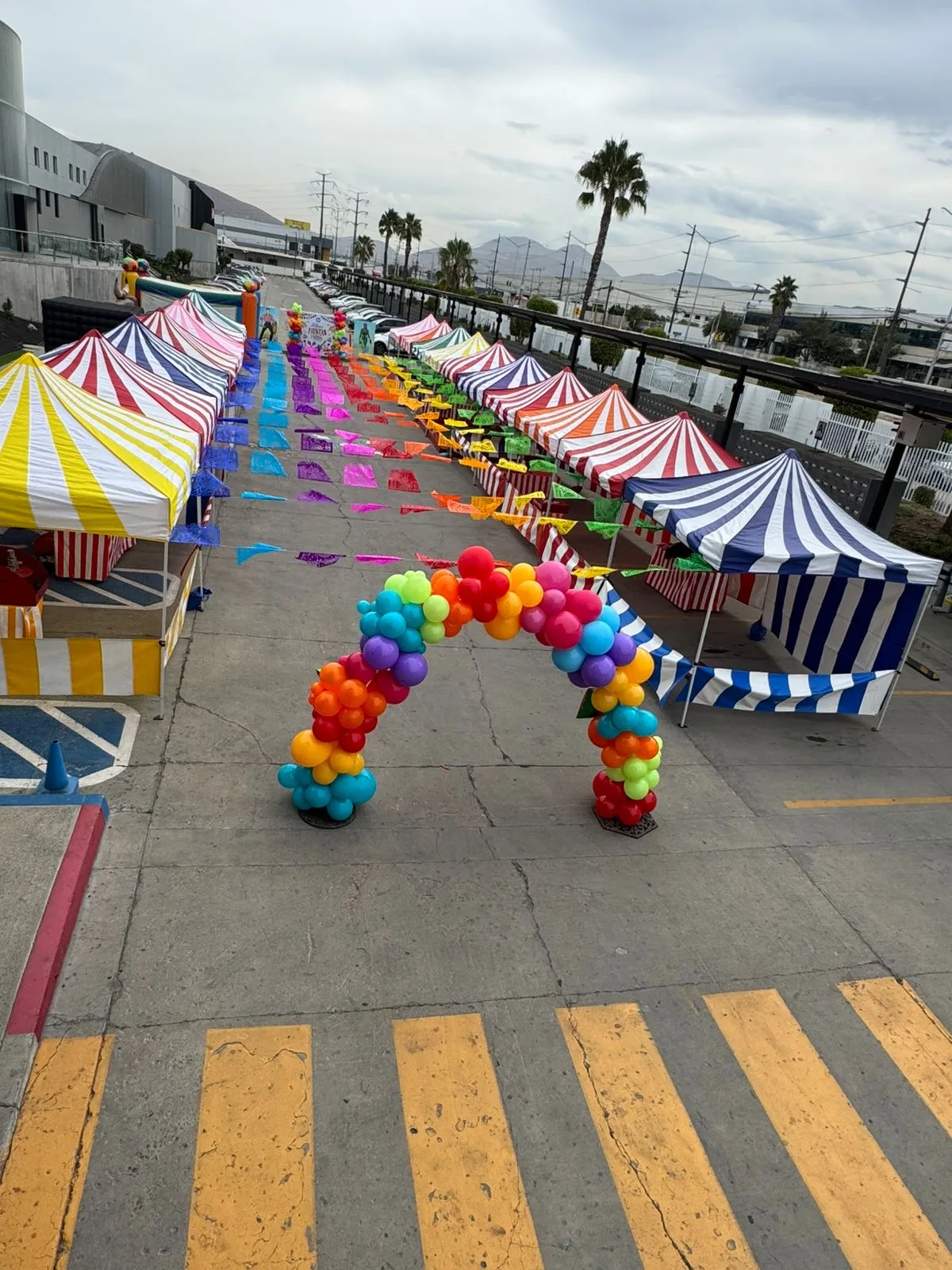
The booth count and mix depend entirely on the event. A school carnival on a Normal Heights-area SDUSD campus typically runs six to ten booths in a horseshoe along the blacktop — a few games at kid height, a couple of concession counters (popcorn, cotton candy, snow cones) clustered near shade or power, and a ticket or prize table anchoring one end. A backyard birthday scales down to two or three booths tucked along a fence line. A community event at Ward Canyon Neighborhood Park or on the lawn near Normal Heights Community Center can run wider and looser, since there's more open grass to work with than a fenced schoolyard offers.
Regardless of scale, the booths are the visual spine of the layout — everything else (inflatables, a stage, seating) gets built around where the booths sit. Games go in 5x5s or 8x8s depending on how much play space the game needs; concession counters usually take an 8x8 or 10x10 for counter depth and storage; a ticket booth or photo backdrop can run as small as a 5x5. My Little Carnival lays the row or horseshoe out during the quote conversation, matched to the venue's actual footprint rather than a generic template.
What's typically included.
-
Booth structure.
A high-peak, red-and-white striped canvas frame in 5x5, 8x8, or 10x10, with full skirting and a header sign space for the booth's game, concession, or ticket branding.
-
Interior fit-out.
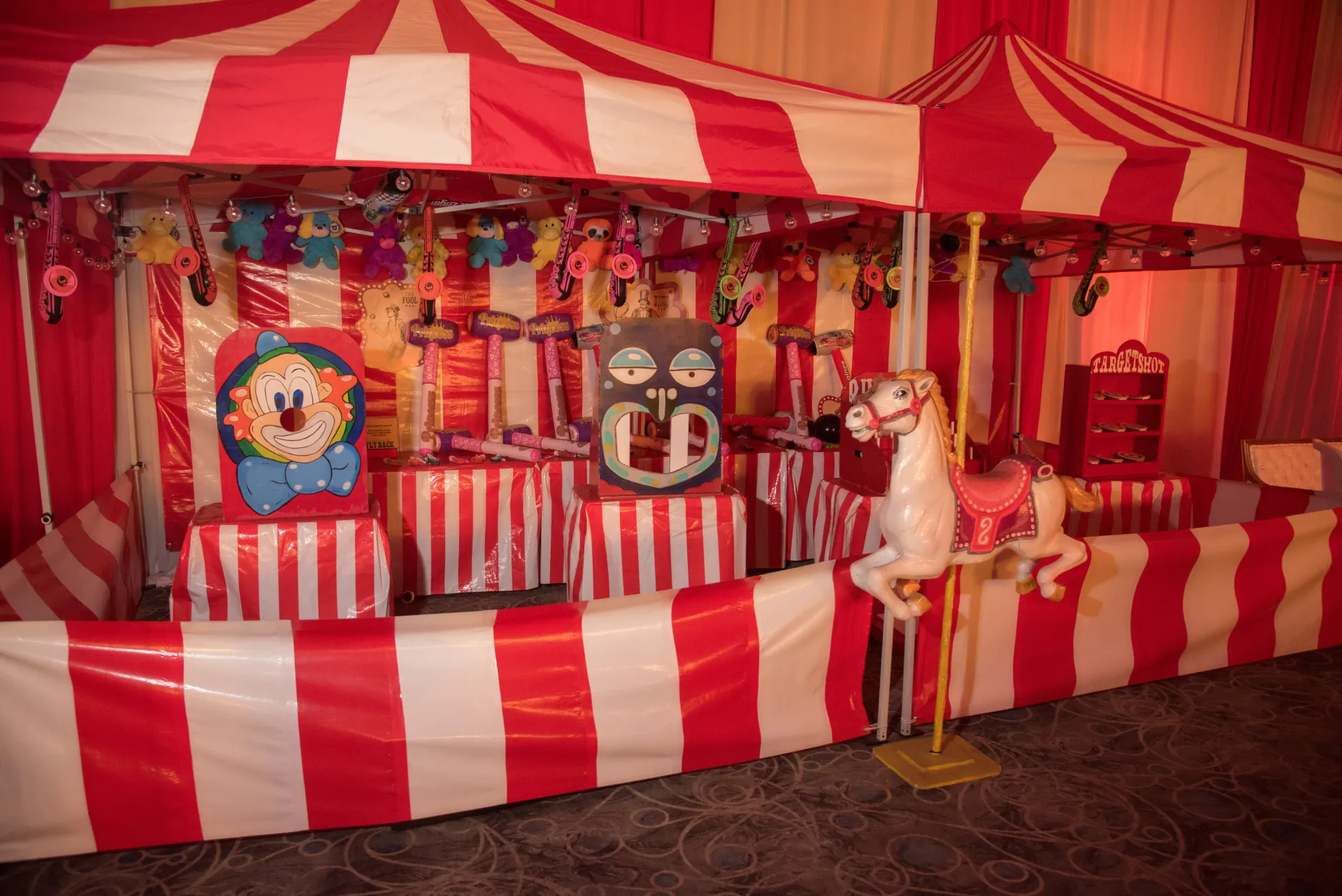
Counter or table surface, shelving for prizes or concession supplies, and any game-specific hardware (ring pegs, knockdown targets, plinko board) needed for that booth's function.
-
Layout design.
Booths are arranged as a row, horseshoe, or perimeter based on the venue's actual footprint — a schoolyard blacktop lays out differently than an open lawn at Ward Canyon Neighborhood Park.
-
Delivery, setup, and breakdown.
Crew builds the full row of booths as part of the event setup and strikes them afterward. No booth is dropped off and left for a host or volunteer to assemble.
-
Anchoring for the surface.
Stakes on grass, water barrels or sandbags on blacktop and concrete — matched to whichever surface a Normal Heights venue offers.
-
Attendants — optional.
Booth attendants are available as an add-on, quoted per booth or per hour, or the booths can run volunteer-staffed for events like PTA carnivals that prefer to keep parent volunteers on the games.
Typical timeline for carnival booths in Normal Heights.
- 1
Inquire
Share the venue, rough guest count, and what the booths need to do — games, concessions, ticket sales, photo backdrop — and how many events like this are typical for the space.
- 2
Quote + layout
My Little Carnival sizes the booth count and mix (5x5, 8x8, 10x10) to the venue footprint and sends a scoped quote with a proposed layout.
- 3
Event day delivery
Crew arrives ahead of the start time, builds the booths in their planned layout, anchors them to the surface, and stages games, prizes, or concession equipment inside each one.
- 4
Breakdown
Booths come down and get packed out after the event ends, with the venue left clear — no equipment stays behind.
Specifics for Normal Heights.
- Common venues: Ward Canyon Neighborhood Park and Kensington Park handle most neighborhood-scale gatherings; Adams Recreation Center and Normal Heights Community Center cover indoor-adjacent or community-org events; SDUSD campuses in the area handle school carnivals.
- Surface matters: Grass at Ward Canyon Neighborhood Park takes stakes easily; blacktop at a school campus or the paved areas near Adams Recreation Center needs water barrels or sandbags instead — this gets confirmed during the quote walk-through.
- School paperwork: Booths headed onto a San Diego Unified School District campus require a facility-use authorization and a vendor Certificate of Insurance naming the district as additional insured, typically routed through the school office weeks ahead of the date.
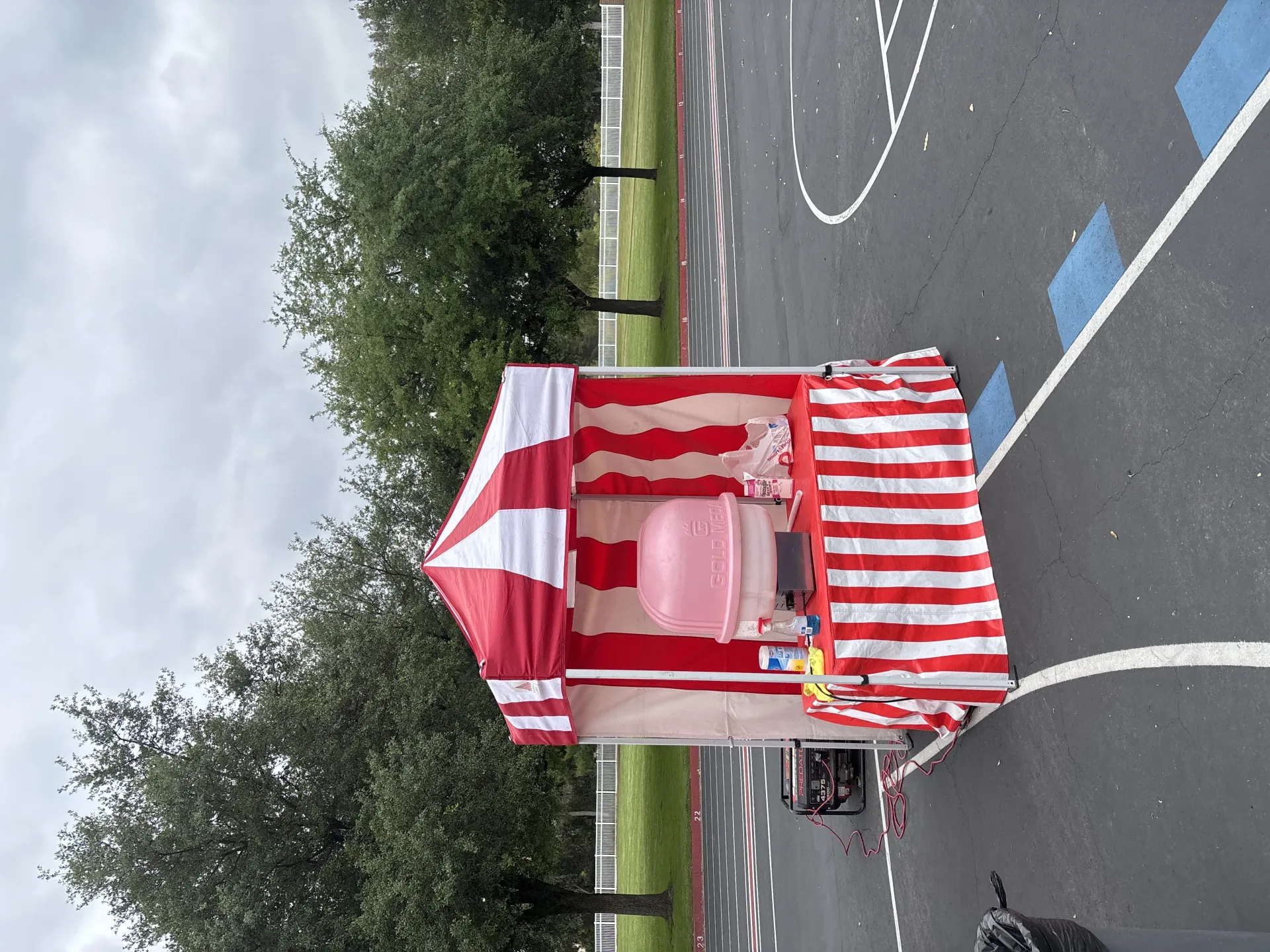
- Power for concession booths: A popcorn popper or cotton candy spinner pulls a dedicated circuit. Where a park or campus doesn't have accessible outdoor outlets, a generator gets brought in as part of the setup rather than relying on an extension cord run.
- Footprint sizing: A single 8x8 booth needs roughly 10x10 of clear ground once guy-lines and walk space are counted. Four to six booths fit a typical backyard or courtyard; a full 10-15 booth school carnival wants a schoolyard blacktop or open park lawn.
- Weather contingency: Southern California's typically dry climate keeps outdoor booth events low-risk most of the year, but a rain date or covered fallback is worth having on the calendar for winter bookings.
Common questions.
What's the difference between the 5x5, 8x8, and 10x10 booths?
5x5s work well for simple games, ticket sales, or a photo backdrop. 8x8s are the standard size for most games and smaller concession counters. 10x10s handle concession stations that need more counter depth and storage, like a full popcorn-and-cotton-candy setup.
Do the booths work on grass and on blacktop?
Yes, both. Grass surfaces get staked; blacktop, concrete, and paved courtyards get water barrels or sandbags instead. Which method applies gets sorted out based on the specific venue during the quote.
Are attendants included with the booths?
Not by default. Booth attendants are available as an add-on, quoted per booth or per hour, or games can be volunteer-run — common for school carnivals where parent volunteers want to staff the booths themselves.
How many booths does a typical event need?
Most school carnivals and community events in the Normal Heights area run four to fifteen booths depending on guest count and venue size. Smaller backyard events run two or three. The right count for a given date gets worked out in the quote conversation.
Do concession booths need special power?
Popcorn poppers, cotton candy spinners, and snow cone shavers each need a dedicated circuit. Where a venue's outdoor outlets can't cover that load, a generator is brought in as part of setup.
What happens if it rains on the event date?
Southern California's typically dry climate keeps this a low-frequency issue, but it's worth having a rain date or a covered indoor fallback discussed ahead of time, particularly for events booked in the wetter winter months.
About this guide.
This local guide to carnival booths in Normal Heights was compiled by My Little Carnival, the San Diego County operation of My Little Carnival — producers of school carnivals, community events, and backyard parties built around striped carnival booths and the games, concessions, and photo setups they host.
Helpful local references: San Diego Unified School District · City of San Diego Parks and Recreation
Carnival Booths in nearby cities.
Planning an event with carnival booths in Normal Heights?
Share the venue, your rough guest count, and what the booths need to do — games, concessions, or ticket sales — and My Little Carnival will scope a layout and send a quote.
Get a quote →