carnival games in Normal Heights.
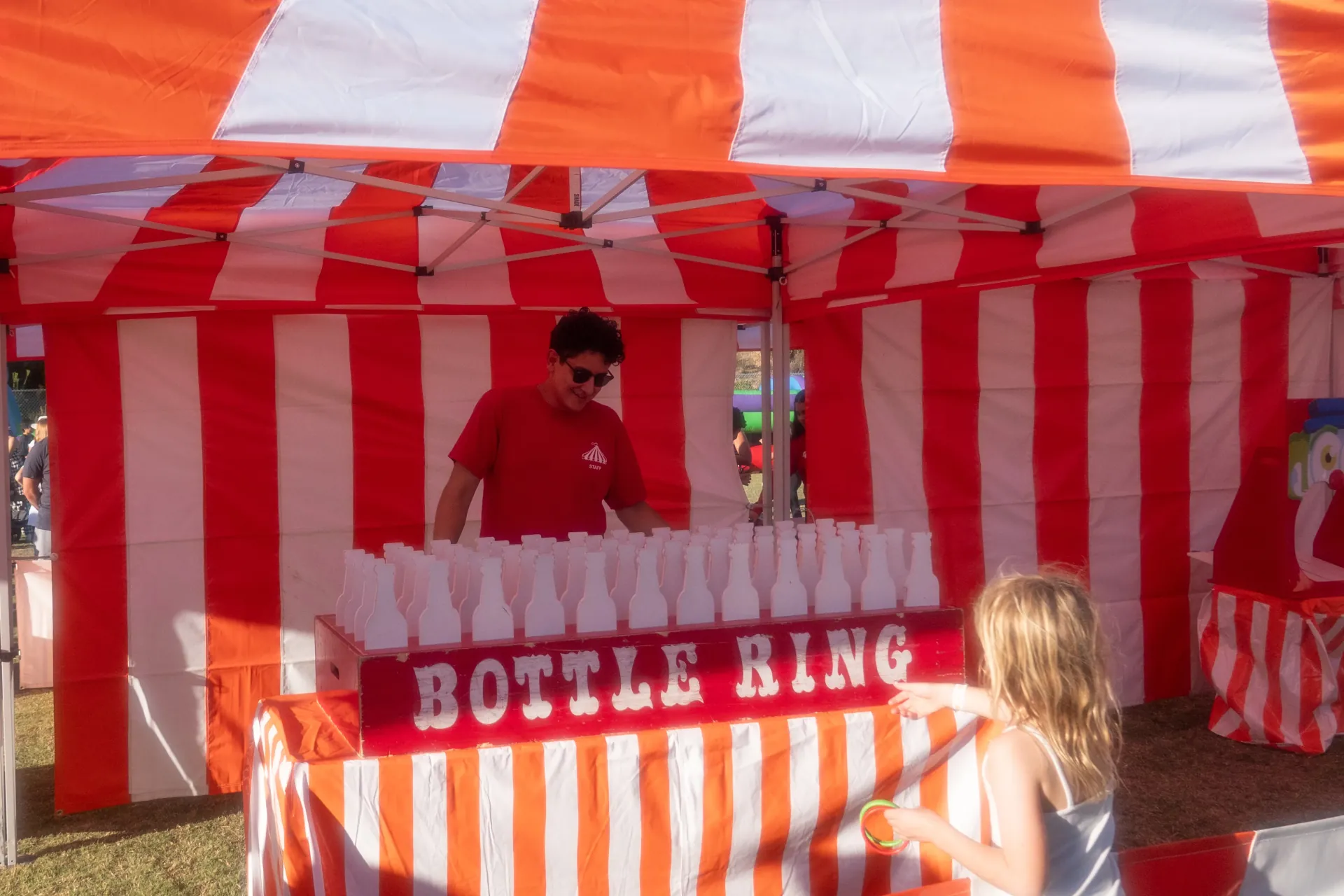
A carnival game is a single freestanding booth built around one simple mechanic — ring toss, bottle ring, dart-the-stars, plinko, balloon pop, milk-can toss, basketball pop, or fishing for ducks — each stocked with consolation and top-tier prizes for winners. On its own it's a compact footprint: one canopy, one game surface, one prize rack. As part of a full event My Little Carnival produces in Normal Heights, carnival games form the midway — the run of booths guests wander between while waiting on concessions or a turn at the bounce house. Most school carnivals, fundraisers, and corporate events here book six to twelve games together, mixed across skill levels, staffed either by My Little Carnival attendants or by parent and staff volunteers. This is a local guide to carnival games in Normal Heights — how they're typically laid out, what a booth includes, and what's worth knowing before requesting a quote.
Normal Heights is a compact, walkable neighborhood, and most carnival-style events here happen at Ward Canyon Neighborhood Park, Adams Recreation Center, the Normal Heights Community Center, or Kensington Park just over the neighborhood line. These venues tend to have flat grass or blacktop areas sized for a modest midway rather than a sprawling one — a horseshoe or straight-line run of six to ten booths is the common configuration, with room left for a concession table and a prize redemption spot.
My Little Carnival supplies carnival games as part of full carnival events across San Diego County, sizing the booth count and mix to whichever Normal Heights venue the event lands at.
How carnival games show up at an event in Normal Heights.
Booths arrive as part of the full event build-out and get arranged along a walkway or in a loose horseshoe so guests can see the whole midway from the entrance. A school carnival at Adams Recreation Center or a church fundraiser at the Community Center typically runs six to eight games alongside a couple of concession stations; a larger neighborhood event at Ward Canyon Neighborhood Park might stretch to ten or twelve to keep lines moving with a bigger crowd.
Each booth is self-contained — striped canopy, game surface, prize rack — and either an My Little Carnival attendant runs it for the full window or a volunteer takes over after a quick walkthrough. Games get mixed deliberately: a few pure-luck options like plinko or the duck pond for younger kids, a few skill-based ones like ring toss or basketball pop for older guests and adults chasing a bigger prize. The mix is usually the first thing worked out in the quote conversation, since it shapes how many booths a given guest count actually needs.
What's typically included.
-
Freestanding game booths.
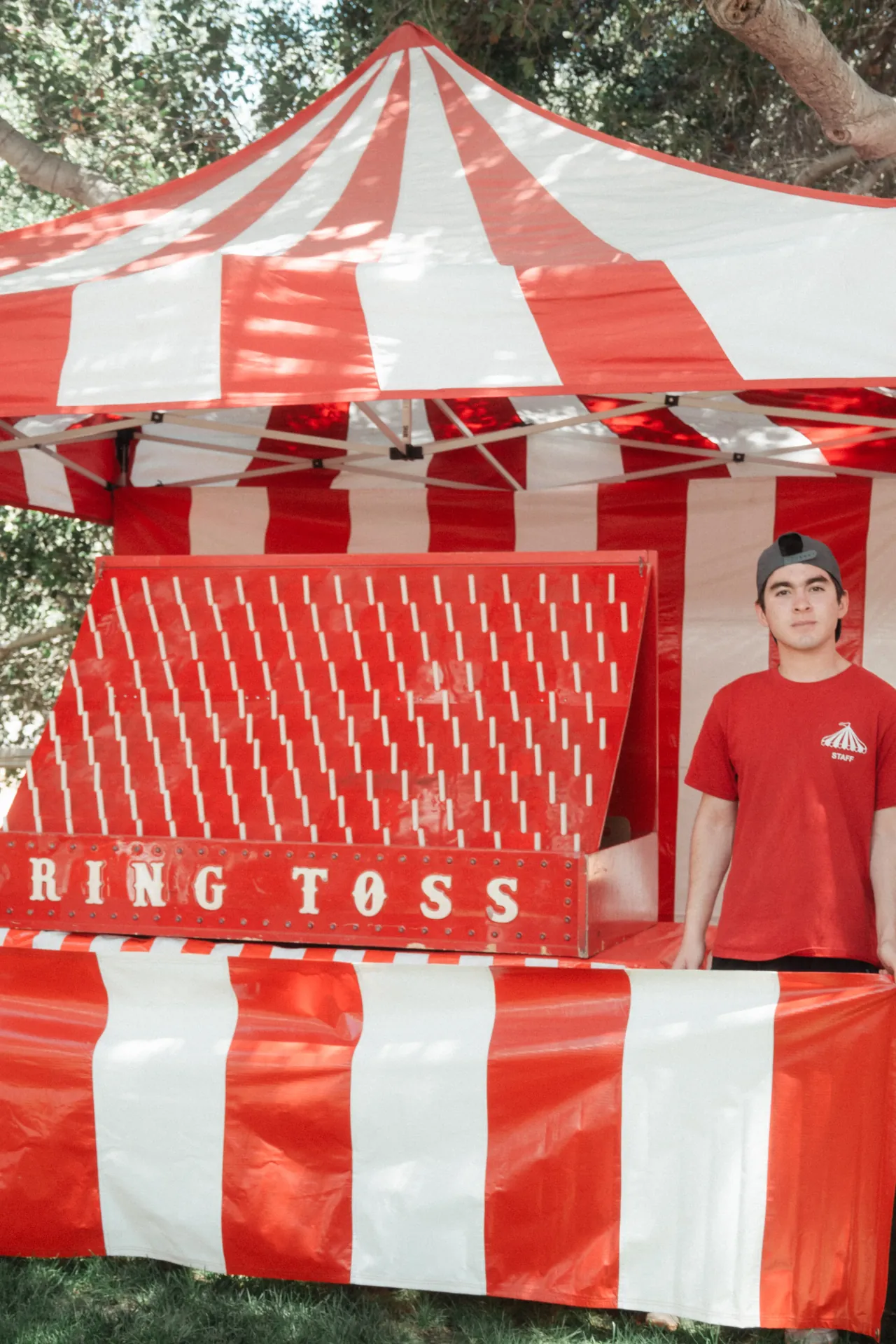
Striped canopy tents with full skirting and signage, each built around one game — ring toss, bottle ring, dart-the-stars, plinko, balloon pop, milk-can toss, basketball pop, or fishing for ducks.
-
Prizes included.
Every booth is pre-loaded with consolation and top-tier prizes matched to the expected guest count, so nobody walks away from a win empty-handed.
-
Attendants, optional.
An My Little Carnival attendant per booth can be added and quoted separately, or booths can be volunteer-staffed. Games are one of the categories where staffing is not automatically included.
-
Layout planning.
Booth count and placement are worked out against the venue — Ward Canyon Neighborhood Park, Adams Recreation Center, and the Normal Heights Community Center all have slightly different footprints.
-
Delivery, setup, and breakdown.
Crew delivers booths as part of the full event build, sets the midway layout, and packs everything out after the event without leaving equipment behind.
-
Certificate of insurance.
My Little Carnival provides a COI on request for venues that require one, which covers most permitted park and school-facility bookings in the area.
Typical timeline for carnival games in Normal Heights.
- 1
Inquire
Share the event date, venue, and rough guest count. Guest count is the biggest driver of how many booths a Normal Heights event actually needs.
- 2
Quote + booth mix
A game mix gets proposed — usually a spread of luck-based and skill-based booths — along with attendant staffing options and a deposit to hold the date.
- 3
Delivery + setup
Booths arrive as part of the full event setup the morning of, get arranged in the agreed layout, and are stocked with prizes before doors open.
- 4
Event day + pack-out
Games run for the contracted window, then crew breaks down and hauls out afterward. The site is left as it was found.
Specifics for Normal Heights.
- Venue footprint: Ward Canyon Neighborhood Park and Kensington Park have open grass areas that comfortably fit a straight-line run of eight to ten booths. Adams Recreation Center and the Normal Heights Community Center tend to work better with a tighter horseshoe of six to eight given more limited flat space.
- Surface: Booths set up equally well on grass, blacktop, or a paved lot. Grass setups use stakes; concrete or asphalt setups switch to weighted bases instead.
- Power needs: Most carnival games don't require power at all — only a couple of lit or electronic variants do. When power is needed and the venue's outlets don't cover it, My Little Carnival brings a generator as part of the setup.
- Park permits: City of San Diego park and recreation facilities generally require a use permit and a certificate of insurance for vendor equipment. Normal Heights events at Ward Canyon Neighborhood Park or Kensington Park should plan for that paperwork a few weeks out.
- School bookings: Events tied to San Diego Unified School District campuses typically go through the school's facility-use process, and the district usually wants the vendor named as additional insured on the COI.
- Weather: Southern California's typically dry climate keeps outdoor carnival dates fairly low-risk. Canopies handle wind reasonably well when properly staked or weighted, but a rain-date option is worth discussing for cooler-season bookings.
Common questions.
Are attendants included with each game booth?
Not by default. Games are typically volunteer-staffed or run with an My Little Carnival attendant added as a paid option, quoted per booth. Many Normal Heights school and fundraiser events mix both — attendants on a couple of the trickier games, volunteers on the rest.
How many games do we actually need?
As a loose guide, one booth per thirty to fifty expected guests keeps lines reasonable. A 150-guest event runs fine on four to six games; a 400-guest neighborhood event usually wants eight to twelve.
Do the games need a flat surface, or does grass work?
Both work. Grass setups use stakes to anchor the canopy; concrete, blacktop, or a paved lot use weighted bases instead. Either way the booths are self-leveling on typical park and school-yard surfaces.
Is there an age range these games work for?
Most booths work from about age four through adult, though the mix matters — plinko and the duck pond skew easier for younger kids, while ring toss and basketball pop reward more skill and tend to draw older kids and adults.
What happens if it rains on event day?
Canopies handle light rain and wind when properly staked or weighted, but a soaked field can make grass setups impractical. Most bookings build in a rain-date conversation rather than trying to move games indoors.
Do we need a permit to run games at a City park?
Generally yes. City of San Diego park facilities like Ward Canyon Neighborhood Park and Kensington Park typically require a facility-use permit and a certificate of insurance for outside vendor equipment — My Little Carnival can supply the COI once the permit process is underway.
About this guide.
This local guide to carnival games in Normal Heights was compiled by My Little Carnival, the San Diego County operation of My Little Carnival — producers of school carnivals, fundraisers, and community events throughout the area. My Little Carnival sizes the game mix and booth count to whatever Normal Heights venue an event lands at.
Helpful local references: San Diego Unified School District · City of San Diego Parks and Recreation
Carnival Games in nearby cities.
Planning carnival games for a Normal Heights event?
Share the venue, date, and rough guest count, and My Little Carnival will propose a booth mix and staffing plan sized for the space.
Get a quote →