amusement rides in San Diego.
Amusement rides are mechanical attractions — trackless trains, carousels, mini ferris wheels, swing rides, teacup rides — that need real infrastructure to run: a stretch of level, open ground, a dedicated power source (shore power or a generator), and a trained operator at the controls for the entire time the ride is loading and turning. Unlike a bounce house or a game booth, a ride isn't something a parent volunteer can run for an afternoon; the operator is part of the product. In San Diego, amusement rides in San Diego show up almost exclusively at larger productions — school carnivals with a couple hundred guests or more, city and neighborhood festivals, grand openings, and big private events with the space to host one. As part of a full event My Little Carnival produces, a ride arrives with the unit itself, the attendant running it, and the power setup to keep it turning for the contracted window. This is a local guide to what these rides need logistically, where they tend to show up around the city, and what's worth knowing before one gets penciled into an event plan.
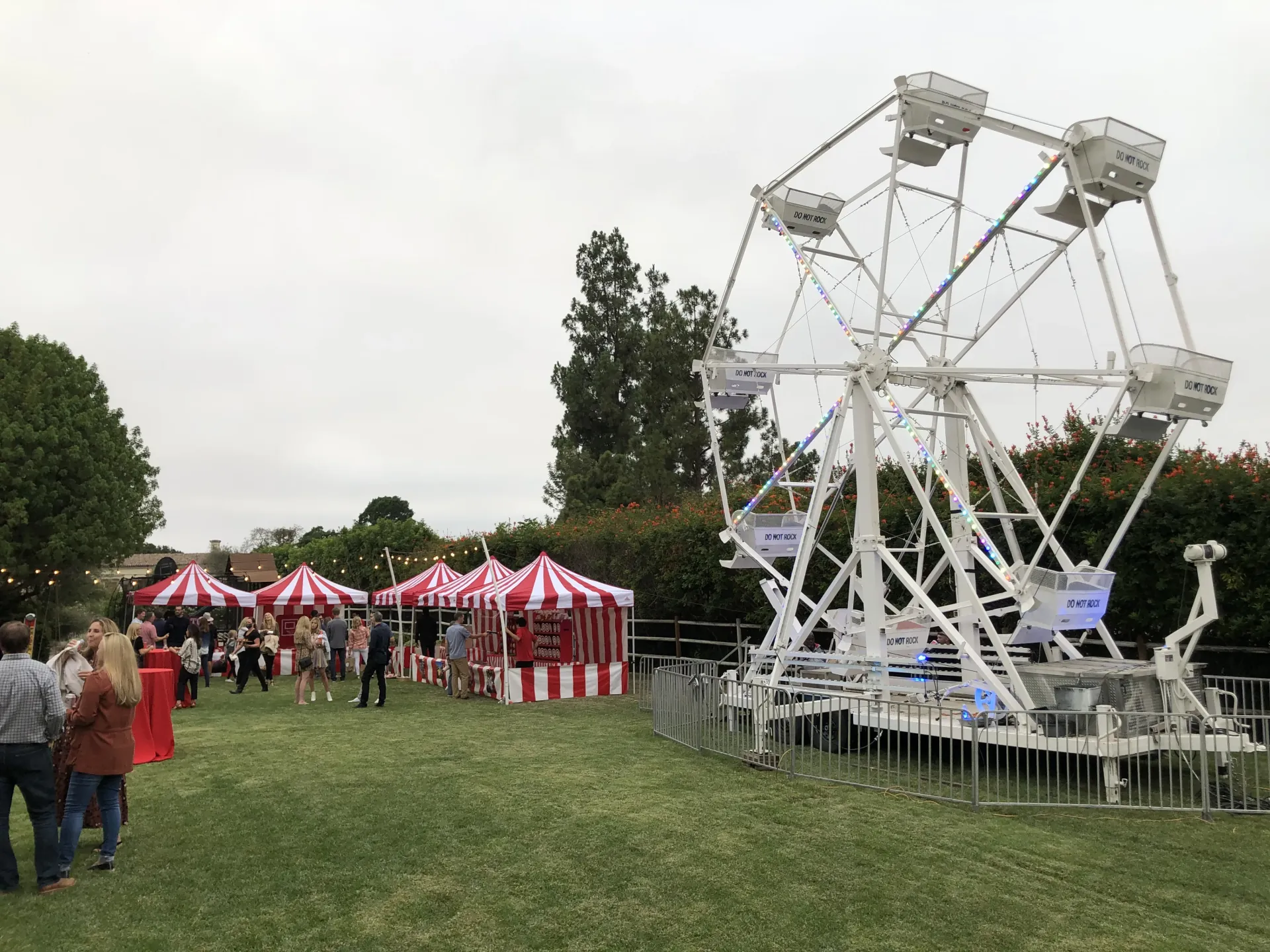
Rides need square footage most backyards don't have, which is why they concentrate at San Diego's larger open venues — Balboa Park's lawns and plaza areas, the shoreline fields at Mission Bay Park, the open meadows of Mission Trails Regional Park, and paved plaza space at Snapdragon Stadium during grand openings and community events. School carnivals hosted on San Diego Unified School District campuses tend to size down to a trackless train or a compact mini ferris wheel that fits a blacktop footprint rather than a full swing ride.
My Little Carnival produces amusement rides as part of full festival, carnival, and grand-opening events across San Diego County, matching ride selection to whatever power and space the venue actually has.
How amusement rides show up at events in San Diego.
A ride is rarely the only attraction at an event — it's one piece of a larger layout that also includes games, concessions, and often an inflatable or two. The ride gets staged first, since it needs the flattest, most open section of the site and the clearest sightline to a power hookup or generator pad. A mini ferris wheel or swing ride anchors one end of the footprint; a trackless train gets a looped path around the perimeter of the whole event instead of a fixed spot. Everything else gets built around it.
Once doors open, an attendant runs the ride continuously for the contracted window — loading riders, checking restraints, cycling the ride, and unloading — while the rest of the event runs in parallel. At a school carnival on an SDUSD field this might mean a single trackless train looping past game booths; at a city festival in Balboa Park or a grand opening at Snapdragon Stadium, it can mean two or three rides running side by side. The ride attendant's job doesn't overlap with game-booth or concession staffing — it's a dedicated role for the whole event.
What's typically included.
-
Ride selection.
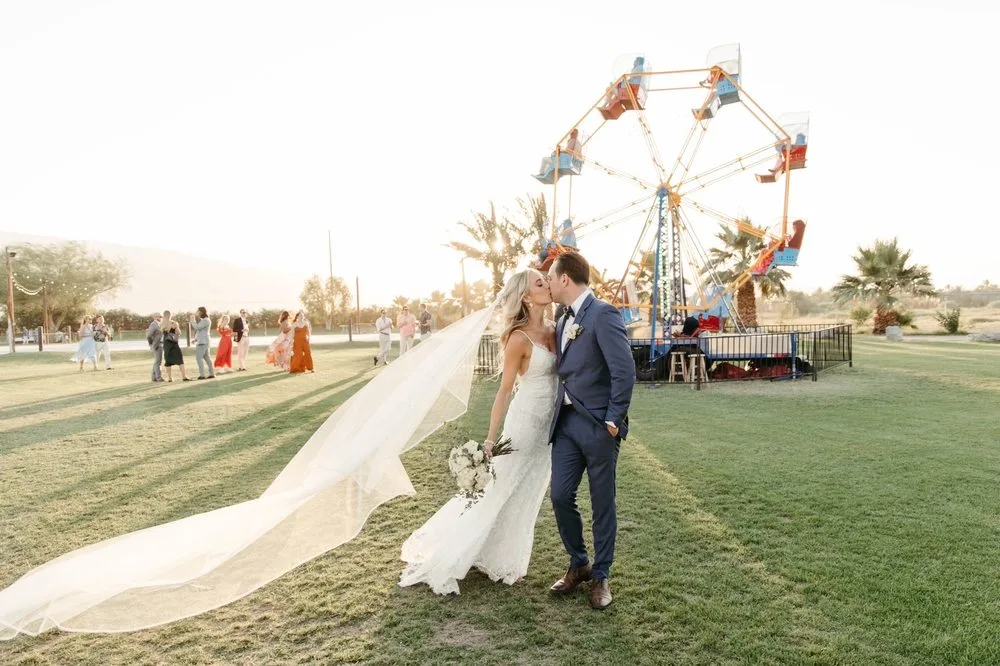
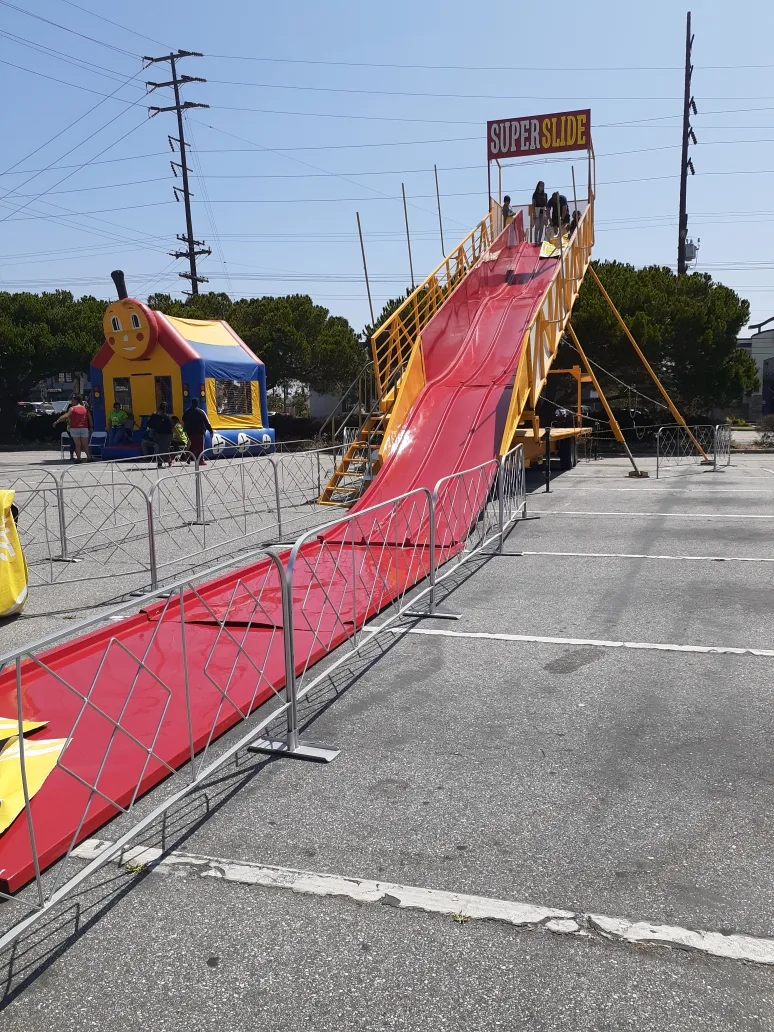
Trackless train, carousel, mini ferris wheel, swing ride, or teacup ride — chosen to fit the venue's footprint, guest age range, and available power.
-
Trained ride attendant.
A dedicated operator runs the ride for the full event window, handling loading, restraints, and cycling. This is not optional or volunteer-staffed — every ride comes with its own operator.
-
Power setup.
Shore power where the venue has it; a generator sized to the ride's draw where it doesn't. Cabling and safe cable-run layout are handled as part of setup.
-
Ground and safety perimeter.
Leveling mats or platform panels where the surface needs them, plus fencing or safety tape around the ride's loading zone and swing radius.
-
Delivery and load-in.
Rides are trailered in, assembled, and tested on-site ahead of the event. Larger units may require an earlier arrival window than the rest of the event's equipment.
-
Insurance documentation.
A Certificate of Insurance covering the ride's operation, provided ahead of time for venues and districts — including San Diego park permits and school facility-use applications — that require it.
Typical timeline for amusement rides in San Diego.
- 1
Inquire + quote
Share the event type, expected guest count, and venue. My Little Carnival recommends a ride (or combination) that fits the space and the rest of the event's footprint.
- 2
Site walk-through
For larger productions, a walk-through confirms ground surface, power access, and load-in path before the ride is finalized on the quote.
- 3
Delivery + setup
The ride arrives ahead of the rest of the event's equipment, gets assembled, leveled, tested, and fenced off before doors open.
- 4
Event day + breakdown
The attendant runs the ride for the contracted window. Breakdown starts once the event closes and the ride is trailered out same-day.
Specifics for San Diego.
- Where rides go: Balboa Park's open lawns and plaza areas, the shoreline fields of Mission Bay Park, the meadows at Mission Trails Regional Park, and the paved plaza at Snapdragon Stadium have all hosted amusement rides for festivals and grand openings. School carnivals on San Diego Unified School District campuses typically fit a single compact ride onto a blacktop or field footprint.
- Ground surface: Rides need level, firm ground — asphalt, concrete, or compacted turf. Loose sand, steep grades, or soft irrigated grass after rain aren't suitable without additional leveling work.
- Power needs: Most park and school venues don't have dedicated ride-grade power on-site, so a generator sized to the unit is the default. Venues with built-in event infrastructure, like parts of Snapdragon Stadium, sometimes offer shore power that reduces or eliminates generator needs.
- Permits and paperwork: City park venues require a City of San Diego park-use permit; SDUSD campuses require facility-use authorization through the school's office. Both typically want a Certificate of Insurance from the ride operator in advance.
- Footprint per ride: A mini ferris wheel or teacup ride needs roughly a 20x20-foot clear pad plus overhead clearance; a trackless train needs a looped path rather than a fixed footprint; swing rides need clearance for the full swing radius.
- Weather contingency: Southern California's typically dry climate keeps most outdoor ride dates low-risk. Wind above a certain threshold can pause ride operation at the attendant's discretion, and muddy turf after rain can rule out grass venues until it firms back up.
San Diego, CA.
ZIPs: 92101 · 92102 · 92103 · 92104 · 92105 · 92106 · 92107 · 92108 · 92109 · 92110 · 92111 · 92112 · 92113 · 92114 · 92115 · 92116 · 92117 · 92119 · 92120 · 92121 · 92122 · 92123 · 92124 · 92126 · 92127 · 92128 · 92129 · 92130 · 92131 · 92132 · 92134 · 92135 · 92136 · 92137 · 92138 · 92139 · 92140 · 92142 · 92145 · 92147 · 92149 · 92150 · 92152 · 92153 · 92154 · 92155 · 92158 · 92159 · 92160 · 92161 · 92163 · 92165 · 92166 · 92167 · 92168 · 92169 · 92170 · 92171 · 92172 · 92174 · 92175 · 92176 · 92177 · 92179 · 92182 · 92186 · 92187 · 92190 · 92191 · 92192 · 92193 · 92195 · 92196 · 92197 · 92198 · 92199
My Little Carnival delivers amusement rides throughout San Diego and the surrounding San Diego County area. Pin shows the city center; we cover every ZIP listed above.
Common questions.
Is an operator included with the ride?
Yes. Every ride comes with a trained attendant who runs it for the full event window — this is standard for every ride booking, not an add-on.
Are there age, height, or weight limits?
Yes, and they vary by ride — a teacup ride or mini ferris wheel typically has different restraint and height requirements than a swing ride. The attendant enforces limits on-site.
Can a ride go on grass?
Yes, as long as the ground is level and firm. Soft, uneven, or recently irrigated turf usually needs to dry out or get leveled with mats before a ride can be set up on it.
Do we need to provide power?
Not usually. Most San Diego park and school venues don't have ride-grade power on-site, so a generator sized to the unit is brought as part of the booking.
Do we need a permit to put a ride in a public park?
Generally yes — City of San Diego park venues require a park-use permit, and school campuses require facility-use authorization. Both are usually handled during the quote and setup process.
What happens if it's windy or rains on event day?
Rides can pause or shut down temporarily in high wind at the attendant's judgment, and muddy turf can delay setup on grass venues. Most events build a little schedule flexibility around this rather than a hard cancellation clause.
About this guide.
This local guide to amusement rides in San Diego was compiled by My Little Carnival, a division of My Little Carnival — producers of school carnivals, city festivals, and grand-opening events across San Diego County.
Helpful local references: San Diego Unified School District · Balboa Park
Amusement Rides in nearby cities.
Planning an event with amusement rides in San Diego?
Share the venue, expected guest count, and date — and My Little Carnival will recommend rides that fit the space and power available, then scope a full event quote.
Get a quote →