community + hoa events in South Park.
A community or HOA event is a two to four hour gathering built around carnival games and concessions as the main activity, run at a community park, clubhouse, or shared pool area rather than a private backyard. Homeowners associations use the format for a summer pool kickoff or a fall resident-appreciation day; neighborhood associations and block-party organizers use it to give a street closure or a park reservation something for kids to do besides stand around; apartment and condo property managers use it as a resident event tied to a lease-renewal season. The booths and concession stand double as the anchor other programming, a raffle table, a DJ, gets built around. This is a local guide to Community + HOA Events in South Park, how the format fits a neighborhood of mostly narrow residential streets and small parks, and what a turnkey carnival production typically covers.
South Park sits just east of Balboa Park and south of Golden Hill, a grid of narrow residential streets lined with Craftsman bungalows and small multi-unit condo and townhome buildings rather than large gated developments. Formal HOAs here tend to be smaller, building-level associations rather than the sprawling common-green communities found in a newer suburban tract, so a block party organized directly by neighbors along a closed-off street is just as common as a board-run event. Grape Street Park, a neighborhood pocket park, handles the smaller gatherings; Golden Hill Recreation Center's larger field space and the picnic meadows inside Balboa Park itself absorb anything bigger. San Diego Unified School District covers the area, and its calendar is often the thing that decides which Saturday a community day actually lands on.
My Little Carnival produces community and HOA-style events across San Diego County, with experience working both the City of San Diego's park-permit process and the board approval or property-management sign-off that private common areas and pool decks require.
How a community or HOA event unfolds in South Park.
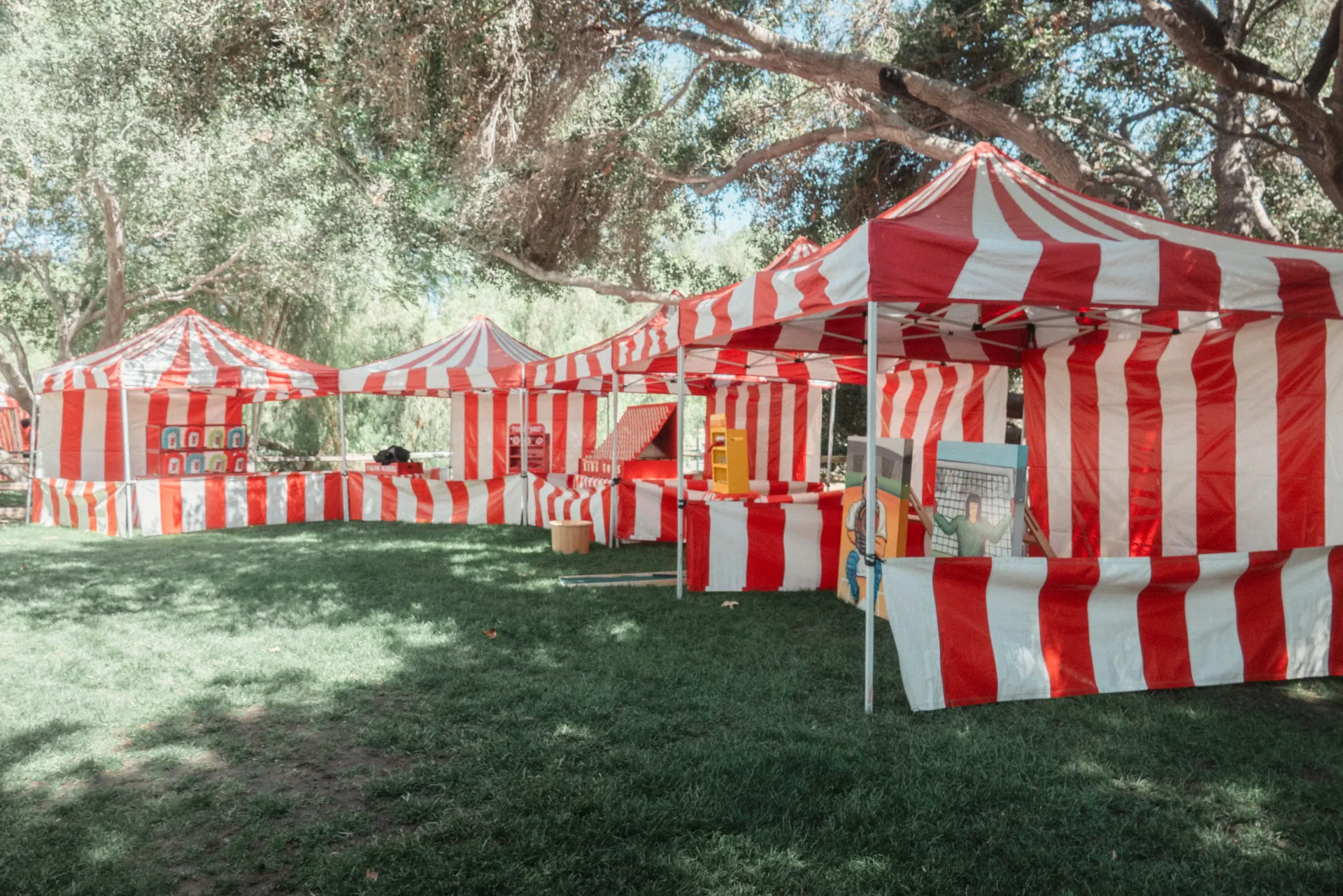
Setup crew arrives roughly an hour before doors open for a smaller gathering, longer for anything at the production-scale end of the format. At a pocket park like Grape Street, that usually means two or three booths and a concession table tucked along one edge of the lawn so foot traffic and stroller lanes stay clear. At a bigger venue like Golden Hill Recreation Center or one of Balboa Park's picnic meadows, the layout opens into a wider arrangement with room for a longer concession line and more breathing space between booths.
Because South Park's housing stock leans toward condo and townhome buildings instead of large HOA tracts, a fair share of the community bookings here start as a shared pool deck or a courtyard rather than a park reservation, especially for a summer kickoff. The setup adapts to whatever surface is available, poured concrete around a pool, a courtyard paver pattern, or open grass, without changing the booth count or game selection. The organizing group, a condo board, a property manager, or a handful of neighbors splitting the cost, handles invitations and any add-on programming; My Little Carnival handles the booths, games, prizes, and concessions from delivery to breakdown.
What's typically included.
-
Right-sized booth setup.
Two to three booths for a small pool-deck or courtyard gathering, up to a full multi-booth layout for a larger neighborhood-association day at a park. Booth count and spacing are scoped to the actual footprint, not a fixed package.
-
Family-friendly games and prizes.
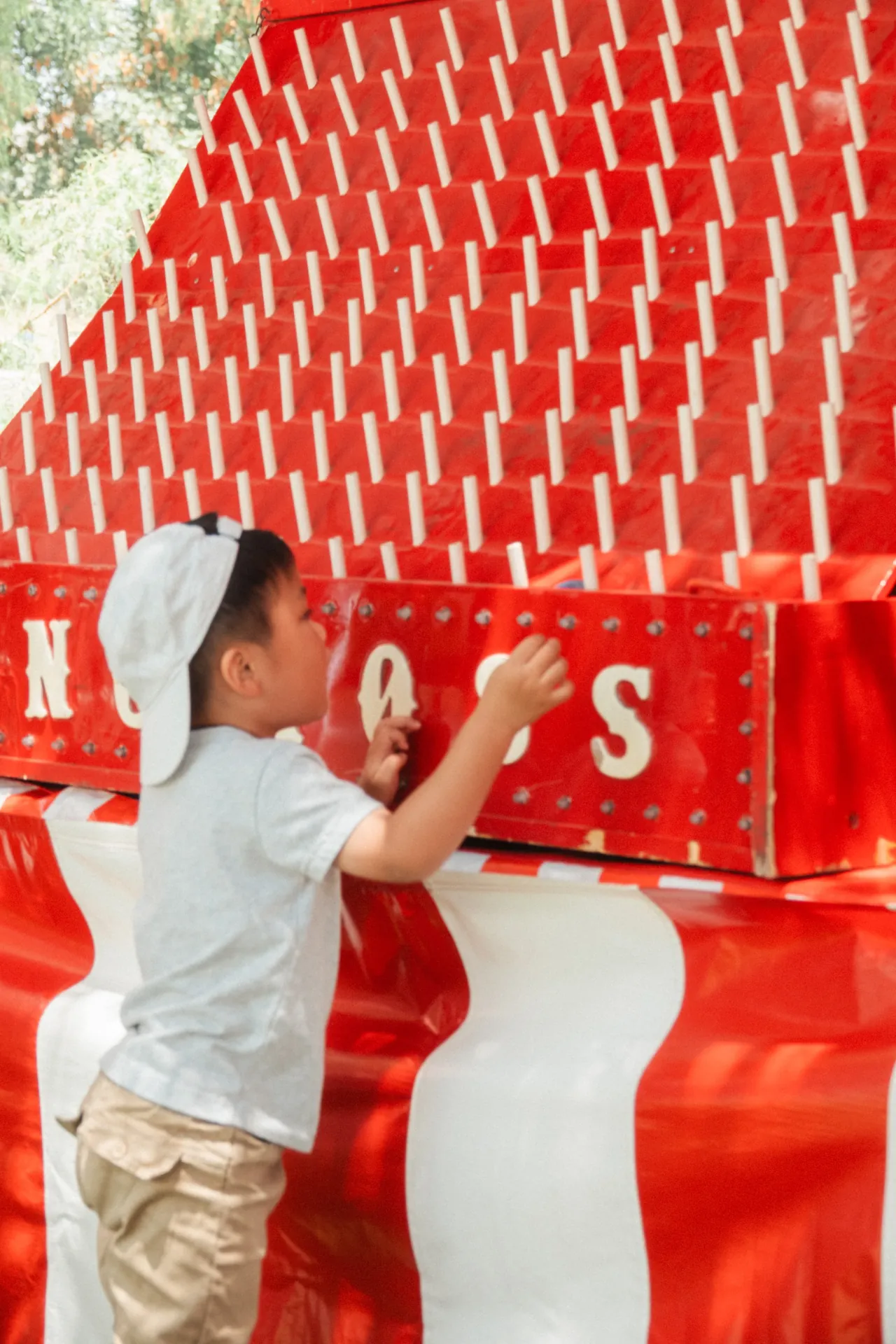
Ring toss, bottle knockdown, balloon pop, and similar low-skill games suited to a wide age range, each stocked with prizes matched to the expected guest count.
-
Concessions sized to RSVPs.
Popcorn and cotton candy stations built to serve the number of households or units expected, not a flat per-hour estimate. Supplies are scoped from the RSVP count the organizing group provides.
-
Surface-flexible setup.
The same equipment sets up on open grass, poured concrete around a pool deck, or a mixed courtyard surface. Anchoring and layout adjust to whichever ground the venue actually has.
-
Setup and breakdown.
Crew loads in ahead of the event window and packs out the same day, so the HOA, property manager, or block-party organizers aren't left managing equipment before or after.
-
Certificate of Insurance.
My Little Carnival provides a COI naming the applicable party, an HOA corporation, a property-management company, or the City of San Diego for a park venue, as additional insured.
Typical timeline for community + hoa events in South Park.
- 1
6-10 weeks out
Date and venue are picked, whether that's a City of San Diego park reservation for Grape Street Park or Golden Hill Recreation Center, a Balboa Park picnic-area permit, or board approval for a private pool deck or courtyard. Park permits generally need more lead time than a private common area does.
- 2
3-4 weeks out
Booth count and concession lineup are locked based on the venue's actual footprint. The COI is issued for the HOA board packet, the property manager's file, or the park permit application, and a deposit holds the date with My Little Carnival.
- 3
Week of
A final guest-count check and a short layout conversation with the production lead confirm exactly where booths and concessions will sit, especially important for a pool deck or courtyard where space runs tighter than an open park lawn.
- 4
Event day
Crew sets up within the confirmed footprint, staffs the contracted window, and breaks down the same day. The organizing group manages invitations, check-in, and any add-on programming; the production team runs the carnival.
Specifics for South Park.
- Park permits in South Park: Events at Grape Street Park, Golden Hill Recreation Center, or one of Balboa Park's picnic meadows go through the City of San Diego's park-use permit process. A COI naming the City as additional insured is typically required alongside the application.
- HOA and property-management approval: Events on a private common area, courtyard, or pool deck skip the city permit but need board or property-management sign-off, usually with a COI naming the HOA corporation or the management company as additional insured.
- Street parking: South Park's residential grid runs narrow, and street parking near most venues is already tight on an ordinary day. Load-in access and any guest overflow parking are worth flagging early, especially for a courtyard or pool-deck event without a dedicated lot.
- Power access: Concession machines need a dedicated circuit each. Older buildings and park sites in the area don't always have enough outdoor outlet capacity, so My Little Carnival brings a generator when the site can't cover the load.
- Venue size and footprint: Grape Street Park suits a two to three booth, pool-deck-scale gathering. Golden Hill Recreation Center's field space and Balboa Park's picnic meadows handle a full mid-size community day. A pool deck or courtyard typically caps out around three to four booths depending on the layout.
- Climate: Southern California's dry climate keeps most outdoor South Park dates low-risk. Summer afternoons can run warm, so starting before 11 a.m. or after 4 p.m., and keeping the concession table in shade, cuts down on heat exposure. A rain-date clause is worth adding for winter bookings.
Common questions.
How far ahead should we book a South Park community event?
Six to ten weeks out is the reliable window, more if the venue is Balboa Park or Golden Hill Recreation Center, since the City of San Diego's permit process takes longer than a private board's approval. A pool-deck or courtyard event with HOA sign-off can sometimes move faster.
Our community doesn't have a formal HOA, just neighbors splitting a block party. Does that change anything?
Not much. A handful of neighbors organizing a street closure or a park reservation works the same way an HOA board would, minus a formal approval step. The city permit, if the venue is a park, is still the binding piece of paperwork.
What size event fits which budget?
Smaller HOA or pool-deck events run roughly $2,000 to $5,000 for two to three booths and a concession station. Mid-size community days land between $5,000 and $12,000 for a full mini-carnival layout. Larger neighborhood-association events at a venue like Balboa Park can run $12,000 and up for a production-scale setup.
Can we run this on a shared pool deck instead of a park?
Yes. The booth and concession setup works on poured concrete or a courtyard surface as easily as open grass. A pool deck or courtyard event typically needs property-management or HOA sign-off and a COI rather than a city park permit.
How does the game selection handle a wide range of ages?
Games are chosen for low-skill, quick turnover play, ring toss, balloon pop, bottle knockdown, so a toddler and a middle-schooler can both play without a rules explanation. Prize tiers can be split by age range during the quote process if the guest list skews wide.
What does My Little Carnival handle versus the HOA, property manager, or neighborhood organizers?
My Little Carnival delivers, sets up, staffs, and breaks down the booths, games, prizes, and concessions. The organizing group handles invitations, RSVP tracking, any raffle or music add-ons, and coordination with the park or the property. The carnival is the production team's job; the event around it stays with the organizers.
About this guide.
This local guide to Community + HOA Events in South Park was compiled by My Little Carnival, a division of My Little Carnival, serving neighborhoods and HOA-governed communities across San Diego County.
Helpful local references: City of San Diego Parks & Recreation · San Diego Unified School District
Community + HOA Events in nearby cities.
Planning a community or HOA event in South Park?
Share the venue, whether that's a park, a clubhouse, or a shared pool deck, plus the expected guest count, and My Little Carnival will scope a quote sized for the space you actually have.
Get a quote →