
carnival booths in Little Italy.
A carnival booth is a striped red-and-white tent structure — usually 5x5, 8x8, or 10x10 feet — that functions as a game station, concession counter, prize window, ticket booth, or photo backdrop depending on how it's fitted out. It's the single most recognizable visual at a carnival event: the row of peaked canvas roofs with skirting hiding the frame, signage across the header, and a counter at guest height. As part of a full event My Little Carnival produces in Little Italy, booths are the backbone of the layout — most bookings in this neighborhood run four to fifteen of them, arranged to fit whatever plaza, park, or block-party footprint is available. This guide covers what carnival booths in Little Italy typically look like on the ground, how they're sized and fitted out, and what's involved in setting them up in a dense, mostly-paved urban neighborhood.
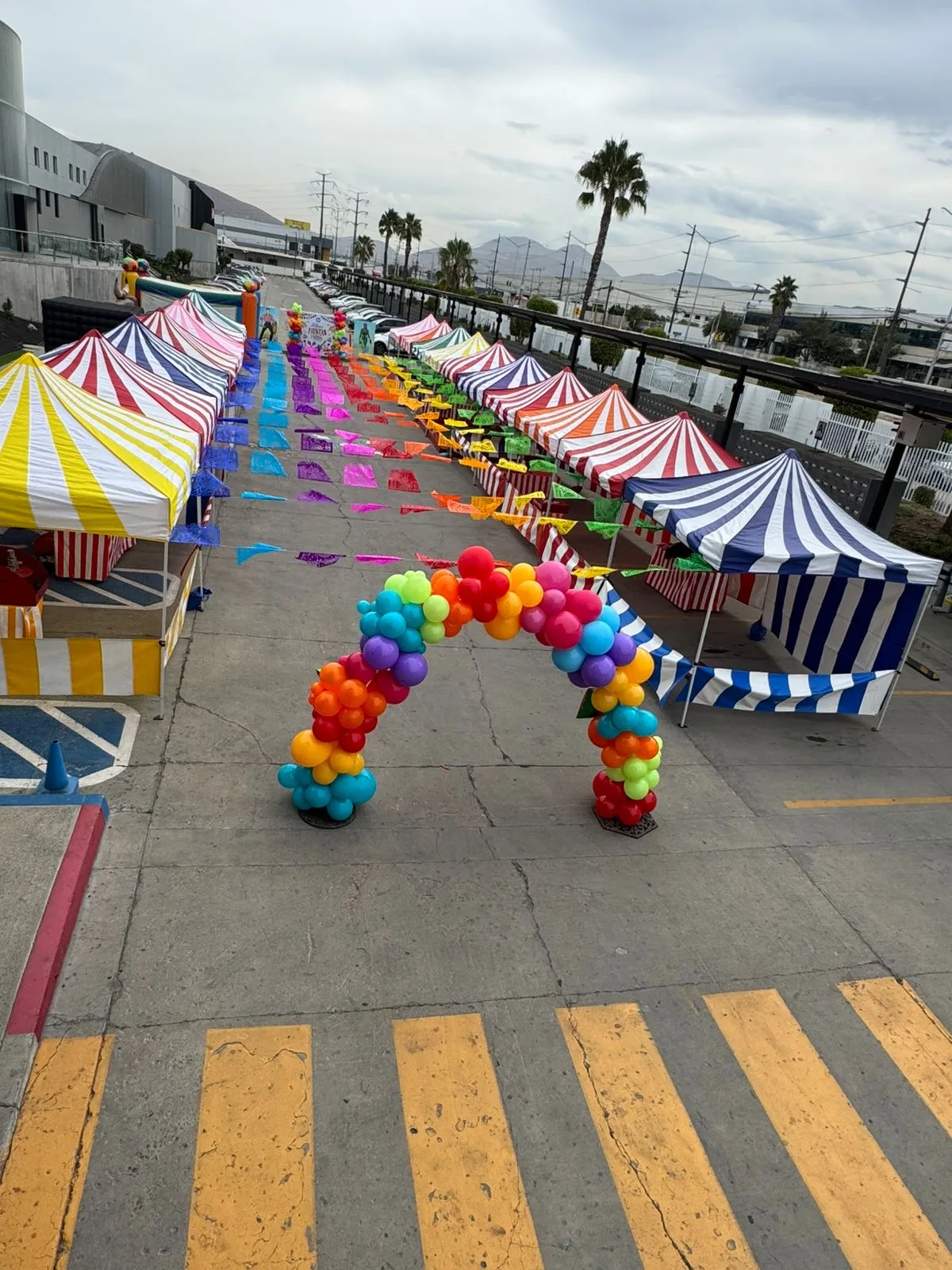
Little Italy is a compact, largely paved neighborhood — courtyards, restaurant patios, and public plazas stand in for the backyards and school blacktops that anchor carnival layouts elsewhere in San Diego County. Booths here tend to set up on hardscape rather than grass, which changes how they're anchored and where power comes from. Piazza della Famiglia's open concrete expanse, the smaller footprint at Amici Park, and the lawn-and-promenade mix at Waterfront Park are the three venues that come up most often for community and corporate carnival-style events in this part of downtown.
My Little Carnival builds out carnival booths as part of complete event productions for schools, corporations, and community groups across Little Italy and the wider San Diego area.
How carnival booths get used in Little Italy.
A corporate mixer on the Waterfront Park lawn might run six to eight booths in a straight line facing the bay — a mix of game stations and a couple of concession counters serving popcorn and snow cones between meetings. A community festival at Piazza della Famiglia tends to spread booths in a loose ring around the plaza's open center, taking advantage of the hardscape and the built-in foot traffic from the surrounding restaurants. A smaller neighborhood gathering at Amici Park might only need three or four booths tucked along one edge of the park, since the space itself is modest.
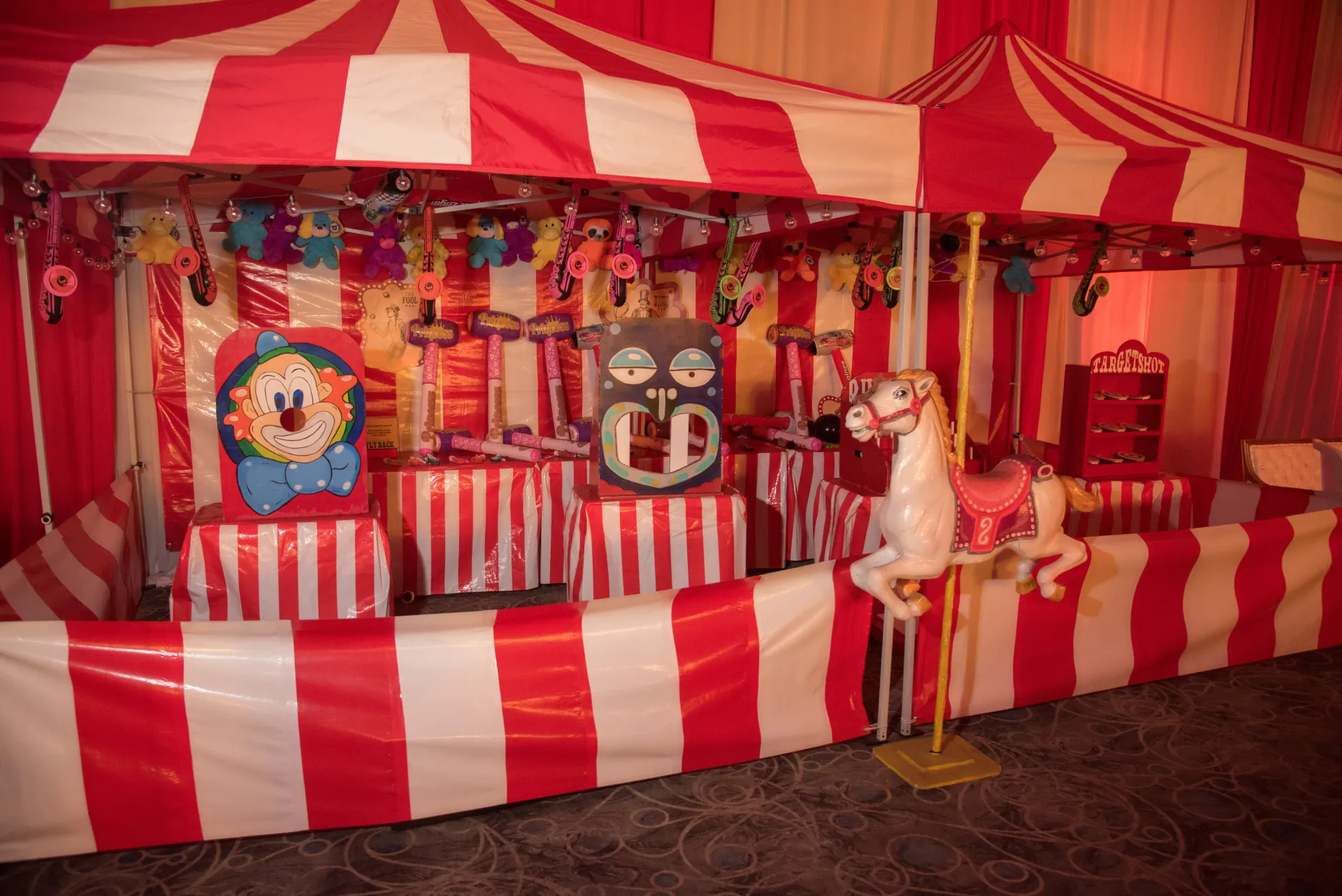
Whatever the venue, the booths themselves don't change much — what changes is the fit-out inside each one. A booth built as a ring-toss station looks structurally identical to one built as a popcorn counter or a ticket window; the difference is the counter height, the interior shelving, and what's stocked inside. My Little Carnival configures each booth to its role before it ever leaves the warehouse, so setup on-site is mostly positioning and anchoring rather than building from scratch.
What's typically included.
-
Booth structure and sizing.
5x5 for compact game stations, 8x8 for standard games and concessions, 10x10 for larger concession counters or photo-backdrop setups. Full striped canvas roof, skirting, and header signage on every size.
-
Game station fit-out.
When booked as a game booth, the interior comes pre-loaded with the game hardware — ring toss, bottle knockdown, plinko, and similar — along with consolation and top-tier prize inventory sized to the event.
-
Concession counter fit-out.
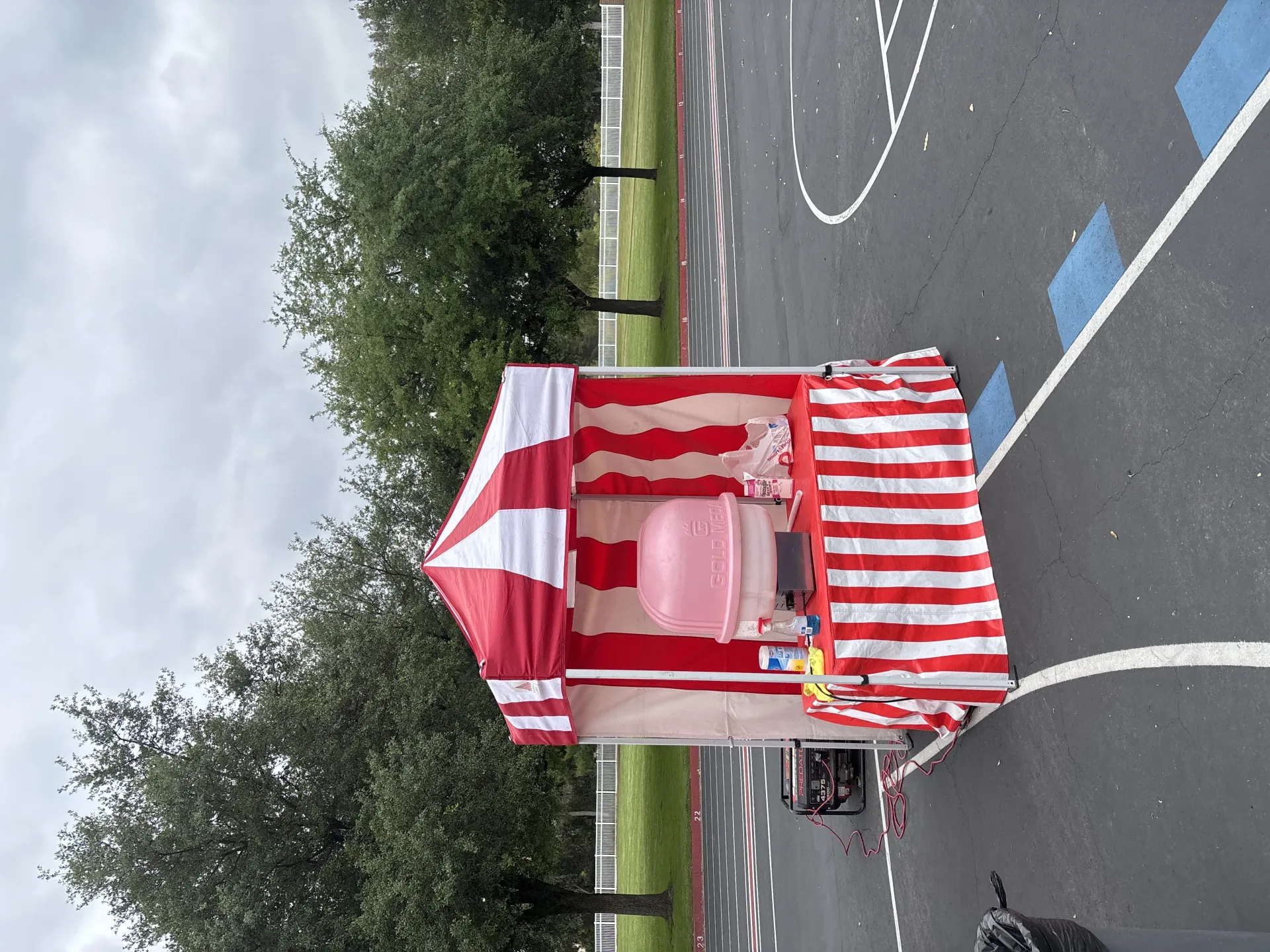
When booked as a concession stand, the booth is set up with counter space and shelving for popcorn poppers, cotton candy spinners, or snow cone shavers, plus supplies for the contracted window.
-
Prize windows and ticket booths.
Simplified fit-out with counter, cash box space, and signage — used for prize redemption or ticket sales at the entrance to a larger carnival layout.
-
Delivery, setup, and breakdown.
Crew delivers, positions, and anchors each booth as part of the event build-out, then strikes everything at the end. On paved surfaces like Piazza della Famiglia, booths are weighted rather than staked.
-
Attendant staffing — optional.
Running a booth's games or concessions is available as an add-on, quoted per booth or per hour, or handled by client volunteers. Attendants aren't bundled in by default for game or concession booths.
Typical timeline for carnival booths in Little Italy.
- 1
Inquire
Share the venue, expected guest count, and whether you're picturing games, concessions, or a mix — a Piazza della Famiglia layout differs from a Waterfront Park lawn layout, so venue matters early.
- 2
Quote
Booth count, sizes, and fit-out (game vs. Concession vs. ticket window) get scoped along with the rest of the event, and a quote comes back with the full production included.
- 3
Delivery and setup
Crew arrives ahead of the event window, positions booths according to the agreed layout, and anchors them appropriately for the surface — weighted bases on plaza concrete, stakes where there's grass.
- 4
Event day and breakdown
Booths run for the contracted window as part of the full event, then crew strikes and packs out, leaving the plaza, park, or lot as it was found.
Specifics for Little Italy.
- Surface type: Little Italy is a mostly-paved neighborhood. Piazza della Famiglia and most restaurant-adjacent footprints are concrete or pavers, which means booths get anchored with weighted bases instead of stakes. Waterfront Park offers some grass if a booking wants it.
- Permits and street use: Events on public plazas or park land, including Piazza della Famiglia and Waterfront Park, typically require a City of San Diego park-use or special-event permit. Street-adjacent setups near the restaurant district may also need a temporary street-use permit if booths encroach on sidewalk space.
- Power access: Concession booths — popcorn poppers, cotton candy spinners — pull real amperage. Outdoor outlets are limited at most Little Italy plaza and park venues, so a generator is common for concession-heavy layouts.
- Footprint planning: Amici Park is small enough that three to four booths fill it comfortably; Piazza della Famiglia's open plaza handles eight to twelve without feeling cramped; Waterfront Park's lawn areas can stretch to fifteen-plus for larger corporate or community bookings.
- School carnival connection: Elementary and middle schools within San Diego Unified School District run the bulk of school-carnival bookings in this part of the city, typically using four to eight booths on a blacktop or multipurpose court rather than a public plaza.
- Weather contingency: Southern California's typically dry climate keeps outdoor booth setups low-risk most of the year. Coastal breeze off the bay near Waterfront Park is worth accounting for with extra weighting on lighter game booths.
Common questions.
Do carnival booths need grass, or can they go on pavement?
Pavement is fine, and in Little Italy it's the norm. Booths on concrete or pavers get anchored with weighted bases instead of stakes — worth mentioning your venue up front so the right anchoring is quoted.
What size booth should we pick?
5x5 works for a simple single-game station; 8x8 is the standard size for most games and single concession machines; 10x10 fits larger concession counters or a photo-backdrop setup where guests need room to gather in front.
Is an attendant included with each booth?
Not by default. Running games or concessions is available as an add-on quoted per booth or per hour, or your own volunteers can staff them. Attendants are only bundled automatically for rides and a few safety-sensitive attractions, not standard game or concession booths.
Do we need a permit to set up booths at a place like Piazza della Famiglia?
Public plazas and parks in the city, including Piazza della Famiglia and Waterfront Park, generally require a City of San Diego park-use or special-event permit. That process is worth starting as soon as a date and venue are picked.
How many booths do we actually need?
As a rough guide, one booth per thirty to fifty expected guests keeps lines reasonable. A 150-guest gathering runs fine on four to six booths; a larger 400-plus guest event scales toward ten to fifteen.
What happens if it rains on event day?
Southern California's typically dry climate makes this a low-frequency issue, but booths themselves are canvas-roofed and hold up fine in light rain. Heavier rain usually means rescheduling rather than moving concessions indoors, since most Little Italy venues don't have an indoor backup space built in.
About this guide.
This local guide to carnival booths in Little Italy was compiled by My Little Carnival, a division of My Little Carnival — producers of school carnivals, corporate events, and community carnivals across San Diego County.
Helpful local references: San Diego Unified School District · City of San Diego Parks & Recreation
Carnival Booths in nearby cities.
Planning an event with carnival booths in Little Italy?
Share your venue, guest count, and whether you're picturing games, concessions, or both — and My Little Carnival will scope a booth layout and send a quote sized to the space.
Get a quote →