carnival games in Little Italy.
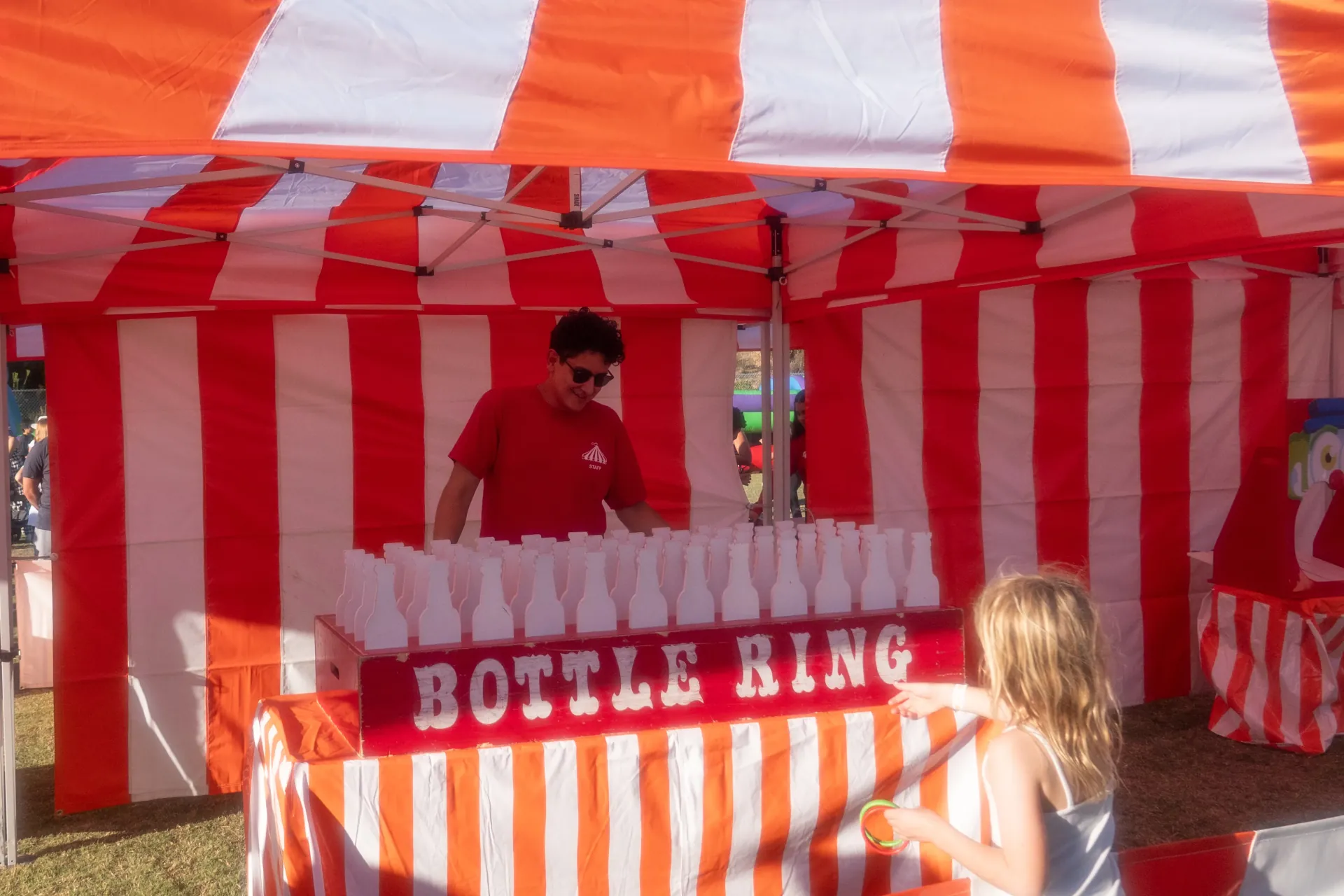
A carnival game is a single freestanding booth built around one classic mechanic — ring toss, bottle ring, dart-the-stars, plinko, balloon pop, milk-can toss, basketball pop, or duck fishing — striped, skirted, and stocked with prizes from small consolation trinkets up to a top-tier plush. Carnival Games in Little Italy show up as part of full carnival productions My Little Carnival builds for schools, fundraisers, and corporate mixers rather than as single drop-off units. A row of six to twelve booths is the usual footprint for a neighborhood event, whether it's set up on the paved plaza at Piazza della Famiglia or the lawn at Amici Park. This is a local guide to how carnival games work as a category — what's included per booth, how attendants factor in, and what to expect logistically in a dense urban neighborhood like Little Italy.
Little Italy's event footprint is compact and mostly hardscape — Piazza della Famiglia's paved plaza, Amici Park's small lawn tucked between residential blocks, and the open lawns of Waterfront Park just west of the neighborhood. None of these venues offer backyard-style grass acreage, so carnival game layouts here tend to run tighter and more linear than the sprawling horseshoe setups common in suburban schoolyards.
My Little Carnival builds carnival game lineups into full event productions for schools, fundraisers, and corporate gatherings around Little Italy, scaling booth count to whatever footprint the venue allows.
How carnival games get used in Little Italy.
Most Little Italy bookings are civic or corporate rather than backyard — a neighborhood association fundraiser at Piazza della Famiglia, a company block party spilling onto Amici Park, or a community festival that borrows a slice of Waterfront Park's lawn. Booths line up along whatever straight edge the venue offers — the plaza's colonnade, the park's perimeter fence — with a prize table and signage anchoring one end. Guest counts in the low hundreds are typical for a neighborhood event; larger waterfront gatherings can run into the high hundreds.
Inside a full event, the games are one piece alongside concessions, booths, or an inflatable if the venue allows it. A ring toss and bottle ring pair well as the entry-level games near the front of the layout, with plinko and dart-the-stars drawing more foot traffic mid-row, and duck fishing tucked toward the end for younger kids. My Little Carnival sequences the lineup based on expected age mix and the walking path guests will naturally take through the space.
What's typically included.
-
Game booth unit.
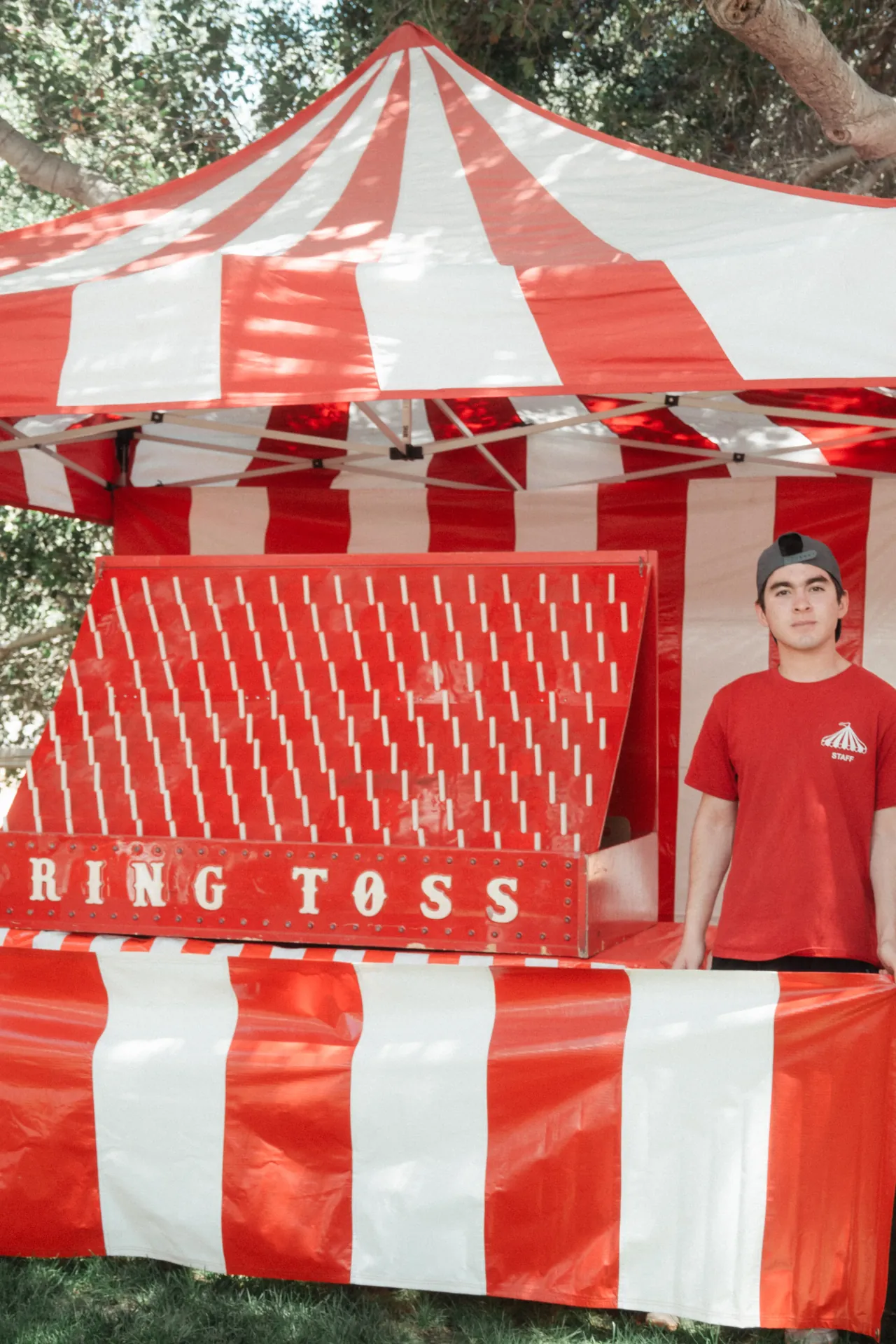
A striped, skirted freestanding booth built around one game mechanic — ring toss, bottle ring, plinko, balloon pop, dart-the-stars, milk-can toss, basketball pop, or duck fishing.
-
Prize inventory.
Each booth arrives stocked with consolation prizes and a top-tier plush or novelty item, sized to the expected guest count and booking scope.
-
Signage and skirting.
Game rules, pricing (if applicable), and full skirting so cords, prize boxes, and storage stay out of sight.
-
Attendants — optional add-on.
A staffed attendant per booth is available, quoted separately, or the games can be volunteer-run for schools and fundraisers that prefer to staff their own lineup.
-
Setup and breakdown.
Delivery, booth assembly, and pack-out are handled as part of the event build — no lifting or assembly left to the host.
-
Layout planning.
My Little Carnival sequences the booth row to fit the venue's footprint, whether that's the plaza's colonnade at Piazza della Famiglia or Amici Park's fence line.
Typical timeline for carnival games in Little Italy.
- 1
Inquire
Share the venue, expected guest count, and event type. Piazza della Famiglia and Waterfront Park bookings often need lead time for the venue's own permit process.
- 2
Quote and scope
Booth count and game mix get locked based on guest count and available layout space — six booths is a common starting point, twelve is the upper end for most Little Italy venues.
- 3
Delivery and setup
Crew arrives ahead of the event window, assembles the booth row, stocks prizes, and stages any attendants as part of the full event build.
- 4
Event day and breakdown
Games run for the contracted window, then the crew packs out — plaza and park venues in Little Italy typically require same-day breakdown per the venue permit.
Specifics for Little Italy.
- Venue permits: Piazza della Famiglia and Waterfront Park are public spaces that require an event-use permit before setup — Waterfront Park sits on Port of San Diego-adjacent county land, so its process runs separately from a City of San Diego plaza reservation.
- Surface: Piazza della Famiglia is paved, which suits game booths well but rules out ground stakes — weighted bases are standard there. Amici Park and the Waterfront Park lawns allow either staking or weighting depending on turf condition.
- Footprint by venue: Amici Park's compact lawn fits a smaller lineup, roughly four to six booths; Piazza della Famiglia's plaza and Waterfront Park's open lawn both comfortably hold eight to twelve.
- Power needs: Most classic games — ring toss, bottle ring, milk-can toss, duck fishing — need no power at all. Lit signage or an electric plinko variant is the exception, and a generator covers it when the venue lacks accessible outlets.
- Parking and load-in: Little Italy's dense street grid means load-in for plaza and park events usually depends on a loading zone or temporary curb permit rather than direct lot access — worth flagging early with whichever venue is booked.
- Weather: Southern California's typically dry climate keeps outdoor game bookings low-risk most of the year; a shade or light cover plan is worth adding for midday events on the open pavement at Piazza della Famiglia.
Common questions.
How many carnival games do we need?
Rough guidance is one booth per 40-60 guests for steady play. A 200-guest neighborhood event runs comfortably on four to six booths; larger waterfront gatherings in the several-hundred range typically want eight to twelve.
Are attendants included with each booth?
Not by default. Attendants are available as an add-on, quoted per booth or per hour, or the games can be run by volunteers — common for school and neighborhood fundraisers that want to keep costs down.
Do the games need electricity?
Most classic games — ring toss, bottle ring, milk-can toss, basketball pop, duck fishing — run without power. A generator gets added only when a booth needs lighting or the venue has no accessible outlets, which is common at plaza and park sites in Little Italy.
Can games be set up on pavement?
Yes — Piazza della Famiglia's plaza is fully paved, and booths there are set up with weighted bases instead of ground stakes. Grass venues like Amici Park can use either method depending on turf condition.
What happens if it rains?
Southern California's typically dry climate makes rain delays uncommon, but outdoor games at open venues like Waterfront Park don't have natural cover. A rain-date clause or a light canopy plan is worth discussing during the quote for events scheduled in wetter months.
Is there an age range these games work for?
Most classic games suit a wide range — duck fishing and balloon pop skew toward younger kids, while dart-the-stars and plinko draw older kids and adults. A mixed lineup covers a full-family guest list without needing separate age zones.
About this guide.
This local guide to carnival games in Little Italy was compiled by My Little Carnival, the San Diego County operation of My Little Carnival — producers of school carnivals, fundraisers, and community events across the county. My Little Carnival scopes booth count and layout to match public venues like Piazza della Famiglia, Amici Park, and Waterfront Park.
Helpful local references: San Diego Unified School District
Carnival Games in nearby cities.
Planning carnival games for a Little Italy event?
Share the venue, expected guest count, and event type — and My Little Carnival will scope a booth lineup and attendant plan sized to the space.
Get a quote →