amusement rides in College Area.
Amusement rides are mechanical, motorized attractions — trackless trains, carousels, mini ferris wheels, swing rides, teacup rides — that require open, level ground and a power hookup or generator to run, and that are operated by trained ride attendants rather than handed over to whoever's hosting the event. In College Area, a dense neighborhood built up around San Diego State University, these shows up almost exclusively at larger productions: school carnivals on San Diego Unified School District campuses, community festivals at parks with real open footprint, and grand-opening events with enough cleared space to fence off a ride safely. As part of a full event My Little Carnival produces, amusement rides get built into the layout alongside game booths, concessions, and inflatables — they aren't sold or delivered as a single standalone unit for a backyard afternoon.
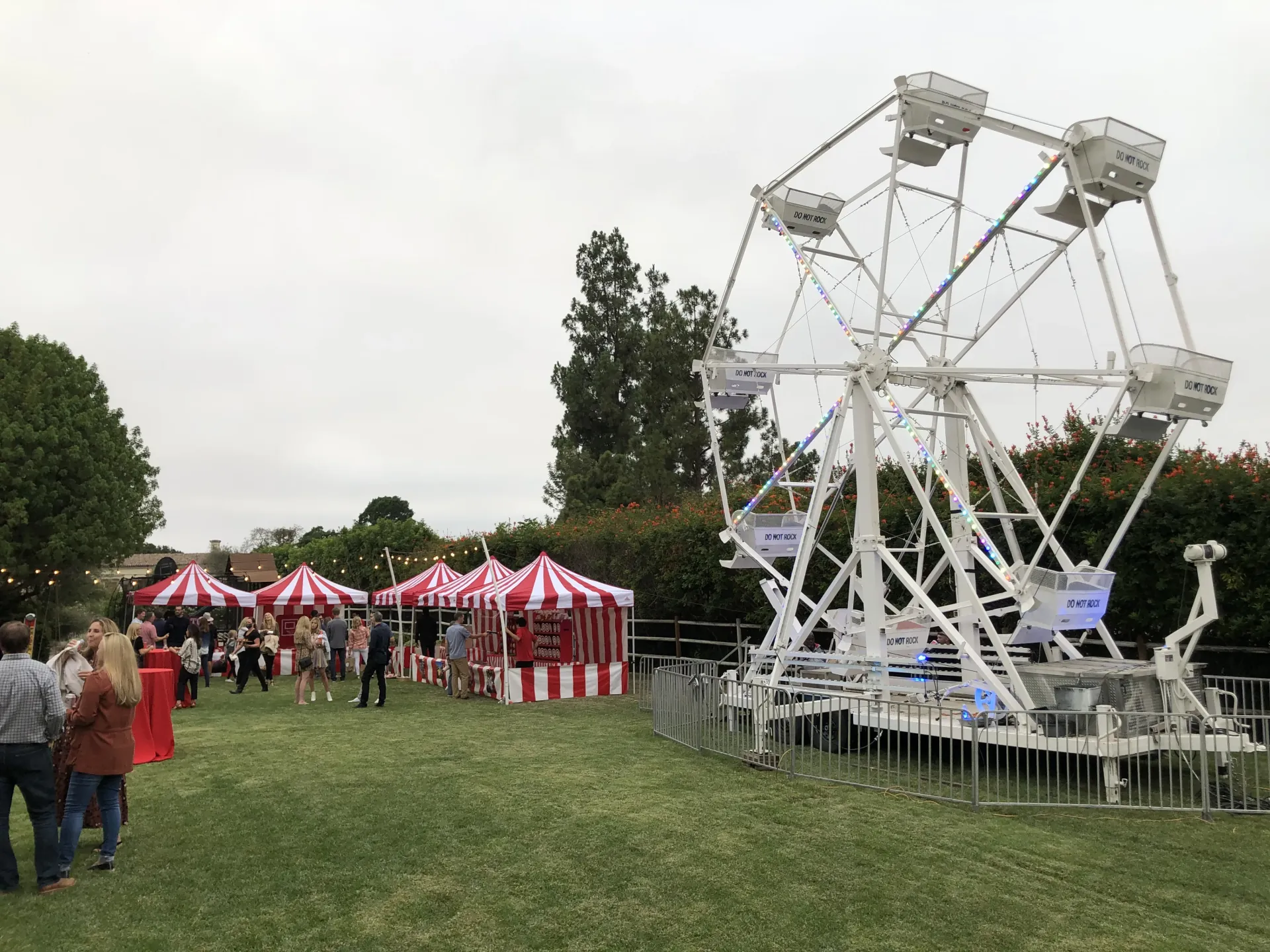
College Area's housing stock — dense, close to campus, short on private yard space — pushes ride bookings toward the neighborhood's open ground rather than backyards. Colina del Sol Park and Montezuma Neighborhood Park both offer the flatter, wider footprint a ferris wheel or swing ride needs, and San Diego Unified School District campuses in the area regularly host fall or spring carnivals on blacktop or field space large enough for a trackless train loop. The College-Rolando Library area anchors the neighborhood but isn't itself a typical ride venue — most bookings gravitate to the parks or school grounds.
My Little Carnival produces amusement-ride events for schools, festivals, and grand openings across San Diego County, sizing the ride lineup and power plan to whatever open ground a College Area event actually has.
How amusement rides show up at an event in College Area.
At a school carnival on an SDUSD campus, a trackless train usually gets a looping path around the perimeter of a field or parking lot rather than a fixed footprint, while a carousel or mini ferris wheel anchors one corner of the blacktop with a fenced queue and load gate. At a park-based community festival — Colina del Sol Park is the kind of venue that fits this — the layout opens up more: a swing ride or teacup ride can sit further from foot traffic, and a second or third ride becomes realistic once there's enough lawn to spread out.
Whatever the venue, a trained attendant runs each ride for the entire event window — checking riders in, running the load/unload cycle, watching height and weight limits — while the rest of the event (booths, food, décor) runs in parallel around it. Guests don't operate the equipment; the attendant does. Setup happens before doors open and breakdown happens the same day once the event closes.
What's typically included.
-
Ride selection matched to footprint.
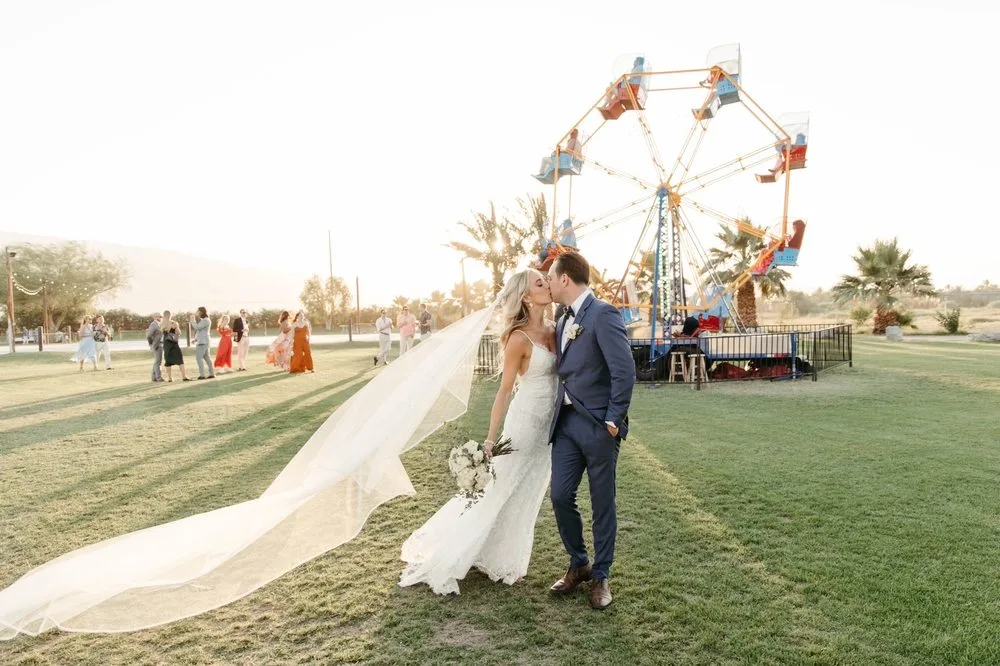
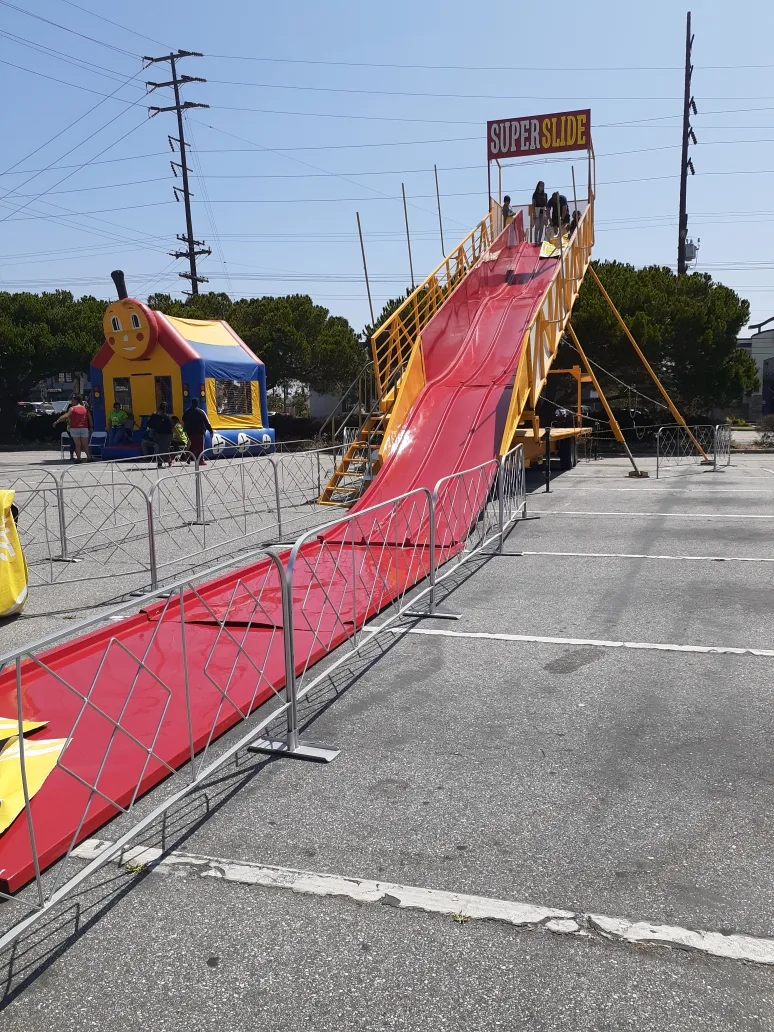
Trackless train, carousel, mini ferris wheel, swing ride, or teacup ride — chosen based on the available ground and the scale of the event, not offered as a generic single option.
-
Delivery, setup, and breakdown.
Crew handles transport, assembly, and safety-checking before the event opens, and full teardown after it closes — all folded into the event-day schedule.
-
Trained ride attendants.
One attendant per ride runs it for the entire event window. This is included by default for rides — unlike games or booths, riders never operate the equipment themselves.
-
Generator power.
A dedicated generator sized to the ride lineup, brought whenever the venue — most parks and school blacktops — doesn't have adequate outdoor power on its own.
-
Queue fencing and signage.
Perimeter fencing, a load/unload gate, and posted height or weight limits sized to whichever ride is booked.
-
Certificate of insurance.
Provided naming the venue or school district as additional insured, which is standard for both City of San Diego park-use permits and SDUSD facility-use authorization.
Typical timeline for amusement rides in College Area.
- 1
6-10 weeks out
Share the date, the venue (park field, school blacktop, parking lot), and expected guest count. Rides are the most site-dependent product, so power and footprint get flagged early.
- 2
4-6 weeks out
Scope is locked and the ride lineup is finalized. COI paperwork is prepared for whichever facility process applies — city park permit or school-district facility use.
- 3
Event day setup
Crew arrives early morning, assembles and safety-checks the rides before doors open, and stages attendants alongside the rest of the event build.
- 4
Event window + breakdown
Rides run for the contracted hours under attendant supervision, then the crew strikes and clears the field or blacktop the same day.
Specifics for College Area.
- Open-ground venues: College Area's density near SDSU means private backyards rarely have room for a ride. Most bookings land at Colina del Sol Park or Montezuma Neighborhood Park, or on a school blacktop or field through San Diego Unified School District.
- Surface requirement: Rides need level, obstruction-free ground — asphalt, hard-packed dirt, or turf all work. A sloped lawn or uneven field usually rules out larger units like a ferris wheel or swing ride.
- Power: Most rides draw more than a household outlet can handle. My Little Carnival brings a generator sized to the ride lineup for park and school events without dedicated event power.
- Permits: A City of San Diego park-use permit applies to events at venues like Colina del Sol Park; a school carnival on SDUSD property instead goes through the district's own facility-use process.
- Footprint planning: A single mini ferris wheel or swing ride typically needs a roughly 20x20 to 30x30 clear pad plus queue space; a trackless train needs a looping path rather than one fixed footprint.
- Weather: Southern California's typically dry climate keeps outdoor ride dates fairly low-risk, though sustained wind can pause a ride temporarily at the attendant's discretion.
Common questions.
Do amusement rides come with an operator?
Yes. Every ride is run by a trained attendant for the entire event window — this isn't optional or volunteer-staffed the way some game booths are, since safety and insurance require a trained operator on the ride at all times.
What kind of ground do rides need?
Level and unobstructed — asphalt, hard-packed dirt, or turf. A sloped or uneven surface usually rules out the larger units, particularly a mini ferris wheel or swing ride.
Is a generator required?
Most parks and school blacktops don't have outdoor power adequate for a ride's motor load. My Little Carnival brings a generator sized to the ride lineup whenever the venue doesn't already have it.
Are there height or weight limits?
Yes, ride-specific. Carousels and trackless trains are generally open to most ages and sizes; ferris wheels and swing rides carry posted height or weight minimums that the attendant enforces at load-in.
Can we book a single ride for a backyard birthday?
No — My Little Carnival produces complete events rather than renting single pieces of equipment. Amusement rides are booked as part of a larger festival, school carnival, or grand-opening production, not as a standalone drop-off.
What happens if it's windy or rains on event day?
Rides pause temporarily in sustained wind, at the attendant's judgment. Southern California's typically dry climate keeps most outdoor dates low-risk, but a rain contingency is worth raising for winter bookings.
About this guide.
This local guide was compiled by My Little Carnival, the San Diego County operation of My Little Carnival — producers of school carnivals, community festivals, and full-scale event productions across San Diego, including the College Area neighborhood.
Helpful local references: San Diego Unified School District · City of San Diego Parks & Recreation
Amusement Rides in nearby cities.
Planning an event with amusement rides in College Area?
Share the date, the venue, and your expected guest count — and My Little Carnival will scope a ride lineup and power plan sized to the space you've got.
Get a quote →