carnival booths in College Area.
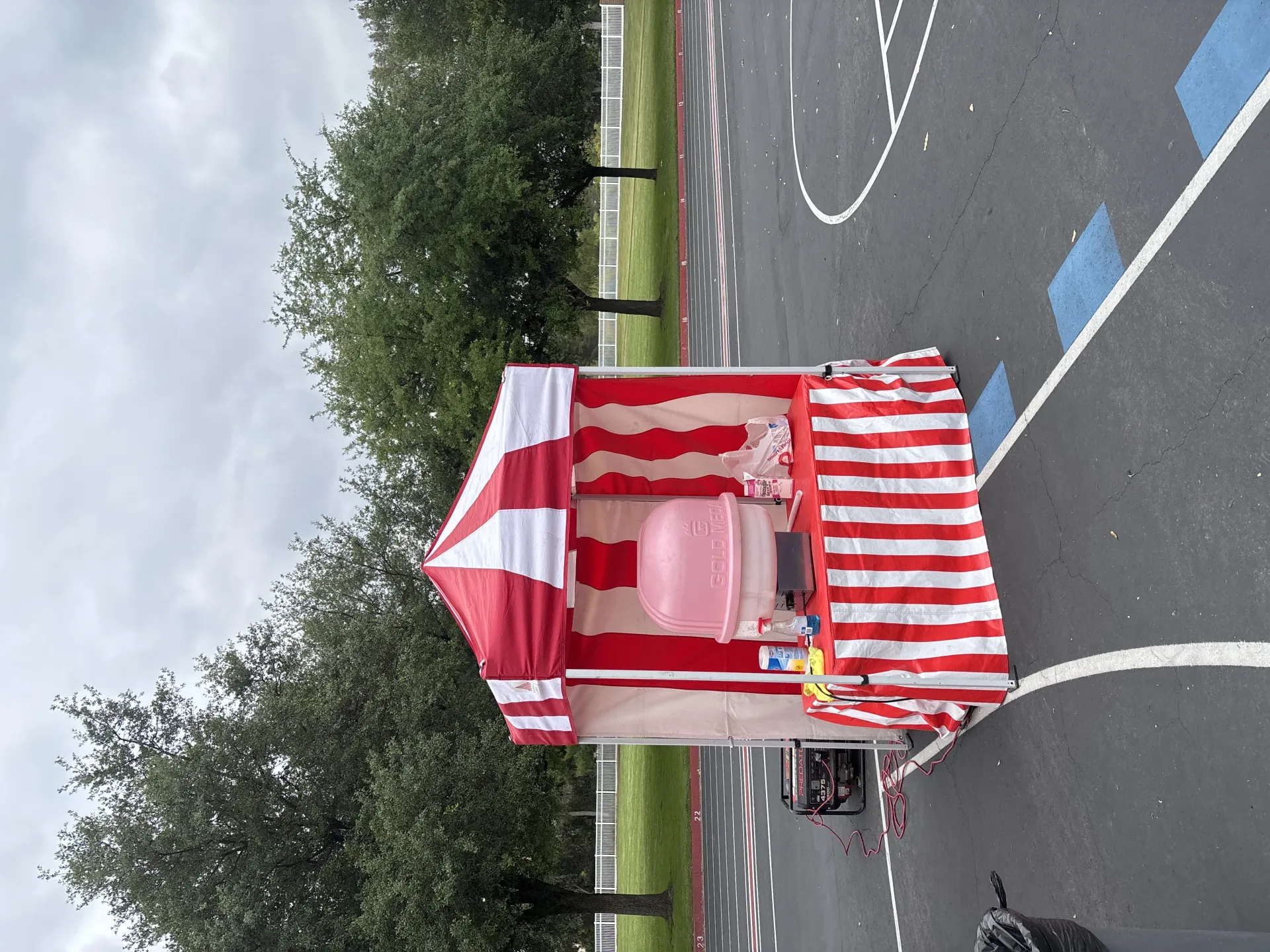
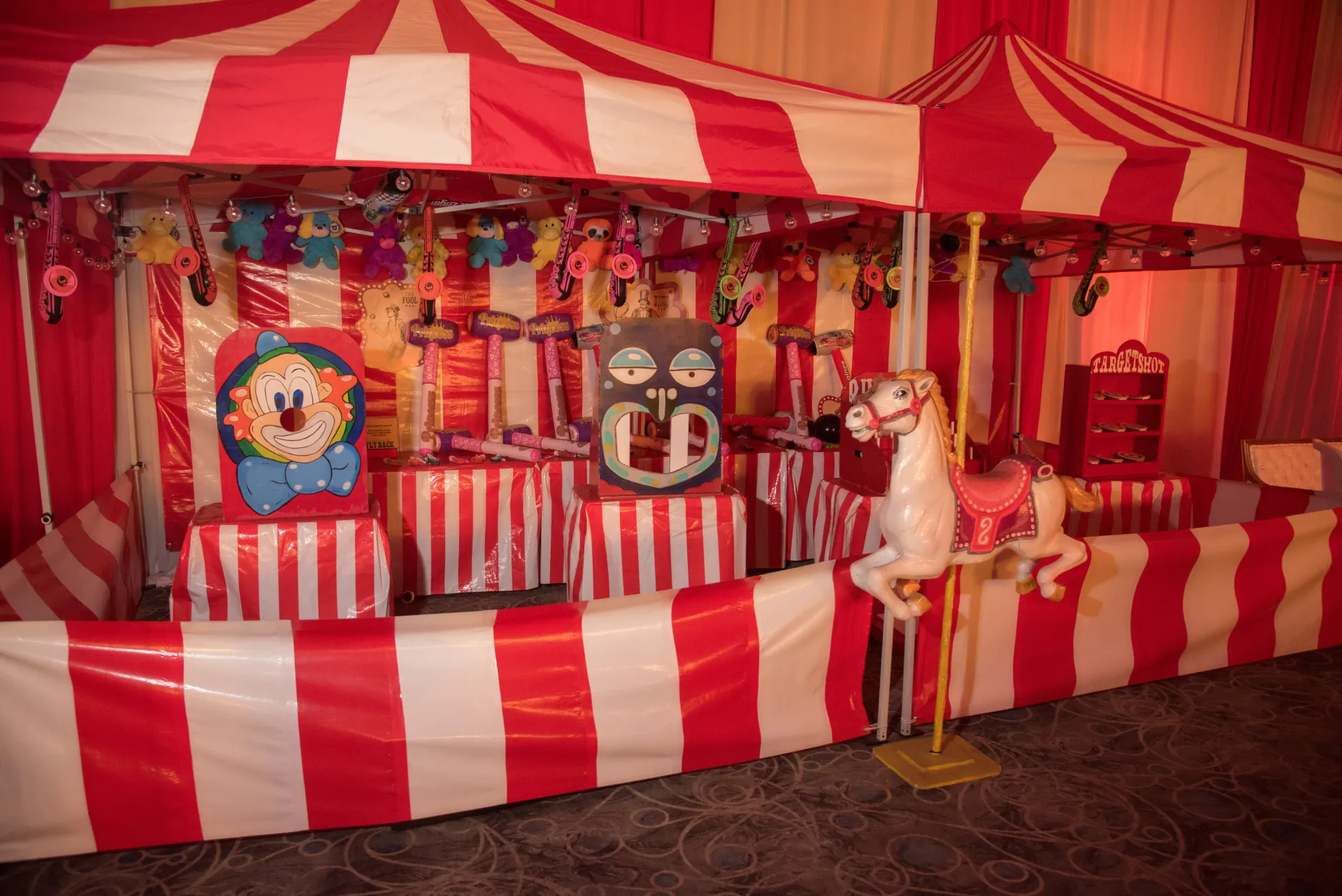
A carnival booth is a modular, tent-framed structure — usually built in 5x5, 8x8, or 10x10 footprints — finished in the red-and-white stripe canvas that reads as 'carnival' from across a parking lot. The booth itself is a shell: skirted on three sides, open at the front counter, with a header rail for signage. What goes inside is the variable part — a ring-toss insert and a shelf of prizes turns it into a game station, a popcorn popper and warming trays turn it into a concession counter, a cash box and a ticket roll turns it into a ticket booth, and a backdrop panel turns it into a photo spot. Most events use somewhere between four and fifteen of them, arranged in a line or a horseshoe. As part of a full event My Little Carnival produces in College Area, booths arrive already built out for their role — nobody shows up to a raw tent frame and has to figure out what goes where.
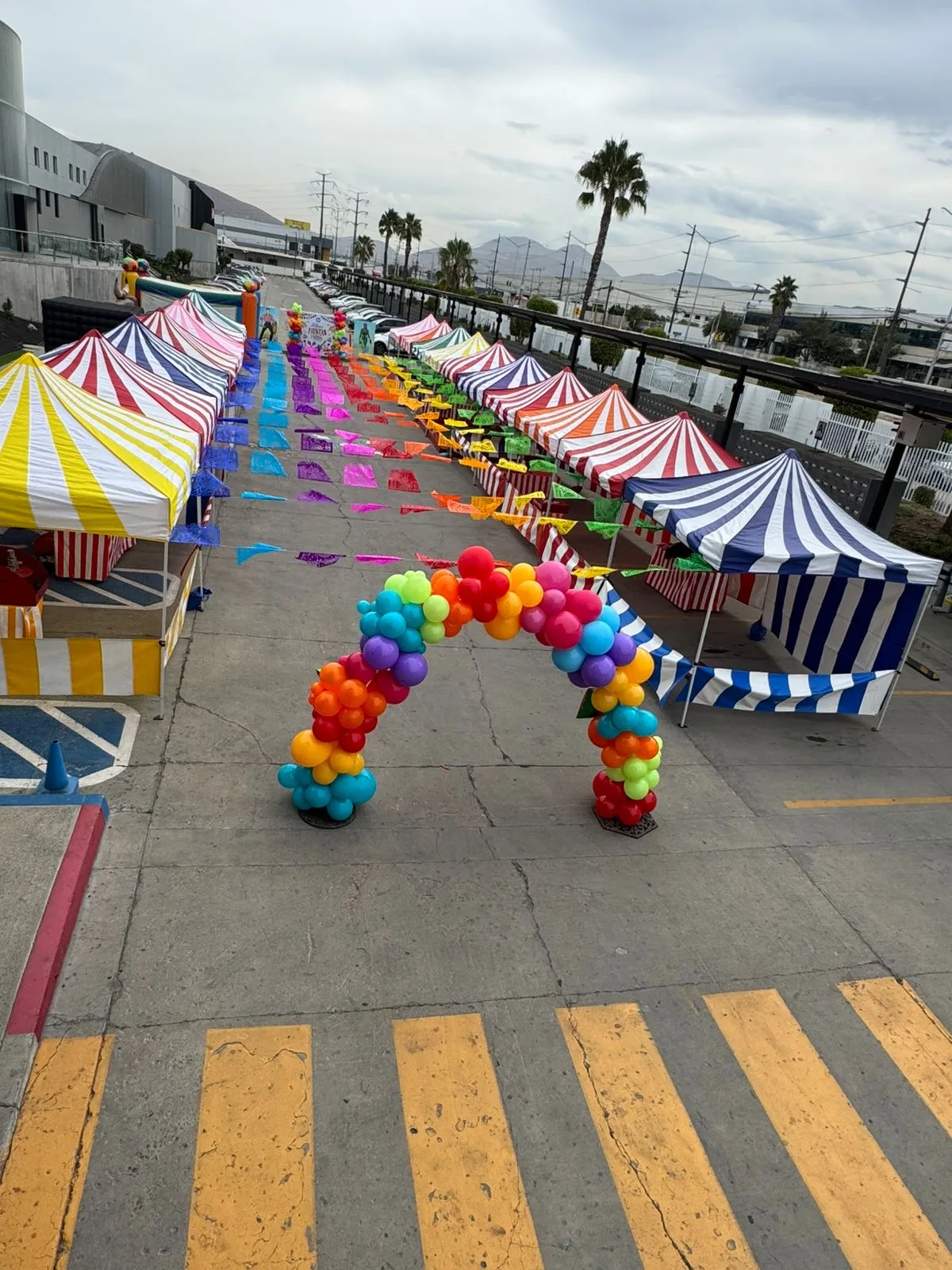
Carnival Booths in College Area typically show up in the four-to-fifteen-booth range, sized to the venue. San Diego Unified schools in the area run carnivals on blacktop or field space, where booths line up along a fence or open edge; community events at Montezuma Neighborhood Park and Colina del Sol Park have more open lawn to work with, so the horseshoe layout tends to open up wider. The College-Rolando Library has hosted smaller community gatherings where two or three booths — usually a game, a concession counter, and a ticket table — cover the footprint without dominating it.
My Little Carnival builds and delivers carnival booths as part of full event productions across College Area and the surrounding San Diego neighborhoods, fitting the booth count and mix to the space and the crowd.
How carnival booths function inside a College Area event.
At a school carnival on a San Diego Unified campus, booths get positioned along the perimeter of the blacktop or field — striped canopies in a line, prize plush hanging visibly from the header rail, a concession booth or two clustered near whatever shade or power access is available. Kids move booth to booth with a strip of tickets or a wristband; the booths themselves don't move once they're set, though the games and prizes inside get swapped or restocked through the event.
At a community fundraiser or church event at a park like Colina del Sol or Montezuma Neighborhood, the same booths might get arranged in a horseshoe facing the entrance, with a ticket booth greeting guests first and concession counters positioned to catch the breeze off the open lawn. Corporate and neighborhood events tend to run leaner — four to six booths instead of ten or more — but the visual is the same red-and-white stripe that signals 'carnival' before anyone reads a sign.
What's typically included.
-
Booth structure.
A framed, skirted tent in 5x5, 8x8, or 10x10 footprint with the signature red-and-white striped canvas, front counter, and header rail for signage.
-
Role-specific fit-out.
Game inserts, concession counters, prize shelving, or a ticket-and-cash setup — the interior is configured for what the booth is doing at your event, not delivered as a blank tent.
-
Game and prize inventory.
Game booths (ring toss, bottle knockdown, plinko, and similar) come stocked with prizes sized to the booking; concession booths come with the relevant equipment instead, like a popper or spinner.
-
Delivery and setup.
Booths arrive built and positioned as part of the full event setup — crew handles placement, leveling, and staging alongside the rest of the equipment.
-
Breakdown.
Crew packs the booths out after the event; nothing is left for volunteers to fold or haul.
-
Attendants.
Available as an add-on, quoted per booth or per hour, or volunteer-staffed — PTA and community groups commonly run booths themselves once shown the setup.
Typical timeline for carnival booths in College Area.
- 1
4-8 weeks out
Booth count and mix (games, concessions, ticket table) get scoped against guest count and venue footprint; a deposit locks the date.
- 2
1-2 weeks out
Final layout confirmed against the venue — blacktop, field, or park lawn — along with power needs for any concession booths.
- 3
Setup
Crew delivers and builds out each booth on-site as part of the full event install, positioning them in the agreed layout before doors open.
- 4
Event day + breakdown
Booths run for the contracted window, then get struck and packed out same-day, typically within an hour of the last guest leaving.
Specifics for College Area.
- Campus vs. Park layouts: San Diego Unified School District campuses in the area typically fit a 6-10 booth horseshoe on blacktop; Montezuma Neighborhood Park and Colina del Sol Park have more open lawn, letting a larger layout spread out with more walking room between booths.
- Surface: Booths set up equally well on asphalt, blacktop, or grass. Grass setups use stakes for the canopy; hardscape setups switch to weighted bases or sandbags.
- Power for concession booths: Popcorn poppers and cotton candy spinners each need a dedicated circuit. My Little Carnival brings a generator when a park or campus doesn't have enough outdoor outlets nearby, which is most venues in College Area without a dedicated event hookup.
- Permits for park venues: Events at Montezuma Neighborhood Park or Colina del Sol Park go through the City of San Diego's park-use permit process; school events go through the site's facility-use paperwork with San Diego Unified.
- Booth count guidance: A rough rule is one booth per 40-50 guests for steady play without long lines. A 200-guest carnival runs comfortably on 4-5 booths; a 500-guest event scales to 10-12.
- Weather: Southern California's typically dry climate keeps outdoor booth setups low-risk most of the year; a rain contingency is worth discussing for bookings in the winter months.
Common questions.
Do booths need a flat surface?
Reasonably flat, yes — blacktop, grass, and pavers all work. Significant slopes or uneven ground can affect how level the counter sits, which matters more for concession booths than game booths.
Are attendants included with the booths?
Not by default. Booths can be run by parent or staff volunteers, or staffed with an add-on attendant quoted per booth or per hour — most school carnivals mix both, with volunteers on games and an attendant on anything involving hot equipment like a popcorn popper.
How many booths do we actually need?
Depends on guest count and how much line-waiting is tolerable. Figure one booth per 40-50 guests for steady play; a 150-200 guest event typically runs on 4-6 booths.
Can a booth double as a photo backdrop?
Yes — a booth with the game insert removed and a themed backdrop panel added works as a photo spot, and it's a common way to add a photo station without a separate structure.
Do concession booths need special power?
Popcorn poppers, cotton candy spinners, and snow cone shavers each pull enough amperage to want a dedicated outlet. If the venue doesn't have enough outdoor circuits nearby, a generator gets brought in as part of setup.
What happens if it rains?
Southern California's dry climate makes weather delays uncommon, but outdoor bookings — especially in winter — are worth discussing a rain contingency for during the quote conversation.
About this guide.
This local guide to carnival booths in College Area was put together by My Little Carnival, the San Diego County division of My Little Carnival, which builds out booths as part of full carnival and event productions across the county.
Helpful local references: San Diego Unified School District · City of San Diego Parks & Recreation
Carnival Booths in nearby cities.
Planning booths for an event in College Area?
Share your venue, expected guest count, and the mix of games, concessions, or ticket booths you're picturing — My Little Carnival will scope a layout and send a quote.
Get a quote →