
city + municipal events in College Area.
A city or municipal carnival event is a public celebration run by a city department, a parks-and-recreation office, or a festival committee rather than a private host: a Fourth of July celebration, a holiday tree-lighting, a parks-and-rec summer program day, or a citywide community festival built around a public venue instead of a backyard or a company lot. The department or committee running the event handles the broader festival, stage programming, vendor coordination, road closures if any, while a carnival production supplies the midway: striped game booths, concessions, and the crew to run all of it for the length of the event. In College Area, that usually means a City of San Diego park near San Diego State University, sized for a guest count that can run from a modest parks-and-rec afternoon into the thousands for a citywide festival. This is a local guide to City + Municipal Events in College Area: which venues host them, how the city's approval process typically runs, and what a carnival production at this scale actually includes.
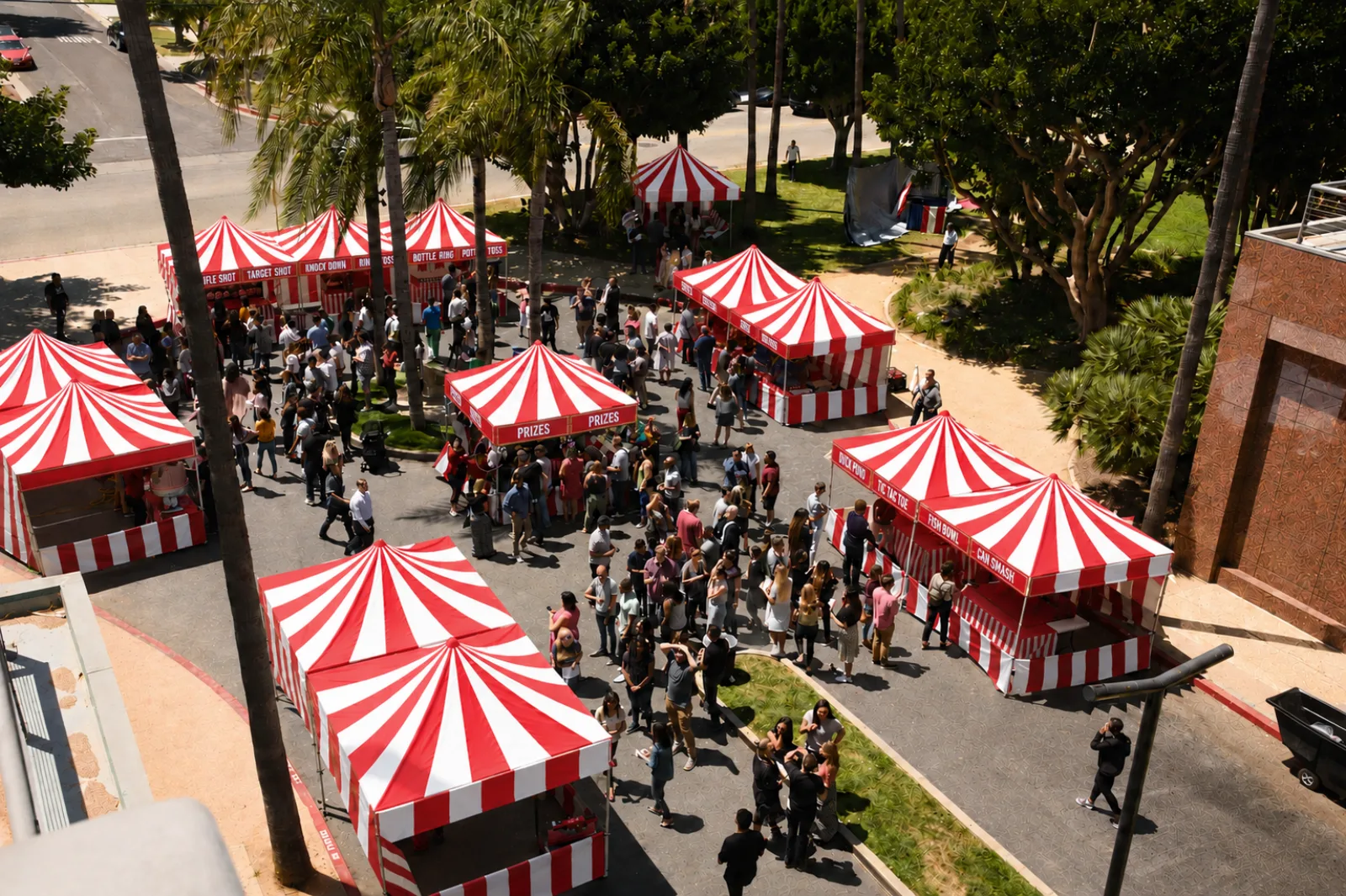
College Area sits around San Diego State University, and its public open space, rather than private venues, carries most of the city-sponsored event load here. Montezuma Neighborhood Park and Colina del Sol Park are the two City of San Diego properties parks-and-recreation staff and citywide festival organizers reserve most often for a public event at this scale, with Colina del Sol's larger open lawn better suited to a full festival footprint and Montezuma Neighborhood Park fitting a smaller department program. The College-Rolando Library grounds occasionally anchor a compact community day when a department wants a footprint closer to the neighborhood's residential core. Families tied to San Diego Unified School District campuses in the surrounding blocks make up a large share of the guest list at any public event scheduled here, particularly programming aimed at school-age kids.
My Little Carnival produces city-scale carnival events across San Diego County, working alongside parks-and-recreation staff, city facilities departments, and festival committees on multi-vendor public events.
How a city or municipal event unfolds in College Area.
A parks-and-recreation summer program day or a citywide festival at Colina del Sol Park typically claims a defined section of the park's open lawn or paved plaza rather than the whole property, since other park uses, picnic reservations, sports fields, continue around it. The carnival footprint gets laid out to match: a run of striped booths along one edge, a concession row positioned near the main pedestrian path, and an inflatable zone on open turf where staking or ballast can anchor it properly. City staff, parks-and-rec coordinators, or a festival committee manage the surrounding event, stage programming, vendor rows, information tables, while the carnival section runs as its own contained operation within that larger footprint.
Guest counts swing widely at this tier: a department family afternoon might draw two to three hundred people, while a citywide festival or a holiday tree-lighting with a carnival add-on can pull well past a thousand. My Little Carnival sizes the booth count, concession quantities, and crew depth to whichever end of that range the department expects, and assigns a production lead who works directly with the city's event coordinator throughout the day, so scheduling questions and any on-site adjustments go through one point of contact rather than getting relayed booth by booth.
What's typically included.
-
City-vendor and COI paperwork.
Vendor registration, W-9 documentation, and a Certificate of Insurance naming the City of San Diego and any required co-insureds, ready ahead of whatever deadline the department's facility-use or vendor-authorization process sets.
-
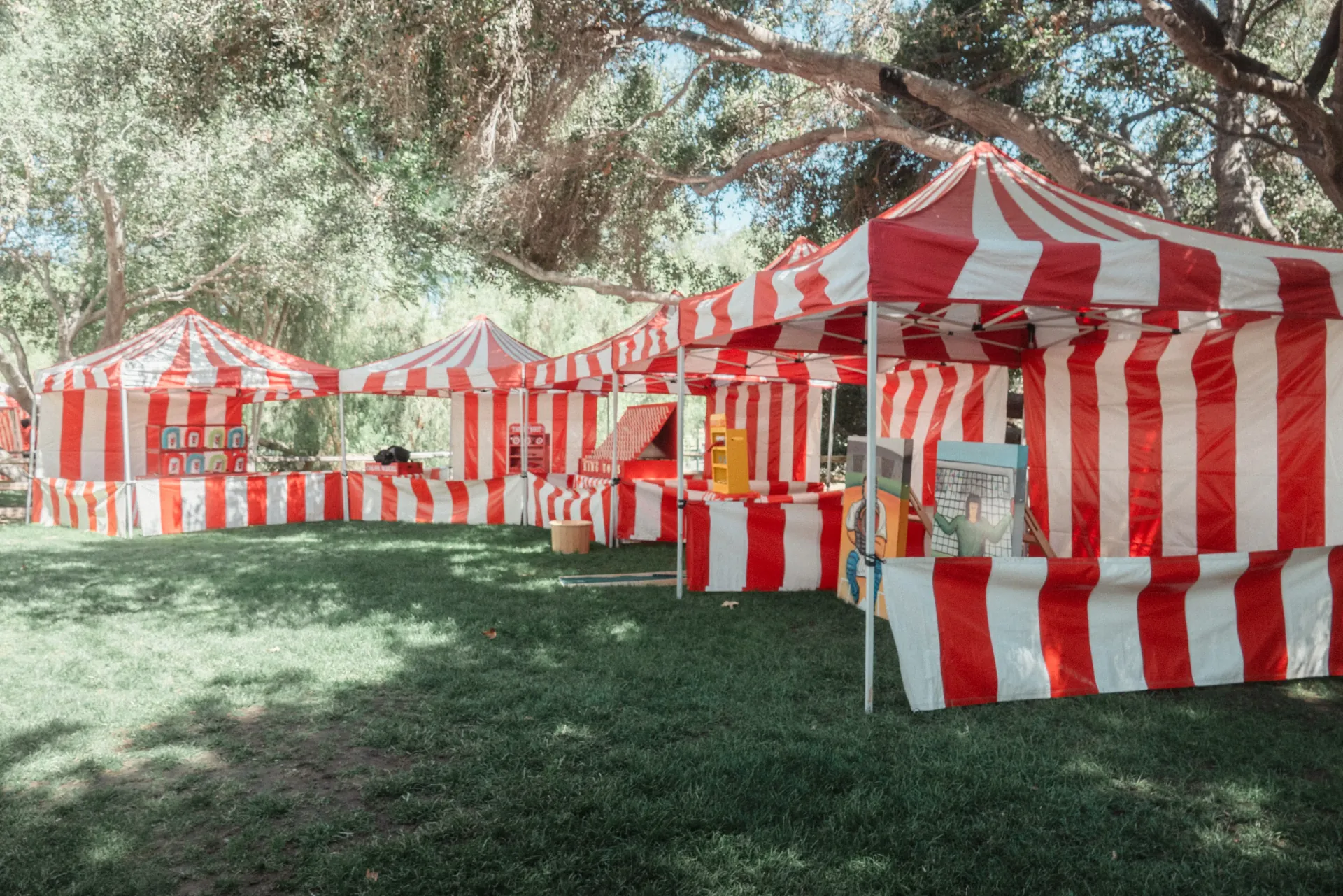
Booth counts sized for public footprints.
From a handful of booths for a parks-and-rec afternoon up to a full midway row for a citywide festival, the setup scales to fit a guest count anywhere from roughly two hundred to well over two thousand.
-
Concessions built for unpredictable turnout.
Popcorn, cotton candy, and snow cone stations stocked with enough supply to cover a public event's attendance swings, since a citywide festival rarely draws a precise, RSVP'd headcount the way a private booking does.
-
Coordination with city facilities and parks staff.
A production lead works directly with the department's event coordinator or facilities contact on load-in timing, footprint boundaries, and power needs, so the carnival section fits cleanly into whatever else the department has planned for the day.
-
Trained attendants for the full event window.
One staff member per booth and concession station, staffed for the entire contracted window, with a production lead on-site throughout to field questions from department staff or the festival committee.
-
Setup, strike, and equipment logistics.
Crew arrives well ahead of opening for full setup and begins strike as soon as the event window closes, coordinated against the department's own teardown schedule so the two crews aren't working the same footprint at once.
Typical timeline for city + municipal events in College Area.
- 1
3-6 months out
Council approvals, facility-use applications, or a formal bid process are common for City of San Diego public events at this scale, and they set the real pace for the timeline. Departments planning a citywide festival or a major holiday event typically start vendor outreach here, well before booth count or layout gets finalized.
- 2
8-10 weeks out
Scope firms up, booth count, concession lineup, and any inflatable add-ons, and a quote is prepared against the expected guest count. Colina del Sol Park's group picnic and open-lawn sites book out well ahead of a spring or fall Saturday, so venue confirmation at this stage matters as much as the carnival scope.
- 3
4-6 weeks out
Contract signed, deposit paid, and the Certificate of Insurance issued naming the City of San Diego and any additional required insureds. Facility-use or vendor-authorization paperwork should be moving on the department's end in parallel.
- 4
Event day
Crew arrives several hours ahead of opening depending on scope, sets the full booth and concession layout, and briefs staff before the first guest arrives. The production lead stays reachable to the department's coordinator for the full window, and strike starts as soon as the event closes.
Specifics for College Area.
- City permits and approvals: Public events on City of San Diego property, particularly anything sized past a routine picnic reservation, typically route through a special-event or group-use permit process, sometimes with a formal bid or vendor-registration step for larger departmental bookings. Starting outreach months ahead, not weeks, keeps that process from compressing the production timeline.
- Venue load-in: Colina del Sol Park's open lawn and adjacent lot off 54th Street handle vehicle access for a larger booth count comfortably; Montezuma Neighborhood Park's tighter street parking suits a smaller department program better. A site walk during planning identifies which loading path a given booth count needs.
- SDSU football Saturdays: College Area sits immediately around San Diego State University, and a citywide event scheduled on a fall Saturday with a home game on the calendar should account for tighter street parking and heavier traffic near both parks. Weekday or non-game-day Saturday dates avoid the conflict entirely.
- Power for citywide-scale events: A festival-sized concession and inflatable load draws well past what most park picnic areas offer through standard outlets. My Little Carnival brings a generator array for any booking beyond a minimal booth count, factored into the site plan submitted as part of the department's permit paperwork.
- Marine layer and seasonal timing: San Diego's coastal marine layer keeps College Area mornings cool and often overcast well into late spring, typically clearing by early afternoon. A late-morning or midday start for a summer event sidesteps both the marine layer and the day's hottest stretch.
- Multi-vendor festival coordination: Citywide festivals in College Area often layer food trucks, community-group tables, and stage programming alongside the carnival footprint. The production lead sets load-in sequencing and footprint boundaries with the department's coordinator ahead of time, so the sections don't compete for the same access path during setup or strike.
Common questions.
How far ahead does a City of San Diego public event need to book?
Three to six months is realistic when a formal bid, vendor registration, or council approval is part of the process. Department events with a simpler authorization path can sometimes move faster, but earlier outreach protects the date and gives COI paperwork time to clear before a facility-use deadline.
What does the Certificate of Insurance for a College Area city event need to cover?
Generally a general liability minimum in the range city departments request for public events at this scale, with the City of San Diego named as additional insured and sometimes a specific parks division or sponsoring department named alongside it. My Little Carnival issues the COI once the contract and deposit are in, matched to whatever language the facility-use paperwork specifies.
How many booths does a public event with around a thousand guests need?
A rough guide is one booth per seventy-five to a hundred guests for manageable wait times across a several-hour window. A thousand-guest festival spread over four to six hours typically runs on ten to fourteen booths plus a concession row, with the exact count modeled against the specific venue footprint during the quote.
Can the carnival section sit inside a larger citywide festival with other vendors?
Yes, that is the most common format at this scale. The carnival occupies a defined zone within the department's broader layout, food trucks, community tables, and a stage typically fill the rest, and the production lead coordinates load-in and footprint boundaries with the department so the sections don't conflict.
What happens if a public event needs to move for weather?
Rescheduling terms are set in the contract and depend on how much notice the change gets. Departments that build a rain-contingency date into the original venue approval are in the best position, since rebooking a City of San Diego park for a new date can take close to as long as the original permit process.
Do smaller parks-and-rec programs fit this service, or only large festivals?
Yes. A parks-and-recreation afternoon with two or three hundred guests sits at the lower end of this pricing tier and uses the same COI and vendor-authorization process, just with a smaller booth count and shorter setup window than a citywide festival.
About this guide.
This local guide to City + Municipal Events in College Area was compiled by My Little Carnival, a division of My Little Carnival, the carnival production operation serving San Diego County city departments, parks-and-recreation offices, and citywide festival committees.
Helpful local references: City of San Diego Parks and Recreation Department · San Diego Unified School District
City + Municipal Events in nearby cities.
Planning a city or municipal event in College Area?
Share the event date, expected guest count, venue, and any procurement or approval requirements, and My Little Carnival will scope a production sized to the department's footprint and timeline.
Get a quote →