
grand openings in College Area.
A grand opening is the public debut of a new business: the first day a storefront, restaurant, clinic, or office invites the neighborhood in, usually built around a ribbon-cutting and a reason for people to stop instead of drive past. A carnival activation supplies that reason. Striped booths go up on the frontage or the parking apron, concession machines run popcorn and cotton candy in the open, prize ribbons and signage carry the new business name, and a styled photo backdrop gives every guest something to post before they leave. The format is photogenic on purpose, which is how a three-hour launch keeps working for the rest of the week. This is a local guide to grand openings in College Area: where launches happen in a neighborhood built around San Diego State University, how the City of San Diego permit track shapes the date, and what a turnkey activation actually covers.
College Area wraps tight around San Diego State University, and its commercial life runs along two corridors: El Cajon Boulevard, which carries most of the neighborhood's retail and restaurant turnover, and Montezuma Road closer to campus. Launches here work off the frontage or a shared parking apron rather than a dedicated event lawn, because the blocks are dense and the lots are shallow. When a business wants more ground than its own footprint allows, Colina del Sol Park and Montezuma Neighborhood Park are the two City of San Diego properties reserved most often, and the College-Rolando Library area anchors smaller neighborhood-facing openings. Guest lists skew local and family-heavy: San Diego Unified School District campuses sit in the surrounding blocks, so a Saturday launch draws parents and kids alongside the student traffic from Rolando and College Avenue.
My Little Carnival produces grand opening activations for businesses across San Diego County, scaled from a single photo backdrop and one concession cart up to a full booth row across a shopping-center lot.
What a grand opening activation looks like in College Area.
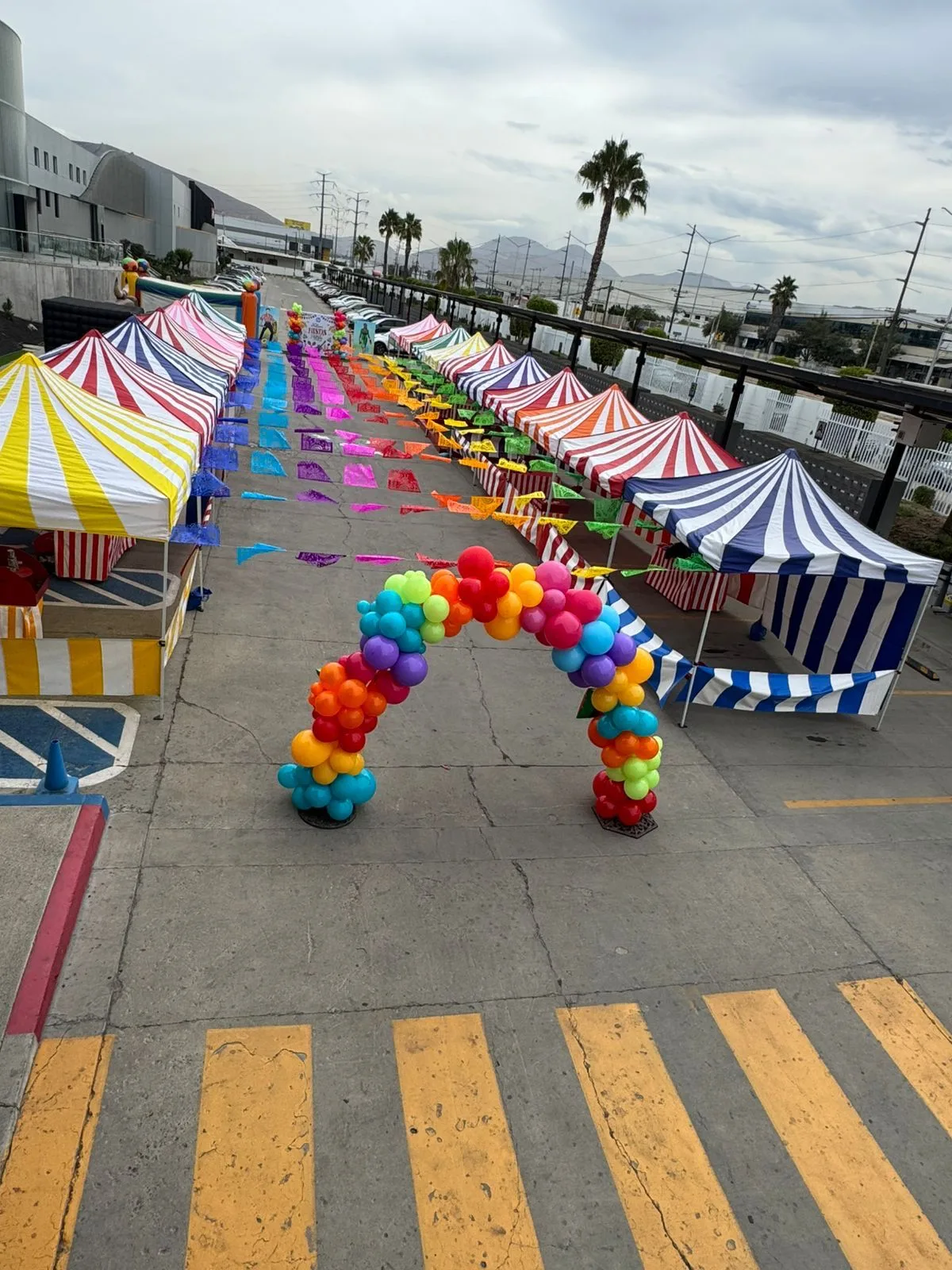
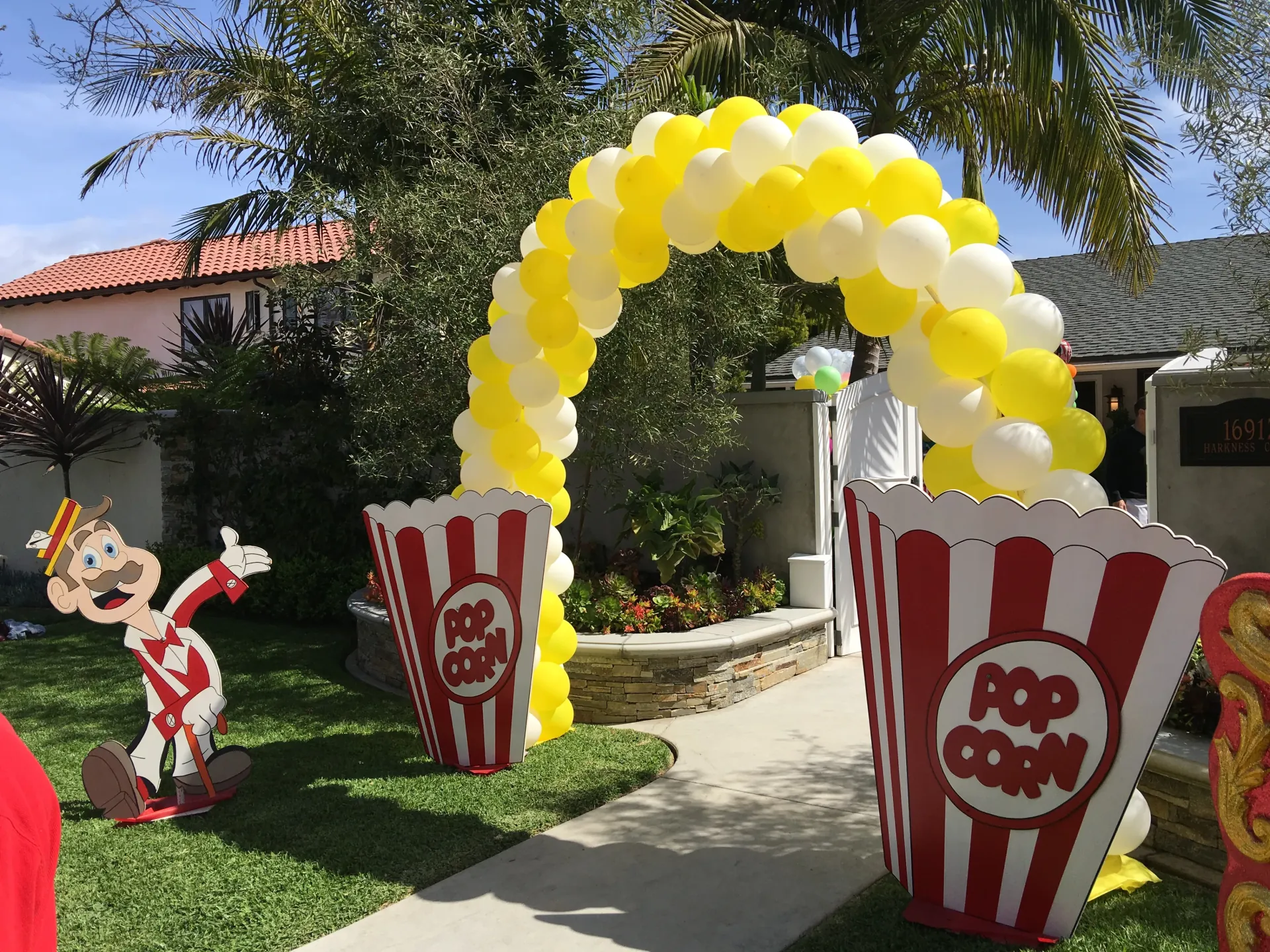
Load-in starts two to three hours before doors. Crew stages the booths along the edge of the frontage or across the nearest run of parking spaces, sets a balloon arch over the entrance so the launch reads as an event from a block away, and positions the photo backdrop where the light holds and the line will not block the door. On a shallow El Cajon Boulevard lot, that usually means claiming two or three stalls with cones and a property manager's written sign-off. In a shopping-center setting closer to College Avenue or 54th Street, there is normally room for a proper row of booths facing the storefront.
The launch window runs two to four hours. People stop because the games are visible from the sidewalk, play a round, take a photo at the backdrop, collect a prize ribbon carrying the business name, and walk inside because they are already standing at the door. That sequence is the whole design of the format. Attendants keep every booth and machine running for the contracted window, so the owner and the new staff spend the day meeting customers rather than refilling a popcorn kettle.
Pack-out happens same-day, generally inside ninety minutes of close, which matters on a corridor where evening traffic builds early and borrowed parking stalls need to go back into circulation. What stays behind is the photo volume: guest phones, the business account, and whatever local coverage the opening pulled in.
What's typically included.
-
Booths built for the camera.
Striped canopy booths positioned for high-traffic photo capture rather than tucked out of the way, angled so the storefront, the signage, and the guest all land in the same frame. Booth count scales to the frontage, from two on a narrow El Cajon Boulevard lot to a full facing row in a shopping-center apron.
-
Brandable signage and prize ribbons.
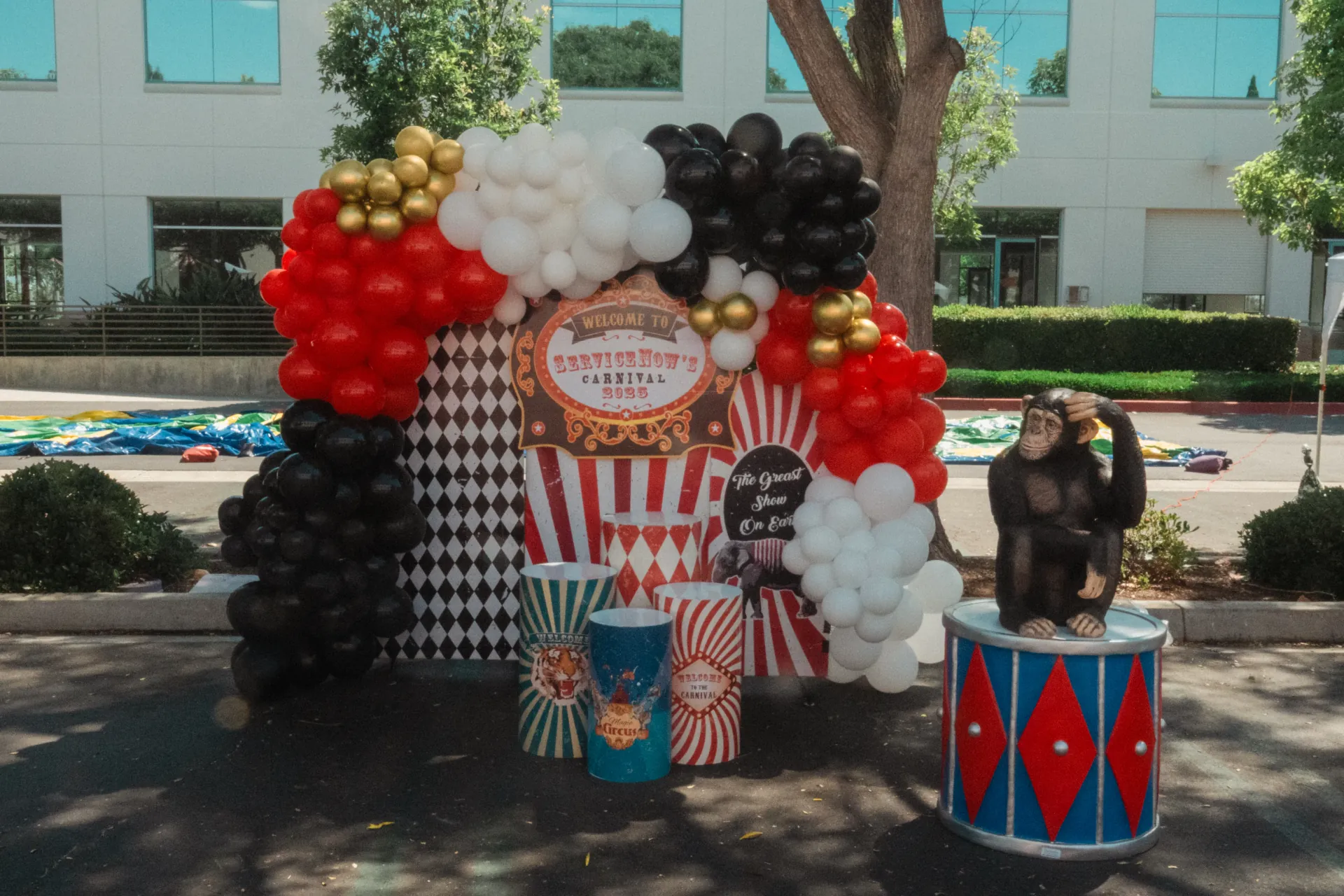
Booth headers, entrance marquee, and prize ribbons customized with the business name and launch date. A ribbon carrying your name leaves the event in someone's hand and turns up in photos long after the crew has packed out.
-
Concessions in your colors.
Popcorn, cotton candy, and snow cone stations, with bags, cones, and serving supplies branded to the launch where the timeline allows. The smell of a running popcorn machine reaches further down a sidewalk than any banner does.
-
Photo backdrop and props.
A styled backdrop with balloon framing and carnival props gives guests a reason to stop moving and a place to be photographed. Gala-tier decor is available for launches where the backdrop carries brand imagery or a sponsor lockup.
-
Professional attendants.
One attendant per booth and per concession station for the full window, running games, restocking prizes, and keeping lines moving. The new team stays on the floor with customers instead of operating rental equipment on opening day.
-
Load-in, strike, and COI.
My Little Carnival handles the full set and strike and issues a Certificate of Insurance naming the property owner or landlord as additional insured, which most College Area commercial leases require before a vendor can occupy any part of the lot.
Typical timeline for grand openings in College Area.
- 1
6 to 8 weeks out
The opening date gets set against the build-out and inspection schedule, and the activation scope gets sketched: booth count, concession lineup, backdrop treatment, and how deep the branding runs. If any part of the setup touches public sidewalk or street, the City of San Diego permit conversation starts here, not later.
- 2
3 to 4 weeks out
Scope locks, deposit places the crew, and permit paperwork goes in. The landlord COI addendum is issued. Branded ribbon, signage, and backdrop artwork move to production, and the launch announcement goes out with a confirmed start time.
- 3
Week of
A layout walk confirms exactly which stalls or frontage the activation occupies, where power comes from, and how the crew truck gets in and out without blocking the drive lane. Generator gets added to the load list if the exterior outlets cannot carry the concession draw.
- 4
Opening day
Crew arrives two to three hours ahead, sets booths and arch, brings machines up to temperature, and posts attendants before the ribbon. The activation runs the full contracted window and strike finishes same-day, inside ninety minutes of close.
Specifics for College Area.
- City of San Diego permits: Anything occupying public sidewalk, parkway, or street space in College Area routes through a City of San Diego special-event or use permit, and that process wants weeks rather than days. An activation held entirely on private property, your own lot or a shared shopping-center apron, often needs only landlord authorization plus a vendor Certificate of Insurance. Confirm which track applies with your property manager before assuming the shorter one.
- Frontage and apron sizing: El Cajon Boulevard storefronts vary block to block, and several have shallow lots where the drive aisle sits close to the door. Two booths, one concession station, and a backdrop fit a footprint around 15 by 25 feet. A four to six booth layout with an arch needs closer to 30 by 40, which usually means borrowing parking stalls or moving to a shopping-center apron off College Avenue or 54th Street.
- Power access: Each popcorn popper and cotton candy spinner wants its own 20-amp circuit. A newly finished storefront may have only one exterior outlet, and sometimes none that has been commissioned yet. Anything past a single machine typically brings a generator, confirmed during the pre-event site walk.
- The SDSU calendar: College Area's foot traffic tracks the university. Home football Saturdays fill street parking and slow the corridor, which is a problem for load-in but a genuine opportunity for a launch that plans around it rather than into it. Move-in and the first weeks of fall term bring the heaviest student turnout of the year. Summer runs noticeably quieter on the blocks nearest campus.
- Park overflow options: For a launch that outgrows its own frontage, Colina del Sol Park has the larger open lawn and a lot off 54th Street that handles crew vehicle access, while Montezuma Neighborhood Park suits a smaller activation but has tighter street parking. Either one requires a City of San Diego reservation on a separate track from a private-property setup.
- Marine layer and timing: San Diego's marine layer keeps College Area mornings grey and cool well into late spring, usually clearing by early afternoon. A late-morning or midday start clears the overcast and lands inside the strongest walk-in window for the corridor, which matters when the whole point is photographs.
Common questions.
Do we need a permit to set up in front of our College Area storefront?
It depends on whose ground you are standing on. If the activation stays entirely on private property, your lot or a shared shopping-center apron, landlord authorization and a vendor Certificate of Insurance usually cover it. The moment any booth, arch, or queue occupies public sidewalk or street along El Cajon Boulevard or Montezuma Road, a City of San Diego permit enters the picture and needs several weeks of lead time. Ask your property manager where the property line actually falls before you plan the layout.
How much space does the setup really need?
A compact launch, two booths plus one concession station and a photo backdrop, fits roughly 15 by 25 feet, which most College Area frontages can produce by borrowing a couple of parking stalls. A larger activation with four to six booths, branded concessions, and an entrance arch wants around 30 by 40 feet. Shopping-center aprons closer to College Avenue and 54th Street handle that comfortably; a narrow storefront lot generally does not without a permitted sidewalk zone.
How does the branding actually work?
Signage, booth headers, prize ribbons, and concession serving supplies can all carry the business name and colors, and the photo backdrop can be built around brand imagery when the artwork is confirmed roughly three weeks ahead. That lead time is the real constraint. Branded material has to be produced, and a rushed request usually means falling back to standard carnival signage on opening day.
What is a realistic budget for a College Area launch?
Most grand openings land between $5,000 and $15,000, and the spread comes down to three things: how much square footage you are filling, how deep the branded decor goes, and how many hours the activation stays open. A single-location storefront launch sits near the lower end. Multi-day openings, or a franchise rolling out several locations across San Diego County, get quoted individually.
Should we schedule around San Diego State's calendar?
Worth thinking about in both directions. A home football Saturday floods the neighborhood with people but also fills every street parking space, so load-in gets harder and your crew needs a confirmed access path. Fall move-in weeks bring the year's biggest student turnout. If your customer base is more the surrounding San Diego Unified School District families than the campus, a non-game Saturday morning is the calmer and usually better choice.
What is not covered by the activation?
The production covers booths, games, prizes, concessions, the photo backdrop and props, attendants, set, and strike. Ribbon-cutting ceremony logistics, press and media outreach, catering beyond the concession machines, live music or a DJ, and interior decor are separate tracks. Plenty of businesses run those alongside the carnival, and they do not change the activation scope on our end.
About this guide.
This local guide to grand openings in College Area was put together by My Little Carnival, the San Diego County division of My Little Carnival, producers of business launches, school carnivals, corporate events, and community festivals across Southern California.
Helpful local references: City of San Diego Parks and Recreation · San Diego Unified School District
Grand Openings in nearby cities.
Opening a new location in College Area?
Send the opening date, the address, and how much of your lot or frontage you can hand over, and My Little Carnival will scope an activation sized to the footprint and built to be photographed.
Get a quote →