
grand openings in Little Italy.
A grand opening is the public launch a business stages when a new store, restaurant, office, or pop-up opens its doors, built to pull passing foot traffic inside on day one and to leave behind images worth posting. Carnival production turns that launch into something visible from a block away: booths positioned for high-traffic photo capture, brand-customizable signage and prize ribbons, concessions running in your colors, and a photo backdrop with props that guests will queue up for. The look is photogenic on purpose, since every booth doubles as a photo opportunity and every prize can carry your branding, which keeps the opening circulating on social media long after the ribbon is cut. This is a local guide to grand openings in Little Italy, a dense downtown San Diego neighborhood where storefront frontage is narrow, curb space is contested, and the surrounding public plazas absorb the footprint a suburban parking lot would handle on its own.
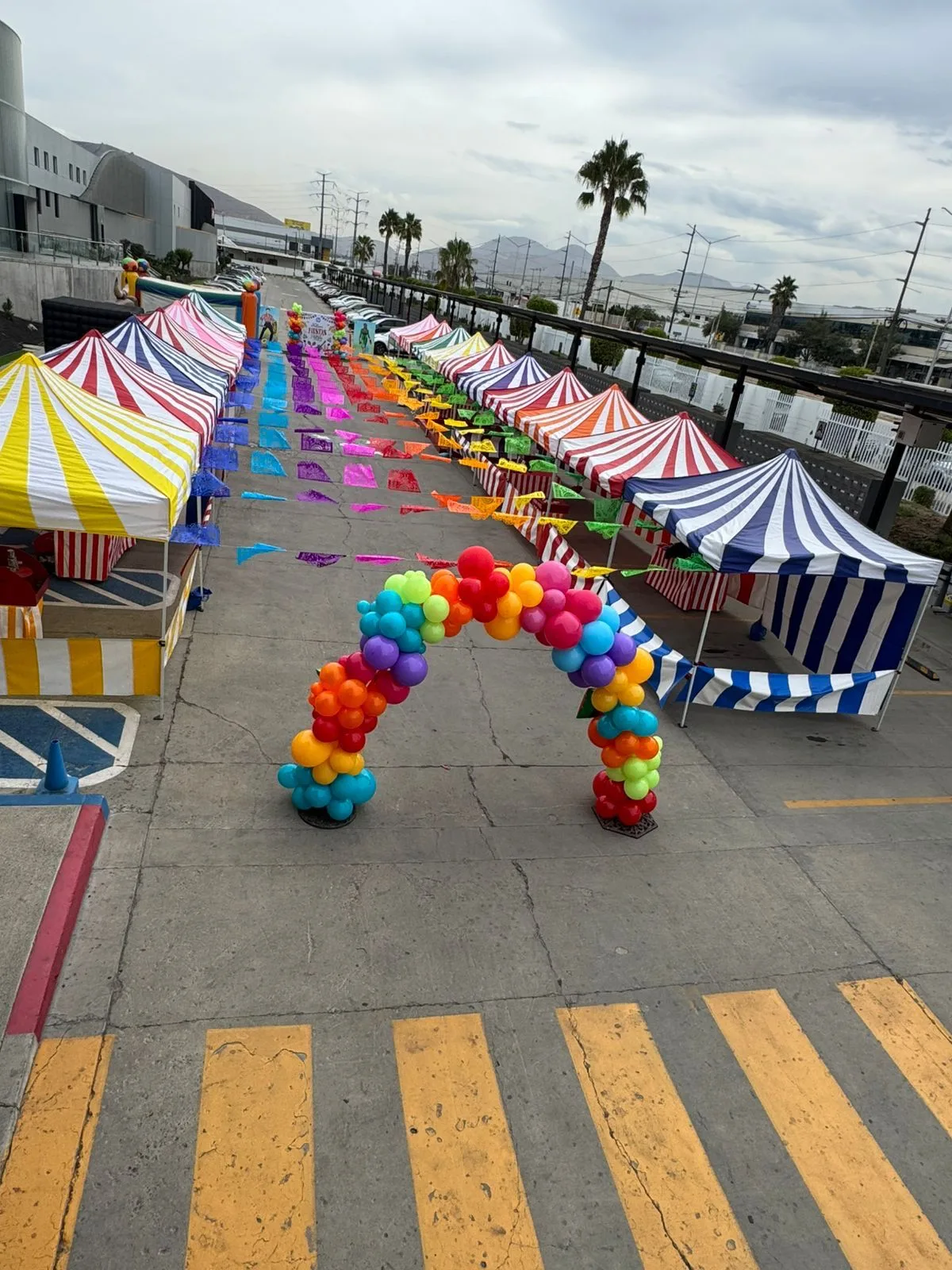
Retail and restaurant launches in Little Italy cluster along India Street and Kettner Boulevard, where frontage is narrow and most of the curb is metered or permit-only, so an activation usually claims the sidewalk apron directly in front of the door. When the space at the door is too tight for the crowd a launch is trying to draw, three nearby public venues carry the overflow: Piazza della Famiglia, the paved civic plaza whose public calendar runs through the Little Italy Association alongside the City of San Diego's own permit process; Amici Park, a smaller lawn a few blocks north that suits a modest opening or a single-storefront launch; and Waterfront Park, managed by the County of San Diego near the County Administration Center, where a larger brand activation gets open lawn to spread across. Families living in the neighborhood are zoned to San Diego Unified School District, which is worth checking against the calendar whenever a weekend opening is aimed at parents rather than the after-work crowd.
My Little Carnival produces grand opening activations for retail, restaurant, and brand clients across the San Diego downtown core, scaled from a two-booth sidewalk setup to a full plaza build with branded concessions and a photo backdrop.
How a grand opening activation unfolds in Little Italy.
Load-in is the part that separates a downtown opening from a suburban one. There is no lot to back a truck into on most of India Street, so the crew books a loading window, arranges temporary curb access where the block requires it, and carries folded booths, prize inventory, and concession machines the last stretch on foot. Setup starts two to three hours before doors. On hardscape, whether that means a sidewalk apron or the paved expanse of Piazza della Famiglia, booths and arches sit on weighted bases instead of ground stakes, and the layout runs long and linear against one edge so pedestrians keep flowing past the activation rather than through the middle of it.
The public window generally runs two to four hours. A guest plays a booth, takes a photo at the backdrop, collects something branded, then walks into the business, which is the whole mechanic the layout is built around. Attendants keep the games stocked and the machines running so the owner and staff stay on their floor with customers instead of refilling a popcorn kettle. Strike happens the same day, usually inside ninety minutes of close, because the sidewalk, plaza, or lawn needs to be back in public use before the neighborhood's dinner traffic arrives.
What's typically included.
-
Booths built for the camera.
Two to six striped canopy booths, placed where the sightlines from the sidewalk are best rather than wherever there happens to be room. Each counter is dressed so a phone photo taken across it reads as a carnival, not as a folding table with a game on top.
-
Brand-customizable signage and prize ribbons.
Entrance signage, booth headers, and prize ribbons produced in your colors and marks. Artwork is confirmed a few weeks ahead so the printed pieces arrive with the rest of the load rather than being improvised on opening morning.
-
Branded concessions.
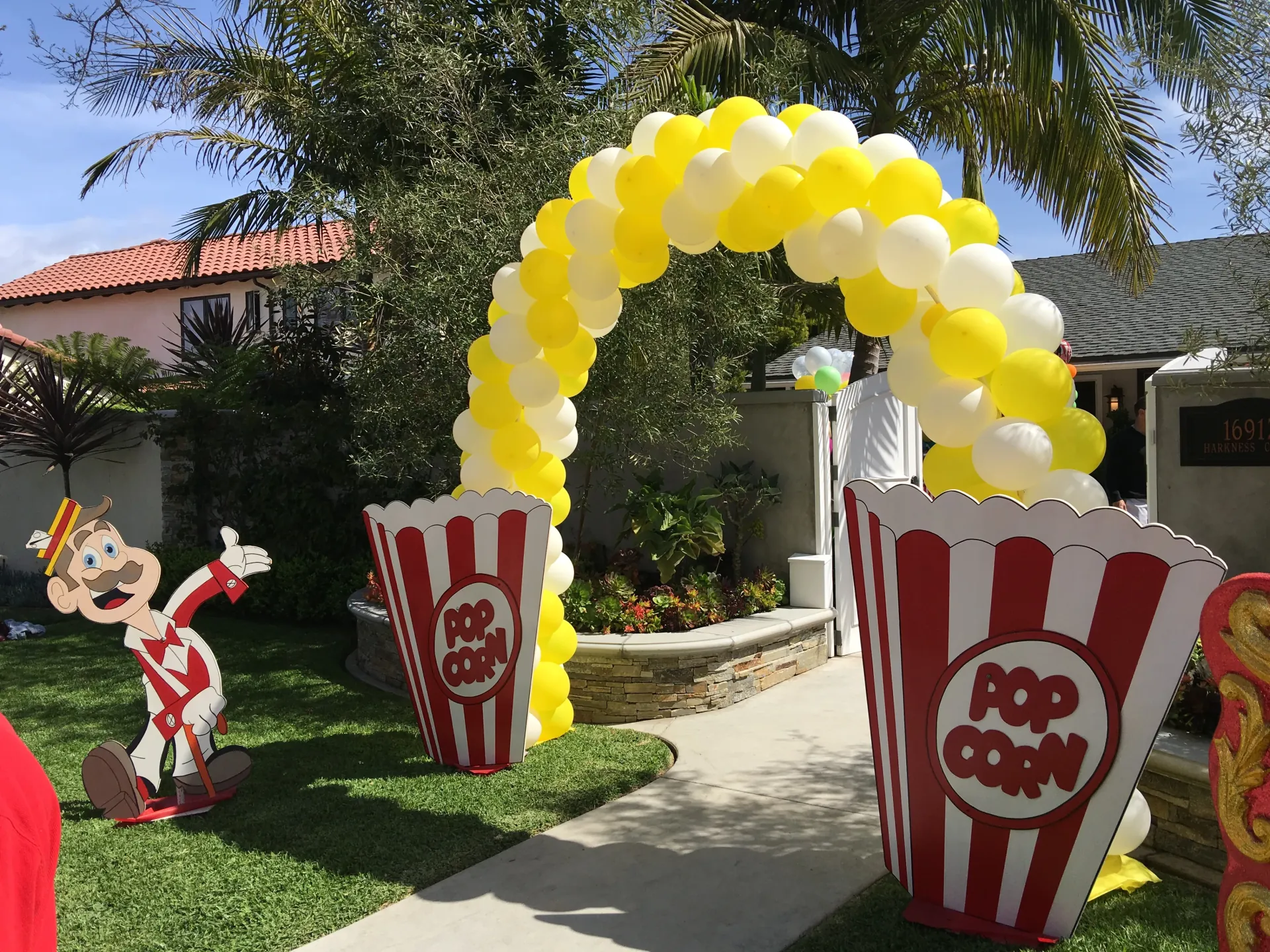
Popcorn, cotton candy, and shaved ice run through the window, with bags, cones, and sleeves brandable in your palette. A concession line gives arriving guests a reason to stop moving, which is the first requirement for getting anyone through a new door.
-
Photo backdrop and props.
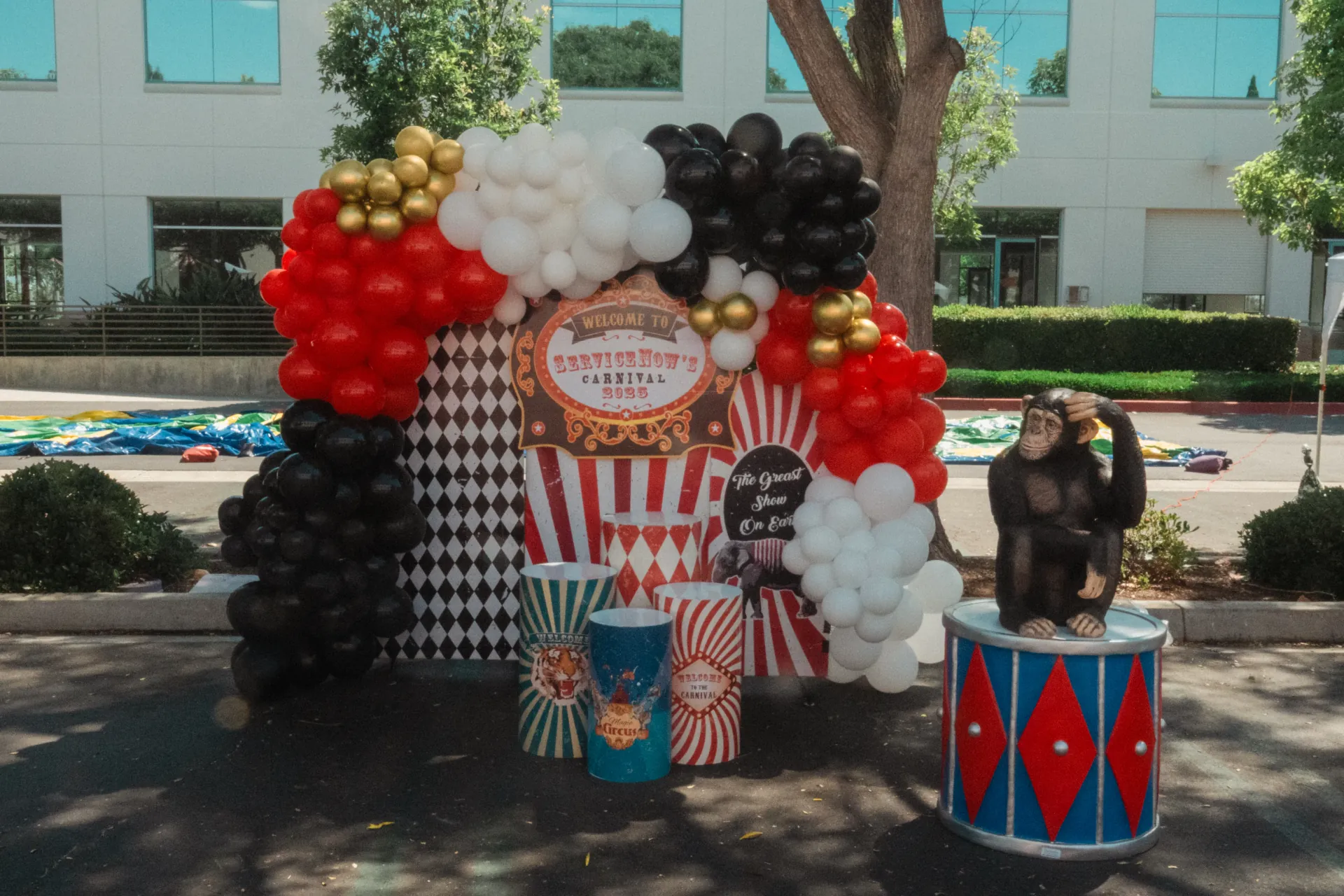
A dedicated backdrop with balloon work and carnival props, positioned so the store name or logo sits in frame behind the guests. Gala-tier decor is available when the launch needs a heavier build than the standard backdrop provides.
-
Professional attendants.
Staffing assigned to each booth and concession station for the full contracted window, so nobody on the business payroll gets pulled off the sales floor to run a game or restock a prize bin during the busiest hours of the launch.
-
Setup, strike, and Certificate of Insurance.
My Little Carnival handles transport, build-out, and same-day strike, and issues the COI naming the City of San Diego, the County of San Diego, or the property owner as additional insured, depending on which authorization the footprint requires.
Typical timeline for grand openings in Little Italy.
- 1
6 to 8 weeks out
The opening date is set against the buildout schedule and the activation is scoped: booth count, concession lineup, backdrop, and how deep the branding goes. If any part of the setup touches public sidewalk or street space, the City of San Diego permit track starts here, and a Piazza della Famiglia booking also goes onto the Little Italy Association's calendar.
- 2
3 to 4 weeks out
Scope locks and the deposit holds the date. Artwork for signage and prize ribbons is submitted for production. The COI is issued to the landlord or the permitting agency, and the launch announcement can go out with a confirmed start time now that the footprint is settled.
- 3
Week of
A site walk confirms the exact frontage width, where the booth line stops relative to the neighboring business's door, and whether the available outlets carry the concession load or a generator joins the load list. The loading window and curb access for opening morning are locked in the same pass.
- 4
Opening day
The crew arrives two to three hours ahead, builds the line of booths, brings the machines up to temperature, and posts attendants before the first guest. The activation runs the contracted window, and strike clears the site the same day.
Specifics for Little Italy.
- City of San Diego permitting: Any part of an activation that occupies public sidewalk, parkway, or street space in Little Italy needs a City of San Diego special event permit plus a COI, and the application wants real lead time. A setup contained entirely on private property, an interior courtyard or a leased patio, may only need the property owner's written sign-off, but that is worth confirming with the property manager before anyone assumes the permit step is skippable.
- Piazza della Famiglia coordination: The plaza is a City of San Diego civic space, and its public schedule is coordinated by the Little Italy Association, so a booking there runs on two tracks at once. The surface is hardscape with built-in shade, which makes it the fastest venue in the neighborhood to build out on, provided every booth and arch is weighted rather than staked.
- Amici Park and Waterfront Park as overflow: Amici Park, a few blocks north, fits a smaller launch that wants lawn instead of concrete. Waterfront Park runs through the County of San Diego rather than the city, a separate application with its own timeline, and earns that extra paperwork when a brand activation needs open ground well beyond what any storefront frontage can offer.
- Frontage width and pedestrian flow: India Street and Kettner Boulevard frontages are narrow, and outdoor dining has already claimed part of the sidewalk on several blocks. A two-booth setup with one concession station fits most aprons; anything larger tends to push toward a permitted sidewalk zone or one of the nearby public venues instead of squeezing the pedestrian path.
- Power access: Concession machines each want a dedicated circuit, and downtown storefronts rarely offer more than one usable exterior outlet. A generator is planned as the default here rather than treated as a contingency, with placement confirmed during the site walk so the noise sits away from the entrance and the photo backdrop.
- Load-in, parking, and curb access: The neighborhood's streets are narrow and largely metered or permit-only, with no direct lot access at most addresses. The crew schedules a loading window and, where the block calls for it, a temporary curb arrangement, then walks equipment in the remaining distance rather than staging a truck at the door through the event.
Common questions.
Do we need a permit to set up in front of our storefront in Little Italy?
If any part of the setup sits on public sidewalk or street space, yes, a City of San Diego special event permit applies, and it is worth starting several weeks ahead. An activation held entirely on private property may only need written authorization from the property owner along with the vendor COI. Because Little Italy frontages are narrow, the line between private patio and public walkway is easy to misjudge, so confirm it with the property manager before finalizing the layout.
How much room does the setup actually need?
A two-booth layout with one concession station and a photo backdrop works in roughly a fifteen by twenty-five foot footprint, which fits most sidewalk aprons on India Street once outdoor dining is accounted for. A five or six booth build with multiple concessions and a full arch wants closer to thirty by forty feet, which in this neighborhood generally means moving to Piazza della Famiglia, Amici Park, or Waterfront Park rather than trying to hold it at the door.
Can the booths, prizes, and concessions carry our branding?
That is the core of the format. Signage, booth headers, and prize ribbons are produced in your colors and marks, concession packaging can be branded, and the photo backdrop is positioned so your name lands in frame behind every guest photo. Artwork needs to be confirmed about three weeks out so printed pieces travel with the rest of the load.
What does a grand opening activation usually cost?
Most run between $5,000 and $15,000, with the range driven by the size of the activation, how deep the branded decor goes, and how many hours the window covers. A multi-day launch, or one running at several locations, gets quoted individually rather than off the standard tiers.
How long should the activation run on opening day?
Two to three hours covers a typical storefront launch: enough for the ribbon-cutting crowd to cycle through, a second wave of walk-ins to arrive, and posted photos to start pulling in people who missed the start. Four hours makes sense for a larger plaza build or a location that needs longer to build momentum with passing traffic.
What sits outside the carnival scope?
The activation covers the booths, games, prize inventory, concessions, backdrop and props, attendants, setup, and strike. Ribbon-cutting logistics, press outreach, catering beyond the concession machines, live performers or a DJ, and any interior decor for the space itself are arranged separately. Those tracks run alongside the carnival without changing what the production team is responsible for.
About this guide.
This local guide to grand openings in Little Italy was compiled by My Little Carnival, the San Diego County operation of My Little Carnival, producers of retail launches, brand activations, corporate events, and school carnivals across Southern California.
Helpful local references: City of San Diego Parks and Recreation · Little Italy Association
Grand Openings in nearby cities.
Planning a grand opening in Little Italy?
Share the opening date, the address or venue, and how long you want the window to run, and My Little Carnival will scope an activation sized to your frontage and your branding.
Get a quote →